
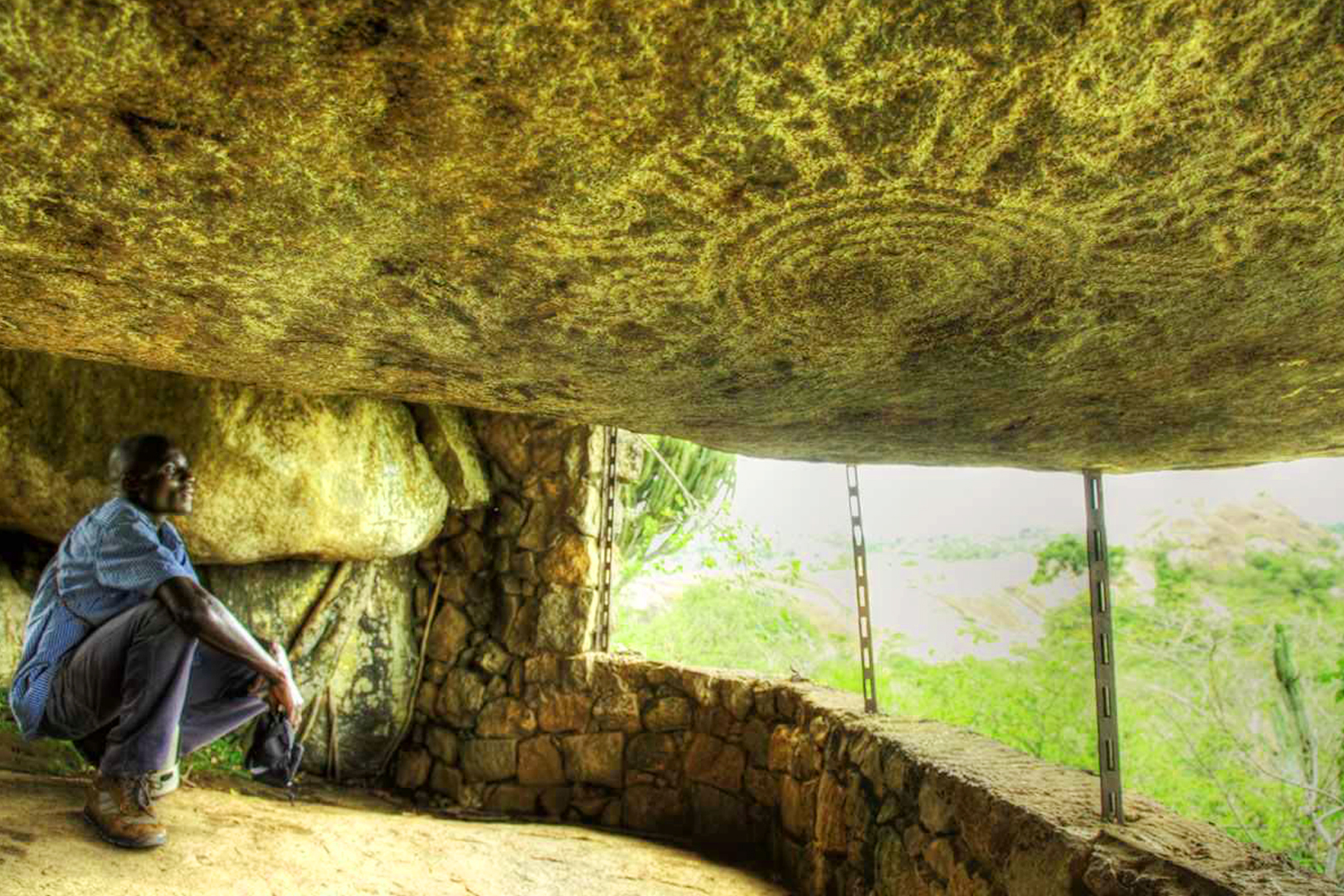
Nyero Rock Paintings in Eastern Uganda
Nyero Rock Paintings in Eastern Uganda: How to Read the Art
Nyero Rock Paintings in Eastern Uganda are among the country’s most remarkable archaeological and cultural heritage attractions. Located near Kumi town in the Teso sub-region, these ancient artworks feature mysterious circles, curved lines, dots and unusual geometric patterns painted onto enormous rock surfaces. Their origins reveal an important connection between Uganda’s prehistoric communities, artistic expression and spiritual traditions.
Unlike modern paintings, the Nyero artworks do not come with written explanations. Visitors must examine the shapes, colours and positions of the designs while learning how archaeologists interpret ancient rock art. Although several theories exist about their meanings, many questions remain unanswered.
For travellers exploring eastern Uganda, Nyero offers an unusual experience combining archaeology, local history, scenic landscapes and guided cultural walks.
Where Are the Nyero Rock Paintings Located?
The Nyero Rock Paintings are situated approximately eight kilometres west of Kumi town in eastern Uganda.
The site lies among large granite rock formations surrounded by farmland, scattered settlements and open countryside.
Travellers can reach the area from Kampala through eastern Uganda, commonly travelling towards Jinja, Mbale and Kumi.
The final approach leads towards the rocky hill where the paintings are preserved.
Quick Facts About Nyero Rock Paintings
| Feature | Description |
|---|---|
| Country | Uganda |
| Region | Eastern Uganda |
| District | Kumi |
| Nearest town | Kumi |
| Main attraction | Prehistoric geometric rock paintings |
| Principal colours | Red and white |
| Main designs | Concentric circles, lines and elongated shapes |
| Main visitor areas | Nyero 1, Nyero 2 and Nyero 3 |
| Suggested visit | 1–2 hours |
| Cultural significance | Archaeological and spiritual heritage |
1. How Old Are the Nyero Rock Paintings?
The exact dates of individual Nyero paintings remain uncertain.
Archaeological research indicates that the rock art belongs to an ancient tradition extending back thousands of years.
Scientific investigations of mineral material associated with selected pigments have suggested dates reaching into the third millennium BCE.
However, these results must be interpreted carefully because dating mineral deposits does not always establish the precise moment a painting was created.
Who Painted the Rocks?
The original artists have not been conclusively identified.
Researchers have associated the wider geometric rock art tradition with ancient hunter-gatherer communities.
Some interpretations connect these traditions with ancestors of Central African forest hunter-gatherer populations.
However, these associations remain subjects of archaeological discussion.
The paintings should not automatically be attributed to the modern Iteso population simply because the site lies within today’s Teso region.
2. Understanding the Three Main Rock Shelters
Although six painted shelters have been recorded around Nyero Hill, most guided visits concentrate on three principal locations.
Each contains distinctive artistic features.
Nyero 1: White Circular Designs
Nyero 1 is a relatively small rock shelter.
Its paintings include six groups of concentric circles produced using white pigment.
Visitors may also notice shapes described by researchers as floral or acacia-pod-like motifs.
These designs introduce the geometric style associated with Nyero.
Nyero 2: The Largest Collection
Nyero 2 is the main attraction.
The shelter lies beneath an enormous rock overhang that protects part of the painted surface.
More than forty individual designs have been identified here.
Red concentric circles dominate the artwork, alongside curved lines, dots and elongated shapes.
Nyero 3: More White Paintings
Nyero 3 contains additional white circular designs.
Some patterns include surrounding curved lines and divided compartments.
Reaching this shelter involves walking across the rocky landscape.
3. How to Read the Concentric Circles
Concentric circles are the most recognisable features of the Nyero paintings.
These patterns consist of several circles arranged around a common centre.
Some have three rings, while others contain more.
Their sizes and spacing vary.
What Do the Circles Mean?
Archaeologists have proposed different interpretations.
Some theories connect circular patterns with spiritual practices, fertility or symbolic communication.
However, the original meanings have not been established conclusively.
Visitors should avoid assuming that every circle represents the sun, moon or a particular ritual.
The most reliable approach is to observe the designs carefully while distinguishing archaeological evidence from interpretation.
4. Understanding the Canoe-Shaped Designs
Some elongated paintings at Nyero 2 resemble boats or canoes.
Researchers often describe them as canoe-shaped motifs because of their appearance.
However, this description does not prove that the artists intended to represent actual boats.
Other interpretations compare certain elongated designs with plant pods or abstract geometric forms.
Why Interpretation Is Difficult
Ancient artists may have used symbols that carried meanings understood within their communities.
Without written records explaining those meanings, modern researchers cannot always identify the intended subject.
The same shape may support several possible interpretations.
This uncertainty makes Nyero particularly interesting.
5. What the Red and White Colours Reveal
The paintings were created using mineral-based pigments.
Scientific studies have identified iron-rich materials associated with red colouring.
White pigment includes different mineral components, including kaolinite.
These substances helped ancient artists produce marks that survived for long periods.
Why Some Paintings Have Faded
Exposure to water, sunlight and natural weathering gradually affects rock surfaces.
Mineral deposits can also accumulate over painted areas, making some designs difficult to see.
Certain shelters provide better protection because large rocks shield the paintings from direct rainfall.
Visitors should therefore expect some patterns to appear faint.
6. Why Ancient Artists Chose Rock Shelters
Nyero’s enormous rock formations provided natural sheltered spaces.
Overhanging surfaces protected paintings from some weather conditions.
The rocks also created enclosed environments that could accommodate gatherings or other activities.
Archaeological evidence indicates that some shelters were associated with ritual practices.
Were the Shelters Homes?
The presence of rock art does not automatically mean every shelter functioned as a permanent home.
Different areas may have supported temporary occupation, artistic activity or spiritual gatherings.
Researchers examine archaeological remains, site layout and surrounding landscapes to understand their historical uses.
Nyero is therefore both an artistic site and an important source of archaeological information.
7. Sacred Traditions Associated With Nyero
Nyero holds spiritual significance within local oral traditions.
Historically, some community members visited the shelters to seek blessings or assistance during difficult circumstances.
Recorded traditions include prayers associated with rainfall, fertility and other concerns.
Certain areas were used for placing offerings.
Respecting Cultural Beliefs
Visitors should understand that these traditions form part of the site’s cultural heritage.
A local guide may explain beliefs associated with particular rocks or sheltered spaces.
Such accounts should be presented respectfully while distinguishing oral traditions from scientifically established history.
The coexistence of archaeology and living cultural memory makes Nyero particularly valuable.
8. How Archaeologists Study Rock Art
Archaeologists use several methods to examine ancient paintings.
These include detailed photography, recording techniques, pigment analysis and comparisons with other archaeological sites.
Researchers also study surrounding rock formations and excavated materials.
What Scientific Research Can Reveal
| Research method | Information provided |
|---|---|
| Pigment analysis | Materials used to create colours |
| Archaeological excavation | Objects associated with ancient activity |
| Photographic recording | Shapes and condition of paintings |
| Mineral dating | Possible chronological information |
| Comparative research | Similarities with other African rock art |
| Oral history | Community traditions connected to the site |
No single method can explain every feature.
Researchers combine evidence to develop more informed interpretations.
9. Other Rock Art Sites in Eastern Uganda
Nyero forms part of a wider tradition of geometric rock art across eastern Uganda.
Other important sites include Dolwe Island, Kakoro, Mukongoro, Komuge and Kapir.
These locations contain related designs produced in different settings.
The similarities suggest that some artistic traditions extended across a broad geographical region.
Is Nyero a UNESCO World Heritage Site?
Nyero has been included in Uganda’s efforts to secure international recognition for its rock art heritage.
The site appears on UNESCO’s Tentative List as part of proposed rock art heritage nominations.
However, being on a Tentative List does not mean a site has received final World Heritage inscription.
This distinction is important when describing Nyero’s official conservation status.
10. What Happens During a Guided Visit?
A typical visit begins with an introduction to the site’s history.
A guide leads visitors towards the principal rock shelters and explains the visible paintings.
The walk may involve uneven ground, large rocks and short climbs.
At each shelter, visitors can examine the patterns and learn about possible interpretations.
Why Guides Are Helpful
Some paintings are difficult to identify without assistance.
Experienced guides can point out faint designs and explain their cultural context.
They also help visitors navigate the rocky terrain safely.
Hiring a local guide can support employment and encourage community participation in heritage protection.
11. Best Time to Visit Nyero Rock Paintings
Nyero can be visited throughout the year.
However, relatively dry weather is generally more convenient for walking across rocky surfaces.
Eastern Uganda experiences seasonal rainfall that can make some paths slippery.
Morning visits are often comfortable because temperatures are relatively cooler.
Visiting During Rainy Weather
Rainfall can make the surrounding landscape attractive and green.
However, wet rock surfaces may become slippery.
Visitors should avoid climbing dangerous sections during heavy rain.
Guides may adjust walking routes according to current conditions.
12. What to Bring for Your Visit
The attraction does not require specialist hiking equipment.
However, preparation improves comfort and safety.
Recommended items include:
Comfortable walking shoes.
Drinking water.
Sunscreen and a hat.
Lightweight outdoor clothing.
A camera or smartphone.
A small backpack.
A rain jacket during wetter periods.
Visitors should avoid carrying heavy luggage while exploring the rock shelters.
13. Photography Tips for Nyero
Nyero provides opportunities for heritage and landscape photography.
The paintings are best photographed using natural light where possible.
Avoid excessive flash use if site management restricts it.
Photographers should never apply water, chalk or other substances to make faint paintings more visible.
How to Capture the Patterns
Include surrounding rock surfaces to show the position of the artwork.
Take wider photographs showing the shelter’s structure.
Close-up photographs can reveal individual circular patterns.
However, visitors must not touch or lean against painted surfaces.
Photographs should document the art without damaging it.
14. Why Protecting Nyero Matters
Rock paintings are fragile and cannot easily be restored once damaged.
Natural weathering gradually affects their appearance.
Human activities can create additional threats through touching, graffiti and uncontrolled visitor access.
Responsible Visitor Behaviour
Remain on permitted paths.
Do not scratch, paint or write on rocks.
Avoid touching ancient designs.
Never remove stones or archaeological objects.
Follow your guide’s instructions.
Protecting Nyero allows future generations to study and appreciate its cultural importance.
15. Combining Nyero With an Eastern Uganda Safari
Nyero can be included in a wider eastern Uganda cultural journey.
Travellers may combine the site with visits to Soroti, Mbale, Sipi Falls or Mount Elgon.
Suggested Two-Day Experience
Day One: Travel Towards Kumi
Begin your journey through eastern Uganda, enjoying rural scenery and planned rest stops.
Continue towards Kumi for an overnight stay.
Day Two: Nyero Rock Paintings
Visit the rock shelters with a local guide.
Learn about the ancient geometric designs and local traditions.
Afterwards, continue towards another eastern Uganda destination or return along your planned route.
Actual travel times depend on road conditions and your departure location.
Why Nyero Rock Paintings Are Worth Visiting
Nyero Rock Paintings provide a rare opportunity to explore Uganda’s ancient artistic heritage.
Their mysterious concentric circles, unusual elongated shapes and mineral pigments reveal the creativity of communities who lived in the region thousands of years ago.
Although their original meanings remain uncertain, archaeological research and local oral traditions offer valuable perspectives.
For travellers visiting eastern Uganda, Nyero provides an educational experience beyond conventional wildlife tourism.
The most rewarding approach is to observe carefully, listen to knowledgeable guides and appreciate the difference between historical evidence and interpretation.
These paintings remind visitors that Uganda’s heritage includes not only wildlife and landscapes, but also the artistic expressions and spiritual traditions of ancient African societies.






No comment