
Driving in Kenya as a Visitor: Roads, Rules and Fuel Tips
Kenya is an excellent country for a road trip, offering access to wildlife reserves, mountain landscapes, lakes, beaches and vibrant towns. Visitors can drive from Nairobi towards the Maasai Mara, explore the Great Rift Valley, travel to Amboseli National Park or continue to the Indian Ocean coast. However, driving in Kenya requires preparation because road conditions, traffic behaviour and journey times vary considerably between regions.
For visitors planning a self-drive holiday, understanding the country’s driving rules, licence requirements, road conditions and fuel availability can make the difference between a comfortable journey and an exhausting one. Major highways connect many towns, but rural roads and safari tracks can be rough, especially after rain. Nairobi traffic can also be slow, while long distances between fuel stations become important when travelling into remote areas.
What Visitors Should Know Before Driving in Kenya
Kenya follows left-hand traffic, meaning vehicles drive on the left side of the road and most cars have the steering wheel on the right. Visitors who normally drive on the right should take time to adjust before entering busy traffic. Roundabouts, junctions, overtaking and lane positioning can feel unfamiliar during the first few hours.
An automatic vehicle can make the adjustment easier, particularly if you are unfamiliar with driving on the left. When collecting a rental car, spend a few minutes learning the position of the indicators, headlights, windscreen wipers, handbrake and gear selector. Check how the vehicle responds when reversing and how to activate its four-wheel-drive system if it has one.
Visitors should also plan realistic daily distances. A route that appears short on a map may take much longer because of traffic, roadworks, potholes, speed restrictions, livestock or stops along the way. Travelling between Nairobi and a safari destination is not simply a matter of calculating kilometres. The condition of the final section of road can have a major effect on the journey.
Before departure, confirm that your itinerary is suitable for independent driving. Some travellers are comfortable driving on paved highways but prefer a professional driver for remote safari routes. Combining self-drive days with guided transfers or organised game drives can provide flexibility without requiring you to handle every challenging road yourself.
Driving Licence and Documents for Foreign Visitors
Before renting a vehicle, check whether your existing driving licence is accepted for your circumstances in Kenya. Requirements can depend on your country of residence, the licence issued to you, the length of your visit and applicable Kenyan regulations. An International Driving Permit may be required or requested by a rental company, and it should be carried alongside your original national driving licence rather than used as a replacement.
Do not assume that every foreign licence is accepted on the same terms. Confirm the requirements with your rental company and the relevant Kenyan transport authority before travelling. If your licence is not written in English, ask whether an authorised translation or an International Driving Permit is necessary.
Keep your passport or another appropriate identification document available, along with your driving licence, rental agreement and vehicle documents. Your rental provider should explain which documents must remain in the vehicle and what to show if an authorised officer requests them.
Insurance is equally important. Ask whether the vehicle has valid insurance for the intended use, what the policy covers and what excess you would have to pay after an accident. Check whether windscreen damage, tyres, underbody damage, recovery and driving on unpaved roads are covered. A standard rental policy may not cover every type of damage associated with off-road or safari driving.
If you are bringing a vehicle registered in another country into Kenya, additional customs and permit requirements may apply. The Kenya Revenue Authority sets out requirements for temporary importation and foreign vehicle permits. Travellers should verify the applicable documents before reaching the border rather than assume that a foreign registration certificate and insurance policy are sufficient.
Kenya’s Main Road Rules
Following road rules is essential for safety and for avoiding penalties. Always obey posted speed limits because the permitted speed can change according to the road, surrounding settlement, vehicle category and traffic conditions. Do not rely on a single national speed figure as a guide for every highway.
Slow down when approaching towns, schools, pedestrian crossings, markets and roadworks. Some roads pass directly through busy communities where pedestrians, cyclists, motorcycles and public transport vehicles share the space. Even on a relatively open road, a vehicle may suddenly slow to pick up passengers or turn into a roadside business.
Seat belts should be worn by everyone in the vehicle. Before starting a journey, check that each passenger has a working belt and that children are secured in suitable child restraints. Never allow passengers to ride in unsafe positions or exceed the vehicle’s seating capacity.
Using a handheld mobile phone while driving is dangerous and can attract penalties. Set your navigation before moving, use a suitable hands-free system where lawful, and pull over safely if you need to read a message or change your route. Never type into a phone while the vehicle is in motion.
Driving under the influence of alcohol or drugs is unsafe and may lead to serious legal consequences. If you plan to drink, arrange a sober driver or alternative transport. Fatigue can be just as dangerous, especially on long highway journeys, so take breaks and avoid driving when sleepy.
Overtaking requires particular care. Pass only when you have a clear view of the road ahead, sufficient space and permission under road markings and signs. Avoid overtaking near bends, hill crests, junctions, pedestrian crossings or any place where oncoming traffic cannot be seen clearly. A vehicle travelling slowly in front of you is not a reason to take an unnecessary risk.
At roundabouts, junctions and merges, approach cautiously and follow signs and road markings. Watch other vehicles carefully instead of assuming that every driver will signal or change lanes predictably. Use indicators to communicate your intentions, leave enough space and avoid aggressive responses when another driver makes a mistake.
Understanding Traffic in Nairobi
Nairobi can be one of the most demanding places for a visitor to drive. Traffic congestion is common during busy commuting periods, and journey times can change considerably depending on the time of day, weather, accidents and roadworks. A short trip across the city may take longer than expected, particularly when travelling between the airport, central business district, hotels and major residential areas.
Public transport vehicles, including matatus, frequently stop to pick up and drop off passengers. Motorcycles, commonly called boda bodas, may move through gaps between cars, while pedestrians can cross busy roads near markets and bus stops. Maintain a safe following distance and check mirrors before changing lanes or turning.
Avoid blocking intersections when traffic slows. If there is no room to clear a junction, wait behind the stop line rather than moving into the intersection and obstructing cross traffic. Be patient when other drivers merge, and do not assume that sounding the horn will make a congested road move faster.
Plan airport transfers carefully. Nairobi has more than one major airport, and travel between them can take substantial time when traffic is heavy. If you are collecting a rental vehicle after an international flight, consider resting before beginning a long drive. Driving immediately after an overnight flight can be difficult because fatigue reduces concentration and reaction time.
Where possible, avoid scheduling a long intercity drive immediately after navigating rush-hour traffic. Staying overnight in Nairobi before travelling to a safari destination can provide a more relaxed start, especially for families, first-time visitors and travellers who have not driven on the left before.
Road Conditions Across Kenya
Road quality varies by region. Major highways connecting Nairobi with places such as Naivasha, Nakuru, Mombasa and other large towns include paved sections suitable for ordinary vehicles. Even on these routes, drivers must remain alert for heavy trucks, potholes, roadworks, speed bumps and traffic moving at different speeds.
The descent into the Great Rift Valley offers beautiful scenery, but some sections are steep or winding. Use a safe speed, avoid sudden braking and allow extra space between your vehicle and large trucks. If you want to stop for photographs, use a designated viewpoint or a safe parking area rather than stopping on the carriageway or an exposed shoulder.
The Nairobi to Mombasa route is an important transport corridor and can carry considerable heavy-vehicle traffic. Allow time for slow-moving trucks and be cautious when overtaking. If travelling to the coast, plan breaks before fatigue builds up and avoid assuming that you can complete the journey comfortably in a fixed number of hours.
Roads leading to national parks and conservancies may become rougher as you leave the main highway. Depending on the destination, you may encounter gravel, loose sand, corrugations, rocky sections, deep ruts and muddy tracks. Road conditions can change after storms, even when the route was manageable a few days earlier.
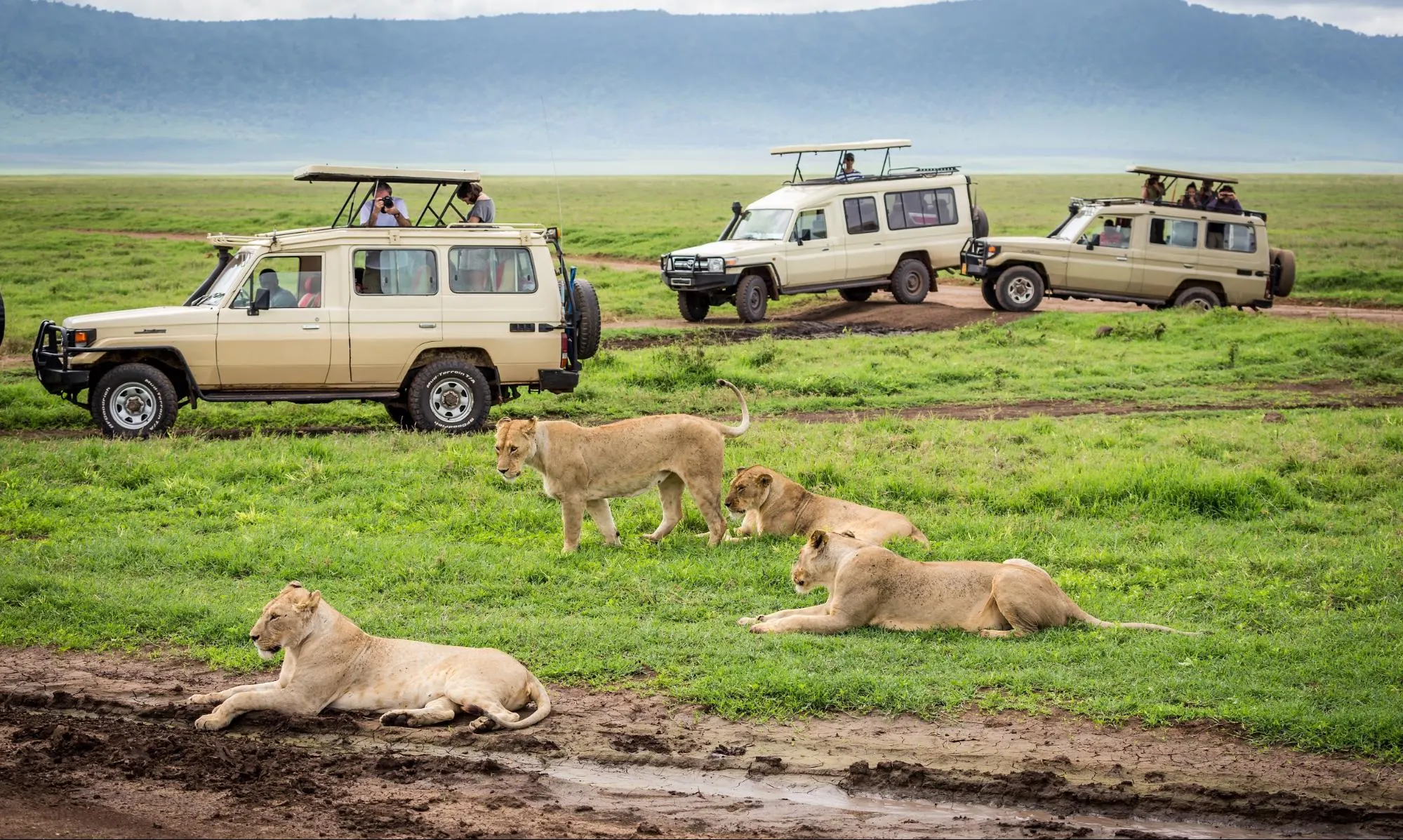
Inside safari areas, the road surface is only part of the challenge. Wildlife may cross tracks, visibility can be limited by dust or vegetation, and some routes are narrow or uneven. Drive slowly, keep a safe distance from animals and follow park rules. Do not leave designated roads or attempt to approach wildlife simply to obtain a closer photograph.
Before driving to the Maasai Mara, Amboseli, Tsavo, Samburu or a remote conservancy, ask your accommodation or rental company about current access conditions. Confirm which gate or access road is appropriate for your destination. A route suggested by a navigation app may not be the best option for your vehicle, particularly after heavy rain.
Choosing the Right Vehicle for Your Trip
The right vehicle depends on where you intend to travel. A standard car can be suitable for city driving and many paved intercity routes, provided it is in good condition and meets the rental company’s requirements. For a trip focused on Nairobi and established towns, paying for a large four-wheel-drive vehicle may not be necessary.
A high-clearance vehicle is more suitable when the itinerary includes rough rural roads, remote lodges or safari tracks. Four-wheel drive can provide additional traction on mud, sand and uneven surfaces, but it does not make every road safe. Ground clearance, tyres, driver experience and the condition of the route all matter.
For a self-drive safari, discuss the exact itinerary with the rental company before booking. Ask whether the vehicle is permitted in the intended parks and conservancies, whether recovery equipment is included and what assistance is available if you become stuck or suffer a breakdown. Some companies restrict where their vehicles may be driven, even if the road is publicly accessible.
Inspect the vehicle before leaving the collection point. Check the tyres, spare wheel, jack, wheel-changing tools, headlights, indicators, mirrors, windscreen, brakes and fuel level. Make sure you know where the warning triangle and first-aid kit are stored. Photograph existing scratches or damage and ensure that the rental agreement records them.
If you are unfamiliar with changing a tyre, ask for a demonstration. Confirm how to contact roadside assistance and whether you are permitted to arrange your own recovery. In remote areas, a small mechanical problem can cause a major delay if you do not know whom to call.
Planning Fuel Stops in Kenya
Fuel is generally available in Nairobi and other major towns, as well as along many busy highways. However, stations become less frequent in remote regions, and some rural areas have limited options. The safest approach is to plan fuel stops around towns and reliable stations instead of waiting until the fuel gauge approaches empty.
Fill the tank before leaving a major town for a long rural journey or entering a safari region. This is particularly important when travelling towards remote parts of northern Kenya or driving between lodges where there may be no public fuel station nearby. In some reserves and conservancies, fuel is not available inside the protected area.
For a Maasai Mara journey, identify fuel options along your route and refuel in a suitable town before continuing into more remote areas. The same principle applies when travelling towards Samburu, Tsavo or other destinations where the distance between reliable stations may be significant. Check the route with your accommodation or rental company because access roads and available services can vary.
Do not calculate fuel needs using distance alone. A four-wheel-drive vehicle on rough roads may consume considerably more fuel than it does on tarmac. Heavy luggage, steep climbs, traffic congestion, low tyre pressure and frequent stops can also increase consumption. Leave a reserve for detours, unexpected delays and changes in road conditions.
Use reputable fuel stations where possible. Check that the attendant has selected the correct fuel type for your vehicle, especially if you are unfamiliar with local pump labels. Petrol and diesel are not interchangeable, and putting the wrong fuel into a vehicle can lead to expensive repairs. If you are unsure, check the fuel cap or ask the rental provider before refuelling.
Pay attention while the vehicle is being filled. Confirm the amount on the pump and keep your receipt, particularly if you need to account for fuel expenses or return the vehicle under a full-tank policy. Never leave the car unattended with valuables visible while paying at a busy station.
Fuel Prices, Payment and Budgeting
Fuel prices in Kenya can change over time, so it is better to check the current official price guidance before departure than rely on an old travel budget. The Energy and Petroleum Regulatory Authority publishes regulated petroleum price information. Your actual expenditure will depend on the fuel type, vehicle efficiency, driving conditions and total distance covered.
Estimate your fuel budget using the vehicle’s expected consumption and the distance of the planned route. Add a reasonable reserve for detours, traffic and rough roads. If you are hiring a large four-wheel-drive vehicle for a safari, do not use the fuel consumption of a small city car to estimate your costs.
Carry more than one practical payment option. Many established fuel stations accept card payments, while cash and mobile money may be useful alternatives depending on the location and the station’s facilities. Acceptance can vary, and network problems can affect digital payments. Ask the attendant which methods are available before filling up if payment flexibility is important.
If you intend to use M-Pesa, confirm that your account and payment arrangements will work for your visitor status. International travellers should not assume that every mobile money service is automatically available to them. A bank card and some local currency provide useful alternatives.
Keep small notes for minor purchases and situations where card payment is unavailable. However, avoid carrying more cash than you need, and do not display large amounts when paying. Store payment cards securely and monitor your transactions during the trip.
Toll Roads and Other Road Charges
Some roads and infrastructure in Kenya may involve toll charges, including the Nairobi Expressway. Whether a toll applies depends on the route and the road being used, so check the current arrangements before setting off. Do not assume that every highway has a toll or that the charge is the same for all vehicle categories.
If your route includes a toll road, ask the rental company how payment works and whether any electronic payment arrangement is needed. Keep enough time in your schedule to follow the correct entry and exit lanes. If you are unsure whether a road is tolled, confirm before entering rather than trying to change lanes at the last moment.
Also budget for parking where applicable, particularly in busy urban areas, hotels and visitor attractions. Use recognised parking facilities and follow posted instructions. Avoid leaving a vehicle in an unauthorised location simply because it appears convenient.
Driving During the Rainy Season
Kenya’s rainy seasons can affect driving conditions, especially on unpaved roads. Heavy rain may create slippery surfaces, potholes, standing water, erosion and muddy tracks. Roads that are easy to use in dry weather can become difficult or temporarily impassable after storms.
If travelling between March and May or during the shorter rainy period later in the year, check conditions before leaving. The timing and intensity of rainfall vary by region and year, so do not assume that every road will be wet or dry simply because of the calendar.
Reduce speed on wet tarmac and leave more distance between vehicles. Avoid sudden braking or sharp steering movements, particularly on gravel or muddy surfaces. If water is covering a road and you cannot judge its depth or the strength of the current, do not attempt to cross. Find a safer route or wait for reliable local advice.
A four-wheel-drive vehicle is helpful on some rough roads, but it cannot overcome every hazard. Deep mud, floodwater and damaged bridges can make a route unsafe even for a capable vehicle. Do not follow another vehicle through water without knowing whether the crossing is safe for your own vehicle.
Keep the windscreen clean and make sure the wipers work properly. Tyres should have adequate tread, and headlights should be used when visibility is reduced. Allow extra time because rain can slow traffic and make the final approach to a lodge or campsite much more difficult.
Why Night Driving Is Best Avoided Outside Cities
Driving after dark on unfamiliar rural roads is best avoided where possible. Some roads have limited lighting, and pedestrians, cyclists, motorcycles, livestock or stationary vehicles may be difficult to see. Potholes and damaged road edges can also be harder to identify at night.
Wildlife presents an additional concern near national parks and rural reserves. Animals may move across the road without warning, and a collision can cause serious injury or substantial vehicle damage. Headlights do not guarantee that an animal will be visible in time to stop safely.
Plan your itinerary so that you reach your accommodation before darkness. Start early when travelling long distances, especially if the route includes rough roads or a remote final section. If delays occur, stop at a suitable town or accommodation rather than pushing on simply to maintain the original schedule.
For visitors arriving at an airport late in the evening, an overnight stay near the arrival point can be more sensible than beginning a long drive immediately. This is particularly useful after a long international flight, when tiredness may affect concentration and judgement.
Police Checks and What to Do If You Are Stopped
Police checks may occur on Kenyan roads. If an authorised officer signals you to stop, slow down safely, pull over where directed and remain calm. Keep your hands visible and follow lawful instructions.
Have your driving licence, identification and relevant vehicle documents accessible. Present the requested documents respectfully and ask for clarification if you do not understand what is being requested. Avoid arguments at the roadside, but do not offer a bribe. If a traffic offence is alleged, ask for the official procedure and documentation for resolving it.
If you believe a demand is improper, remain polite and use the appropriate official complaint channels. The National Transport and Safety Authority provides contact information for transport and road-safety enquiries. Do not attempt to resolve a disagreement by handing over unofficial payments.
If an accident occurs, stop in a safe place where possible, check whether anyone is injured and contact emergency services or the police as appropriate. Notify the rental company and insurer promptly, following the instructions in your agreement. Do not leave the scene without meeting the applicable legal requirements.
Before travelling, save the rental company’s emergency number and make sure all passengers know how to contact you if the group becomes separated. In remote areas, a breakdown may require patience, so share your planned route and expected arrival time with someone you trust.
Navigation, Mobile Coverage and Offline Maps
Navigation apps are useful for finding fuel stations, accommodation and major routes, but they should not be treated as infallible. Digital maps may suggest a shortcut along a rough track or a road that is unsuitable for your vehicle. On safari routes, a mapped path may not reflect current conditions or access restrictions.
Download offline maps before leaving a town with reliable internet access. Save the location of your accommodation, fuel stops, park gates and any planned overnight stops. Keep your rental company’s contact details available offline as well.
Mobile coverage can be inconsistent in remote areas. Do not rely on being able to call for assistance from every point on the route. If you are travelling far from towns, ask your accommodation about communication coverage and what to do in an emergency.
Check your route before starting each day rather than repeatedly handling your phone while driving. If a diversion is necessary, stop in a safe place to review the options. A physical map or written directions can provide a useful backup when your phone battery runs low.
Packing Essentials for a Kenyan Road Trip
Carry drinking water, a phone charger, a power bank, sun protection and basic personal supplies. For long journeys, take snacks and plan proper rest stops rather than driving continuously. Keep a small first-aid kit and a torch accessible, especially if your itinerary includes rural areas.
The vehicle should have a suitable spare tyre and the equipment needed to change it, along with a warning triangle and any other required safety equipment. For remote travel, ask the rental company whether recovery gear is provided and whether you need additional equipment for the intended route.
Keep luggage and valuables out of sight when the vehicle is parked. Lock the doors, choose recognised parking areas and avoid leaving passports, electronics or cash inside an unattended vehicle. When stopping for photographs, pull completely off the road in a safe location and check surrounding traffic before getting out.
For a safari, pack binoculars, a camera and suitable clothing, but keep loose items secure while driving on rough roads. Dust can enter the vehicle, particularly on gravel tracks, so protective bags for electronics can be useful.
Planning a Safe Self-Drive Safari
A self-drive safari offers flexibility, but it requires more preparation than a road trip between major cities. Confirm park entry arrangements, vehicle restrictions, opening hours and the route to your accommodation before departure. Some reserves have specific access rules, and a rental company’s permission to drive in one region does not necessarily mean its vehicle is approved for every park or conservancy.
Choose a vehicle that suits the season and the terrain. A high-clearance four-wheel-drive vehicle is often the safer option for remote or rough safari roads. Make sure you understand how to operate it and do not attempt challenging tracks simply because the vehicle has four-wheel drive.
Inside wildlife areas, obey posted speed limits and stay on permitted roads. Keep a respectful distance from animals, never feed wildlife and do not block an animal’s path. If an elephant or other large animal is near the track, give it room and follow park guidance rather than trying to force your way past.
Fuel up before entering remote areas and confirm the distance to the next reliable station. Share your plans with your accommodation and avoid making a long, unfamiliar drive late in the day. If the weather deteriorates or a road appears unsafe, be prepared to change your plans.
Is Driving in Kenya Suitable for First-Time Visitors?
Driving in Kenya can work well for confident drivers who are comfortable with left-side traffic, changing road conditions and independent route planning. Visitors who mainly want to explore cities and paved highways may find self-driving relatively straightforward after allowing time to adjust.
A more remote safari itinerary requires additional judgement. Long distances, rough roads, limited mobile coverage and wildlife hazards can make independent driving tiring, particularly for travellers with little experience of rural African roads. A guided safari or a professional driver may be more suitable if you want to concentrate on wildlife viewing rather than navigation and vehicle management.
You do not need to make every part of the trip a self-drive journey. You can hire a car for a few days around Nairobi or the Rift Valley and arrange a transfer or guided excursion for a more challenging destination. This approach can reduce driving fatigue while retaining some freedom to explore independently.
The best choice depends on your driving experience, travel schedule, budget and preferred destinations. Before committing to a rental, compare the total cost of the vehicle, insurance, fuel, parking, tolls and any required equipment with the cost of a driver or organised transfer.
Final Preparation Before Setting Off
Before every journey, check the weather, road conditions, fuel level and expected travel time. Confirm that your licence and rental documents are valid, your insurance covers the planned route and your vehicle is suitable for the road ahead. Tell someone where you are going when travelling into remote areas, and make sure you have enough time to reach your destination before dark.
Kenya rewards travellers who plan carefully and remain flexible. With the right vehicle, a realistic schedule, sensible fuel stops and respect for local road conditions, visitors can enjoy the freedom of exploring the country’s landscapes and wildlife at their own pace. The safest journeys are those where drivers prepare for delays, avoid unnecessary risks and treat every unfamiliar road with attention and patience.







No comment