
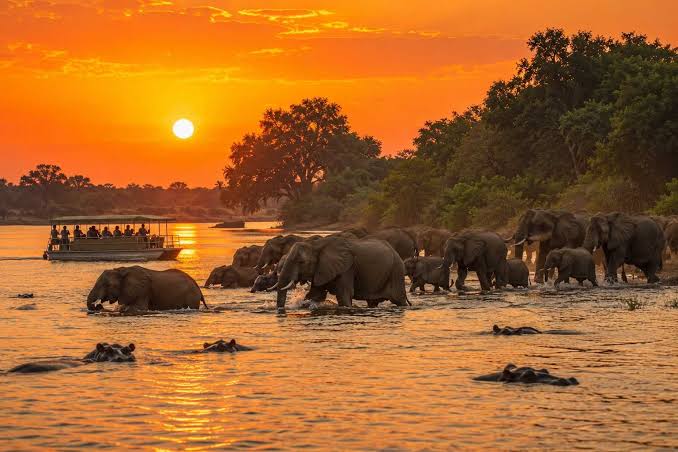
Chobe National Park: River Safaris and Elephant Herds
During dry season at Chobe’s riverfront, a single boat safari can put hundreds of elephants in view simultaneously, drinking, bathing and socialising along the water’s edge in numbers unmatched almost anywhere else on Earth. Chobe National Park, Botswana’s first national park and home to the continent’s largest elephant concentration, pairs this sheer wildlife density with a genuinely distinctive way to experience it: from the water itself.
Key Highlights
- Chobe National Park, established in 1968, was Botswana’s first national park and remains its third-largest
- The greater Chobe ecosystem supports an estimated 50,000 elephants, the highest concentration anywhere on Earth
- During dry season, hundreds of elephants gather daily along the Chobe riverfront to drink, bathe and socialise
- Boat safaris offer water-level wildlife viewing unavailable from any land-based vehicle
- The Chobe Riverfront section delivers the park’s most concentrated and reliable elephant sightings
- Chobe pairs naturally with nearby Victoria Falls given their relative geographic proximity
Botswana’s First National Park
Established in 1968, Chobe holds the distinction of being Botswana’s first national park, a foundational piece of the country’s now internationally respected conservation infrastructure, and remains the nation’s third-largest protected area at roughly 4,100 square miles. This historical significance, combined with decades of sustained conservation investment, has allowed Chobe’s wildlife populations, elephants especially, to flourish to a scale genuinely unmatched elsewhere on the African continent.
A Park Built Around River Ecology
Chobe’s defining ecological feature is the Chobe River itself, forming the park’s northern boundary and anchoring the dense wildlife concentrations that have made the park internationally famous, a direct illustration of how a single reliable water source can shape an entire ecosystem’s wildlife distribution patterns.
Africa’s Largest Elephant Concentration
The greater Chobe ecosystem supports an estimated 50,000 elephants, representing the highest concentration of elephants found anywhere on Earth, a genuinely staggering population built up over decades of sustained protection within this specific corner of northern Botswana. This scale of elephant presence shapes virtually every aspect of a Chobe safari experience, elephant sightings here aren’t simply possible but genuinely expected, often in numbers difficult to fully process on a first visit.
Why Chobe Specifically Hosts Such Density
Chobe’s position within a broader cross-border ecosystem connecting Botswana, Namibia, Zambia and Zimbabwe allows elephant populations considerable freedom of movement across an enormous combined range, with the Chobe River’s reliable water drawing concentrated numbers specifically into the park during the driest months of the year.
Dry Season: When the River Comes Alive
During Chobe’s dry season, thousands of elephants converge on the riverfront daily, creating genuinely unforgettable wildlife spectacles as family groups drink, bathe and interact along the water’s edge, often visible in their hundreds from a single vantage point. This concentration intensifies as the dry season progresses and water sources elsewhere in the broader ecosystem diminish further, making late dry season the single most reliable window for witnessing Chobe’s elephant gatherings at their most dramatic scale.
Morning and Afternoon Gathering Patterns
Elephants typically gather at the river specifically during morning and late afternoon hours, patterns experienced guides time their boat and vehicle safaris around to maximise the odds of witnessing the riverfront at its most active and visually spectacular.
Boat Safaris: A Water-Level Perspective
Chobe’s boat safaris position visitors directly at water level alongside swimming, drinking and bathing elephants, a genuinely different vantage point than any land-based vehicle safari could offer, letting photographers and wildlife enthusiasts capture intimate, eye-level imagery unavailable from an elevated vehicle position. This water-based approach has become Chobe’s signature activity, widely regarded as delivering the park’s single most rewarding elephant-viewing experience.
Combining Boat and Land-Based Game Drives
Most Chobe itineraries combine both boat safaris and standard vehicle-based game drives, giving visitors the water-level intimacy of river-based viewing alongside the broader wildlife diversity, lion, leopard, buffalo and extensive plains game, that land-based drives through the park’s wider terrain reveal.
Planning Your Visit
Combining Chobe With Victoria Falls
Chobe’s relative proximity to Victoria Falls makes the two destinations a natural, commonly arranged combination, letting travellers pair one of Africa’s great natural wonders with its single most concentrated elephant-viewing destination within a single, efficiently structured itinerary.
Best Time to Visit
Dry season, roughly May through October, delivers Chobe’s most dramatic riverfront elephant concentrations, with late dry season specifically offering the most intense gatherings as water becomes scarcer elsewhere in the surrounding ecosystem.
Beyond Elephants: Chobe’s Broader Wildlife
While elephants dominate Chobe’s international reputation, the park supports genuinely strong populations of lion, leopard, buffalo and an extensive range of plains game, all drawn to the same reliable Chobe River water source sustaining the park’s famous elephant herds. Puku antelope, a species considerably less commonly found elsewhere in Southern Africa, also inhabit Chobe’s riverine terrain, adding genuine species diversity for visitors interested in more than the park’s headline elephant spectacle alone.
Predator Viewing Along the Riverfront
Lion prides in particular have learned to take advantage of Chobe’s concentrated prey density along the riverfront, making predator sightings genuinely productive here, a direct consequence of the same water-driven wildlife concentration responsible for the park’s famous elephant gatherings.
The Chobe-Linyanti Ecosystem
Chobe forms part of a much larger connected ecosystem extending across the Linyanti and Savuti regions further within the park, each offering its own distinct character and wildlife emphasis beyond the riverfront’s famous elephant concentrations. Savuti in particular is known for dramatic predator-prey dynamics and a genuinely different, drier terrain than the lush riverfront, giving longer Chobe stays meaningful landscape and wildlife variety beyond the river itself.
Why Longer Stays Reveal More of the Park
Visitors who extend their Chobe stay beyond the riverfront alone, incorporating Savuti or Linyanti into their itinerary, encounter a considerably fuller picture of the park’s ecological diversity than a riverfront-only visit provides, though the riverfront remains the essential, signature Chobe experience most visitors prioritise first.
Cross-Border Wildlife Movement
Chobe’s elephants move freely across an international ecosystem spanning Botswana, Namibia, Zambia and Zimbabwe, part of the broader Kavango-Zambezi Transfrontier Conservation Area, one of the largest connected conservation landscapes anywhere in the world. This cross-border cooperation has played a genuinely significant role in sustaining Chobe’s remarkable elephant population, giving the species access to a vastly larger combined range than Chobe’s own boundaries alone could support.
A Model for Regional Conservation Cooperation
The scale of cooperation required to manage wildlife moving freely across four separate national jurisdictions represents a genuinely significant conservation achievement, one that directly underpins Chobe’s status as home to the world’s largest elephant concentration.
Where to Stay at Chobe
Accommodation along the Chobe riverfront ranges from more accessible lodges to high-end luxury properties, many specifically positioned to offer direct river views and convenient boat safari access given how central the water-based experience is to a Chobe visit. Day-trip options from nearby Kasane, Chobe’s gateway town, also let visitors experience the park’s famous boat safaris without necessarily overnighting within the park itself, a practical, budget-conscious option for travellers with limited time.
Kasane as a Practical Base
Kasane offers a genuinely wider range of accommodation and logistics options than in-park lodges alone, making it a practical base for travellers wanting flexibility to combine Chobe day trips with other regional activities, including onward connections toward Victoria Falls.
Photography on the Chobe River
Boat safaris offer genuinely exceptional photography conditions, water-level positioning alongside swimming and bathing elephants, soft reflected river light, and the ability to quietly drift alongside wildlife without the engine noise or movement disruption a land vehicle might create. Afternoon light along the riverfront, combined with peak elephant gathering times, typically delivers Chobe’s strongest photographic opportunities, a combination worth prioritising when scheduling boat safari timing with your operator.
Managing a Population at Scale
Chobe’s exceptional elephant numbers, much like Zimbabwe’s Hwange further east, raise genuine, ongoing habitat management questions, a population this large places real pressure on vegetation within the park’s boundaries, a complexity park authorities continue actively managing rather than a simple, uncomplicated conservation success story. Understanding this fuller context gives visitors a more complete appreciation of what sustaining a population at this scale genuinely requires, beyond the simple spectacle of hundreds of elephants gathered at the riverbank.
How Long to Spend at Chobe
Two to three nights allows sufficient time to properly experience both boat safaris and land-based game drives, capturing the riverfront’s signature elephant spectacle alongside the park’s broader wildlife diversity without feeling rushed. A single day-trip visit from Kasane still delivers a genuine taste of Chobe’s famous boat safari experience, a practical option for travellers with tighter schedules who still want to witness the park’s remarkable elephant concentrations firsthand.
Frequently Asked Questions
How many elephants will I actually see at Chobe?
During dry season, hundreds can be visible simultaneously from a single riverfront boat safari, a genuinely reliable and dramatic sighting rate.
Is a boat safari better than a standard game drive at Chobe?
Each offers genuinely different value; boat safaris deliver unmatched water-level elephant intimacy, while game drives reveal broader wildlife diversity across the park’s wider terrain.
Can I combine Chobe with a Victoria Falls visit?
Yes, their relative proximity makes this a natural, frequently arranged combination for travellers visiting the region.
When is the best time to see Chobe’s famous elephant gatherings?
Dry season, roughly May through October, with late dry season offering the most intense riverfront concentrations.
Is Chobe suitable for a first African safari?
Yes, its reliable, dramatic wildlife density makes it a genuinely strong choice for first-time visitors specifically prioritising elephant viewing.
Recommended Safaris
Chobe pairs naturally with a Victoria Falls-based itinerary and the wider Botswana safari circuit. Ready to witness the largest elephant concentration anywhere on Earth? Reach our team through our Book Now page and we’ll plan it around your dates.

No comment