
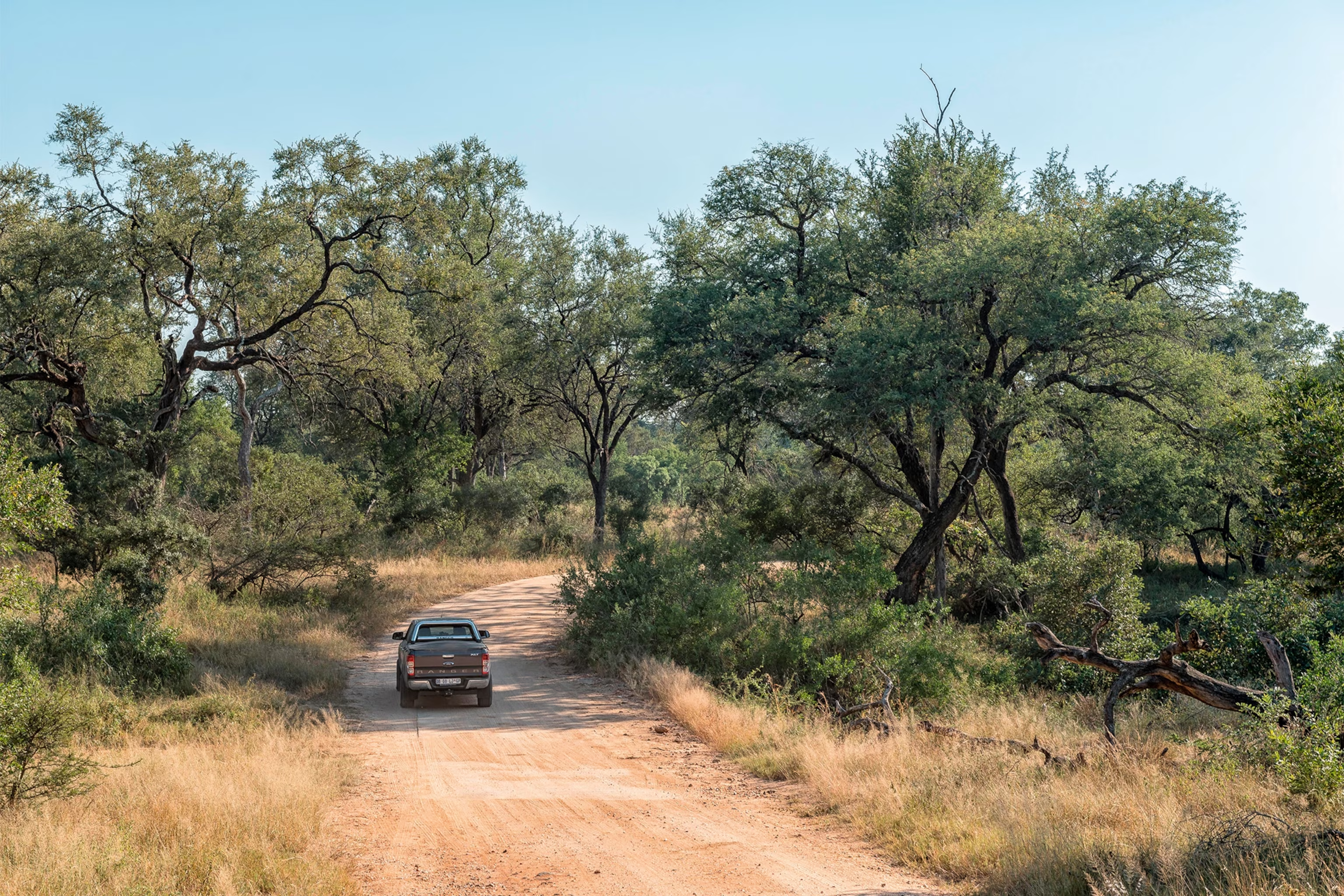
Hwange National Park: Zimbabwe’s Elephant Stronghold
When Hwange became a protected reserve in 1928, its first warden faced a genuine problem: the park had almost no animals, because it had almost no reliable water. Nearly a century and more than 60 pumped boreholes later, Hwange National Park holds an estimated 46,000 elephants, one of Africa’s largest single elephant populations, a transformation built entirely on a deliberately engineered water system.
Key Highlights
- Hwange National Park was established as a protected reserve in 1928, originally hampered by a severe lack of reliable water
- Founding warden Ted Davison pioneered pump-driven boreholes to create permanent water sources through the dry season
- The park’s elephant population has grown from roughly 1,000 when boreholes began to an estimated 46,000 today
- More than 60 pumped waterholes now sustain wildlife across Hwange during the dry season
- Artificial water has reduced seasonal elephant migration while allowing the population to grow substantially
- Hwange’s elephant numbers now raise genuine habitat management questions the park continues actively addressing
A Park Built Around Solving a Water Problem
Hwange’s founding warden, Ted Davison, confronted a fundamental challenge when the reserve was first established: natural water sources were scarce and unreliable, small depressions that caught seasonal rain but routinely dried up well before the next wet season arrived, meaning wildlife that visited during wetter months simply departed once the water disappeared. Davison recognised that attracting and sustaining wildlife through the dry season required something the landscape didn’t naturally provide, permanent, engineered water access, leading him to develop a system of pump-driven boreholes that would fundamentally reshape the park’s entire ecology.
From an Idea to a Park-Wide System
What began as Davison’s practical solution to a specific water shortage problem eventually grew into the extensive network defining Hwange today, more than 60 pumped waterholes distributed across the park, each one engineered specifically to provide reliable water through even the driest months of the year.
From 1,000 Elephants to an Estimated 46,000
The transformation in Hwange’s elephant population since the introduction of artificial waterholes ranks among the most dramatic wildlife population changes anywhere in Africa, growing from roughly 1,000 individuals when the boreholes began to an estimated 46,000 elephants today, making Hwange home to one of the largest single elephant populations found anywhere on the continent. This growth reflects decades of sustained water availability removing what had previously been the single limiting factor constraining elephant numbers across this stretch of Zimbabwe.
How Permanent Water Changed Elephant Behaviour
Beyond simply enabling population growth, the shift to reliable artificial water sources has measurably reduced seasonal elephant migration patterns that once drove herds beyond the park’s boundaries in search of water during drier months, concentrating the population more consistently within Hwange’s protected area year-round rather than following the more dispersed seasonal movement typical of elephant populations dependent entirely on natural water.
An Honest Look at Hwange’s Elephant Management Challenge
Hwange’s remarkable elephant population growth has created genuine habitat management questions that park authorities continue actively addressing, a population this large places real, ongoing pressure on vegetation and other wildlife sharing the same landscape, a direct consequence of the very water system that enabled the population’s growth in the first place. This isn’t simply a success story without complexity; it represents a genuine, ongoing conservation management challenge, balancing a thriving elephant population against the broader ecological health of the park they call home.
Why This Nuance Matters for Visitors
Understanding this fuller picture, remarkable conservation success paired with genuine, ongoing habitat management complexity, gives visitors a more complete, honest appreciation of what they’re witnessing at Hwange than a simple “most elephants in Africa” headline alone would convey.
Wildlife Viewing at the Pumped Waterholes
Hwange’s extensive pumped waterhole network creates genuinely predictable, concentrated wildlife viewing opportunities, much like Etosha’s famous waterholes further west, with elephants, buffalo, lion and a wide range of other species converging on these reliable water sources throughout the dry season. Several camps position themselves directly overlooking specific productive waterholes, letting visitors witness substantial wildlife activity without even needing to leave camp for an active game drive.
Elephant Herds at Scale
Given the sheer size of Hwange’s elephant population, visitors here regularly encounter genuinely large herds, sometimes numbering in the hundreds at a single waterhole during peak dry season, a scale of elephant gathering difficult to witness with comparable reliability almost anywhere else in Africa.
Planning Your Visit
Best Time to Visit
Zimbabwe’s dry season, roughly July through October, delivers Hwange’s most concentrated wildlife viewing, as natural water sources diminish further and animals rely even more heavily on the park’s engineered waterhole network.
Getting There
Hwange is reachable via domestic flight connections from Victoria Falls or Harare, making it a realistic addition to a broader Zimbabwe itinerary, particularly for travellers already visiting Victoria Falls given the two destinations’ relative proximity.
Beyond Elephants: Hwange’s Broader Wildlife
While elephants dominate Hwange’s reputation, the park supports genuinely strong populations of lion, leopard, cheetah, hyena and African wild dog, alongside a wide range of plains game drawn to the same reliable water sources sustaining the elephant population. This broader wildlife diversity gives Hwange real Big Five and predator-viewing substance well beyond its headline elephant numbers, a genuinely complete safari destination rather than a single-species spectacle.
African Wild Dogs at Hwange
Hwange holds one of Zimbabwe’s most significant African wild dog populations, a genuinely endangered species considerably less commonly encountered than the park’s more famous elephants, adding real conservation significance for visitors specifically interested in this rare, highly social predator.
How the Waterhole System Actually Operates Today
Maintaining more than 60 pumped waterholes across Hwange’s considerable area requires genuine ongoing infrastructure investment, diesel or solar-powered pumps, regular maintenance, and careful water management decisions about which waterholes to keep active during any given dry season. This operational reality means Hwange’s remarkable wildlife concentrations depend on continuous human intervention and investment, a genuinely different conservation model than parks relying purely on unmanaged natural water sources.
A Park That Requires Active Management, Not Just Protection
Understanding that Hwange’s wildlife spectacle depends on sustained engineering and maintenance investment, not simply protecting a naturally self-sustaining ecosystem, adds genuine appreciation for the considerable ongoing effort behind what visitors experience as seemingly effortless wildlife abundance.
Community-Supported Waterhole Funding
Given the genuine cost of maintaining Hwange’s extensive pumped waterhole network, tourism revenue and direct donor support play a significant, ongoing role in funding this infrastructure, with several safari operators and conservation organisations specifically contributing to borehole maintenance and fuel costs as part of their broader presence in the park. This funding model means a Hwange visit contributes directly and tangibly to sustaining the very water system responsible for the wildlife spectacle visitors come to witness.
Why Visitor Support Genuinely Matters Here
Unlike parks where tourism revenue supports conservation in a more general sense, Hwange’s situation creates an unusually direct link between visitor spending and a specific, essential piece of infrastructure, the pumps themselves, that the park’s entire modern wildlife population genuinely depends on for survival through the dry season.
Where to Stay at Hwange
Hwange’s accommodation spans a genuinely wide range, from more budget-accessible camps to high-end luxury lodges, many specifically positioned overlooking particularly productive waterholes to maximise passive wildlife viewing directly from camp. Choosing a camp based on its specific waterhole access, rather than general amenities alone, meaningfully shapes how much wildlife activity you’ll witness simply sitting at your lodge between organised game drives.
A Park Still Writing Its Own Conservation Story
Hwange’s century-long transformation from a water-scarce, sparsely populated reserve into one of Africa’s most significant elephant strongholds offers a genuinely instructive case study in how deliberate human intervention can reshape an ecosystem, for better and with real complexity attached. Visitors who understand this fuller history, the original problem, the engineered solution, and the ongoing management questions the resulting success now raises, come away with considerably more than a simple wildlife-viewing experience; they witness an active, still-evolving conservation story nearly a century in the making.
Getting Around Hwange
Hwange’s considerable size, Zimbabwe’s largest national park, means most visitors explore via guided vehicle-based game drives organised through their chosen lodge, though some operators also offer walking safaris and night drives for travellers seeking the expanded activity range typical of private conservancy-style tourism elsewhere in Southern Africa. Given the park’s scale, concentrating your stay around a specific region or waterhole cluster, rather than attempting to cover excessive ground, generally produces a more satisfying visit than an overly ambitious route spanning the park’s full extent.
Frequently Asked Questions
Why does Hwange have so many pumped waterholes?
The park’s founders engineered them specifically to provide reliable water through the dry season, since natural water sources were historically scarce and unreliable.
Is Hwange’s large elephant population a genuine conservation success?
In terms of population growth, yes, though it also creates real ongoing habitat management challenges that park authorities continue actively addressing.
When is the best time to see large elephant herds at Hwange?
The dry season, roughly July through October, when reliance on pumped waterholes peaks and elephant concentrations are most visible.
Can I combine Hwange with a Victoria Falls visit?
Yes, domestic flight connections make this a natural, commonly arranged combination for travellers visiting Zimbabwe.
How does Hwange compare to Etosha’s waterhole system?
Both rely on engineered water sources to concentrate wildlife predictably, though Hwange’s system specifically supports Africa’s largest single elephant population.
Recommended Safaris
Hwange pairs naturally with a Victoria Falls-based Zimbabwe itinerary. Ready to witness one of Africa’s largest elephant populations up close? Reach our team through our Book Now page and we’ll plan it around your dates.

No comment