
Mount Longonot: A Day Hike Into a Volcanic Crater
Just 90 kilometres from Nairobi, a dormant volcano rises sharply from the Great Rift Valley floor, offering one of the most accessible genuine crater-rim hikes anywhere in Kenya. Mount Longonot combines a steep initial climb, a full loop around a 500-metre-deep caldera, and sweeping Rift Valley views, all achievable as a single demanding but realistic day trip from the capital.
Key Highlights
- Mount Longonot sits roughly 90 kilometres from Nairobi within the Great Rift Valley
- The initial climb to the crater rim covers about 3.1 kilometres, with a further 7.2-kilometre loop around the full rim
- The total hike, including the complete crater rim circuit, runs roughly 13.5 kilometres
- The trail is rated moderate to difficult, with roughly 550 metres of elevation gain
- The volcano’s caldera descends approximately 500 metres deep
- A complete hike, including the full rim loop, takes five to six hours
A Genuine Volcano Within Day-Trip Reach of Nairobi
Mount Longonot’s position roughly 90 kilometres from Nairobi makes it one of the most accessible genuine volcanic crater hikes anywhere in Kenya, a realistic single-day trip for travellers based in the capital without requiring extensive dedicated travel or overnight logistics elsewhere in the Rift Valley. This accessibility, combined with the hike’s genuine physical substance, has made Longonot one of the more popular hiking destinations for both Nairobi residents seeking a weekend challenge and travellers looking to add genuine adventure activity to a broader Kenya itinerary.
Part of the Great Rift Valley’s Volcanic Story
Longonot formed as part of the same broader East African Rift System volcanic activity responsible for shaping much of the surrounding landscape, a dormant stratovolcano whose last recorded eruption dates back centuries, now standing as a striking, climbable landmark rather than an active geological hazard.
The Climb: What to Expect
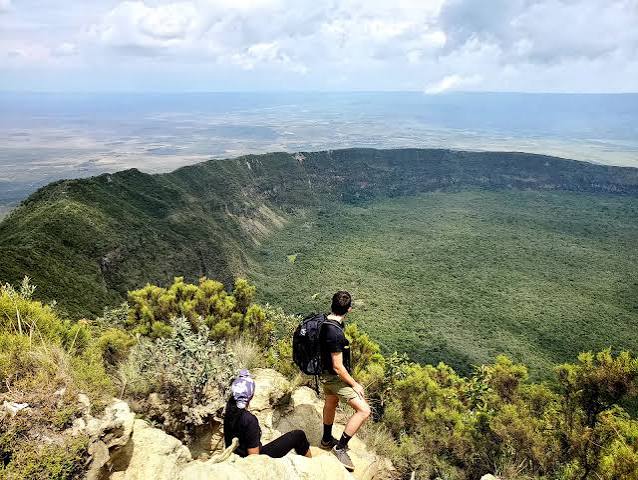
The initial ascent to the crater rim covers roughly 3.1 kilometres of steep, rugged trail, gaining approximately 550 metres of elevation before reaching the rim itself, a genuinely demanding climb that the trail’s moderate-to-difficult rating accurately reflects. Reaching the rim rewards hikers with their first full view into the volcano’s caldera, descending roughly 500 metres into a genuinely impressive crater depth that puts the mountain’s scale into immediate, visible perspective.
The Full Crater Rim Loop
Beyond simply reaching the rim, hikers can continue around the complete crater circuit, a further 7.2-kilometre loop that brings the total hike distance to roughly 13.5 kilometres and the total time commitment to five to six hours. This full loop rewards the additional effort with constantly shifting views, the crater’s interior on one side and sweeping Rift Valley panoramas on the other, changing meaningfully as you progress around the rim’s full circumference.
Fitness and Preparation
Given the trail’s genuinely steep, rugged character and the full loop’s considerable distance, visitors should arrive with a reasonable baseline level of fitness; this isn’t a casual stroll but a legitimate, physically demanding day hike that rewards proper preparation. Sturdy hiking boots with good grip are genuinely important given the trail’s loose, rocky sections, particularly on the initial steep ascent before reaching the rim itself.
Timing Your Hike
Starting early in the day, both to avoid Kenya’s midday heat and to allow sufficient time for the full rim loop if you choose to complete it, is strongly advised; attempting a late-morning start risks running out of daylight or comfortable hiking conditions before finishing the complete circuit.
What You’ll See From the Rim
Beyond the immediate drama of the crater itself, Longonot’s rim offers genuinely sweeping views across the broader Great Rift Valley, including, on clear days, sightlines toward Lake Naivasha and the surrounding Rift Valley terrain. This combination of looking directly down into an ancient volcanic caldera while simultaneously taking in the vast surrounding Rift Valley landscape gives Longonot a genuinely unique visual and geological experience unmatched by many standard Kenya hiking destinations.
Vegetation Inside the Crater
The crater floor itself supports its own distinct vegetation, a genuinely striking sight from the rim above, forest growing within the volcanic bowl in a landscape that visually underscores just how long Longonot has sat dormant, long enough for substantial plant life to establish itself within what was once an active volcanic crater.
Getting There From Nairobi
Mount Longonot National Park is reachable by road from Nairobi, typically combined with other Rift Valley stops like Lake Naivasha given their geographic proximity, making a Longonot hike a realistic addition to a broader Rift Valley day trip or short excursion rather than requiring a dedicated separate journey.
Combining With Lake Naivasha
Given their close proximity, many visitors pair a Longonot hike with time at nearby Lake Naivasha, combining the physical challenge of the crater climb with the more relaxed boat-based wildlife viewing Naivasha offers, a genuinely well-rounded single-day or overnight Rift Valley itinerary.
Safety Considerations on the Trail
Mount Longonot National Park requires visitors to hike with an official park ranger, a mandatory safety measure given both the trail’s rugged terrain and historical concerns around visitor safety on the mountain, making independent unguided hiking not an option here regardless of your own hiking experience level. This ranger accompaniment adds genuine value beyond pure safety too, with rangers typically sharing local knowledge of the mountain’s geology, wildlife and history throughout the climb.
Weather and Trail Conditions
The exposed, rocky trail offers little shade across most of its length, making sun protection and adequate water genuinely essential rather than optional considerations; the full rim loop in particular demands realistic preparation for several hours of sustained sun exposure at altitude.
Wildlife on the Mountain
Beyond its geological appeal, Mount Longonot’s slopes and crater floor support a range of wildlife, including buffalo, giraffe and various antelope species that have established themselves within the dormant volcano’s forested interior and surrounding grassland. While wildlife viewing isn’t the primary draw of a Longonot hike, encountering animals moving across such a genuinely dramatic volcanic landscape adds an unexpected, memorable dimension to what’s otherwise primarily a scenic and physical hiking challenge.
Why Wildlife Lives Within an Old Volcanic Crater
The crater floor’s established forest, built up over the centuries since the volcano’s last eruption, has created a genuine, self-contained habitat supporting resident wildlife, a striking illustration of how thoroughly nature reclaims even dramatic geological features given sufficient time.
What to Pack for the Climb
Beyond sturdy hiking boots, a hat, high-SPF sunscreen and sufficient water for several hours of exposed hiking form the essential core of a Longonot packing list, given the trail’s largely shadeless character across most of its length. A basic first-aid kit and a fully charged phone are worth carrying too, standard sensible precautions for any genuinely remote, physically demanding hike, even one as relatively close to Nairobi as Longonot.
Food and Energy for a Multi-Hour Hike
Given the full crater rim loop’s five-to-six-hour duration, packing genuine trail snacks and a proper lunch, rather than assuming a brief hike requiring minimal provisions, helps sustain energy levels across what is, by any reasonable measure, a full day’s physical exertion.
Why Longonot Rewards Nairobi-Based Travellers Specifically
For travellers with limited time who find themselves based in Nairobi, whether for business, a brief stopover, or simply the start or end of a longer Kenya trip, Mount Longonot offers a genuinely rare opportunity: a legitimate, physically substantial adventure hike achievable within a single day without needing to venture far from the capital or sacrifice significant time elsewhere in a broader itinerary. Few other destinations this close to Nairobi deliver quite this combination of genuine physical challenge and striking geological reward.
Comparing Longonot to Kenya’s Other Nairobi-Area Hikes
Among the handful of hiking options within easy reach of Nairobi, Longonot stands out specifically for combining genuine volcanic crater drama with a legitimately demanding full-day physical challenge, distinct from gentler options like Ngong Hills or Karura Forest, which suit shorter, less strenuous outings. Travellers specifically seeking a substantial physical challenge alongside striking scenery, rather than a gentle afternoon walk, find Longonot the clear standout choice among Nairobi’s accessible hiking destinations.
Best Time of Year to Hike Longonot
Kenya’s dry season months generally offer the firmest trail conditions and clearest Rift Valley views, while hiking during wetter periods brings a genuine risk of slippery, more treacherous footing on the trail’s already steep, rocky sections. Regardless of season, an early morning start remains the single most important timing decision, both for cooler hiking conditions and to ensure enough daylight remains for the full crater rim loop if you choose to attempt it.
Frequently Asked Questions
How difficult is the Mount Longonot hike?
It’s rated moderate to difficult, with a steep initial climb and, for the full rim loop, a genuinely demanding total distance of roughly 13.5 kilometres.
Do I need to complete the full crater rim loop, or is reaching the rim enough?
Reaching the rim alone, covering roughly 3.1 kilometres each way, is a worthwhile shorter option for visitors not wanting to commit to the full loop’s additional distance and time.
Is Mount Longonot still an active volcano?
It’s considered dormant, with no recorded eruption in recent history, though it remains part of the geologically active East African Rift System.
How long should I budget for the full hike?
Five to six hours covers the complete crater rim loop; the shorter rim-only option takes considerably less time.
Can I do Mount Longonot as a standalone day trip from Nairobi?
Yes, its roughly 90-kilometre distance from the capital makes it a realistic single-day round trip.
Recommended Safaris
Mount Longonot pairs naturally with a visit to nearby Lake Naivasha. Ready to add this genuinely rewarding volcanic crater hike to your Kenya itinerary? Reach our team through our Book Now page and we’ll plan it around your dates.

No comment