
Rwanda’s Great Blue Turaco: Chasing the Forest’s Star Bird
Rwandas Great Blue Turaco: Chasing the Forest’s Star Bird starts with a sound before you actually see it. You are deep inside Rwanda’s forests. A strange call echoes through the trees. Sometimes it is away and sometimes it is really close. You stop. You look at the branches. You wait. Then a big bird moves through the leaves. You see flashes of blue and green and red and black. If you like birds, this is a moment that you will remember long after you leave the forest.
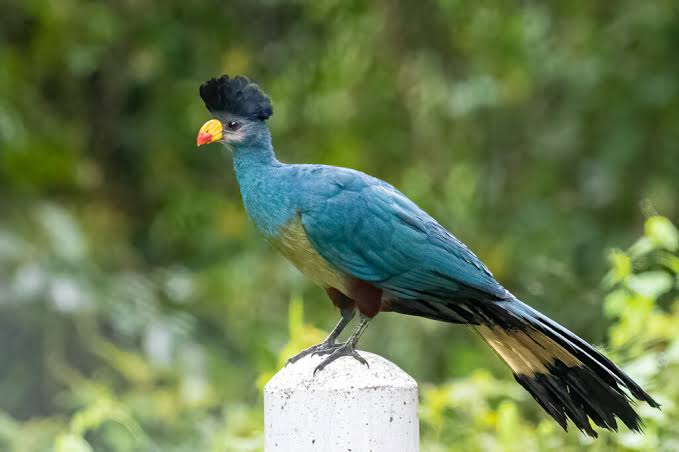
The Great Blue Turaco is a special bird in Africa. It is big. It has colors. It has a tail and a strong beak and a funny hairdo on its head. This bird is also known as Corythaeola cristata. It is the turaco. It lives in forests where it can find fruit to eat. In Rwanda, seeing one of these birds is like finding a secret that nobody else knows.
Meeting Rwanda’s Great Blue Turaco
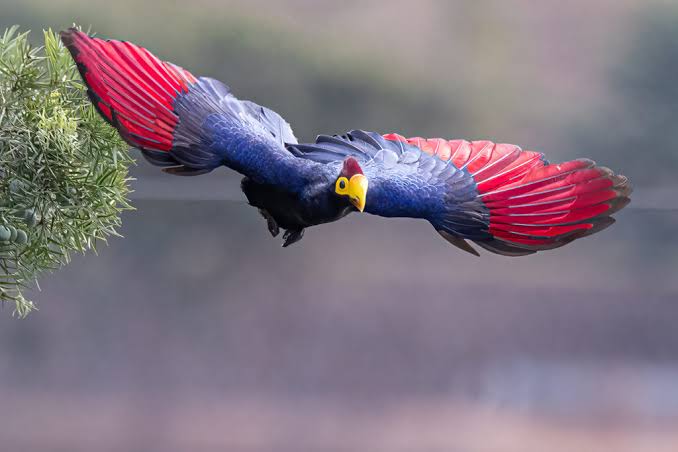
The Great Blue Turaco does not need sunlight to look beautiful. When it sits still, its feathers look a little dull. When it moves, you can see how pretty it is. The blue body and the dark wings and the red spot around the eye make it look very nice. The long tail makes it look elegant. The big beak is special too. It is made for eating fruit.
This bird belongs to a group of birds called turacos. They are birds. They are known for looking strange and living in forests. They are not like the birds you see in your garden. They like to stay high up in the trees. They move from tree to tree. Call out to each other. You can hear their calls from away. That is how you can find them.
In Rwanda the Great Blue Turaco lives in the southwestern parts of the country. It likes to live in forests with trees. Forests like these are very important for the birds. We need to protect them so that the birds can live there
Where the Search Begins
Nyungwe Forest is a place to go bird watching. It has a forest with many kinds of birds. You can walk under the trees. Hear the birds calling. You can see them moving in the branches. You can discover birds that you have never seen before.
The Great Blue Turaco is not always easy to find. You may hear it calling. You cannot see it. Sometimes it is hiding behind leaves. Sometimes it flies across a space and you can see it for just a second. That is what makes it exciting.
Gishwati-Mukura National Park is another place to go bird watching. It has forests and landscapes that’re home to many birds. People are working to protect the forest and make it a better home, for the birds. When you visit these places you remember that the birds need forests to live in.
Chasing the Forests Star Bird
Finding a Great Blue Turaco rewards patience more than speed. Of rushing from one location to another spend time listening. Early mornings are particularly useful for forest birding because bird activity is often high and cooler conditions can make walking more comfortable. A local guide who knows the forest can make the search much easier by recognizing calls and understanding where particular species tend to feed.
Binoculars are essential. The bird may be high in the canopy and even a large species can look small when viewed from the forest floor. A pair with around 8x or 10x magnification can provide a balance between detail and stability. Comfortable walking shoes, clothing, water and protection from rain are also practical choices for Rwandas forest trails.
The best encounters often happen when you slow down. Listen for repeated calls examine fruiting trees and watch for movement than searching only for a complete silhouette. A turaco may reveal itself through a swaying branch a flash of blue or a bird landing before disappearing behind leaves.
The Importance of Fruit-Rich Forests
The connection between the Great Blue Turaco and forest trees is one of the interesting parts of its story. Fruits provide a source of food so the availability of mature fruiting trees can influence where these birds spend their time. When forests are cleared or fragmented birds that depend on connected habitats can face increasing pressure.
Turacos also play roles within forest ecosystems. As they consume fruits and move between trees they can contribute to seed dispersal. This relationship connects the bird to the health of the forest. Protecting the turaco therefore means protecting the trees, plants, insects and other wildlife that share its habitat.
Rwandas conservation efforts have helped strengthen the protection of natural areas. National parks and forest reserves provide spaces where wildlife can survive while communities, researchers, guides and conservation organizations work toward management. For visitors seeing a Great Blue Turaco in the wild becomes a reminder of what protected forests can preserve.
A Birding Experience Beyond the Checklist
Rwandas Great Blue Turaco: Chasing the Forests Star Bird is also a story about learning to experience forests. A forest walk is not simply a search for species. It involves listening to calls noticing changing light identifying fruiting trees watching insects move through leaves and understanding how different layers of vegetation support forms of life.
The Great Blue Turaco can become an introduction to this way of exploring. Because it is large and visually distinctive seeing one can provide a sense of achievement.. The search also encourages you to notice smaller birds that might otherwise be overlooked. A movement in the canopy may lead to a turaco while another branch may hold a sunbird, cuckoo, robin or other forest species.
Nyungwes famous canopy walk offers another perspective on Rwandas forest birdlife. Looking across the treetops than only upward from the forest floor can change how you understand the habitat. Birds that seemed distant from a trail may become easier to observe when you are closer to their level. The experience also reveals how extensive the forest canopy really is.
Making the Most of Your Encounter
A search does not require expert birding skills. Start by learning the birds appearance and call before entering the forest. Carry binoculars. Keep your movements deliberate. When you hear a call stop walking. Listen carefully before trying to locate the source.
Avoid chasing a bird through vegetation. Constant movement can make observation harder. May disturb wildlife. Instead find a position and watch the surrounding branches. If the bird moves away give it space. Continue along the trail when appropriate.
A notebook can also make the experience more memorable. Record the location time, weather, behavior and other species you encounter. Even a simple note such, as ” blue turaco feeding quietly in a fruiting tree at 8:20 a.m.” can become a valuable memory of the trip.
Why This Bird Belongs on a Rwanda Birding Journey
The Great Blue Turaco in Rwanda is really something. This bird is a part of what makes searching for wildlife in Rwanda so exciting. You never know what you are going to find. Rwanda is famous for its mountain gorillas. The forests are home to all sorts of other amazing things like birds and plants and monkeys and insects and really old trees.
The Great Blue Turaco is an example of this. It is a colorful bird but it is not easy to find. You do not need to be in the open to see it it likes the forest. When you do see it it feels really special because you know how hard it was to find.
For people visiting Rwanda looking for birds in the forest can be a great addition to your trip. You can spend the morning walking through the forest in Nyungwe listening for the Great Blue Turaco. Then you can go see animals somewhere else in the country. You can also go to Lake Kivu. Visit some of the other forests or go to the highlands and see different kinds of birds and different landscapes.
The best part is, looking for the Great Blue Turaco teaches you to be patient. You might walk for a time and not see anything. All of a sudden you see a big shape moving through the trees and it lands on a branch. Everything gets really quiet. You look through your binoculars and you see the Great Blue Turaco it is so blue. It has a red eye and it looks really powerful.
That is what makes it all worth it.
The Great Blue Turaco in Rwanda is not something to check off your list. It is an experience. You get to be a part of the forest and all its rhythms. You can hear the birds calling. You never know what you are going to find. The Great Blue Turaco might be hiding,. When you see it it is amazing.
If you are planning a birding trip to Rwanda you should definitely look for the Great Blue Turaco. Just be patient. Walk quietly and listen carefully and give yourself plenty of time. The forest might not give up its secrets away but when it does you will see why the Great Blue Turaco is one of the best things, about Rwanda.
