Shoebill Stork 101: What You Need to Know Before You Go
Few birds in the world generate as much excitement as the shoebill stork. With its enormous shoe-shaped bill, towering height, piercing eyes, and prehistoric appearance, the shoebill has become one of Africa’s most sought-after wildlife sightings. For many travelers visiting Uganda, spotting a shoebill is just as exciting as seeing mountain gorillas, lions, or elephants.
The shoebill is not only rare but also fascinating. It belongs to a small group of birds that have survived largely unchanged for millions of years. Standing face to face with one in the wild feels like stepping into another era. Whether you are a dedicated birdwatcher, wildlife photographer, or simply a curious traveler, understanding a few facts about the shoebill before your trip can make the experience even more rewarding.
What Is a Shoebill Stork?
Despite its common name, the shoebill is not a true stork. Scientists classify it in its own unique family due to its unusual characteristics and evolutionary history.
The bird gets its name from its massive bill, which resembles a traditional wooden shoe. This remarkable bill can grow to more than 20 centimeters wide and over 24 centimeters long, making it one of the largest bills among birds.
An adult shoebill can stand between 1.1 and 1.5 meters tall and have a wingspan reaching nearly 2.5 meters. Its large size, combined with its grey feathers and dinosaur-like posture, creates an appearance unlike any other bird in Africa.
Why Is the Shoebill So Famous?
The shoebill’s popularity comes from a combination of rarity, appearance, and behavior.
Unlike colorful birds that attract attention through bright feathers, the shoebill impresses through sheer presence. Its large body, intense stare, and slow deliberate movements make it one of the most memorable wildlife encounters in Africa.
Social media and wildlife documentaries have further increased interest in the species. Many travelers arrive in Uganda with the shoebill already at the top of their wildlife wish list.
For photographers, the bird offers exceptional opportunities because it often remains still for extended periods while hunting.
Where Can You See Shoebills?
The shoebill is found in freshwater wetlands across parts of East and Central Africa. However, Uganda is widely regarded as one of the best destinations in the world to see the species.
Several locations offer opportunities to encounter shoebills, but some are more accessible than others.
Mabamba Swamp near Entebbe is the most popular location for visitors. The wetland can be reached within a relatively short drive from Entebbe International Airport, making it ideal for travelers with limited time.
Other areas where shoebills are occasionally seen include the Nile Delta in Murchison Falls National Park, the wetlands around Ziwa Rhino Sanctuary, and parts of eastern Uganda.
Why Mabamba Swamp Is the Most Popular Location
Mabamba Swamp has earned an international reputation among birdwatchers.
The wetland consists of extensive papyrus channels and shallow water areas that provide ideal habitat for shoebills. Local guides have years of experience tracking the birds and work closely with fishermen who often report recent sightings.
The combination of accessibility, experienced guides, and high sighting rates makes Mabamba the preferred destination for most visitors.
Many travelers include a shoebill excursion on the first or last day of their Uganda safari because of its convenient location near Entebbe.
What Time of Day Is Best for Shoebill Tracking?
Early morning is generally considered the best time to look for shoebills.
Bird activity tends to be highest during the cooler hours of the day, and the calm morning conditions make it easier to navigate through the wetlands.
Photographers also benefit from the soft morning light, which creates excellent conditions for wildlife photography.
Afternoon trips can still be successful, but morning excursions often provide the best overall experience.
How Does Shoebill Tracking Work?
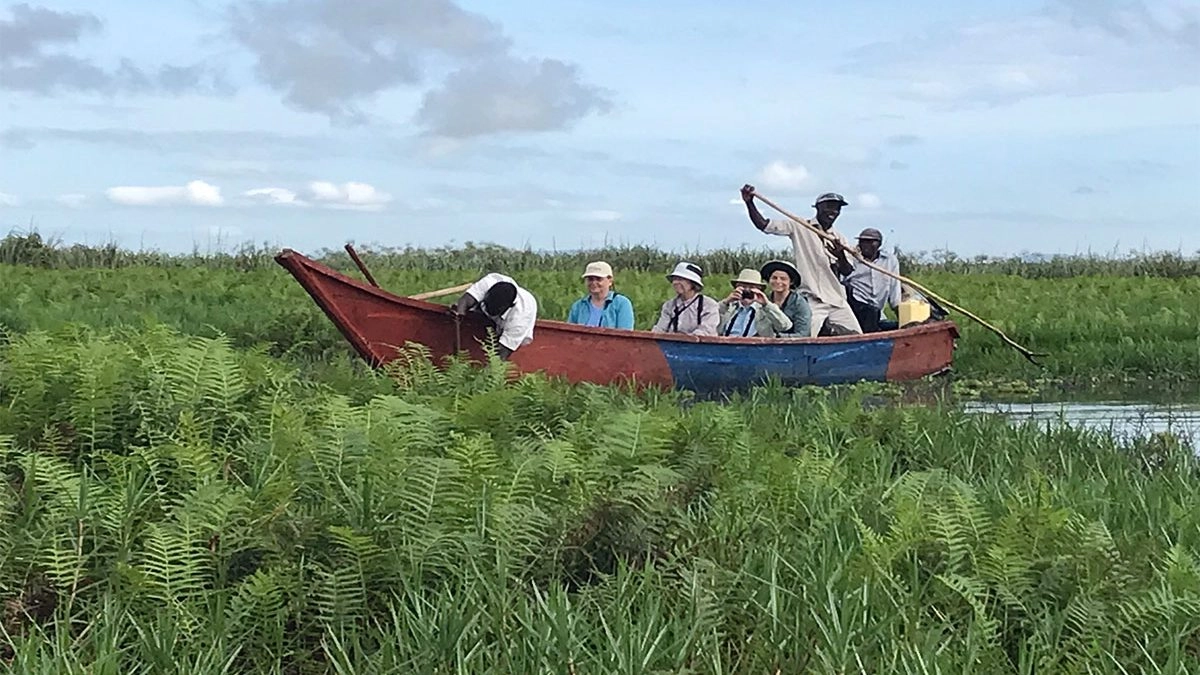
Shoebill tracking usually takes place in small motorized or paddled boats.
Visitors travel through narrow channels surrounded by papyrus reeds while guides search for signs of the bird. The experience is peaceful and offers opportunities to see many other bird species along the way.
Part of the excitement comes from the search itself. Although sightings are common in certain areas, shoebills are wild animals and can move freely throughout the wetland.
The journey through the swamp often becomes just as memorable as the actual sighting.
What Does a Shoebill Eat?
Shoebills are highly specialized hunters.
Their favorite prey is lungfish, but they also feed on catfish, frogs, snakes, monitor lizards, and occasionally young crocodiles.
The bird’s hunting technique is based on patience. A shoebill may stand motionless for long periods while waiting for prey to come within striking distance.
When the opportunity arrives, it attacks with remarkable speed and accuracy.
Watching a shoebill hunt is one of the highlights of any tracking excursion.
Why Do Shoebills Stand Still for So Long?
Many first-time visitors are surprised by how motionless shoebills can be.
This behavior is an important part of their hunting strategy. By remaining still, they avoid alerting fish and other prey to their presence.
The bird’s ability to remain patient for extended periods is one reason why it is such an effective predator.
Its calm and deliberate behavior also contributes to its mysterious reputation.
How Do Shoebills Communicate?
Shoebills are generally quiet birds, but they have a distinctive form of communication known as bill clattering.
During this display, the bird rapidly snaps its bill together to produce a loud rattling sound. This behavior is often used during greetings, courtship, and interactions between parents and chicks.
Young shoebills also produce vocal sounds when requesting food or attention.
These communication methods add another layer of fascination to an already remarkable species.
What Should You Bring for Shoebill Tracking?
Comfortable clothing is important for a successful outing.
Neutral-colored clothing is recommended because it blends more naturally into the environment. Lightweight long sleeves can provide protection from the sun and insects.
A hat, sunscreen, drinking water, and insect repellent are useful items to carry.
For photography, a camera with a zoom lens offers the best opportunity to capture detailed images of the bird.
Binoculars are also highly recommended for birdwatchers.
Is Shoebill Tracking Suitable for Everyone?
One of the advantages of shoebill tracking is that it requires very little physical effort.
Unlike gorilla trekking, which can involve challenging hikes through mountainous terrain, shoebill tracking takes place from a boat.
This makes it suitable for travelers of various ages and fitness levels.
Families, photographers, birdwatchers, and senior travelers can all enjoy the experience comfortably.
Conservation Challenges Facing Shoebills
Although Uganda remains one of the best places to see shoebills, the species faces several conservation challenges.
Wetland destruction, drainage for agriculture, human disturbance, and illegal wildlife trade have affected shoebill populations in some areas.
Protecting wetland habitats is essential for the long-term survival of the species.
Tourism plays a positive role by creating economic incentives for local communities to conserve wetlands and protect wildlife.
Responsible visitors contribute directly to these conservation efforts.
Why Seeing a Shoebill Is So Special
Many wildlife encounters are memorable because of dramatic action.
The shoebill creates a different kind of impression.
Its power comes from its appearance, behavior, and rarity. Standing a few meters away from a bird that looks as though it stepped out of prehistoric times is an experience that few people forget.
The silence of the wetlands, the anticipation of the search, and the moment the giant bird finally appears combine to create one of Africa’s most rewarding wildlife experiences.
For anyone planning a trip to Uganda, shoebill tracking deserves a place on the itinerary. It is an opportunity to encounter one of the world’s most extraordinary birds in one of its most important remaining habitats. Seeing a shoebill in the wild is more than a birdwatching activity. It is a chance to witness a living relic of nature that continues to captivate travelers from around the globe.