
Why Predators Ignore Safari Vehicles
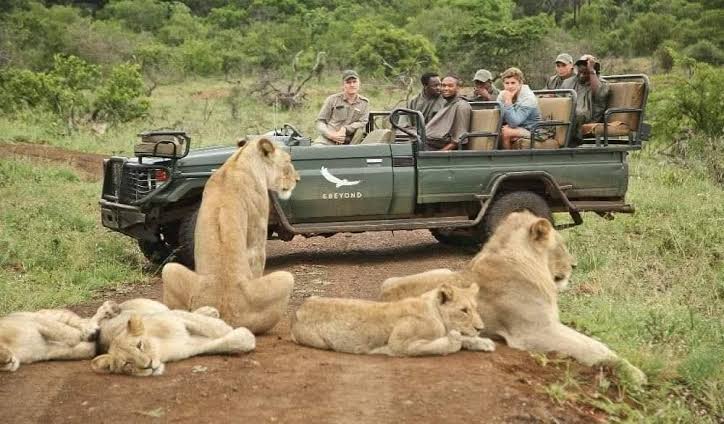
Imagine driving through Uganda’s Queen Elizabeth National Park when your safari guide stops beside a pride of lions. A large lioness stands up, stretches and walks towards the vehicle. Everyone becomes quiet. Surprisingly, she passes without showing much interest and settles beneath a nearby tree.
For many first-time safari visitors, this experience raises an important question: why predators ignore safari vehicles even when people are sitting only a short distance away.
Lions, leopards, cheetahs and spotted hyenas are wild animals capable of dangerous behaviour. Yet in protected areas with regular tourism, they often continue resting, hunting or feeding while vehicles remain nearby.
The explanation involves animal learning, familiarity, predictable vehicle movements and experienced wildlife guiding. Understanding these factors helps travellers appreciate close encounters without forgetting essential safety precautions.
1. Predators Become Familiar With Safari Vehicles
One of the main explanations is a process called habituation.
Habituation occurs when an animal gradually reduces its response to something it encounters repeatedly without harmful consequences.
In popular safari destinations, predators may see vehicles frequently.
Over time, some individuals learn that stationary or slowly moving safari vehicles do not usually threaten them.
What Happens During Habituation?
A lion that initially moves away from an approaching vehicle may gradually become more tolerant after repeated peaceful encounters.
Eventually, it may continue resting or walking without showing obvious concern.
However, habituation does not mean the animal has become tame.
The predator retains its natural hunting instincts, defensive responses and ability to cause serious injury.
2. Why a Safari Vehicle Usually Does Not Look Like Prey
Lions regularly hunt animals such as zebras, wildebeest and antelopes.
A safari vehicle has a completely different size, appearance and movement pattern.
It does not move like the animals lions normally pursue.
This may help explain why predators often show little hunting interest in vehicles.
However, scientists cannot establish exactly how every predator mentally interprets a vehicle.
It would be inaccurate to claim that lions cannot recognise individual passengers.
Predators have excellent senses and may detect human movement, voices and scents.
The important point is that a familiar, predictable vehicle usually does not trigger the same response as vulnerable prey.
3. Why Sitting Still Makes a Difference
During predator sightings, guides often ask passengers to remain seated and avoid unnecessary movement.
Sudden changes can attract attention or disturb an animal.
For example, a passenger standing unexpectedly, waving an arm or leaning far outside the vehicle may create a new visual stimulus.
This does not mean every movement will cause an attack.
However, unnecessary movement introduces risks that can usually be avoided.
Safe Behaviour Inside a Safari Vehicle
| Recommended Behaviour | Why It Matters |
|---|---|
| Remain seated | Reduces sudden movements |
| Keep arms inside | Prevents dangerous close contact |
| Speak quietly | Avoids unnecessary disturbance |
| Follow guide instructions | Supports safe decision-making |
| Avoid feeding wildlife | Prevents dangerous associations |
| Stay inside at authorised viewing areas | Reduces exposure to wild animals |
Passengers should follow the specific safety instructions for their vehicle, particularly when using an open-sided safari vehicle.
4. Why Lions Can Walk Beside Vehicles Without Attacking
Lions are powerful predators, but hunting and confrontation involve risks.
They generally do not attack every unfamiliar object they encounter.
A familiar safari vehicle may simply be irrelevant to a lion resting or travelling through its territory.
In frequently visited parks, some lions continue their normal activities despite nearby traffic.
A lion may even rest in the shade cast by a vehicle.
However, visitors should never interpret relaxed behaviour as permission to approach or touch the animal.
A lion’s response can change rapidly if it feels threatened, startled or crowded.
5. Why Leopards Sometimes Ignore Tourists
Leopards are generally more secretive than lions.
They frequently use vegetation, rocks and trees to avoid disturbance.
In areas where leopards have experienced respectful vehicle-based tourism, some individuals become comfortable with nearby safari vehicles.
They may rest on branches, groom themselves or continue feeding while tourists observe.
Do All Leopards Behave This Way?
No.
Some leopards tolerate vehicles, while others retreat quickly.
Their reactions can depend on previous experiences, individual temperament and the circumstances of the encounter.
A female with young cubs may respond differently from a solitary adult.
Professional guides assess each animal individually rather than assuming all leopards behave alike.
6. Do Cheetahs Also Ignore Safari Vehicles?
Cheetahs may become accustomed to vehicles in regularly visited protected areas.
A cheetah resting on a grassy mound may remain calm while tourists observe from a suitable distance.
However, these cats are particularly sensitive to disturbance during hunting.
Vehicles that approach too closely or surround a cheetah can interfere with its movements.
A mother accompanied by cubs may also need additional space.
Responsible guides avoid blocking a cheetah’s route or creating obstacles between predator and prey.
The purpose of habituation should be to allow natural behaviour, not to force unusually close sightings.
7. Why Spotted Hyenas May Approach Safari Vehicles
Spotted hyenas are intelligent, curious carnivores.
They may investigate unusual smells or objects in their environment.
Sometimes a hyena approaches a stationary safari vehicle, looks around and moves away.
This curiosity does not necessarily indicate aggression.
However, it also does not mean the animal is harmless.
Visitors must never feed hyenas or leave food where they can reach it.
Food-related encounters can encourage animals to associate vehicles and people with meals, increasing risks for both wildlife and tourists.
8. Do Predators Behave Differently Around Vehicles and People on Foot?
Yes. The context of an encounter matters greatly.
A lion that tolerates a vehicle may react differently to a person walking nearby.
People on foot move differently, produce different sounds and may be perceived as a threat.
That is why leaving a safari vehicle in an unauthorised location is dangerous.
Vehicle vs Walking Encounter
| Situation | General Consideration |
|---|---|
| Seated inside a vehicle | Usually lower exposure when rules are followed |
| Standing inside an authorised roof opening | Follow vehicle-specific guide instructions |
| Leaning outside | Creates avoidable risks |
| Walking near predators | Requires specialised supervision and authorisation |
| Approaching a predator on foot | Dangerous and should never be attempted independently |
Walking safaris are different from ordinary game drives.
They require trained guides, suitable locations and established safety procedures.
9. Can Predators Suddenly Become Aggressive?
Yes.
Even animals accustomed to vehicles can respond defensively.
Possible triggers include being startled, feeling trapped or experiencing repeated close approaches.
Animals with cubs, fresh kills or injuries may require additional caution.
However, behaviour cannot be predicted perfectly from these circumstances alone.
Warning Signs Guides May Notice
Depending on the species, concerning behaviour can include:
- Persistent attention towards the vehicle.
- Threatening vocalisations.
- Defensive postures.
- Repeated attempts to move away.
- Sudden changes in behaviour.
- Signs that the animal is becoming increasingly uncomfortable.
These behaviours are not a reliable checklist for predicting an attack.
A predator may react without giving visitors an obvious warning.
The safest approach is to maintain distance and follow the guide’s judgement.
10. Why Safari Guides Know When to Move Away
Professional guides learn to interpret wildlife behaviour through training and field experience.
They observe an animal’s posture, movements and response to nearby vehicles.
If a predator appears uncomfortable, the guide may stop approaching or withdraw.
Guides also consider surrounding hazards.
For example, they avoid positioning vehicles where animals cannot retreat naturally.
Good guiding prioritises wildlife welfare and passenger safety over photography opportunities.
A relaxed predator is more likely to continue behaving naturally when vehicles remain predictable and unobtrusive.
11. Do Safari Vehicles Affect Predator Hunting?
They can.
Although some predators tolerate vehicles while resting, hunting encounters require particular care.
A vehicle positioned between a cheetah and its prey may interfere with the chase.
Crowded vehicles can also restrict an animal’s movement.
For lions and leopards, repeated close approaches may interrupt stalking or feeding behaviour.
Responsible Hunting-Sighting Rules
- Do not block predator movements.
- Never drive between a predator and its prey.
- Avoid surrounding hunting animals.
- Do not chase predators for photographs.
- Keep noise to a minimum.
- Follow designated tracks and park regulations.
- Leave space for animals to move naturally.
The goal is to observe wildlife without influencing the outcome of a hunt.
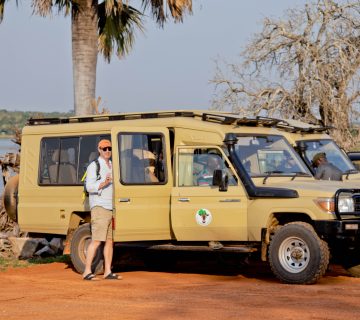
12. Are Open Safari Vehicles Safe?
Open safari vehicles are used in some African reserves and conservancies.
Their safety depends on vehicle design, trained guides, passenger behaviour, local regulations and the circumstances of each encounter.
They are not automatically safe simply because predators often ignore them.
Passengers must remain within the permitted seating area and follow instructions.
In other destinations, enclosed vehicles with pop-up roofs are commonly used.
Both arrangements require responsible guiding.
Visitors should choose licensed safari operators and never assume that an open vehicle provides the same physical protection as an enclosed one.
13. Where Can You Observe Predators From Safari Vehicles?
Several East African national parks offer opportunities to observe predators during guided game drives.
| Destination | Country | Predators Commonly Sought |
|---|---|---|
| Queen Elizabeth National Park | Uganda | Lions and leopards |
| Murchison Falls National Park | Uganda | Lions and leopards |
| Kidepo Valley National Park | Uganda | Lions and leopards |
| Serengeti National Park | Tanzania | Lions, leopards and cheetahs |
| Maasai Mara National Reserve | Kenya | Lions, leopards, cheetahs and hyenas |
| Tarangire National Park | Tanzania | Lions and leopards |
Predator sightings are never guaranteed.
Animals in quieter or less frequently visited areas may respond differently to vehicles.
14. Why Responsible Habituation Matters
Habituation can make wildlife observation possible without constant disturbance.
However, it must develop through repeated, non-threatening encounters.
Aggressive driving, overcrowding and chasing animals can create negative experiences.
These actions may cause predators to avoid vehicles or respond defensively.
Responsible tourism therefore depends on consistent standards.
Guides should approach slowly, respect animal behaviour and withdraw when necessary.
Visitors contribute by following instructions and avoiding demands for extremely close photographs.
15. Common Myths About Predators and Safari Vehicles
| Safari Myth | What Visitors Should Know |
|---|---|
| Lions cannot see people inside vehicles | Predators can detect people; their reactions depend on context |
| A calm lion is completely safe | Wild behaviour remains unpredictable |
| Predators will never attack a vehicle | Dangerous incidents remain possible |
| Leopards always hide from vehicles | Some individuals become habituated |
| Open safari vehicles are automatically safe | Safety requires appropriate precautions |
| Feeding predators improves sightings | Feeding wildlife increases risk and disturbance |
Understanding these differences helps travellers approach predator encounters with realistic expectations.
Why Predators Often Ignore Safari Vehicles
Predators frequently appear relaxed around safari vehicles because of familiarity, repeated harmless encounters and the predictable behaviour of responsible guides.
This process, known as habituation, can allow lions, leopards, cheetahs and spotted hyenas to continue their natural activities while tourists observe.
However, it never removes the dangers associated with wild animals.
Passengers should remain within their vehicles, maintain suitable distances and follow professional guidance.



No comment