
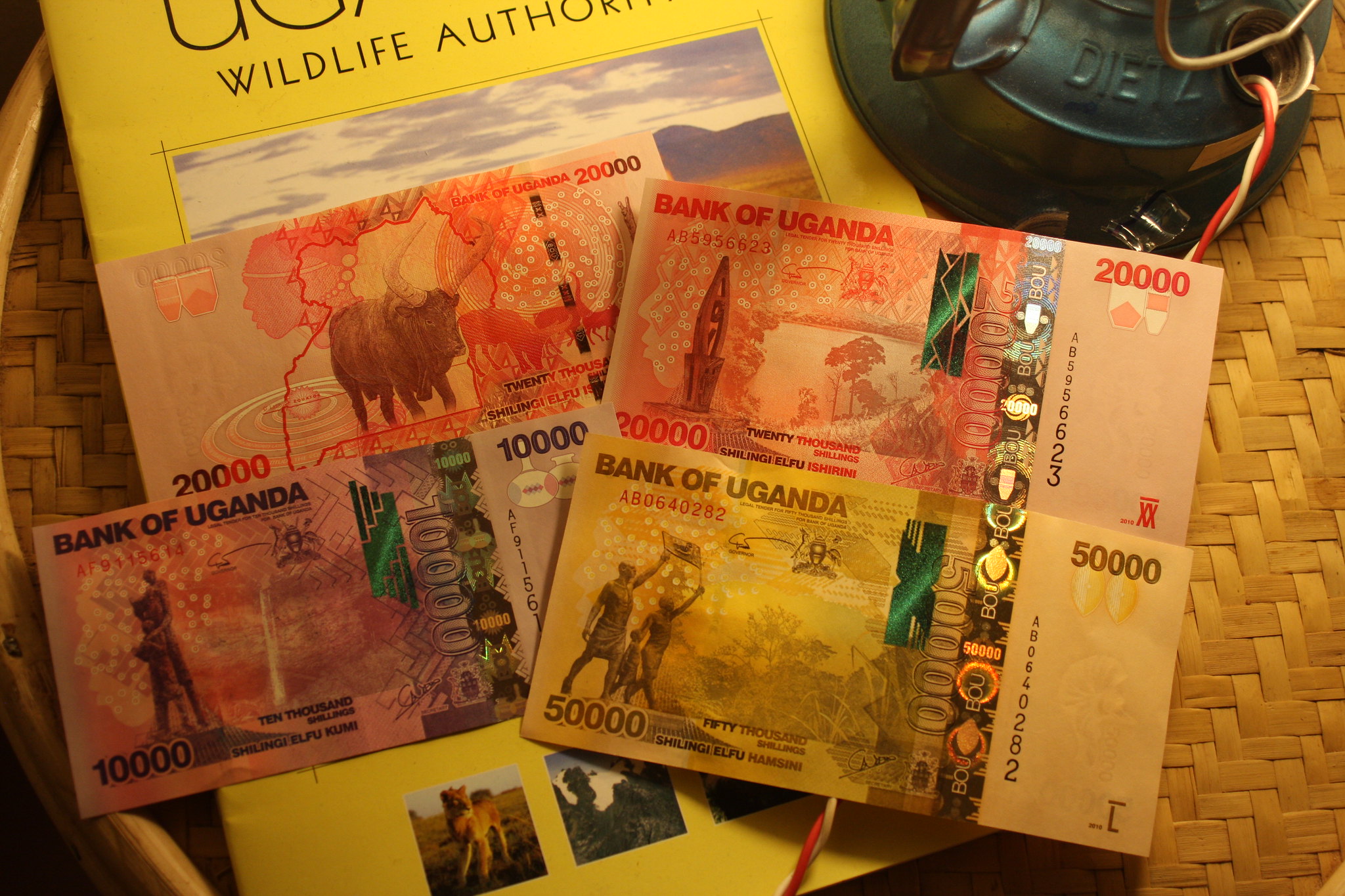
Currency Guide: Ugandan Shillings, Kenyan Shillings, Rwandan Francs and Tanzanian Shillings
Travelling across East Africa can take you through several countries in one journey. You might begin your holiday in Uganda for gorilla trekking in Bwindi Impenetrable National Park, continue to Rwanda for a cultural visit in Kigali, travel to Kenya for wildlife viewing in the Maasai Mara, and finish in Tanzania to experience the Serengeti and Ngorongoro Crater. Each destination offers different experiences, but crossing between these countries also means dealing with different currencies, exchange rates and payment systems.
Uganda uses the Ugandan shilling, Kenya uses the Kenyan shilling, Rwanda uses the Rwandan franc, and Tanzania uses the Tanzanian shilling. Although the currencies share similar names, they have different values and cannot be treated as interchangeable. Money that covers a meal in one country may have a different purchasing power in another, even when the number printed on the banknotes looks similar.
Understanding these currencies before departure makes it easier to budget for transport, meals, shopping, local experiences and other daily expenses. It also helps travellers avoid unnecessary exchange fees, carry suitable amounts of cash and make informed decisions about when to use a bank card.
Understanding the Four East African Currencies
The first step in managing money across East Africa is learning the official currency name and its international code. These codes are useful when checking exchange rates, withdrawing money from ATMs and reviewing card transactions.
Uganda uses the Ugandan shilling, abbreviated as UGX. Prices may appear with the letters UGX, the abbreviation USh or the word shillings. The currency is used for everyday transactions such as buying food, paying local transport fares, purchasing souvenirs and settling bills at businesses that quote prices in local currency.
Kenya uses the Kenyan shilling, abbreviated as KES. You will encounter it in Nairobi, Mombasa, Kisumu, smaller towns and safari destinations across the country. It is the standard currency for everyday purchases, including meals, taxis, market goods and many local services. Kenya also has a widely used mobile money system, which plays an important role in everyday payments.
Rwanda uses the Rwandan franc, abbreviated as RWF. The franc is used throughout the country, including Kigali, Musanze, Rubavu and areas around Volcanoes National Park. Travellers need Rwandan francs for smaller purchases, local transport, snacks, market shopping and other services that do not accept international cards.
Tanzania uses the Tanzanian shilling, abbreviated as TZS. It is the currency used in Dar es Salaam, Arusha, Moshi, Zanzibar and communities around major safari destinations. Visitors commonly need local cash for small purchases, local transport, market visits and expenses outside larger hotels and lodges.
The important distinction is that UGX, KES, RWF and TZS are four separate currencies. A Kenyan shilling is not equal to a Ugandan shilling, and neither is equal to a Rwandan franc or Tanzanian shilling. Always confirm the currency code before making a payment or checking a price online.
How Exchange Rates Work in East Africa
An exchange rate tells you how much one currency is worth when converted into another. Rates change in response to foreign exchange markets, economic conditions, demand for currencies, monetary policy and other financial factors. The amount you receive at a bank or exchange bureau can also differ from the published market rate.
For example, a traveller converting US dollars into Ugandan shillings will receive a certain amount based on the rate offered by the provider. Converting the same dollars into Kenyan shillings will produce a different numerical amount because the currencies have different values. The larger number does not automatically mean that one country is cheaper than another.
It is also important to distinguish between the exchange rate and the cost of a purchase. A hotel room costing 300,000 Ugandan shillings should not be compared directly with a room costing 30,000 Kenyan shillings simply by looking at the numbers. Both prices must first be converted into the same currency before you can make a meaningful comparison.
Exchange providers may quote buying and selling rates. The buying rate is the rate at which the provider buys foreign currency from you. The selling rate is the rate at which it sells that currency to you. These rates are not always identical, and the difference is one way a provider earns money.
Some providers also charge a separate commission or service fee. A rate that looks attractive at first may therefore produce a less favourable final amount after all charges are included. Before exchanging money, ask how much local currency you will receive for the exact amount you intend to change.
For an East African trip, check rates close to departure and again before making a substantial exchange. Avoid building your entire budget around a conversion figure remembered from a previous holiday. Even if the rate has changed only slightly, repeated transactions across several countries can make the difference noticeable.
Using the Ugandan Shilling in Uganda
Uganda’s currency is essential for travellers spending time in Kampala, Entebbe, Jinja, Fort Portal, Queen Elizabeth National Park, Murchison Falls National Park and Bwindi Impenetrable National Park.
Daily expenses may include bottled water, snacks, restaurant meals, local transport, laundry, small purchases and payments to businesses that use local currency. Visitors who spend time in towns will generally find more opportunities to use cards than those travelling through remote rural areas.
Safari prices require particular attention. Some tour operators, lodges and specialist activities quote prices in US dollars, while other services use Ugandan shillings. A package may include accommodation, transport, meals and park-related costs, but travellers should confirm which currency applies to any excluded expenses or optional activities.
Do not assume that every business will accept US dollars simply because it operates in the tourism industry. Some hotels and safari providers may accept them, while smaller businesses generally prefer local currency. If a business offers to accept foreign cash, confirm the exchange rate it will apply before agreeing to pay.
Banknotes in smaller denominations are useful for everyday purchases. A shopkeeper, driver or market vendor may not have enough change for a large note, especially outside major towns. Keeping some smaller notes separate from your main cash supply makes routine payments easier.
Travellers should exchange money through reputable banks or licensed foreign exchange bureaus. Avoid carrying large amounts of cash in one place, and keep emergency funds separate from the money used for daily expenses.
Using the Kenyan Shilling in Kenya
The Kenyan shilling is used throughout Kenya, from the busy streets of Nairobi to coastal towns and wildlife destinations such as the Maasai Mara and Amboseli National Park.
Kenya offers several payment options. Cash remains useful for smaller purchases, but bank cards and mobile money are also widely used in many parts of the country. Visitors may find card payments convenient in established hotels, shopping centres, larger restaurants and some tourism businesses. Acceptance can be less predictable in remote areas.
M-PESA is a major part of Kenya’s payment system. Residents commonly use it to transfer money and pay participating businesses. However, international visitors should not assume that their foreign mobile number or bank account will automatically provide access to every mobile money service. Eligibility, registration requirements and transaction limits can vary.
For most visitors, a combination of local cash and a working international card is a practical arrangement. Use cash for small purchases and places that do not accept cards. Keep the card available for larger transactions where it is accepted.
Safari travellers should confirm how park fees, accommodation and transport will be paid. A lodge may accept cards, while a small roadside business may require cash. Some park-related services have specific payment arrangements, so it is best to check with the tour operator before travelling rather than assuming every payment can be made in the same way.
When withdrawing Kenyan shillings, use an ATM operated by a recognised bank whenever possible. Check the transaction fee displayed on the machine and review your own bank’s international withdrawal charges. If the ATM offers to convert the transaction into your home currency, compare the terms carefully before accepting.
Using the Rwandan Franc in Rwanda
Rwanda’s currency is the Rwandan franc. Travellers need it for everyday spending in Kigali, Musanze, Rubavu and other towns, as well as during visits to local markets and communities near national parks.
Rwanda’s capital, Kigali, offers a range of established hotels, restaurants, shops and businesses where card payments may be available. However, visitors should still carry cash for small transactions and places with limited payment facilities. The availability of ATMs and card terminals becomes less predictable as you travel away from major urban centres.
If your itinerary includes gorilla trekking in Volcanoes National Park, arrange the major costs before arrival. Gorilla permits, accommodation and guided activities may be priced separately or included in a package. Confirm the agreed currency and payment deadlines with your tour operator. Carrying Rwandan francs is still useful for personal purchases, snacks, local services and other expenses that are not included.
Small denominations are particularly useful for shopping in local markets and making modest purchases. Do not exchange your entire travel budget into Rwandan francs at once unless you have a clear reason to do so. You may have little opportunity to use the remaining balance if your journey continues into Uganda, Kenya or Tanzania.
Rwandan francs are not a universal regional currency. A shop in Kampala or Arusha will not normally treat them as a standard payment method. If you are crossing a border, plan to obtain the currency required for your next destination through an appropriate exchange provider or ATM.
Using the Tanzanian Shilling in Tanzania
The Tanzanian shilling is used across mainland Tanzania and is also the everyday currency in Zanzibar. Travellers may need it when visiting Arusha, Moshi, the Serengeti, Ngorongoro Conservation Area, Tarangire National Park, Dar es Salaam and coastal destinations.
Tanzania’s tourism sector uses a mixture of local currency and foreign-currency pricing. Some safari packages, lodges and specialist activities quote prices in US dollars, while daily purchases are commonly made in Tanzanian shillings. The currency required for a particular service should be confirmed before payment.
Visitors on a northern Tanzania safari often spend time in Arusha before travelling to the national parks. Local currency is useful for personal shopping, meals outside the package, small purchases and other costs that are not covered by the tour. In more remote areas, access to ATMs may be limited, so it is sensible to obtain a suitable amount of cash before leaving a major town.
Zanzibar also requires some planning. Larger hotels and established tourism businesses may accept cards, but cash remains useful for markets, smaller shops and local transport. Ask about any card surcharge before paying, and keep a record of transactions to help monitor spending.
US dollars may be accepted for certain tourism services, but acceptance depends on the business and the type of payment. Do not assume that every shop, driver or restaurant will accept foreign notes. For everyday expenses, Tanzanian shillings are the more dependable option.
Should You Carry US Dollars Across East Africa?
US dollars can be useful when travelling between Uganda, Kenya, Rwanda and Tanzania, especially when a safari package or accommodation provider quotes prices in dollars. They may also serve as a convenient reserve currency for exchanging money after arrival.
However, US dollars do not replace the need for local currency. A market vendor, local taxi driver or small shop may not accept them. Even when a business does accept dollars, the exchange rate used for the transaction may be less favourable than the rate available at a reputable exchange bureau.
The condition and age of banknotes can affect whether they are accepted. Some banks, exchange bureaus and tourism businesses apply restrictions to older, damaged, marked or torn notes. Requirements can differ by country and provider. Before departure, ask your bank for clean, undamaged notes and confirm any local restrictions relevant to your destinations.
It is also sensible to carry a mixture of denominations. Larger notes can be convenient for exchanging money, while smaller notes may be useful for tips or other permitted cash payments. Do not carry more foreign cash than you can safely manage.
Avoid exchanging money with unlicensed individuals who approach you in public places. A rate that seems unusually generous may come with a risk of receiving counterfeit notes, being short-changed or losing your money. Use a reputable provider and count the money before leaving the counter.
If you have leftover currency at the end of a country visit, do not assume that it will be easy to exchange at the next destination. Exchange options for regional currencies vary. Whenever practical, plan your cash withdrawals and exchanges so that you finish each country with only a modest balance.
Cash, Bank Cards and ATMs
The most useful payment strategy for many East African travellers is to carry some local cash, keep an international debit or credit card available, and maintain a separate emergency reserve. Each method has advantages, and relying on only one can create difficulties.
Cash is valuable for small purchases, local transport, markets and businesses that do not accept electronic payments. It also provides a backup when electricity or network connections fail. Its main disadvantages are the risk of loss or theft and the possibility of receiving poor exchange rates when changing money in a hurry.
Bank cards are convenient for larger payments at participating hotels, restaurants, shops and other established businesses. Before travelling, confirm that your bank allows international transactions and check the fees for purchases and cash withdrawals. Tell your bank about your travel plans if its policies require notification.
ATMs allow travellers to withdraw local currency without exchanging a large amount of foreign cash in advance. Availability is generally better in major towns and cities than in remote safari areas. Machines can be out of service, run out of cash or decline a transaction, so never wait until you are far from a town to obtain all the money you need.
Choose ATMs located inside or close to established bank branches when possible. Protect your PIN, keep your card in sight during transactions and avoid accepting assistance from strangers at the machine. If a machine retains your card or displays an unusual error, contact your bank using an official number.
Pay attention to the currency conversion screen when withdrawing cash or paying by card. Some machines and card terminals offer to charge you in your home currency instead of the local currency. This is known as dynamic currency conversion. The offered rate may include an additional margin, so compare the terms and, where appropriate, choose to be charged in the local currency.
Your own bank may apply a foreign transaction fee, an exchange-rate margin or an international ATM fee. The ATM operator may also charge a separate fee. Check these costs before travelling because several small charges can add up over multiple withdrawals.
Mobile Money Across the Four Countries
Mobile money has become an important payment method in East Africa, but its availability and requirements differ between countries.
Kenya is particularly well known for M-PESA, which is widely used for transfers and payments. Uganda also has established mobile money services, and Rwanda has its own mobile payment options. Tanzania has mobile money services used by residents for everyday transactions.
For international visitors, access is not always straightforward. A service may require a local SIM card, identity verification, a locally registered account or other documentation. A foreign phone number may not be eligible for every feature, and international roaming does not automatically provide access to a domestic mobile money account.
Do not rely on mobile money as your only payment method unless you have confirmed that you can register, add funds and complete the transactions you expect to make. Ask your mobile provider and any relevant service provider about eligibility before departure.
For a multi-country itinerary, remember that a mobile money account registered in one country may not work like a domestic account in another. Even where regional or cross-border services exist, availability, charges and limits can vary. Keep a bank card and some local cash as alternatives.
Exchanging Money at Borders and Airports
Border crossings are natural points to review your cash supply, but they are not always the best places to make a large currency exchange. Exchange counters may be limited, opening hours may not suit your arrival time, and rates may differ from those offered in major towns.
Before travelling from Uganda to Rwanda, for example, estimate how much Rwandan currency you will need for the first part of your stay. The same approach applies when moving from Kenya into Tanzania or crossing in the opposite direction. You do not need to exchange your entire budget at the border. A modest amount for immediate expenses may be enough until you reach a recognised bank or exchange bureau.
Airports can be convenient, especially when you arrive late or need money for immediate transport. However, convenience does not guarantee the best rate. Compare the final amount offered, including fees, before making a substantial exchange.
Do not assume that a currency from one East African country will be accepted at face value in another. A foreign exchange bureau may buy regional currency, but the rate may be less favourable or the currency may not be accepted at all. Confirm acceptance before handing over your money.
It is also unwise to exchange the same money repeatedly. Every conversion can involve a difference between buying and selling rates, and possibly additional charges. If you convert Tanzanian shillings into US dollars and then convert those dollars into Ugandan shillings, you may lose money through two separate transactions. Compare the available options before deciding.
Budgeting for a Multi-Country Safari
A realistic budget should separate the major prepaid costs from the money needed for daily personal expenses. Safari packages often include several large items, such as accommodation, transport, meals and guided activities. The exact inclusions depend on the operator and itinerary, so review the written quotation carefully.
Start by identifying which expenses have already been paid. Then establish which costs remain, including personal purchases, drinks, optional excursions, laundry, extra meals, tips and transport outside the package. This prevents you from carrying too much cash or discovering that a seemingly small expense was excluded.
Convert your estimated daily spending into the local currency of each country. You do not need to predict every purchase exactly, but having a rough daily allowance helps you track costs and compare prices. Keep a small reserve for unexpected expenses, such as a delayed transfer, a change in travel plans or a necessary purchase.
Remember that the same type of service can have different prices in different locations. A meal in a major city may cost more than a similar meal in a smaller town. A remote safari lodge may have higher operating costs because supplies and staff must travel long distances. Currency conversion alone cannot explain these differences.
For gorilla trekking, chimpanzee tracking and other specialist wildlife experiences, confirm the permit cost and payment currency directly with your tour operator or the relevant authority. These expenses can be substantial compared with everyday spending, and they should be planned separately from your cash budget for meals and shopping.
Handling Tips and Small Purchases
Tipping practices vary according to the country, service and type of establishment. Some travellers prefer to tip in local currency, while certain safari operators may provide guidance on whether US dollars are acceptable for specific tourism staff. There is no single rule that applies to every situation.
Before a safari begins, ask your tour operator about its tipping guidance and whether tips are expected to be paid individually or collectively. This helps you prepare appropriate denominations and avoids the need to exchange money at the last minute.
For small purchases, local currency is generally the simplest option. Keep a portion of your cash in smaller notes so that you can pay without asking a vendor to change a large denomination. This is particularly useful in rural areas and at local markets.
When shopping, confirm the price and currency before handing over cash. If a vendor quotes a price without making the currency clear, ask for clarification. This is especially important near international borders, where travellers from different countries may be familiar with different currencies.
Count your change calmly after a transaction. If you are unfamiliar with the appearance of a currency, take time to learn the common banknote denominations before spending. This small preparation can make daily purchases more comfortable.
Common Currency Mistakes to Avoid
One frequent mistake is assuming that the four currencies have a similar value because they share the word shilling or are used in neighbouring countries. Their exchange rates differ, and prices should always be compared after conversion into the same currency.
Another mistake is changing too much money at the start of a trip. If you have a large balance remaining when you leave a country, you may have difficulty exchanging it at a reasonable rate. Withdraw or exchange money in amounts suited to your expected expenses instead.
Travellers can also lose money by accepting the first exchange rate offered without checking the final amount. Ask about commissions and other charges, and compare reputable providers when practical. A small difference in the rate can matter when exchanging a large sum.
Relying entirely on cards is another avoidable problem. Card acceptance is not universal, and technical issues can prevent transactions from going through. On the other hand, carrying all your travel funds in cash creates unnecessary risk. A balanced payment plan is safer and more flexible.
Finally, avoid treating a budget prepared several months earlier as a fixed conversion guide. Exchange rates change, and bank fees may differ between providers. Review your figures before departure and check the rate again when you need to make a substantial exchange.
A Practical Currency Plan Before Departure
Before leaving home, confirm that your debit or credit card works internationally and understand the fees attached to purchases and withdrawals. Carry a second payment option if possible, and store it separately from your main card.
Prepare a small amount of suitable foreign cash if your itinerary or arrival arrangements require it. If you plan to use US dollars for tourism payments, confirm the provider’s rules on note condition and age. Do not assume every business follows identical requirements.
When you arrive in each country, obtain enough local currency for immediate needs. Use reputable banks or exchange bureaus, or withdraw from a recognised bank-operated ATM. Keep receipts for significant exchanges and monitor your spending as you move between destinations.
Before crossing into the next country, estimate your likely cash requirements and avoid retaining a large amount of the currency you are leaving behind. Keep a record of which currency you have, especially if your journey includes several border crossings in a short period.
For a trip covering Uganda, Kenya, Rwanda and Tanzania, the simplest approach is to treat each country as a separate currency zone. Use UGX in Uganda, KES in Kenya, RWF in Rwanda and TZS in Tanzania. Keep a payment card for larger transactions, local cash for daily spending and a secure reserve for emergencies.
Exchange rates should be checked close to the time of travel rather than memorised as permanent figures. Official and commercial rates can differ, and the amount you receive depends on the provider and any applicable charges. With a little preparation, managing four currencies becomes a routine part of travelling through East Africa rather than a source of confusion.






No comment