
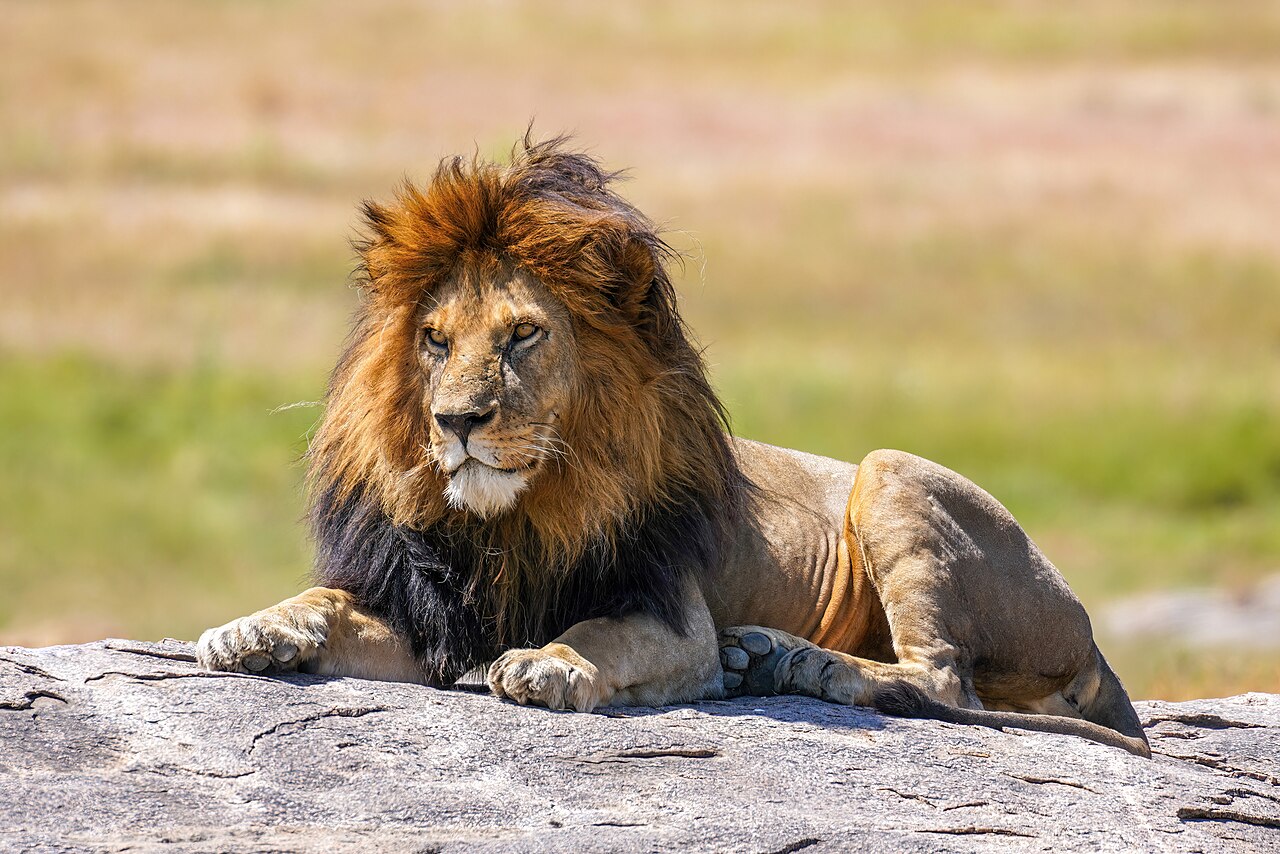
Radio Collars on Predators: How They Help Conservation
A lioness walks through the grasslands of Kenya’s Laikipia region, moving from a protected wildlife area towards land where local families graze cattle. Around her neck is a tracking collar that records her movements. Several kilometres away, conservation teams receive location information that may help them warn livestock owners before the lioness reaches their herds.
Radio collars on African predators are among the most useful technologies in modern wildlife conservation. These devices help researchers understand where lions, leopards, cheetahs and other carnivores travel, how they use their habitats and when they encounter human settlements.
Although tracking collars cannot solve every conservation challenge, they provide information that would otherwise be difficult to obtain.
For safari travellers, understanding this technology reveals how scientists and local communities work together to protect Africa’s remarkable predators.
1. What Is a Wildlife Radio Collar?
A wildlife radio collar is a tracking device fitted around an animal’s neck.
It contains electronic equipment designed to help researchers monitor the animal’s location or movements.
Traditional radio collars transmit signals that researchers can detect using receivers and antennas.
Modern collars may combine radio transmitters, GPS technology and satellite or mobile-network communication.
This allows scientists to follow an animal’s movements without constantly approaching it.
Main Types of Tracking Collars
| Collar Type | How It Works | Main Use |
|---|---|---|
| VHF radio collar | Transmits a radio signal detected by a receiver | Locating animals in the field |
| GPS collar | Records geographic coordinates | Studying movement patterns |
| GPS-satellite collar | Sends recorded locations through satellite communication | Monitoring animals across large areas |
| GPS-cellular collar | Transfers data through available mobile networks | Monitoring in areas with network coverage |
Some devices combine several technologies in one collar.
2. Why Do Scientists Put Collars on Predators?
Large predators often travel across extensive territories.
Some move through thick vegetation or become active mainly after dark.
This makes direct observation difficult.
A tracking collar allows researchers to collect movement information even when the animal cannot be seen.
The data can reveal how far a predator travels, which habitats it uses and whether it moves outside protected areas.
Important Conservation Benefits
- Understanding animal movements.
- Identifying important wildlife corridors.
- Monitoring predators near livestock.
- Investigating territorial behaviour.
- Locating animals that may be injured or dead.
- Supporting conservation planning.
- Studying how predators respond to environmental changes.
However, location data alone cannot explain every aspect of animal behaviour.
3. How GPS Collars Track Lions
Modern GPS collars receive signals from navigation satellites to calculate geographic positions.
The device records locations according to a programmed schedule.
Some collars collect information several times per hour, while others record positions less frequently to conserve battery power.
Data may be stored inside the collar or transmitted to a research platform.
Scientists then examine the locations on digital maps.
What Can Researchers Learn?
A lion’s movement record may reveal:
- Its approximate home range.
- Routes between resting and hunting areas.
- Movements across park boundaries.
- Areas frequently used at night.
- Potential encounters with livestock.
- Changes in movement after disturbances.
These patterns become particularly valuable when studied over several months or years.
4. How Collars Help Prevent Human-Wildlife Conflict
One of the most important uses of predator collars is reducing conflict between carnivores and people.
Lions and leopards sometimes move into areas where livestock are kept.
If cattle, goats or sheep are attacked, local families can suffer serious economic losses.
In some situations, people retaliate by killing predators.
Tracking technology can help conservation teams respond before conflict develops.
Early-Warning Systems
A GPS collar may alert researchers when a lion enters a high-risk area.
Conservation officers can then contact livestock owners or community wildlife representatives.
Herders may move animals away, increase supervision or secure livestock inside protective enclosures.
This approach can benefit both people and wildlife.
5. Lion Tracking in Kenya’s Laikipia Region
Kenya’s Laikipia landscape provides an important example of collar-based conservation.
The organisation Lion Landscapes works with local communities and conservation partners to monitor large carnivores.
Some lions receive GPS collars that transmit movement information.
When monitored animals enter areas associated with livestock conflict, teams can communicate warnings.
This allows livestock owners to take preventive measures.
The programme demonstrates how wildlife tracking can support coexistence rather than simply collecting scientific data.
However, a collar on one lion does not reveal the location of every lion nearby.
6. What Radio Collars Reveal About Leopard Behaviour
Leopards are especially difficult to study because they are secretive and often active at night.
They also occupy a wide variety of habitats.
Tracking collars can help scientists understand how individual leopards use woodland, grassland, rocky areas and landscapes shared with people.
Research may reveal which routes leopards use when crossing roads or moving between protected habitats.
Collar data can also show whether an individual changes its movements when human activity increases.
These findings can contribute to better land-use planning.
7. Can Cheetahs and African Wild Dogs Wear Tracking Collars?
Yes. Researchers also use tracking devices on other suitable carnivore species.
Cheetahs can travel considerable distances, especially when searching for mates, territories or prey.
GPS data can help identify movement corridors and areas where roads or human activity create risks.
African wild dogs frequently travel across large landscapes.
Tracking selected pack members may help researchers understand pack movements, denning areas and habitat connectivity.
However, collar design and monitoring methods must be appropriate for each species.
Not every animal or population needs to be collared.
8. How Collars Help Protect Wildlife Corridors
Predators do not recognise the boundaries drawn on national park maps.
A lion may move between protected areas, community grazing lands and wildlife conservancies.
If roads, settlements or fences interrupt these routes, animals may become isolated.
GPS tracking helps researchers identify frequently used movement pathways.
Why Wildlife Corridors Matter
| Corridor Benefit | Conservation Importance |
|---|---|
| Movement between habitats | Allows animals to reach important resources |
| Access to breeding partners | Supports genetic diversity |
| Seasonal movement | Helps animals respond to changing conditions |
| Connectivity between populations | Reduces isolation |
| Better land-use planning | Helps identify important areas for protection |
Protecting suitable corridors can support the long-term survival of large predators.
9. Can Tracking Collars Reveal Hunting Behaviour?
Collars can provide clues about hunting and feeding.
For example, repeated GPS positions within a small area may suggest that a lion has stopped near a carcass.
Researchers may investigate these location clusters after the animal leaves.
However, a GPS location cannot prove that a kill occurred.
The predator might have been resting, drinking or spending time with other animals.
To confirm feeding behaviour, scientists may combine tracking data with camera traps, field observations or signs found at the location.
This makes the conclusions more reliable.
10. Can Collars Help Detect Injured Predators?
Some collars contain motion-sensitive equipment.
If an animal remains unusually still for a specified period, the system may generate an alert.
This can prompt conservation teams to investigate.
The animal could be injured, dead or simply resting for an extended period.
Therefore, an inactivity alert is not a confirmed diagnosis.
Field teams must assess the circumstances before taking action.
Such technology may help conservation authorities respond more quickly to potential emergencies.
11. How Are Radio Collars Fitted to Wild Animals?
Fitting a collar to a large carnivore requires specialist training and official authorisation.
A qualified wildlife veterinarian normally supervises the procedure.
The animal is safely immobilised under veterinary protocols while researchers fit the device and check its condition.
Main Stages of a Collaring Operation
| Stage | Main Purpose |
|---|---|
| Veterinary assessment | Determine suitability and minimise risk |
| Safe immobilisation | Allow trained professionals to work |
| Collar fitting | Ensure appropriate size and placement |
| Health monitoring | Check the animal’s condition |
| Recovery observation | Monitor the animal after the procedure |
| Ongoing tracking | Collect useful conservation data |
Visitors should never attempt to approach, handle or fit equipment to wildlife.
12. Do Radio Collars Hurt Predators?
A correctly fitted collar is designed to minimise interference with an animal’s movement and normal behaviour.
However, collaring is not completely risk-free.
Capture and anaesthesia carry potential dangers.
A poorly fitted or damaged collar can cause irritation, injury or other problems.
Responsible conservation programmes therefore use suitable equipment, veterinary oversight and animal-welfare procedures.
Some modern collars include release mechanisms that allow them to fall off at a planned time.
Researchers must weigh the expected conservation benefits against the potential risks to each animal.
13. Do All Lions and Leopards Have Collars?
No. Only a small selection of animals is normally fitted with tracking collars.
Researchers choose individuals according to specific scientific or conservation objectives.
For example, a lion frequently moving near livestock areas may be particularly important to monitor.
Some projects select animals to represent different territories or movement patterns.
The resulting information can improve understanding of the wider population, but it does not provide the exact location of every predator.
Collars are one research tool among many.
14. Where Are Predator Collars Used in East Africa?
Tracking technology is used in conservation projects across East Africa.
| Country | Example Landscape | Conservation Application |
|---|---|---|
| Kenya | Laikipia ecosystem | Lion tracking and livestock-conflict prevention |
| Kenya | Greater Maasai Mara ecosystem | Predator ecology and movement research |
| Tanzania | Ngorongoro Conservation Area | Lion movement and coexistence |
| Tanzania | Serengeti ecosystem | Predator movement and behavioural research |
| Uganda | Selected lion conservation landscapes | Carnivore monitoring and ecological research |
Projects, funding and deployment locations can change over time.
Visitors should not assume that every park has an active GPS collar programme.
15. Can Safari Tourists See Collared Predators?
Yes. Occasionally, safari visitors may encounter a lion or another predator wearing a tracking collar.
A collar often appears as a broad band around the animal’s neck, sometimes with an attached equipment housing.
Seeing one does not mean the animal is tame or safe to approach.
The predator remains completely wild.
Tourists should not attempt to follow collar signals, approach researchers or request access to restricted tracking data.
Exact locations may be sensitive because they could be misused.
A guide can explain the conservation purpose of a collar without revealing protected information.
16. Are There Alternatives to Radio Collars?
Yes. Researchers use several other methods to study carnivores.
Camera traps photograph animals automatically when triggered.
Footprint surveys can help estimate species presence and movement.
Genetic analysis of hair or droppings may identify individuals and populations.
Direct observation remains valuable for understanding social relationships and hunting.
Comparing Research Methods
| Method | Main Advantage |
|---|---|
| GPS collars | Detailed individual movement records |
| Camera traps | Remote monitoring without attaching devices |
| Footprint surveys | Evidence of animal presence |
| Genetic sampling | Identity, relatedness and population information |
| Direct observation | Detailed behaviour and social interactions |
Using several methods together often provides a fuller picture.
17. Why Tracking Technology Matters for Conservation
Large predators face growing pressures from habitat fragmentation, declining prey and conflict with people.
Radio collars cannot remove these threats by themselves.
However, the information they provide can help conservationists decide where interventions are most useful.
Movement records may identify dangerous road crossings, important wildlife corridors or areas requiring community conflict-prevention programmes.
Their greatest value comes when research findings lead to practical action.
Following Predators to Protect Their Future
Radio collars on African predators provide scientists with valuable information about animals that are often difficult to observe.
They help reveal movement patterns, habitat use and potential conflict areas.
In places such as Kenya’s Laikipia region and Tanzania’s Ngorongoro Conservation Area, collar information supports efforts to protect livestock while reducing risks to wild lions.
However, successful conservation depends on much more than technology.
Local communities, trained rangers, veterinarians, scientists and responsible safari operators all have important roles.




No comment