
What are wattled cranes and can you see them in East Africa?
Wattled cranes are among the largest and most distinctive birds found in Africa. Their impressive height, grey body, long white neck and unusual hanging wattles make them easy to recognise when seen in suitable wetland habitats. They are also among the continent’s most wetland-dependent crane species, relying on healthy marshes, floodplains and seasonally flooded grasslands for feeding and breeding.
For birdwatchers travelling through East Africa, the wattled crane is an interesting species to look out for, although sightings depend heavily on the destination. Tanzania has a recognised population, and Ethiopia supports a separate northern population in its highlands. The species is not a regular bird in Uganda or Kenya, so visitors should not expect to see it during an ordinary wildlife tour in those countries.
Understanding where wattled cranes live, how to identify them and which habitats they use will help you plan a more realistic birdwatching experience.
What is a wattled crane?
The wattled crane is a large African wetland bird belonging to the crane family, Gruidae. Its scientific name is Bugeranus carunculatus. It is sometimes listed under the older scientific name Grus carunculata.
It is the largest crane species in Africa, standing approximately 1.2 to 1.75 metres tall. Adults can weigh around 7.5 to 8.5 kilograms, with a wingspan that can reach approximately 2.5 metres. Its long legs and neck give it an elegant appearance, especially when it walks through shallow water or flies across an open wetland.
The species gets its common name from the distinctive wattles hanging from its throat. These are noticeable fleshy structures covered in white feathers, positioned beneath the lower part of the head. The wattles, combined with the bird’s red facial skin, make it different from other cranes found in Africa.
Wattled cranes generally occur in pairs or small family groups. They can also gather in larger groups in suitable feeding areas, particularly where wetland conditions provide enough food.
How to identify a wattled crane
A wattled crane is relatively easy to identify once you know its main physical features. Its size is usually the first thing you notice. It is exceptionally tall, with long dark legs, a long neck and a powerful body.
The adult has grey feathers covering much of its back and wings. Its neck and upper breast are white, while the lower body, flight feathers and tail area are dark or black. The head has a grey crown, and the face contains a distinctive area of bare red skin.
The most recognisable feature is the pair of white feathered wattles hanging from the throat. These give the bird its name and distinguish it from other African crane species.
Males and females look very similar. Males are generally slightly larger, but their plumage does not provide an easy way to separate the sexes during a normal safari sighting.
Young wattled cranes look different from adults. Juveniles have more tawny or brownish body feathers, and their facial skin and wattles are less developed. As they mature, they gradually acquire the familiar grey, white and black adult plumage.
Their long legs allow them to walk through shallow marshes while searching for food. When they take flight, their broad wings and long neck create a striking silhouette over open wetlands.
Where do wattled cranes live in Africa?
Wattled cranes have a restricted African distribution, with their main populations concentrated in south-central Africa and a smaller isolated population in the Ethiopian highlands.
The largest concentrations occur in countries such as Zambia and Botswana, with additional populations in Tanzania, Angola, the Democratic Republic of the Congo, Malawi, Mozambique and Zimbabwe. Smaller populations occur elsewhere within their range, including parts of southern Africa.
The Okavango Delta in Botswana is one of the most important areas for the species. Zambia also supports a major proportion of the global population, particularly in extensive wetland systems such as the Kafue Flats and Bangweulu Wetlands.
The Ethiopian population is geographically separated from the main south-central African population. It occupies suitable highland wetland habitats and is important because it represents the species’ northern distribution.
Wattled cranes are generally resident birds rather than long-distance migrants. However, they move locally when water levels change. A wetland that provides suitable feeding and breeding conditions in one season may become less attractive during a dry period.
This movement makes the distribution of the species closely connected to rainfall, flooding patterns and the condition of its wetland habitats.
Can you see wattled cranes in East Africa?
Yes, but your chances depend on which East African country you visit. Tanzania and Ethiopia are the most relevant destinations within the wider East African region. Uganda and Kenya are not recognised as regular destinations for wattled crane sightings.
Tanzania has a population within the wider south-central African range. However, the birds are not evenly distributed throughout the country, and their presence is associated with suitable wetland systems. You should not assume that a visit to a popular northern Tanzania safari park will automatically produce a sighting.
Ethiopia has a separate population in its highlands. This makes it another important destination for birdwatchers interested in the species, although finding the cranes requires visiting suitable wetland areas rather than relying on general wildlife tourism routes.
Uganda has several important wetlands and supports other crane species, especially the grey crowned crane. However, wattled cranes are not a regular part of Uganda’s birdlife. A traveller visiting Queen Elizabeth National Park, Murchison Falls National Park, Lake Mburo National Park or Bwindi Impenetrable National Park should not expect to find them.
Kenya also offers excellent birdwatching, including opportunities to see grey crowned cranes and many other wetland birds. However, wattled cranes are not a regular species in the country’s established birdwatching destinations.
Where to look for wattled cranes in Tanzania
Tanzania is particularly relevant to birdwatchers exploring the eastern part of the species’ south-central African distribution. Historical and conservation records recognise the species in the country, especially in the western and southwestern parts of its wider range.
Its habitat preferences mean that you should concentrate on extensive wetlands, floodplains, marshes and areas with suitable shallow water. The presence of open grassland around wetlands can also be useful because the birds sometimes feed outside permanently flooded areas.
Tanzania’s well-known northern safari circuit includes the Serengeti, Ngorongoro Conservation Area, Tarangire and Lake Manyara. These destinations offer outstanding wildlife and birdwatching, but they should not be promoted as guaranteed wattled crane locations.
If seeing this species is a major objective, arrange your trip around confirmed recent records and advice from a specialist local bird guide. A guide familiar with regional wetlands can help you distinguish likely habitat from places where the species has actually been recorded.
It is also worth remembering that the birds may move between feeding areas as water conditions change. A wetland that held cranes during one visit may not have them during another season.
Where to look for wattled cranes in Ethiopia
Ethiopia supports an isolated northern population of wattled cranes in its highlands. The species is associated with high-altitude wetlands, marshes and wet grasslands.
These habitats can be very different from the lowland savannas that many visitors associate with African wildlife tours. The cranes use suitable wetland areas where they can feed, nest and raise their young.
Birdwatchers planning an Ethiopian trip should work with local guides who understand the country’s highland bird habitats. The presence of the species in Ethiopia does not mean that it can be found throughout the highlands. Its distribution is limited, and the condition of individual wetlands affects where birds occur.
A specialist birdwatching itinerary is more suitable than a general sightseeing tour if you want to search for wattled cranes.
What habitats do wattled cranes prefer?
Wattled cranes depend heavily on wetlands. They use large river floodplains, marshes, sedge beds, shallow lakes and seasonally flooded grasslands.
Their preferred habitats usually provide shallow water and plenty of aquatic vegetation. Sedge-covered wetlands are particularly important because some sedges produce underground tubers and rhizomes that form a major part of the birds’ diet.
Unlike some birds that feed only in water, wattled cranes may also use nearby grasslands and agricultural areas. They can search for grain, grass seeds and insects when conditions make these foods available.
Water levels influence their distribution. During periods of suitable flooding, wetlands provide feeding opportunities and breeding habitat. When water levels fall or vegetation changes, the birds may move to other areas.
Their dependence on these habitats makes them sensitive to wetland drainage, changes in river flows and the conversion of marshes into farmland.
What do wattled cranes eat?
Wattled cranes mainly feed on plant material found in wetlands. Their diet includes tubers, rhizomes, sedges, grass seeds and other aquatic vegetation.
They use their strong bills to search through shallow water and soft wetland soil for underground food. They may also feed on grain and seeds in surrounding grasslands or cultivated areas.
Although plant material makes up much of their diet, wattled cranes are not strict vegetarians. They also eat insects and other small animals, including frogs, fish and aquatic invertebrates when available.
Their feeding behaviour can involve dipping their heads into water or probing the wet ground. They move slowly through suitable feeding areas, searching for food while remaining alert to potential threats.
The availability of food is one reason why healthy wetlands are essential to their survival. When wetland vegetation disappears or water levels change significantly, the birds may lose important feeding grounds.
How do wattled cranes breed?
Wattled cranes usually form long-term pair bonds. Breeding pairs establish territories in suitable wetlands and defend these areas from other cranes.
Their courtship behaviour can be impressive. Like other crane species, they perform displays involving bowing, jumping, running, wing movements and calls. These behaviours help strengthen pair bonds and are among the most interesting activities to observe during the breeding period.
They build their nests in wetlands, often using plant material to create a raised platform in shallow water or marsh vegetation. Nest placement helps provide some protection from land-based predators.
A breeding pair generally produces one or two eggs, although successful raising of more than one chick is uncommon. Both parents take part in incubation and caring for the young.
The chicks are able to leave the nest area relatively early compared with many other bird species, but they remain dependent on their parents while growing. Young birds need time to develop their strength and feeding skills before becoming independent.
Breeding success depends on suitable water levels, undisturbed nesting sites and adequate food. When wetlands are drained or disturbed by human activities, pairs may struggle to raise their young successfully.
Are wattled cranes endangered?
The wattled crane is globally classified as Vulnerable on the IUCN Red List. Its population is relatively small and has faced pressure from the loss and degradation of wetland habitats.
Agricultural expansion is one of the major threats. Wetlands are drained or converted into farmland, reducing the areas available for feeding and breeding. Irrigation schemes, dams and other water-management projects can also change natural flooding patterns.
These changes are particularly serious for a bird that depends so heavily on wetland conditions. Even when a wetland is not completely destroyed, changes in water depth and vegetation can make it unsuitable for breeding.
Human disturbance is another concern. Activities close to nesting sites can cause breeding pairs to abandon nests or reduce the time they spend caring for their eggs and chicks.
Power lines also present a danger in some areas. Wattled cranes are large birds with broad wings, and collisions with overhead cables can cause serious losses, especially where populations are already small.
Conservation organisations work with governments, landowners and local communities to protect important wetlands, improve habitat management and reduce threats. Protecting river systems and maintaining natural flooding patterns are important parts of these efforts.
Wattled cranes compared with grey crowned cranes
Visitors to East Africa are much more likely to encounter grey crowned cranes than wattled cranes. Both belong to the crane family, but they have different appearances, distributions and habitat preferences.
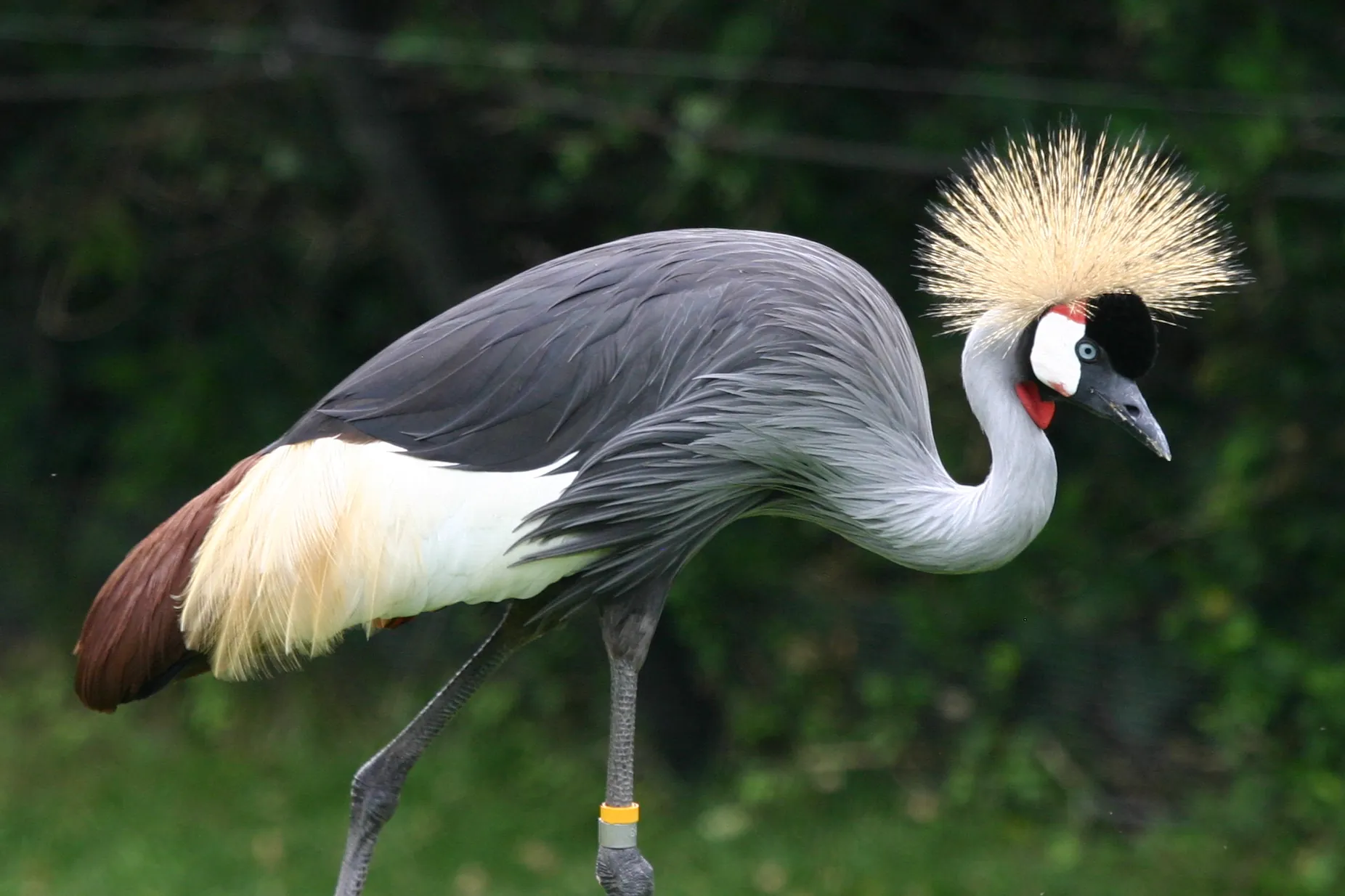
The grey crowned crane is recognisable by its golden crown of stiff feathers, white cheeks, red throat pouch and grey body. It is Uganda’s national bird and occurs in several East African countries.
The wattled crane is larger and lacks the golden crown. It has a grey head, a red facial patch, a white neck and distinctive hanging wattles beneath its throat. Its body is mainly grey, with darker feathers underneath.
Their habitats also differ. Grey crowned cranes use grasslands, wetlands, cultivated land and open landscapes. They can be seen in areas where people farm and keep livestock, provided suitable feeding and nesting habitat remains.
Wattled cranes are much more dependent on extensive wetlands. They require suitable marshes and floodplains, especially for breeding.
If you are visiting Uganda and want to see cranes, the grey crowned crane is the species to look for. You may encounter it in suitable wetland and grassland habitats, including areas around Lake Mburo and other parts of the country.
Best time to look for wattled cranes
The best time to search for wattled cranes depends on the country and wetland system you plan to visit. Rainfall and seasonal flooding influence where the birds feed and breed.
In areas with strong seasonal rainfall, the availability of shallow water and wetland vegetation can change considerably throughout the year. Some wetlands become more attractive during periods of flooding, while others provide suitable feeding areas as water levels begin to fall.
Because wattled cranes are generally resident, they do not follow a simple long-distance migration schedule. Their movements are usually local and linked to water availability.
For a birdwatching trip, it is better to check recent sightings and local wetland conditions before choosing your travel dates. A specialist guide can help identify areas where the birds have been recorded recently.
You should also allow enough time for birdwatching. A short visit to a wetland may not be sufficient, especially when the cranes are spread across a large area or remain hidden among vegetation.
How to photograph wattled cranes
Wattled cranes are large birds, which makes them rewarding subjects for wildlife photography. Their height, contrasting plumage and unusual wattles provide several opportunities for detailed photographs.
A telephoto lens between 300mm and 600mm is useful. The longer focal length allows you to photograph the birds without approaching too closely or disturbing them.
For standing birds, use a shutter speed of around 1/1000 second as a starting point. If the cranes begin walking quickly, interacting or taking flight, increase the shutter speed to 1/2000 second or faster. Continuous autofocus and burst shooting can help you capture movement.
Light is important when photographing their grey and white plumage. Early morning and late afternoon often provide softer conditions than the middle of the day. Try to position yourself where the light falls on the bird’s face and body rather than photographing it against a bright background.
Pay attention to the head and throat. The red facial skin and hanging wattles are key identification features, so a clear photograph of these details can be more useful than a distant image showing only the bird’s outline.
Always follow your guide’s instructions and keep a respectful distance. Avoid approaching nests, blocking the birds’ movement or causing them to leave feeding areas.
Other cranes you may see in East Africa
Even if wattled cranes are not available on your chosen East African itinerary, the region has several other interesting crane species.
The grey crowned crane is one of the best-known. It occurs in Uganda, Kenya, Tanzania and other parts of eastern and southern Africa. Its golden crown makes it one of the easiest African cranes to identify.
The black crowned crane is another species found in parts of Africa. It has a darker body and a golden crown, but its distribution is more associated with western and central parts of the continent than with the main East African safari circuit.
The demoiselle crane and common crane also occur in parts of the wider region, particularly as seasonal visitors or wintering birds in suitable areas. Their presence depends on migration routes and seasonal conditions.
For visitors interested in cranes, combining wetland birdwatching with a broader East African itinerary can provide opportunities to see several species. Uganda’s wetlands, Tanzania’s lakes and floodplains, and Ethiopia’s highland habitats each support different bird communities.
Planning a birdwatching trip to see wattled cranes
If wattled cranes are high on your birdwatching list, plan your trip around their known distribution rather than choosing a destination based only on its reputation for general wildlife viewing.
Tanzania and Ethiopia are the most relevant East African countries to investigate. In Tanzania, focus on suitable wetlands in the western and southwestern parts of the country and confirm recent records before travelling. In Ethiopia, seek advice about highland wetlands where the isolated population has been recorded.
A specialist bird guide is particularly useful. Guides with local knowledge can help you identify the right habitats, recognise other crane species and understand seasonal changes in wetland conditions.
You should also be realistic about sightings. Wattled cranes are not found in every wetland, and even a suitable habitat does not guarantee that birds will be present during your visit. Their movements respond to water availability, feeding conditions and breeding activity.
For travellers visiting Uganda or Kenya, it is better to focus on the crane species that regularly occur in those countries rather than planning an itinerary around wattled cranes. You can still enjoy excellent birdwatching, with opportunities to see grey crowned cranes and many other wetland species.
Wattled cranes remain special because of their size, distinctive throat wattles and dependence on healthy African wetlands. Seeing one in the wild requires careful destination planning, but a successful sighting in Tanzania or Ethiopia can be a memorable experience for any birdwatcher interested in Africa’s remarkable wetland birds.




No comment