
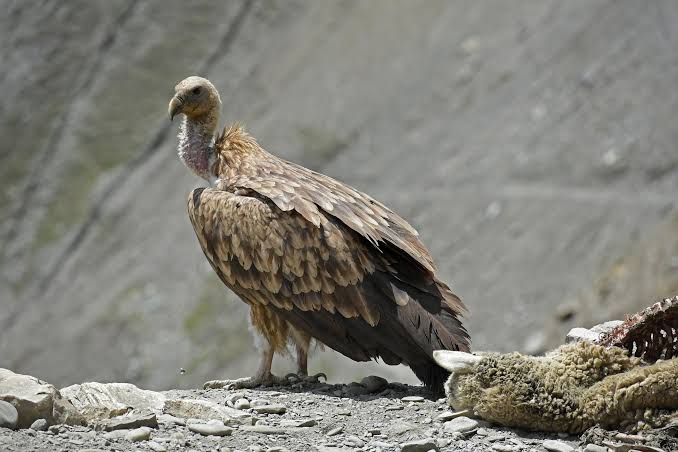
Vultures at a Carcass: Roles by Species and Why Declines Matter
The morning sun rises over Kenya’s Maasai Mara National Reserve as a group of vultures circles above the savannah. Below them lies the remains of a wildebeest killed during the night.
One large vulture lands nearby, spreading its enormous wings. Within minutes, more birds arrive. Some begin tearing at exposed flesh, while smaller vultures wait around the edges for an opportunity to feed.
To a first-time safari visitor, the gathering may look like a noisy competition. However, different vulture species possess specialised beaks, feeding techniques and behaviours that allow them to exploit different parts of a carcass.
Understanding vulture feeding behaviour at a carcass reveals one of the most important ecological processes in African wildlife habitats.
Vultures rapidly remove dead animal remains, recycle nutrients and help reduce the opportunities for other scavengers and potentially harmful microorganisms to proliferate.
Unfortunately, many African vultures are experiencing severe population declines.
This guide explains the roles different vultures play at a carcass, how they interact and why protecting them matters for wildlife conservation and ecosystem health.
1. Why Do Vultures Gather Around Carcasses?
Vultures are specialised scavenging birds that obtain most or all of their food from dead animals.
Their excellent eyesight helps them locate carcasses from considerable distances.
Some species also watch the movements of other vultures, eagles and mammalian scavengers.
When one bird descends towards a feeding opportunity, others may follow.
Large animal carcasses can attract numerous birds because they provide substantial quantities of food.
However, not every vulture feeds at the same time.
Size, species, beak strength, numbers and the condition of the carcass influence access.
2. Different Vultures Have Different Feeding Roles
African savannahs support several vulture species, each with distinctive feeding characteristics.
Their differences allow them to consume various parts of a dead animal.
Vulture Species and Feeding Specialisations
| Vulture Species | Typical Feeding Role |
|---|---|
| Lappet-faced vulture | Tears tough skin, muscle and connective tissue |
| White-backed vulture | Consumes exposed flesh and internal organs |
| Rüppell’s vulture | Feeds on soft tissues and internal organs |
| White-headed vulture | Tears flesh and uses smaller carcasses |
| Hooded vulture | Picks small scraps from carcasses and surrounding ground |
| Egyptian vulture | Takes small remains, scraps and varied supplementary foods |
| Bearded vulture | Specialises in bones, mainly in mountainous habitats |
These roles overlap, and the exact feeding order changes with circumstances.
The bearded vulture is not a regular participant at typical lowland savannah carcasses.
3. Lappet-faced Vulture: The Powerful Carcass Opener
The lappet-faced vulture is among the largest and most powerful African vultures.
It has a massive hooked beak capable of tearing through tough animal hide.
This gives it an important advantage when a carcass has not yet been opened by predators.
A lappet-faced vulture can tear into skin and connective tissue that smaller vultures struggle to penetrate.
It may also dominate competing birds through its size and strength.
How to Identify It
The lappet-faced vulture has a large body, dark plumage, pale thighs and a powerful head with pinkish exposed skin.
Its strong beak is particularly noticeable.
Although it is often dominant, it does not always arrive first or feed without competition.
4. White-backed Vulture: The Busy Group Feeder
African white-backed vultures are among the familiar scavengers seen gathering around large carcasses in East African savannahs.
They often arrive in groups and compete intensely for exposed meat.
Their relatively long necks help them reach into carcass openings.
They are particularly effective at removing soft tissues and internal organs.
Visitors may see several birds pushing, hissing, spreading their wings and attempting to reach the same feeding position.
This behaviour can look chaotic but allows them to consume large amounts of carrion quickly.
White-backed vultures are currently classified as Critically Endangered, making their continued decline a major conservation concern.
5. Rüppell’s Vulture: Another Specialist in Soft Tissue
Rüppell’s vultures are large soaring scavengers often encountered in the Serengeti–Mara ecosystem.
They are known for their mottled plumage and pale markings around the head and neck.
Like white-backed vultures, they specialise in feeding on softer parts of carcasses.
These two species often appear together, particularly around large dead herbivores.
Their numbers and competitive interactions influence which birds obtain food.
Rüppell’s vultures can travel substantial distances while searching for feeding opportunities.
However, their reliance on widely distributed carcasses also exposes them to threats across large landscapes.
6. White-headed Vulture: The More Solitary Scavenger
White-headed vultures generally occur in smaller numbers at carcasses than white-backed vultures.
They have a distinctive pale head, contrasting dark body and colourful facial skin.
Their strong beaks allow them to tear flesh and handle tougher materials.
They sometimes visit smaller carcasses where competition is limited.
They can also take small live prey occasionally.
Because of their different feeding habits, they contribute to scavenging even when large groups of other vultures are absent.
7. Hooded Vulture: The Small-Scrap Specialist
The hooded vulture is smaller than many other African vultures.
Its slender beak allows it to pick up small pieces of flesh and food left behind by larger scavengers.
It may feed around the edges of a carcass or collect scraps from nearby ground.
Hooded vultures also use other food sources and sometimes forage around human settlements.
Their smaller size can make them vulnerable to displacement by larger birds.
However, they may benefit by arriving early or continuing to feed after other vultures have departed.
Their role demonstrates why smaller scavengers remain important even when large vultures dominate the scene.
8. Egyptian Vulture: An Opportunistic Cleaner
The Egyptian vulture is one of the smaller vulture species found in parts of Africa.
Adults are mainly white with black flight feathers and a yellow face.
Unlike larger vultures, Egyptian vultures often concentrate on smaller food items.
They may pick scraps from bones and feed on insects or other available foods.
This species is also known for its unusual ability to use stones to break open large eggs in certain circumstances.
Egyptian vultures are Endangered globally.
Their decline reflects a combination of poisoning, unsafe infrastructure and other pressures across their extensive range.
9. Is There a Fixed Feeding Order at a Carcass?
Not completely.
It is tempting to imagine a strict sequence in which large vultures feed first and smaller species arrive only after the others leave.
In reality, feeding behaviour is more flexible.
The first bird may be a small scavenger, an eagle or a vulture that happens to discover the carcass.
Large lappet-faced vultures can open tough hides, but white-backed and Rüppell’s vultures may arrive earlier and feed through openings made by predators.
Factors Influencing Feeding Order
| Factor | Effect |
|---|---|
| Carcass size | Larger carcasses attract more scavengers |
| Whether skin is already open | Determines access to soft tissue |
| Vulture species | Influences feeding ability |
| Number of birds | Large groups can displace individuals |
| Presence of predators | May delay vulture feeding |
| Carcass age | Changes available edible material |
| Individual dominance | Influences access to preferred feeding areas |
Research in Kenya’s Maasai Mara confirms that species differ in carcass use and competitive relationships.
10. How Do Vultures Find Dead Animals?
Vultures use keen eyesight to search large areas while soaring on rising warm air.
They may spot a carcass directly or observe other birds descending.
Predator activity can also provide clues.
A concentration of vultures may indicate a feeding opportunity nearby.
However, vultures gathering or circling does not automatically mean a lion has made a fresh kill.
They may be responding to another scavenger, an old carcass or an unrelated food source.
Experienced safari guides interpret these signals alongside other wildlife activity.
11. Why Are Vultures Important for Ecosystem Health?
Vultures remove dead animal tissue efficiently.
A gathering of hungry scavengers can consume much of a carcass before it remains exposed for extended periods.
This helps recycle nutrients through the food web.
Rapid carcass removal can also reduce opportunities for certain insects, mammals and microorganisms to multiply around exposed remains.
Ecological Benefits of Vultures
| Function | Why It Matters |
|---|---|
| Carcass removal | Reduces the persistence of exposed animal remains |
| Nutrient recycling | Returns organic material to food webs |
| Scavenger competition | Influences access by other carrion feeders |
| Ecosystem sanitation | May reduce some contamination pathways |
| Food-web stability | Supports natural scavenger relationships |
Vultures are sometimes described as nature’s clean-up crew.
That description is appropriate, but it does not mean they eliminate every disease risk associated with carcasses.
12. Why Are African Vulture Populations Declining?
Many African vulture species have experienced dramatic declines over recent decades.
Some populations have fallen by more than 90% in particular regions or periods.
The leading threats are strongly connected to human activities.
Poisoning is particularly serious because one contaminated carcass can attract and kill many vultures.
Other threats include dangerous electricity infrastructure, deliberate killing, habitat loss and contamination.
Major Threats to African Vultures
| Threat | How It Affects Vultures |
|---|---|
| Poisoned carcasses | Can kill many feeding birds simultaneously |
| Retaliatory predator poisoning | Vultures die after feeding on poisoned remains |
| Poaching-related poisoning | Birds may be deliberately killed to conceal illegal activity |
| Power lines | Cause collisions and electrocution |
| Belief-based killing | Birds are killed for body parts |
| Habitat loss | Reduces suitable nesting and feeding areas |
| Lead contamination | Poisoning from contaminated carcasses |
| Dangerous veterinary drugs | Some medicines in carcasses can be toxic to vultures |
Because many vultures reproduce slowly, populations may take years to recover from mass mortality events.
13. What Happens When Vultures Disappear?
Without healthy vulture populations, carcasses may remain available to other scavengers for longer periods.
This can change the balance between birds, mammals, insects and microorganisms.
In some ecosystems, greater access to carcasses by scavenging mammals may create additional opportunities for disease transmission.
However, the precise public-health consequences depend on local conditions and the species involved.
A 2025 BirdLife International assessment estimated that vultures provide ecosystem services valued at approximately US$1.8 billion annually across three Southern African countries: Botswana, Zambia and Zimbabwe.
This estimate includes sanitation, pest-control and other ecosystem-related values.
It illustrates the importance of vultures beyond wildlife photography and tourism.
14. How Are Conservationists Protecting Vultures?
Conservation organisations are working across Africa to address the threats.
One important strategy is reducing wildlife poisoning.
This involves working with livestock owners to prevent predator attacks without using poisoned carcasses.
Other measures include responding rapidly to poisoning incidents, improving electricity infrastructure and monitoring breeding populations.
Main Conservation Actions
- Educating communities about the dangers of poisoned carcasses.
- Supporting predator-proof livestock enclosures.
- Training teams to respond to wildlife poisoning.
- Monitoring vultures with tracking devices.
- Protecting nesting habitats.
- Reducing dangerous power-line collisions.
- Promoting safer veterinary medicine and ammunition practices.
In the Serengeti–Mara ecosystem, conservation partnerships have supported community-based approaches to reducing wildlife poisoning.
15. Where Can You Watch Vultures in East Africa?
Several East African protected areas offer opportunities to observe vultures soaring, resting and feeding.
| Country | Wildlife Destination | Viewing Opportunities |
|---|---|---|
| Kenya | Maasai Mara National Reserve | Mixed vulture species around carcasses |
| Kenya | Tsavo ecosystem | Savannah scavengers and soaring vultures |
| Tanzania | Serengeti National Park | Large scavenger gatherings |
| Tanzania | Ngorongoro Conservation Area | Vultures in open savannah habitats |
| Tanzania | Tarangire National Park | Vultures in woodland and grassland |
| Uganda | Murchison Falls National Park | Savannah vultures and other scavengers |
| Uganda | Queen Elizabeth National Park | Vultures around natural carcasses |
| Rwanda | Akagera National Park | Vulture sightings in suitable savannah habitats |
Sightings depend on wildlife movements, season and species distribution.
Not every park will provide opportunities to observe all the species discussed.
16. How to Watch and Photograph Vultures Responsibly
A carcass can attract predators and scavengers, making it a particularly sensitive wildlife viewing location.
Visitors should remain inside their safari vehicle where required.
Use a telephoto lens rather than asking the guide to drive too close.
Observe which species arrive, how they interact and which parts of the carcass they consume.
Watch for wing spreading, chasing and differences in beak size.
Avoid blocking the birds’ access or deliberately disturbing them for photographs.
A successful observation focuses on natural behaviour rather than forcing dramatic reactions.
Frequently Asked Questions
Which Vulture Opens a Carcass?
Lappet-faced vultures are particularly well equipped to tear through tough hide, although predators and other scavengers may open carcasses first.
Why Do Different Vultures Feed Together?
Different beak shapes and feeding strategies allow them to exploit different tissues, although they still compete for food.
Are Vultures Dangerous to Humans?
Vultures generally avoid direct confrontation with people. Visitors should nevertheless keep a safe distance and never approach carcasses on foot without authorisation.
Why Are Vultures Becoming Endangered?
Poisoning, electrocution, collisions, deliberate killing and habitat pressures are major contributors.
Can Vultures Help Prevent Disease?
Rapid carcass removal can reduce some exposure pathways, but its effect on specific diseases varies by ecosystem and cannot be guaranteed.
Why Every Vulture Matters
A carcass on the African savannah supports a surprisingly complex community of scavengers.
Large lappet-faced vultures can tear open tough skin. White-backed and Rüppell’s vultures consume exposed flesh and organs. Smaller species, including hooded and Egyptian vultures, collect scraps and other remaining food.
Together, these birds remove animal remains and help maintain the natural recycling processes of African ecosystems.
However, poisoning and other threats are causing serious population declines.
Protecting vultures therefore means protecting more than individual bird species.
It means preserving an important ecological service that benefits wildlife habitats and potentially human communities.





No comment