
South Africa’s Kruger National Park vs the Serengeti: An Honest Comparison
Kruger National Park in South Africa and Serengeti National Park in Tanzania are two of Africa’s most recognised safari destinations. Both offer opportunities to see lions, elephants, leopards, buffaloes, giraffes, zebras and many other animals in their natural habitats. Both also have established conservation programmes, experienced safari guides and accommodation ranging from simple camps to luxury lodges.
However, the experience of visiting these parks is quite different. Kruger is known for its excellent self-drive facilities, varied habitats and strong Big Five viewing opportunities. The Serengeti is famous for its enormous open plains, large predator populations and the annual Great Migration of wildebeest and zebras.
Choosing between them depends on what you want from your safari. If you prefer independent travel, flexible accommodation and the option to explore at your own pace, Kruger may suit your plans. If you want vast savannah landscapes, large wildlife herds and the opportunity to follow the Great Migration, the Serengeti offers a different kind of experience.
This comparison examines wildlife, scenery, safari activities, accommodation, costs, accessibility and seasonal conditions to help you decide which destination fits your travel plans.
Where are Kruger and the Serengeti located?
Kruger National Park is located in northeastern South Africa, mainly across Limpopo and Mpumalanga provinces. It covers approximately 19,500 square kilometres and forms part of a wider conservation landscape that includes private reserves and neighbouring protected areas.
The park stretches along the borders with Mozambique and Zimbabwe. Its size, road network and range of habitats make it one of Southern Africa’s most important wildlife destinations. Visitors can enter through several gates and explore different sections using the park’s established network of tarred and gravel roads.
Serengeti National Park is located in northern Tanzania. It covers approximately 14,750 square kilometres and forms part of the larger Serengeti ecosystem, which extends into Kenya’s Maasai Mara and includes several surrounding conservation areas.
The Serengeti is characterised by extensive grasslands, open savannah, rocky outcrops known as kopjes, river systems and woodland areas. Its location within the migration ecosystem makes it one of the most important wildlife destinations in East Africa.
Although Kruger is larger in area, the Serengeti’s surrounding ecosystem extends far beyond the national park boundary. This wider landscape supports the seasonal movement of millions of wildebeest, zebras and gazelles.
Wildlife viewing: What can you expect to see?
Both parks support an impressive variety of African wildlife. However, their habitats and animal populations create different viewing experiences.
Kruger is particularly well known for its Big Five, which include lions, leopards, elephants, buffaloes and rhinoceroses. It also supports giraffes, zebras, hippos, crocodiles, hyenas, cheetahs, African wild dogs and numerous antelope species.
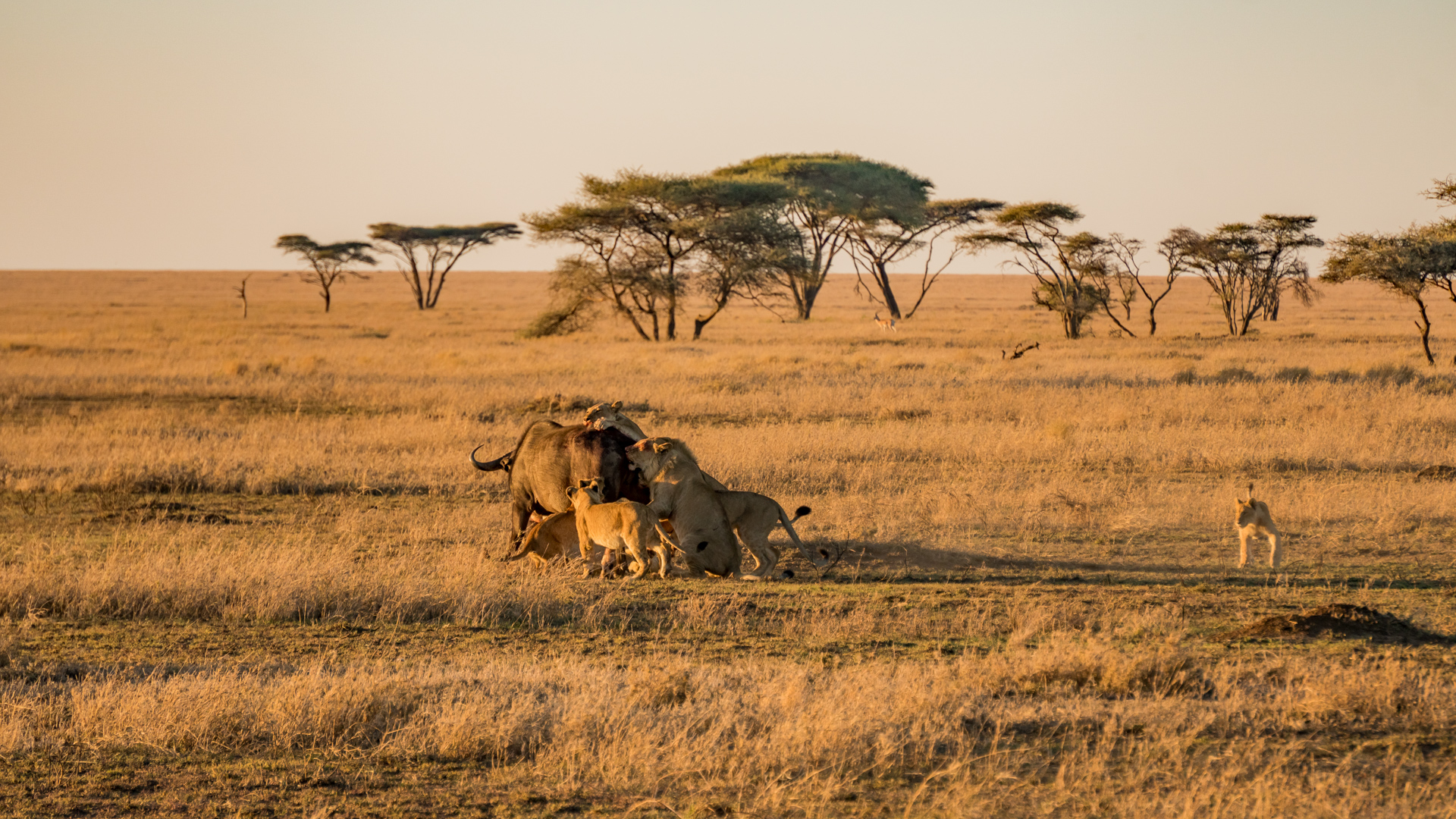
The Serengeti is famous for its large populations of lions, cheetahs, leopards, elephants, buffaloes, giraffes, zebras, wildebeest and hyenas. Its open grasslands make it especially rewarding for observing predators and large herds across considerable distances.
Neither destination guarantees sightings of every animal. Wildlife moves freely, and encounters depend on season, location, weather and luck.
The Big Five: Which park offers better sightings?
Both Kruger and the Serengeti support all five members of the Big Five. However, the chances of seeing particular species differ.
Kruger has a strong reputation for rhinoceros viewing. It supports populations of both white and black rhinos, although sightings are never guaranteed. Visitors also have good opportunities to see elephants, buffaloes and lions across different sections of the park.
Leopards are another major attraction in Kruger. They can be difficult to spot because they spend much of their time in trees, dense vegetation and shaded areas. Certain riverine sections, particularly around the Sabie River, are well known for leopard sightings.
The Serengeti offers excellent opportunities to see lions and other large predators. Its open plains make it easier to scan the landscape, especially when animals gather around water sources or follow migrating herds.
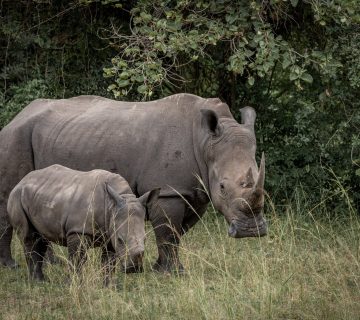
Rhinos are present in the Serengeti, but they are rare and difficult to encounter. Visitors whose main priority is seeing rhinoceroses may find Kruger more suitable.
For a broader Big Five experience, both parks are strong choices. The main difference is that Kruger generally offers better opportunities for rhino viewing, while the Serengeti provides particularly rewarding opportunities to observe large predator populations and their interactions with migrating herds.
The Great Migration: The Serengeti’s biggest attraction
The Great Migration is one of the main reasons international travellers choose the Serengeti. Every year, large herds of wildebeest, zebras and gazelles move through the Serengeti ecosystem in search of fresh grazing and water.
The movement follows seasonal rainfall and changing pasture conditions. It is not a single event that takes place on one particular day. Instead, it is a continuous cycle involving migration, calving, predator activity and river crossings.
The southern Serengeti and Ndutu area are associated with the calving season, usually around January and February. During this period, large numbers of wildebeest give birth, attracting predators such as lions, cheetahs and hyenas.
As the grazing conditions change, the herds move towards the western and northern parts of the ecosystem. Around the Grumeti River, some animals encounter crocodile-filled waterways during their seasonal movement.
Later in the year, usually between July and October, parts of the migration may be found in northern Serengeti, where herds move around the Mara River and towards Kenya’s Maasai Mara. River crossings can provide dramatic wildlife encounters, although their timing and location are unpredictable.
Kruger does not host this migration. It has its own seasonal wildlife movements and changing concentrations of animals around water sources, but it does not experience a comparable annual movement of wildebeest across a continental ecosystem.
If witnessing the Great Migration is your main safari objective, the Serengeti is the appropriate choice. You should plan your travel around the expected location of the herds rather than assume that every area of the park will offer migration sightings throughout the year.
Landscapes and scenery
The scenery in Kruger and the Serengeti creates two distinct safari environments.
The Serengeti is famous for its expansive grasslands, distant horizons and scattered rocky outcrops. These open landscapes allow visitors to observe animals over long distances. Large herds moving across the plains can create impressive photographic opportunities, especially during early morning and late afternoon.
The kopjes are another distinctive feature. These granite rock formations rise above the surrounding grasslands and provide resting places and lookout points for lions and other animals.
Kruger has a more varied landscape. Its habitats include open grassland, woodland, dense bushveld, riverine forest, rocky areas and seasonal watercourses. The scenery changes as you travel between different sections of the park.
Some areas have thick vegetation that makes wildlife harder to spot, while others provide open views across grasslands and riverbanks. The Sabie, Crocodile, Olifants and Limpopo river systems contribute to the park’s ecological diversity.
For photographers who prefer wide-open savannah views, the Serengeti may be more appealing. Travellers who enjoy changing habitats, wooded landscapes and river scenery may appreciate Kruger’s variety.
Safari activities: Self-drive or guided experience?
One of the biggest differences between Kruger and the Serengeti is how visitors explore the parks.
Kruger is particularly suitable for self-drive safaris. Visitors can hire a vehicle, enter through an authorised gate and follow the park’s road network independently. This gives travellers considerable flexibility over their daily schedules and the areas they want to explore.
Self-driving is popular among South African residents and international visitors who prefer independent travel. The park has established rest camps, visitor facilities, maps and designated picnic sites. Visitors must follow park speed limits, gate times and wildlife safety regulations.
Guided game drives are also available through SANParks camps and private lodges. These drives allow visitors to benefit from experienced guides who understand animal behaviour and can help locate wildlife.
The Serengeti is generally explored through organised guided safaris. Most visitors travel in registered safari vehicles with professional guides who understand the park’s roads, wildlife movements and seasonal conditions.
Self-driving arrangements are more complicated than in Kruger. The road network includes rough tracks, distances can be considerable, and navigation requires preparation. Visitors should understand the applicable park regulations and vehicle requirements before considering independent travel.
Guided safaris are particularly useful when following the Great Migration. Experienced guides can advise on where the herds are likely to be and adjust routes according to wildlife movements.
Night drives and walking safaris
Kruger offers several activities beyond standard daytime game drives. Guided night drives are available through selected SANParks camps, allowing visitors to search for nocturnal animals such as genets, civets, bush babies, owls and predators.
Guided bush walks are another option. Visitors can explore selected areas on foot with trained field guides and armed escorts, learning about tracks, plants, smaller animals and the relationships between different species.
Private reserves within the Greater Kruger landscape may offer additional activities, including off-road game drives and guided walks, depending on their individual rules and operating arrangements.
In the Serengeti National Park, activities are more tightly structured around guided game drives. Walking safaris and night drives are generally restricted or unavailable within the main national park, although selected private concessions and surrounding conservation areas offer additional experiences under their own regulations.
Hot-air balloon safaris are among the Serengeti’s best-known activities. Visitors rise before sunrise and travel over the plains, observing the landscape and wildlife from above. The experience is usually followed by a breakfast in the bush.
If you want a safari with several activity options, Kruger and the surrounding private reserves provide considerable flexibility. If a balloon safari over the Serengeti plains is high on your wish list, Tanzania offers a distinctive experience.
Accommodation: Lodges, camps and rest camps
Both destinations offer accommodation for different budgets, although the options are organised differently.
Kruger has a well-established network of public rest camps managed by South African National Parks. These include camps with bungalows, cottages, family accommodation, campsites and basic facilities.
Popular rest camps include Skukuza, Lower Sabie, Satara, Olifants and Letaba. Each offers access to different parts of the park, so your choice can influence the wildlife habitats you explore.
Private lodges are available within the wider Greater Kruger landscape. Areas such as Sabi Sand, Timbavati and Manyeleti offer luxury accommodation, guided game drives and more personalised safari arrangements.
The Serengeti has a wide range of tented camps, permanent safari lodges and seasonal mobile camps. Some properties are located near central Seronera, while others are positioned in the northern or southern sections to follow seasonal wildlife movements.
Mobile camps are particularly useful for migration-focused safaris because they can be located near areas where the herds are expected to move. However, availability depends on the season and the operator.
Luxury lodges in the Serengeti often include meals, game drives and other services in their rates. This makes the safari more structured, with fewer independent decisions required during the stay.
Kruger offers more flexibility for visitors who want to manage their own accommodation and meals. The Serengeti is particularly suitable for travellers who prefer a fully organised safari experience.
Safari costs: Which is more affordable?
Kruger is generally more affordable for travellers who are comfortable with self-driving and staying in public rest camps. You can control much of your expenditure by choosing your vehicle, accommodation, meals and number of guided activities.
This makes it possible to organise a safari across different budget levels. Visitors can stay in campsites or simple bungalows, prepare their own meals and pay separately for optional guided drives.
Private lodges in Greater Kruger can be expensive, particularly those offering luxury accommodation, expert guiding and exclusive game-viewing experiences.
The Serengeti is generally more expensive for most international visitors. The costs of park fees, accommodation, safari vehicles, guides and transport can add up quickly.
Many visitors fly from Arusha or Kilimanjaro International Airport to airstrips inside or near the park. These flights can save significant driving time but increase the overall cost.
A road-based safari is another option, although distances can be long and journey times substantial. Accommodation and park charges also need to be included in the budget.
The final cost in either destination depends on travel dates, accommodation standards, group size, transport arrangements and the length of stay. It is better to compare complete itineraries than headline accommodation prices.
For budget-conscious travellers, Kruger usually offers more ways to reduce costs. The Serengeti may require a larger budget, particularly when the itinerary includes remote camps and internal flights.
Accessibility and getting there
Kruger is relatively easy to reach from Johannesburg, one of South Africa’s major international gateways. Visitors can travel by road to the park or use domestic flights to airports serving the surrounding region.
The journey from Johannesburg depends on the chosen entrance gate and accommodation location. Some travellers prefer to fly to Kruger Mpumalanga International Airport or other regional airports before arranging a transfer or rental vehicle.
The park’s multiple entrances and extensive road network make it suitable for independent visitors.
The Serengeti is usually accessed through northern Tanzania. Travellers commonly arrive through Kilimanjaro International Airport or Arusha Airport before continuing by road or light aircraft.
Arusha is an important starting point for northern Tanzania safaris. Visitors often combine the Serengeti with Tarangire National Park, Lake Manyara National Park and the Ngorongoro Conservation Area.
The journey to the Serengeti can take several hours by road, depending on the starting point and destination within the park. Fly-in safaris reduce travel time but generally cost more.
Kruger is more convenient for visitors already travelling through South Africa. The Serengeti fits naturally into a northern Tanzania safari circuit.
Best time to visit Kruger National Park
Kruger can be visited throughout the year, but the seasons influence wildlife viewing and vegetation.
The dry season generally runs from May to September. During these months, vegetation becomes thinner, and animals often concentrate around permanent rivers and waterholes. This can make wildlife easier to locate.
June, July, August and September are particularly popular for game viewing. Temperatures can be cool in the mornings and evenings, so warm clothing is useful for early drives.
The rainy season generally begins around October or November and continues into March or April. The landscape becomes greener, migratory birds arrive and many animals give birth.
Summer can be hot, with afternoon thunderstorms and thicker vegetation. Wildlife may be more difficult to see in some areas, but the scenery and birdlife are excellent.
For general wildlife viewing, the dry winter months are often preferred. However, the wet season offers a different experience that is attractive to birdwatchers and photographers.
Best time to visit the Serengeti
The Serengeti also offers year-round safari opportunities, but the best time depends on which part of the Great Migration you want to experience.
January and February are generally associated with the calving season in the southern Serengeti and Ndutu area. Large numbers of wildebeest give birth during this period, attracting predators and creating excellent wildlife photography opportunities.
Around March and April, the herds begin moving away from the southern plains as rainfall and grazing conditions change. The central and western sections may become important areas during different stages of this movement.
From approximately June to October, visitors often focus on the western and northern Serengeti. The timing of river crossings varies, and no operator can guarantee that a crossing will take place during a particular game drive.
November and December often bring the herds back towards the southern plains as seasonal rains support new grass growth.
The migration does not follow an exact calendar. Rainfall patterns, grazing conditions and local movements influence where the animals are found.
If you are planning a migration safari, select your travel dates according to the expected location of the herds and choose accommodation accordingly.
Birdwatching: Kruger or the Serengeti?
Both parks are excellent birdwatching destinations, with more than 500 recorded bird species in each. Their habitats support resident birds, seasonal migrants and a variety of raptors, waterbirds and woodland species.
Kruger offers particularly varied bird habitats. Visitors can look for hornbills, rollers, bee-eaters, kingfishers, storks, eagles and vultures. The wet season is especially interesting because migratory species arrive and breeding activity increases.
The Serengeti also has rich birdlife, including ostriches, secretary birds, kori bustards, vultures, eagles and various grassland species. Its open plains provide good visibility for spotting larger birds.
For dedicated birdwatchers, either destination can be rewarding. The choice depends on the species you want to see and the habitats you prefer to explore.
Kruger’s combination of woodland, rivers and open grassland gives it considerable habitat diversity. The Serengeti’s open plains provide excellent opportunities to observe large ground-dwelling birds and raptors.
Photography opportunities
The Serengeti is particularly attractive for wide-angle wildlife photography. Its open landscapes make it easier to photograph large herds, predators moving across grasslands and animals framed against distant kopjes.
The Great Migration provides opportunities to photograph wildebeest, zebras, predators and dramatic river crossings. However, river crossings are unpredictable, and photographers may need patience to capture the action.
Kruger offers a different photographic environment. Its woodland and riverine habitats provide opportunities for close encounters with elephants, leopards, rhinos and other animals.
The vegetation can make photography more challenging because animals may be partly hidden behind trees or bushes. However, this can create interesting compositions and natural backgrounds.
Private reserves in Greater Kruger often allow vehicles to move off designated roads under controlled conditions. This can provide better photographic positioning, depending on the reserve’s rules.
Both parks are excellent for wildlife photography, but the Serengeti is particularly suited to open-plains compositions, while Kruger offers varied habitats and opportunities to photograph a wider range of species in different settings.
Crowds and the overall safari atmosphere
Both destinations attract international visitors, particularly during peak travel seasons.
Kruger can become busy around popular rest camps, main roads and waterholes. Self-drive visitors often gather where predators or other sought-after animals have been spotted. This can lead to several vehicles sharing a wildlife sighting.
The park is large enough for visitors to explore quieter areas, although popular southern sections generally receive substantial traffic.
Private reserves in Greater Kruger often provide a more exclusive experience. They have fewer vehicles and may offer controlled access to wildlife sightings.
The Serengeti also experiences crowds, particularly around popular predator sightings and migration hotspots. During the river-crossing season, several safari vehicles may gather along suitable viewing areas.
However, the park’s extensive landscape means that quieter areas are available, especially when visitors travel away from the busiest wildlife locations.
The overall atmosphere differs. Kruger can feel more accessible and structured, particularly around public rest camps. The Serengeti often feels more remote, especially when staying in mobile camps far from the main tourism centres.
Safety and health considerations
Both parks require visitors to follow wildlife safety regulations. Animals are wild, and even familiar species can be dangerous when approached too closely.
In Kruger, self-drive visitors must remain inside their vehicles except at designated areas. Feeding animals, leaving vehicles in restricted locations and ignoring park rules can create serious risks.
Visitors should also pay attention to malaria advice. Kruger lies in a malaria-risk region, particularly during warmer and wetter months. The level of risk varies by area and season, so travellers should consult a qualified health professional before departure.
The Serengeti is also within a malaria-risk area. Travellers should obtain appropriate medical advice and follow recommended mosquito-bite prevention measures.
Both destinations have remote sections where medical assistance may take time to reach. Travel insurance, suitable medication, insect repellent and preparation for changing weather conditions are important.
Families travelling with young children should check lodge age restrictions and activity rules before booking. Some private lodges have minimum age requirements for game drives or walking activities.
Can you visit Kruger and the Serengeti on one trip?
Yes, it is possible to combine Kruger and the Serengeti in one extended African holiday. However, they are in different parts of the continent, and travelling between them requires international flight connections.
A combined itinerary could begin in South Africa with several days in Kruger, followed by travel through a suitable international hub to Tanzania. The trip could then continue with a northern Tanzania safari covering the Serengeti and Ngorongoro Conservation Area.
This arrangement is best suited to travellers with sufficient time and budget. You should allow for international connections, airport transfers and possible overnight stops.
Trying to combine both parks in a short holiday can create unnecessary travel pressure. A longer trip allows you to enjoy each destination without spending too much time in transit.
If you have limited time, choose the park that best matches your main wildlife interests.
Which park is better for families?
Both parks can work for family safaris, but the experience depends on the children’s ages, accommodation choices and planned activities.
Kruger offers considerable flexibility for families. Public rest camps provide different accommodation types, and self-driving allows parents to manage the pace of the day. Families can stop for meals, take breaks and choose shorter game drives.
Some private lodges in Greater Kruger provide family suites, children’s activities and specialised safari programmes. However, minimum age requirements vary.
The Serengeti also has family-friendly lodges and tented camps. Many offer comfortable accommodation, guided drives and meals included in the package. Some properties provide family rooms and activities for children.
However, long road journeys and remote camp locations may be challenging for younger children. Families should also check age restrictions for game drives and balloon safaris.
Kruger may be more practical for families seeking independent travel and flexible daily schedules. The Serengeti can work well for families who prefer a fully organised safari with suitable accommodation and transport.
Which park should you choose?
The decision becomes easier when you consider the experience you want rather than comparing the parks only by the number of animals.
Choose Kruger if you want:
- A flexible safari with self-drive options.
- Strong opportunities to see the Big Five, including rhinoceroses.
- A range of public rest camps and private lodges.
- A safari that can fit different budgets.
- A destination that can be combined with Cape Town, Johannesburg or the Panorama Route.
Choose the Serengeti if you want:
- The Great Migration and its seasonal wildlife movements.
- Extensive open grasslands and dramatic savannah scenery.
- Excellent opportunities to observe lions, cheetahs and other predators.
- A guided safari with professional wildlife interpretation.
- The option to combine your trip with Ngorongoro, Tarangire or Zanzibar.
Neither park is universally better. The right choice depends on your budget, preferred travel style, available time and wildlife priorities.
Is Kruger or the Serengeti better for a first African safari?
For a first safari, Kruger can be a practical introduction to African wildlife. Its road network, public rest camps and self-drive facilities make it relatively easy to organise an independent visit. You can also choose guided activities if you prefer not to drive.
The Serengeti is particularly rewarding for travellers who want the classic East African safari experience. Its open plains, large wildlife herds and famous migration create opportunities that are difficult to find elsewhere.
If your main goal is to see the Great Migration, the Serengeti is the clear choice. If you want flexibility, a wider range of budget options and opportunities to explore independently, Kruger may suit you better.
Both destinations deserve their reputations. Kruger offers a varied and accessible safari experience, while the Serengeti delivers the scale, scenery and wildlife movement that have made East Africa famous among safari travellers.




No comment