
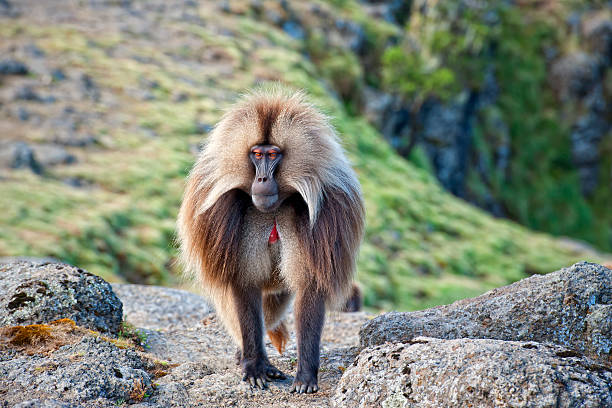
Simien Mountains in Ethiopia :Gelada Baboons and Cliff Walks
The Simien Mountains in Ethiopia offer one of Africa’s most spectacular highland landscapes, combining dramatic cliffs, deep valleys, rare wildlife and unforgettable mountain walking experiences. Located in northern Ethiopia, Simien Mountains National Park is famous for its large groups of gelada monkeys, endangered Walia ibex and extraordinary views across the Ethiopian Highlands.
Unlike East Africa’s tropical forests and savannah parks, the Simien Mountains feature vast Afroalpine grasslands, jagged volcanic peaks and steep escarpments that descend into enormous valleys.
Visitors traditionally explore the region through guided nature walks, scenic viewpoints and multi-day mountain treks.
For travellers interested in wildlife photography, mountain scenery and Ethiopia’s natural heritage, the Simien Mountains are a remarkable destination.
Important travel update, October 2026: The park lies in Ethiopia’s Amhara Region, for which several governments currently advise against all travel because of armed conflict and insecurity. The article describes the park’s attractions and established trekking routes, not a confirmation that these activities are presently safe or accessible.
Where Are the Simien Mountains Located?
The Simien Mountains lie in northern Ethiopia’s Amhara Region, within the Ethiopian Highlands.
The historic city of Gondar has traditionally served as the main gateway, with Debark providing access to the national park.
Quick Facts About the Simien Mountains
| Feature | Description |
|---|---|
| Country | Ethiopia |
| Region | Amhara |
| Protected area | Simien Mountains National Park |
| UNESCO designation | 1978 |
| Highest peak | Ras Dashen (Ras Dejen) |
| Peak elevation | Approximately 4,550 metres |
| Famous wildlife | Geladas and Walia ibex |
| Main activities | Hiking and wildlife watching |
| Landscape | Cliffs, valleys and highland grasslands |
| Traditional trekking gateway | Debark |
Why Are the Simien Mountains Special?
The mountains contain some of Africa’s most dramatic high-altitude scenery.
Millions of years of geological activity and erosion created deep valleys, sharp ridges and towering cliffs.
Some escarpments descend approximately 1,500 metres.
UNESCO World Heritage Recognition
The national park became a UNESCO World Heritage Site in 1978.
Its international importance comes from its extraordinary scenery and rare wildlife.
The protected landscape supports animals and plants adapted to the Ethiopian Highlands, including species found nowhere else.
Gelada Baboons: The Main Wildlife Attraction
Geladas are among the Simien Mountains’ most fascinating animals.
Although commonly called gelada baboons, they are not true baboons. They belong to a separate genus, Theropithecus.
Their scientific name is Theropithecus gelada.
What Makes Geladas Different?
Geladas spend much of their time feeding on grasses.
They have distinctive red patches of exposed skin on their chests.
Adult males often develop impressive flowing manes.
Their social behaviour, facial expressions and vocal communication make them particularly interesting to observe.
Why Are Geladas Called Bleeding-Heart Monkeys?
The name comes from the conspicuous reddish patch on their chests.
Unlike many other primates, geladas possess these visible chest markings.
Understanding Their Appearance
| Feature | Description |
|---|---|
| Chest | Distinctive red skin patch |
| Male appearance | Large mane |
| Main diet | Grasses |
| Habitat | Ethiopian highland grasslands |
| Movement | Mostly ground-dwelling |
| Social behaviour | Large organised groups |
Their unusual appearance makes them popular subjects for wildlife photography.
Watching Gelada Groups in the Highlands
Geladas live in complex social groups.
Visitors may observe them grazing across open slopes or resting near rocky areas.
What Can You See?
Young geladas sometimes play together while adults feed.
Group members communicate through calls, gestures and facial expressions.
Some gather in impressive numbers across the grasslands.
However, they remain wild animals and should never be approached or fed.
Walia Ibex: Ethiopia’s Rare Mountain Goat
The Walia ibex is another remarkable animal associated with the Simien Mountains.
This endangered wild goat is found naturally only in this mountain range.
What Makes the Walia Ibex Special?
Males possess large, curved horns.
Their strong bodies and specialised hooves help them move across rocky slopes.
They frequently inhabit steep terrain that provides opportunities to escape predators.
Where Might Visitors See Them?
The animals are associated with high cliffs and rocky habitats.
Sightings are less predictable than gelada encounters.
Experienced wildlife guides can help visitors identify suitable observation areas without disturbing the animals.
Ethiopian Wolves in the Simien Mountains
The Ethiopian wolf is one of Africa’s rarest carnivores.
It inhabits high-altitude grasslands and feeds largely on rodents.
Are Wolves Easy to See?
No. Ethiopian wolves are rare and difficult to observe.
They are more frequently associated with Ethiopia’s Bale Mountains, although the Simien Mountains also support an important population.
Any encounter should be appreciated from a respectful distance.
Other Wildlife in the Park
The Simien Mountains support several additional mammals and bird species.
Wildlife Viewing Guide
| Animal | Typical habitat |
|---|---|
| Gelada | Open grasslands |
| Walia ibex | Rocky cliffs |
| Ethiopian wolf | Afroalpine grasslands |
| Klipspringer | Rocky slopes |
| Bushbuck | Woodland |
| Golden jackal | Open habitats |
| Bearded vulture | Mountain cliffs |
Wildlife sightings depend on season, habitat and animal movements.
Birdwatching in the Simien Mountains
The park’s mountain landscapes support an interesting variety of birds.
Large birds of prey are particularly impressive against the dramatic cliffs.
Birds to Look For
The bearded vulture, also called the lammergeier, is among the park’s best-known birds.
Other species include augur buzzards, ravens and several Ethiopian Highland birds.
Early morning walks traditionally provide good opportunities for observing bird activity.
Hiking Through the Simien Mountains
Mountain hiking is one of the park’s defining attractions.
Trails cross open grasslands, rocky ridges and areas overlooking spectacular valleys.
Popular Trekking Areas
| Location | Main attraction |
|---|---|
| Sankaber | Highland scenery and geladas |
| Geech | Open mountain landscapes |
| Imet Gogo | Dramatic escarpment views |
| Chenek | Walia ibex habitat |
| Bwahit | High-altitude trekking |
| Ras Dashen | Ethiopia’s highest summit |
These are established trekking destinations, but present-day route access must be independently confirmed when security conditions permit travel.
Sankaber: An Introduction to the Mountains
Sankaber has traditionally been an important stop on shorter Simien Mountains itineraries.
The surrounding scenery includes open grasslands and dramatic escarpments.
What Makes Sankaber Attractive?
Gelada groups may graze across nearby slopes.
Visitors can appreciate sweeping mountain views.
Its established walking routes have historically made Sankaber an appealing introduction to the region.
Imet Gogo: Spectacular Cliff Views
Imet Gogo is among the Simien Mountains’ most impressive viewpoints.
The landscape contains steep cliffs, deep valleys and striking rock formations.
Experiencing the Escarpment
The views reveal the enormous scale of the mountain range.
Changing light creates dramatic shadows across the valleys.
Visitors should remain on established paths and avoid approaching unstable cliff edges.
Chenek: Highland Wildlife and Scenery
Chenek is an important location on longer trekking itineraries.
The surrounding highland environment provides habitat for Walia ibex and geladas.
Wildlife Photography
The dramatic backdrop creates excellent opportunities for photographing wildlife.
However, steep slopes and changing weather require caution.
Binoculars and a zoom lens allow observation without approaching animals too closely.
Climbing Ras Dashen
Ras Dashen, also called Ras Dejen, is Ethiopia’s highest mountain, rising approximately 4,550 metres above sea level.
Climbing it requires a multi-day trek through demanding high-altitude terrain.
What Makes the Climb Challenging?
Thin air, cold temperatures and long walking distances increase the difficulty.
Adequate acclimatisation is essential.
Travellers should only attempt the summit when conditions are safe, access is permitted and qualified guiding arrangements are available.
Best Time to Visit the Simien Mountains
The relatively dry season, generally October to March, has traditionally provided favourable hiking conditions.
Rainfall increases during other months, affecting trails and visibility.
Seasonal Trekking Guide
| Period | Typical conditions |
|---|---|
| October–November | Greener landscapes after rains |
| December–February | Often dry with cold nights |
| March–May | Increasing rainfall |
| June–September | Main rainy season |
Weather can change rapidly at high elevations.
Accommodation and Trekking Facilities
Traditional trekking itineraries use campsites and selected lodges around the mountain region.
Accommodation ranges from simple mountain camps to more comfortable properties outside the park.
Camping requires appropriate cold-weather equipment.
Facilities, operating status and access conditions should be confirmed rather than assumed.
Safety and Current Travel Restrictions
The Simien Mountains lie in an area affected by serious regional insecurity.
As of October 2026, official travel advisories warn against travel to Amhara. Security circumstances can change without notice.
Visitors should not rely solely on a local operator’s assurance that a route is open.
Consult government travel advice, park authorities and appropriate security information before making any arrangements.
Responsible Wildlife Tourism
The Simien Mountains protect fragile high-altitude ecosystems.
Visitors should avoid feeding geladas or approaching cliff-dwelling wildlife.
Keep to permitted trails, remove litter and respect local communities.
Supporting conservation and responsible local employment helps protect the region’s exceptional natural heritage.
Why the Simien Mountains Are Worth Discovering
The Simien Mountains combine extraordinary landscapes with some of Ethiopia’s most remarkable wildlife.
Geladas grazing across alpine grasslands, Walia ibex navigating rocky cliffs and bearded vultures soaring above deep valleys create unforgettable natural scenes.
The region’s UNESCO recognition reflects its exceptional ecological and geological importance.
When safe access becomes possible, the Simien Mountains offer tremendous potential for wildlife enthusiasts, photographers and experienced hikers.

No comment