
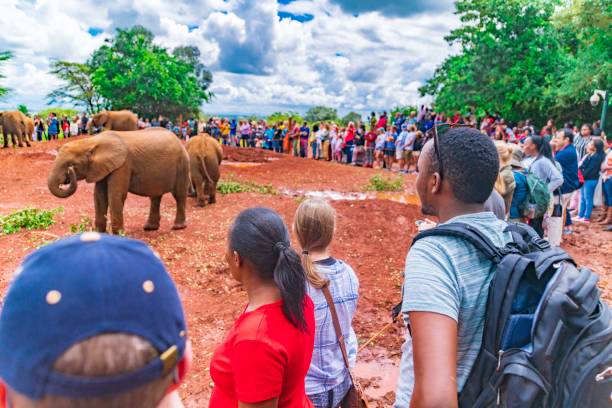
Sheldrick Wildlife Trust Elephant Orphanage
Booking the Daily Visit
Sheldrick Wildlife Trust Elephant Orphanage in Nairobi is one of Kenya’s most meaningful wildlife attractions, offering visitors an opportunity to watch rescued baby elephants during their daily milk feeding and mud bath. Located inside Nairobi National Park, the sanctuary cares for orphaned elephants before preparing them for eventual reintegration into the wild.
Unlike ordinary safari experiences, the Nairobi Nursery focuses on elephant rehabilitation, conservation education and animal welfare. Visitors can learn about individual elephants, understand why they were rescued and discover the challenges involved in raising young elephants.
The public visiting session takes place daily from 11:00 am to noon, except on Christmas Day. However, advance booking is compulsory, and visitors must arrange both the orphanage entry donation and separate Nairobi National Park admission.
For travellers exploring Nairobi, the experience provides a memorable introduction to Kenya’s elephant conservation programmes.
Where Is Sheldrick Wildlife Trust Located?
The Sheldrick Wildlife Trust Nairobi Nursery is located inside Nairobi National Park, south of central Nairobi.
Visitors access the sanctuary through the Kenya Wildlife Service Mbagathi Gate, also known as the Workshop Gate, along Magadi Road.
The journey from central Nairobi varies according to traffic.
Quick Facts About the Elephant Orphanage
| Feature | Description |
|---|---|
| Country | Kenya |
| City | Nairobi |
| Location | Nairobi National Park |
| Organisation | Sheldrick Wildlife Trust |
| Established | 1977 |
| Main attraction | Rescued baby elephants |
| Visiting time | 11:00 am–12:00 noon |
| Opening days | Daily except 25 December |
| Booking | Advance reservation compulsory |
| Recommended arrival | By 10:30 am |
| Adult entry donation | USD 20 |
| Child entry donation | USD 5 |
The History of Sheldrick Wildlife Trust
The organisation was established in 1977 by Dr Dame Daphne Sheldrick in memory of her husband, David Sheldrick.
David had played an important role in wildlife conservation, particularly in Tsavo National Park.
Daphne developed specialist methods for raising orphaned elephants, including milk formulas and approaches to emotional care.
Why the Organisation Became Important
Young elephants depend heavily on their mothers.
Losing a mother can threaten survival because calves require specialised nutrition and social support.
The Trust established a rescue and rehabilitation programme to give orphaned elephants another opportunity to live in the wild.
Its conservation activities now extend beyond elephant care.
Why Baby Elephants Become Orphans
Elephants may lose their mothers through several circumstances.
Poaching remains an important threat in some African landscapes.
Human-wildlife conflict can also separate calves from their families.
Common Causes of Orphaning
Poaching and illegal wildlife activities.
Drought and environmental stress.
Human-wildlife conflict.
Natural accidents.
Abandonment following maternal death.
Separation from family herds.
Each rescued elephant requires an individual care programme.
How to Book the Daily Visit
Visitors must contact the Sheldrick Wildlife Trust’s Nairobi office directly to request a reservation.
The organisation accepts bookings by email.
Reservations are available only for dates within the next three months.
Booking Information Required
When requesting a booking, provide:
Your preferred visiting date.
Number of adults attending.
Number of children attending.
Full names of adult visitors.
Names and ages of children.
The Trust sends a confirmation email when a reservation is successful.
Keep the confirmation available on your phone or print a copy.
Important Booking Rules
The daily session has limited capacity.
Same-day reservations are not accepted.
Visitors without confirmed bookings cannot enter.
Avoid Unofficial Tickets
The Trust does not recognise bookings issued independently by third-party ticketing platforms.
Travellers using safari operators should request a copy of the official confirmation from Sheldrick Wildlife Trust.
A transport reservation alone does not guarantee admission.
Allow at least two business days for a response to your booking enquiry.
How Much Does the Visit Cost?
The Nursery charges a minimum conservation donation for admission.
This payment supports rescue, rehabilitation and associated elephant care.
Sheldrick Nursery Entry Donations
| Visitor category | Admission donation |
|---|---|
| International adult, 12 years and above | USD 20 |
| International child, under 12 | USD 5 |
| Kenya resident adult | KES 2,000 |
| Kenya resident child | KES 500 |
International visitors may pay the equivalent amount in Kenyan shillings according to the applicable daily rate.
The donation is payable in cash on arrival.
Nairobi National Park Fees
Visitors must also pay Kenya Wildlife Service admission charges to enter Nairobi National Park.
These fees are separate from the Sheldrick Nursery donation.
The requirement applies even when visitors are only attending the elephant feeding session.
Understanding the Two Payments
| Payment | Collected by |
|---|---|
| Nairobi National Park admission | Kenya Wildlife Service |
| Elephant Nursery donation | Sheldrick Wildlife Trust |
| Vehicle or driver fees | Kenya Wildlife Service, where applicable |
| Private transport | Your transport provider |
Park charges depend on nationality, residency and age.
Confirm current Kenya Wildlife Service tariffs before travelling.
How to Pay Park Admission
Kenya Wildlife Service uses the government eCitizen system for park admission.
Visitors are encouraged to arrange payment before arriving.
This helps reduce delays at the entrance.
Keep your park ticket available for inspection.
Remember that paying for Nairobi National Park does not replace the Sheldrick booking requirement.
What Time Should You Arrive?
The public visit begins at 11:00 am and finishes at noon.
Visitors are encouraged to arrive by 10:30 am or earlier.
Why Early Arrival Matters
Traffic around Nairobi can cause unexpected delays.
Park entry checks also require time.
The Trust cannot delay the feeding session for late visitors.
Plan transport carefully, especially during busy travel periods.
Getting to the Elephant Orphanage
Private taxis, ride-hailing vehicles and arranged safari transfers can reach the Mbagathi Gate.
Visitors should confirm the correct entrance before departure.
Arriving by Taxi
Visitors arriving by taxi may be dropped at the park gate.
The Trust operates a vehicle transferring pedestrians from the gate towards the Nursery during the visiting period.
Drivers entering the park must meet applicable Kenya Wildlife Service payment requirements.
Ask your transport provider whether park entry for the vehicle is included.
What Happens During the Daily Visit?
The public experience centres on the elephants’ midday milk feeding.
Young elephants emerge from the surrounding forest in groups.
Keepers provide bottles containing specialised milk formula.
Watching the Milk Feeding
Visitors observe the elephants drinking and interacting with their keepers.
Some finish quickly, while others show different feeding behaviours.
Experienced keepers explain the animals’ individual histories.
The session provides opportunities to learn about elephant development and rehabilitation.
The Famous Elephant Mud Bath
After feeding, elephants may enjoy playing in the mud.
Mud bathing helps elephants regulate body temperature and protect their skin.
Visitors often enjoy watching calves splash, roll and interact.
Why Elephants Love Mud
Mud can provide protection against sunshine and insects.
It also creates opportunities for social interaction.
Some elephants wrestle playfully, while others throw dust over themselves.
The behaviour varies daily, making each session different.
Can Visitors Touch or Feed the Elephants?
No. Visitors are not permitted to feed or deliberately touch the elephants.
Only authorised keepers handle the animals.
Why Contact Is Restricted
The Trust’s main objective is eventual reintegration into wild elephant populations.
Excessive interaction with tourists could interfere with rehabilitation.
Visitors must remain behind designated barriers.
Occasionally, a curious elephant may approach the visitor boundary, but deliberate interaction is prohibited.
Learning About Individual Elephants
Every rescued elephant has a different story.
During the public session, keepers introduce the animals and explain their backgrounds.
Visitors learn about rescues, personalities and ongoing care.
These stories demonstrate the importance of protecting wild elephant families.
How Elephant Rehabilitation Works
Raising orphaned elephants is a long process.
Young calves require specialised feeding, veterinary attention and companionship.
As they mature, they develop social relationships and natural behaviours.
From Nursery to Wild Herd
Elephants eventually move to reintegration units in the greater Tsavo ecosystem.
These include Voi, Ithumba and Umani Springs.
Reintegration can take many years.
The elephants gradually develop independence and may eventually join wild herds.
Can Visitors Meet the Rhinos?
The Trust also rescues and rehabilitates orphaned rhinoceroses.
However, the ordinary Nairobi Nursery public session focuses on elephants.
Maxwell, a blind black rhinoceros cared for by the Trust, is not available for public viewing during this session.
Visitors should not assume the standard booking includes a rhino encounter.
Best Time to Visit
The Nursery operates throughout the year, except Christmas Day.
Kenya’s relatively dry periods, generally January–March and June–October, are convenient for sightseeing.
However, the session proceeds according to the Trust’s arrangements.
Rainfall may affect outdoor comfort.
What to Wear and Carry
The activity takes place outdoors.
Comfortable clothing and walking shoes are suitable.
Recommended Items
Comfortable closed shoes.
Sun hat.
Lightweight rain jacket.
Drinking water.
Camera.
Booking confirmation.
Park admission ticket.
Cash for the Nursery donation.
Avoid carrying unnecessary luggage.
Photography Rules
Visitors may take photographs and videos for personal use.
Commercial photography and commercial use of Nursery footage are prohibited.
Photography Advice
Avoid using flash unnecessarily.
Keep phones on silent.
Do not interfere with keepers.
Remain behind visitor barriers.
Photograph elephants respectfully without interrupting their normal activities.
Visiting With Children
The elephant feeding session can be educational for families.
Children may enjoy observing the calves and learning about conservation.
Parents should supervise young visitors.
Explain beforehand that elephants are wild animals and cannot be treated like domestic pets.
Combining the Visit With Nairobi National Park
Because visitors already pay Nairobi National Park admission, combining the Nursery with a game drive can be convenient.
The park protects lions, rhinos, giraffes, buffaloes and other wildlife.
Suggested Nairobi Day Trip
Morning: Enter Nairobi National Park early for a guided game drive.
Late Morning: Travel to the Nursery for the 11:00 am feeding session.
Afternoon: Continue suitable park activities or return to your accommodation.
Confirm vehicle access and transfer arrangements before departure.
Supporting Elephant Conservation
Visitors can support the Trust through donations and its elephant adoption programme.
Symbolic adoption helps fund ongoing care and conservation work.
However, adoption does not provide ownership of an elephant or unrestricted access.
The programme contributes to long-term rehabilitation efforts.
Why Sheldrick Wildlife Trust Is Worth Visiting
Sheldrick Wildlife Trust offers a meaningful opportunity to understand elephant conservation in Kenya.
The daily milk feeding introduces visitors to rescued calves, dedicated keepers and the complex process of returning elephants to the wild.
For travellers exploring Nairobi, the experience combines education, wildlife observation and support for conservation.
Booking early, paying the required park fees and following visitor rules help ensure a rewarding visit while protecting the animals.


No comment