
Ruma National Park: Roan Antelope and Rothschild’s Giraffe
The morning sun rises over the rolling grasslands of Ruma National Park in western Kenya. Tall grasses move gently in the breeze, while scattered acacia trees provide shade across the Lambwe Valley.
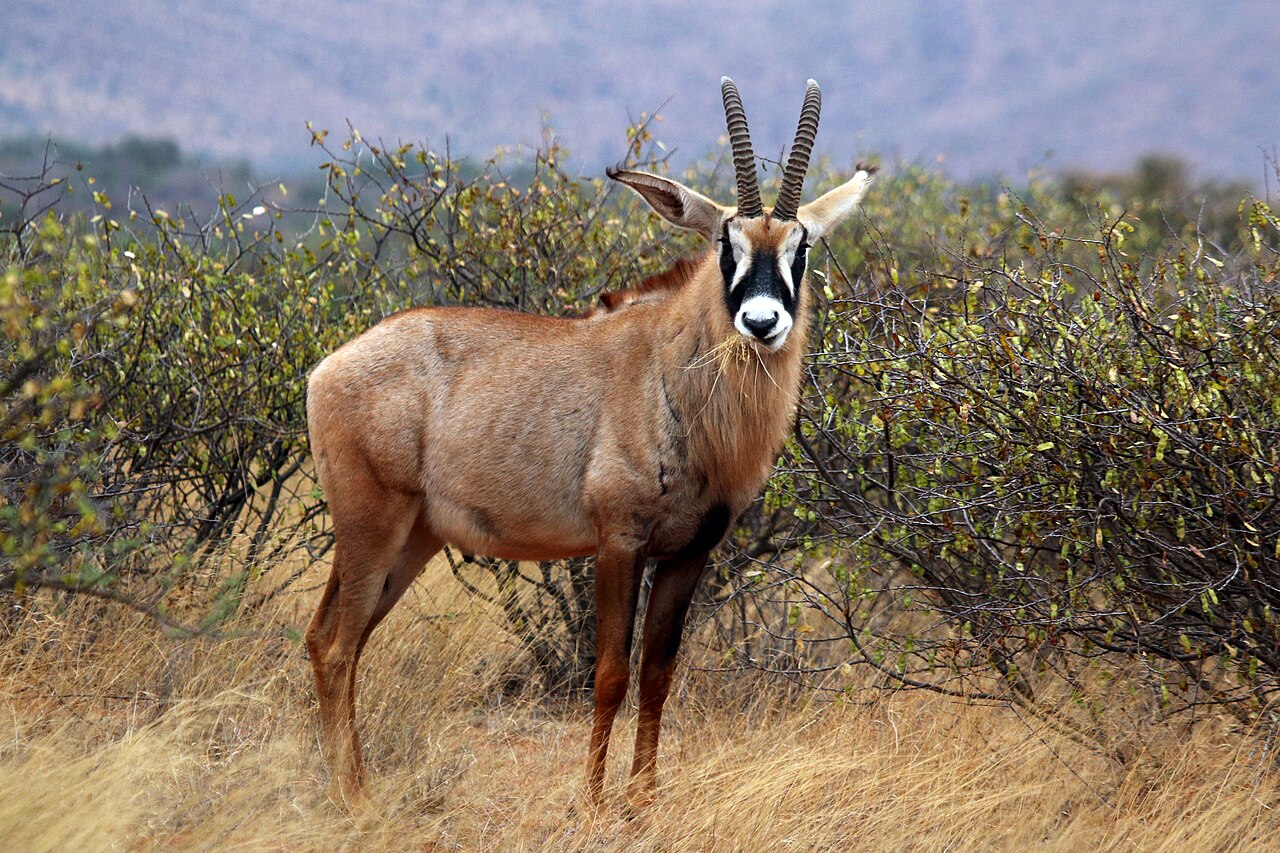
In the distance, a large antelope raises its head. Its reddish-brown coat, long curved horns and striking black-and-white face immediately distinguish it from the more familiar impalas and hartebeests.
It is a roan antelope, one of Kenya’s rarest wildlife sightings.
Nearby, a Rothschild’s giraffe stretches its long neck towards the leaves of a tree, feeding quietly against a backdrop of green hills.
Ruma National Park roan antelope and Rothschild’s giraffe safaris offer a different experience from the busy wildlife circuits of the Maasai Mara or Amboseli.
Located near Lake Victoria in Homa Bay County, Ruma protects rare antelopes, giraffes, grassland birds and an attractive mixture of savannah and woodland habitats.
This guide explores the park’s special wildlife, conservation history, safari activities and practical travel information.
1. Where Is Ruma National Park?
Ruma National Park is located in western Kenya’s Homa Bay County, within the Lambwe River Valley.
The park lies between the Kanyamwa Escarpment and the Ruri Hills, not far from the shores of Lake Victoria.
Covering approximately 120 square kilometres, it is relatively small compared with Kenya’s famous safari landscapes.
However, its location creates an attractive mixture of grasslands, hills and riverine vegetation.
Ruma National Park Quick Facts
| Feature | Details |
|---|---|
| Country | Kenya |
| County | Homa Bay |
| Location | Lambwe Valley |
| Size | Approximately 120 km² |
| Main gate | Kamato Gate |
| Famous wildlife | Roan antelope and Rothschild’s giraffe |
| Other highlights | Oribi, rhinos, buffaloes and birds |
| Main activities | Game drives, birdwatching and approved nature activities |
| Managing authority | Kenya Wildlife Service |
Its relatively quiet atmosphere appeals to travellers interested in wildlife photography, conservation and less-crowded safari experiences.
2. Why Is Ruma National Park Special?
Ruma is famous because it protects Kenya’s remaining wild roan antelope population.
Roan antelopes were historically more widespread, but their numbers declined because of habitat changes, hunting and other pressures.
Today, Ruma is an important refuge for their survival in Kenya.
The park also supports Rothschild’s giraffes, rare oribi antelopes and a varied bird population.
Its landscapes provide a different safari atmosphere from the wide-open plains of the Maasai Mara.
Visitors can enjoy attractive hill views, woodland habitats and quiet game drives.
However, rare wildlife sightings are never guaranteed, particularly when animal populations are small.
3. The Roan Antelope: Ruma’s Most Famous Animal
The roan antelope is one of Africa’s largest antelope species.
Its scientific name is Hippotragus equinus.
The animal has a strong body, a reddish or greyish-brown coat and a short mane along the neck.
Its most distinctive feature is its striking black-and-white facial pattern.
Both males and females carry long horns that curve backwards.
How to Identify a Roan Antelope
| Feature | Description |
|---|---|
| Body | Large and muscular |
| Coat | Reddish-brown to grey-brown |
| Face | Contrasting black-and-white markings |
| Ears | Long and pointed |
| Horns | Present in both sexes |
| Mane | Short, upright hair along the neck |
| Habitat | Grassland and open woodland |
| Diet | Mainly grasses |
Roan antelopes can sometimes resemble sable antelopes, but their colouring and horn characteristics differ.
4. Why Are Roan Antelopes So Rare in Kenya?
Roan antelopes require suitable grassland and woodland habitats.
They are vulnerable to habitat loss, changes in vegetation, illegal hunting and competition for resources.
Historically, roan populations occurred across a wider area of western Kenya.
Over time, their distribution contracted.
Ruma became the country’s remaining important refuge.
Kenya Wildlife Service recorded only 11 surviving roan antelopes in 2021 and subsequently established a protected enclosure as part of recovery efforts.
A later KWS conservation account reported an increase to 24 animals.
This recovery is encouraging, but the population remains small and vulnerable.
Protecting habitat and maintaining effective management remain essential.
5. Can Tourists See Roan Antelopes in Ruma?
Yes, although sightings can be difficult.
Roan antelopes occur in small numbers, making them less predictable than more abundant wildlife.
Their conservation management may also influence where visitors can observe them.
The best approach is to arrange your visit with an experienced local guide or Kenya Wildlife Service personnel.
Ask about current viewing opportunities rather than assuming the animals will be visible during every game drive.
Visitors should never approach restricted conservation areas without authorisation.
A successful sighting is particularly rewarding because of the species’ importance to Kenya’s wildlife heritage.
6. Rothschild’s Giraffe: Another Ruma Highlight
Rothschild’s giraffe is another important conservation attraction.
Traditionally classified as Giraffa camelopardalis rothschildi, it is also known as the Nubian giraffe under widely used modern classifications.
Rothschild’s giraffes are tall, graceful browsers with distinctive coat patterns.
Their markings often appear as large, irregular patches separated by pale lines.
The lower legs are comparatively pale, creating the familiar appearance of white stockings.
Rothschild’s Giraffe Identification
| Feature | Description |
|---|---|
| Coat pattern | Large irregular brown patches |
| Patch borders | Pale contrasting lines |
| Lower legs | Often relatively pale |
| Diet | Leaves and woody vegetation |
| Feeding style | Browsing |
| Social behaviour | Flexible groups |
| Conservation importance | Important protected giraffe population |
Photographs should be identified carefully because giraffe patterns vary and classification has changed over time.
7. How Did Rothschild’s Giraffes Come to Ruma?
The giraffe population in Ruma has an important conservation history.
Rothschild’s giraffes were introduced to the park in 1983.
The introduced animals established a breeding population that subsequently increased.
Kenya Wildlife Service’s recent conservation publication reported more than 800 giraffes descended from the original introduction.
These animals now represent a major part of the park’s wildlife population.
Their presence also demonstrates how managed wildlife introductions can help establish populations in suitable protected habitats.
However, such programmes require scientific planning, habitat assessment and continued monitoring.
8. Why Are Giraffes Important to Ruma’s Ecosystem?
Giraffes are browsers that feed on leaves, shoots and other woody vegetation.
Their feeding influences the structure of trees and shrubs.
They may also help disperse seeds through their movements.
Within Ruma, giraffes occupy a different feeding niche from grazing antelopes such as roan.
Roan Antelope vs Rothschild’s Giraffe
| Feature | Roan Antelope | Rothschild’s Giraffe |
|---|---|---|
| Main diet | Grass | Leaves and shoots |
| Feeding height | Ground vegetation | Trees and taller shrubs |
| Main habitat | Grassland | Savannah woodland |
| Body structure | Large antelope | Very tall browsing mammal |
| Main attraction | Extreme rarity in Kenya | Conservation and photography |
| Viewing | Potentially difficult | Generally more accessible |
Both species contribute to the park’s ecological diversity.
9. What Other Animals Live in Ruma?
Although roan antelopes and giraffes are the main attractions, Ruma supports a wider range of African wildlife.
Visitors may encounter buffaloes, zebras, topis, hartebeests, waterbucks and oribis.
Predators recorded in the park include leopards, spotted hyenas and serval cats.
Ruma also has managed rhinoceros populations.
Other Wildlife in Ruma
| Animal | Safari Interest |
|---|---|
| Oribi | Small and relatively uncommon antelope |
| Buffalo | Large grazing mammal |
| Zebra | Open grassland wildlife |
| Topi | Savannah antelope |
| Hartebeest | Distinctive long-faced antelope |
| Bohor reedbuck | Grassland species |
| Leopard | Elusive predator |
| Spotted hyena | Carnivore |
| Serval | Small spotted wild cat |
| Rhinoceros | Conservation-focused wildlife |
Not all species are regularly seen, and some populations are managed within designated areas.
10. Birdwatching in Ruma National Park
Ruma is an important destination for birdwatchers.
Its mixture of grassland, riverine woodland and seasonal wetlands supports many bird species.
One of its most notable birds is the blue swallow, a threatened migratory species associated with moist grasslands.
Blue swallows are seasonal visitors, generally arriving from southern Tanzania around April and departing around September.
Other birds may be found across woodland, open grassland and wetter habitats.
Birdwatching is especially rewarding when visitors spend time in different vegetation types rather than concentrating only on large mammals.
11. What Is the Landscape Like?
Ruma’s landscape is dominated by the Lambwe Valley.
The valley floor contains rolling grassland and patches of woodland.
Surrounding hills and escarpments provide a scenic backdrop.
Some parts of the park are relatively open, while others have thicker vegetation.
Main Habitats
| Habitat | Wildlife Importance |
|---|---|
| Open grassland | Roan, topi and other grazers |
| Savannah woodland | Giraffes and browsers |
| Riverine vegetation | Shelter and birdlife |
| Moist grassland | Important for specialised birds |
| Hills and escarpments | Scenery and habitat diversity |
Seasonal rainfall changes the colour and accessibility of the landscape.
12. Best Time to Visit Ruma National Park
Ruma can be visited throughout the year.
However, weather affects road conditions, vegetation and wildlife visibility.
Drier periods may make game drives easier, while rainy months bring greener landscapes.
Seasonal Travel Guide
| Period | General Conditions |
|---|---|
| January–March | Often relatively dry and warm |
| April–June | Long rains can affect road conditions |
| July–September | Often suitable for game viewing |
| October–December | Short rains may bring fresh vegetation |
Rainfall varies between years.
A four-wheel-drive vehicle is particularly useful during wet conditions.
Birdwatchers interested in blue swallows should consider their seasonal presence when planning a visit.
13. Safari Activities in Ruma
Game drives are the main wildlife activity.
Visitors can explore designated roads while looking for antelopes, giraffes and other animals.
Photography is particularly rewarding because of the scenic landscape and relatively quiet environment.
Birdwatching is another major attraction.
Kenya Wildlife Service also identifies approved walking, hiking, picnicking and organised outdoor activities.
All activities must follow park regulations.
Walking should only take place where permitted and with appropriate authorisation.
14. How to Get to Ruma National Park
Most visitors reach Ruma by road through Homa Bay.
Kenya Wildlife Service lists routes leading to Kamato Main Gate.
One route follows the C19 road towards Mbita, branching at Kadio or Malela Junction.
Another approaches through Rodi Kopany and Mirogi.
Road Access Guide
| Starting Point | General Route |
|---|---|
| Homa Bay | Towards Kadio/Malela Junction and Kamato Gate |
| Homa Bay alternative | Rodi Kopany, Mirogi and Kamato Gate |
| Kisumu | Travel towards Homa Bay, then continue to the park |
| Nairobi | Travel via western Kenya towards Homa Bay |
Travel time varies with road conditions, traffic and the chosen route.
Confirm the latest directions before departure.
15. Where Can You Stay Near Ruma?
Accommodation options include park-managed facilities, campsites and private properties in the surrounding region.
Visitors may choose to stay near Homa Bay or combine Ruma with accommodation around Lake Victoria.
Accommodation Options
| Type | Suitable For |
|---|---|
| KWS guesthouse | Travellers wanting simple park accommodation |
| Public campsite | Camping visitors |
| Special campsite | Organised safari groups |
| Homa Bay hotels | Travellers using the town as a base |
| Lake Victoria lodges | Visitors combining wildlife and lakeside relaxation |
Kenya Wildlife Service lists Oribi Guest House, Nyati Special Campsite and Fig Tree Public Campsite among the park’s facilities.
Check booking arrangements and availability before travelling.
16. Ruma National Park Entry Fees
Kenya Wildlife Service publishes entrance charges according to visitor categories.
As listed on its official park page in October 2026, the following adult rates apply.
| Visitor Category | Published Adult Entry Fee |
|---|---|
| East African citizen | KES 500 |
| Kenya resident | KES 675 |
| Other African citizen | USD 20 |
| International non-resident | USD 40 |
Children may qualify for lower rates.
Additional vehicle, accommodation or activity charges may apply.
Confirm the latest rates and accepted payment arrangements directly with Kenya Wildlife Service before your visit.
17. Can You Combine Ruma With Other Attractions?
Ruma can be included in a wider western Kenya itinerary.
Travellers may combine the national park with Lake Victoria scenery and cultural experiences in the Homa Bay region.
Nearby destinations include Rusinga Island, where visitors can learn about local heritage and enjoy lakeside landscapes.
A longer itinerary may also include Kisumu and other attractions around the lake.
This approach works particularly well for visitors who want wildlife experiences beyond Kenya’s best-known parks.
18. Photography Tips for Ruma National Park
Ruma provides excellent opportunities to photograph rare wildlife and landscapes.
Roan antelopes are particularly attractive because of their facial markings and curved horns.
Giraffes are easier to photograph against scattered trees and distant hills.
Wildlife Photography Checklist
- Use a telephoto lens for distant antelopes.
- Focus on the roan antelope’s distinctive face.
- Photograph giraffes with the landscape in the background.
- Visit during soft morning or afternoon light.
- Carry binoculars for locating distant wildlife.
- Remain on authorised roads and viewing points.
Never enter restricted conservation areas to obtain a closer photograph.
19. Why Ruma Matters for Conservation
Ruma demonstrates the importance of relatively small protected areas.
Its roan antelope population represents a species that has disappeared from other Kenyan locations.
Without continued protection, the remaining population would face serious risks.
The park’s giraffe population also highlights the value of long-term wildlife management.
Conservation work includes habitat management, monitoring, protection against illegal hunting and scientific assessment.
Tourism can support these efforts by generating awareness and contributing to protected-area revenues.
Responsible visitors help maintain Ruma’s conservation value.
20. Frequently Asked Questions
Is Ruma the Only Place to See Roan Antelopes in Kenya?
Ruma is Kenya’s last remaining protected stronghold for its wild roan antelope population.
Are Rothschild’s Giraffes Found in Ruma?
Yes. Ruma supports an important population of Rothschild’s, or Nubian, giraffes.
How Big Is Ruma National Park?
The park covers approximately 120 square kilometres.
Is Ruma Worth Visiting?
Yes, especially for travellers interested in rare antelopes, giraffes, birdwatching and a quieter safari experience.
Can You Visit Ruma in One Day?
A day visit is possible, particularly when staying around Homa Bay, although spending longer allows more time for wildlife observation.
A Rare Wildlife Sanctuary in Western Kenya
Ruma National Park may not be as famous as the Maasai Mara, Amboseli or Tsavo, but its conservation importance is exceptional.
Its greatest treasure is the roan antelope, an animal that has become extremely rare in Kenya.
The park also supports a substantial population of Rothschild’s giraffes, together with oribis, zebras, buffaloes, rhinoceroses and numerous bird species.
Its rolling savannah, woodland and dramatic surrounding hills create an attractive setting for wildlife exploration.
For visitors who enjoy quiet landscapes and unusual species, Ruma offers an opportunity to experience a different side of Kenya’s natural heritage




No comment