
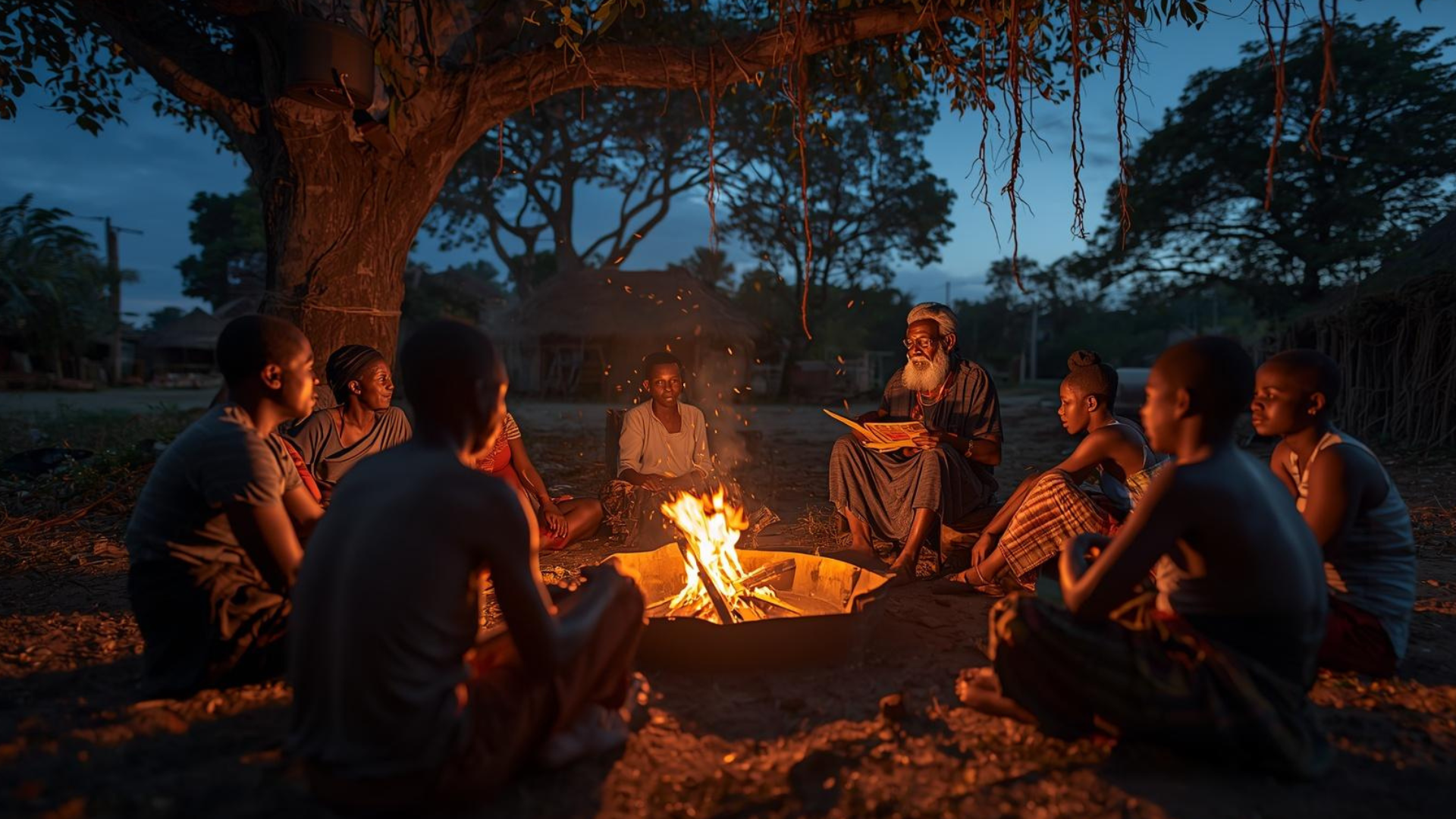
Oral Storytelling in East Africa: Folktales Guides Share at the Campfire
Oral storytelling in East Africa is an important cultural tradition through which communities preserve history, share knowledge and teach younger generations. Across Uganda, Kenya, Tanzania and Rwanda, folktales have been passed between generations through spoken narratives, songs, riddles and proverbs. Many stories feature animals such as hares, hyenas, lions and tortoises, while others describe family relationships, historical events and traditional beliefs.
For travellers on an East African safari, listening to a local guide share stories during an evening at camp can be an enjoyable cultural experience. Some safari lodges arrange storytelling sessions where guests learn about traditional characters, community values and the meanings behind familiar tales.
Understanding these traditions can add a different dimension to your wildlife holiday.
What Is Oral Storytelling in East Africa?
Oral storytelling involves communicating stories through speech rather than relying entirely on written texts.
Traditionally, family members, elders and experienced storytellers shared narratives during gatherings.
Stories could entertain listeners, explain social expectations or preserve memories of important events.
Many were accompanied by songs, gestures and audience participation.
Why Were Stories Passed Down Orally?
Before widespread formal education and printed books, spoken traditions played an important role in sharing community knowledge.
Children could learn about cooperation, honesty, courage and responsibility through stories.
Historical narratives also helped communities remember important personalities and events.
Today, storytelling continues through family conversations, schools, cultural performances and recorded media.
Different Storytelling Traditions Across East Africa
East Africa contains many communities with distinct languages and oral traditions.
Although some story themes are shared, particular characters and meanings differ.
| Country | Examples of oral traditions | Common themes |
|---|---|---|
| Uganda | Folktales, riddles, proverbs and praise songs | Family, wisdom and relationships |
| Kenya | Animal tales, historical narratives and community legends | Cleverness, responsibility and identity |
| Tanzania | Swahili folktales, songs and local narratives | Cooperation, humour and human behaviour |
| Rwanda | Imigani, ibitekerezo and traditional poetry | Moral lessons, history and cultural memory |
Travellers should avoid assuming that every story belongs equally to all East African communities.
Ask your storyteller where a particular tale comes from.
Animal Characters in East African Folktales
Animals frequently appear as characters in traditional stories.
They may speak, argue, make decisions or behave like human beings.
Their actions often represent qualities such as intelligence, greed, courage or impatience.
The Hare: A Clever Trickster
The hare is a familiar character in many East African storytelling traditions.
In Swahili, the hare is called Sungura.
Stories often portray the hare as small but intelligent.
He may overcome stronger animals through clever planning or trickery.
Some stories praise his intelligence, while others warn about dishonesty.
The Hyena: Greed and Poor Judgement
Hyenas also appear frequently in regional folktales.
They may represent greed, impatience or careless decisions.
In some narratives, the hyena loses something valuable because of an unwise choice.
However, the character’s meaning depends on the particular story and community.
The Lion: Strength and Authority
Lions may represent leadership, strength or authority.
A story might describe a lion making decisions that affect other animals.
The lesson may concern fair leadership or the dangers of abusing power.
The Tortoise: Patience and Persistence
Tortoises appear in some African folktales as patient or thoughtful characters.
They may succeed by acting carefully rather than rushing.
Such stories encourage listeners to consider the value of persistence.
Common Folktale Themes Travellers May Hear
| Story theme | Common characters | Possible lesson |
|---|---|---|
| Cleverness | Hare and hyena | Intelligence can overcome strength |
| Greed | Hyena and other animals | Excessive greed causes problems |
| Leadership | Lion and smaller animals | Authority requires responsibility |
| Patience | Tortoise and faster animals | Careful effort can succeed |
| Cooperation | Families or animal groups | Working together brings benefits |
| Honesty | Friends, relatives or neighbours | Trust depends on truthful behaviour |
These are broad themes rather than fixed interpretations of every tale.
Storytelling Traditions in Uganda
Uganda has numerous oral storytelling traditions reflecting its different communities.
Among the Baganda, storytelling includes folktales, proverbs, riddles and narratives connected with social life.
Other communities, including the Acholi, Basoga, Banyankore and Bamasaaba, maintain their own oral forms.
Stories Among the Baganda
In Buganda, traditional folktales are commonly known as engero.
Stories may involve animals, family members or imaginary situations.
They can communicate lessons about relationships, respect and judgement.
A storyteller may ask questions or invite listeners to respond.
Storytelling in Northern Uganda
Acholi oral traditions include songs, folktales, praise expressions and narratives connected with community history.
Some stories explore family responsibilities, conflict and reconciliation.
Traditional oral literature remains relevant to cultural education and historical study.
Storytelling in Kenya
Kenya’s communities maintain diverse storytelling traditions.
Among Kikuyu, Luo, Kalenjin, Maasai and other communities, oral narratives have helped preserve knowledge and cultural values.
Some tales feature animals, while others describe ancestors and historical events.
Folktales and Community Knowledge
Stories may explain why people should respect elders, cooperate with neighbours or make careful decisions.
Animal characters can make complicated situations easier for children to understand.
The same broad story may exist in several languages with different details.
Stories Connected With Wildlife
Safari guides sometimes use animal stories to introduce cultural interpretations of wildlife.
For example, a guide may explain how the hare or hyena appears in local folklore.
Such stories should be understood as cultural narratives rather than scientific explanations of animal behaviour.
Swahili Storytelling in Tanzania
Swahili oral literature has a long tradition along the East African coast.
Folktales are commonly called hadithi in Swahili.
Stories may include animals, clever characters, family situations and moral lessons.
Sungura and Fisi
The hare, Sungura, and the hyena, Fisi, appear in many Swahili stories.
Their interactions often involve cleverness, selfishness or unexpected consequences.
Different storytellers may tell different versions.
The important lesson can change depending on how the story is presented.
Proverbs Within Stories
Swahili storytellers may include traditional proverbs.
For example, Haraka haraka haina baraka warns against rushing.
A story might demonstrate this message through a character who makes a careless decision.
Proverbs can help listeners remember the lesson after the story ends.
Oral Storytelling in Rwanda
Rwanda has a rich oral literary tradition involving folktales, historical narratives, proverbs and poetry.
Different forms preserve cultural memory and communicate important values.
Imigani: Stories and Proverbs
In Kinyarwanda, imigani can refer to traditional stories or proverbs, depending on the expression.
These forms communicate observations about human behaviour and society.
Riddles, known as ibisakuzo, are another important part of oral tradition.
Ibitekerezo: Historical Narratives
Ibitekerezo are associated with historical narratives and traditions concerning the past.
Such accounts have contributed to the preservation of Rwanda’s cultural history.
Some stories are connected with royal traditions and important personalities.
Visitors should distinguish historical oral narratives from fictional folktales.
What Happens During Campfire Storytelling?
Some safari camps organise evening storytelling activities.
Guests may gather in a designated outdoor area after dinner.
A guide or invited storyteller introduces a traditional narrative.
The session may include explanations of unfamiliar words or cultural references.
Example Storytelling Programme
| Activity | Approximate duration |
|---|---|
| Welcome and introduction | 5–10 minutes |
| Background about the storytelling tradition | 10 minutes |
| First folktale | 10–15 minutes |
| Discussion of characters and meanings | 10 minutes |
| Second story or traditional proverb | 10–15 minutes |
| Questions and closing | 10 minutes |
Programmes vary between lodges.
Not every safari camp provides organised storytelling, so enquire before booking.
Storytelling and Safari Camp Safety
Campfire activities must follow lodge safety arrangements.
Some camps are located in wildlife areas where animals move near accommodation.
Guests should remain within designated areas.
Never leave the campfire to search for animals in the dark.
Follow staff instructions when returning to your room or tent.
Children should remain supervised around fires.
Storytelling can also take place indoors when weather or safety conditions make outdoor gatherings unsuitable.
How to Listen Respectfully to Local Folktales
Cultural storytelling deserves the same respect as other forms of artistic performance.
Listen carefully and avoid interrupting important moments.
If the storyteller invites audience participation, follow their instructions.
You can ask questions after the story.
Useful Questions to Ask
Which community does this story come from?
Who taught you this tale?
Is it commonly told to children?
Does the story have different versions?
What lesson do listeners usually understand?
Is there a proverb connected with the story?
These questions encourage meaningful discussion.
Avoid asking people to share sacred or restricted stories intended only for particular community members.
Travelling With Children: Making Folktales Educational
Traditional storytelling can be especially interesting for families travelling with children.
Animal characters help younger listeners follow the action.
Parents can encourage children to identify characters and discuss their decisions.
Simple Learning Activities
| Activity | Suggested age | Learning benefit |
|---|---|---|
| Identify animal characters | 5–8 years | Listening and recognition |
| Explain the story’s lesson | 8–12 years | Understanding and reasoning |
| Compare two versions | 10–14 years | Cultural awareness |
| Write a short story summary | 8–14 years | Language development |
| Learn a related proverb | All ages | Vocabulary and memory |
Encourage children to respect the storyteller and avoid interrupting.
Can Travellers Record Traditional Stories?
Recording permission should never be assumed.
Some storytellers may welcome photographs or audio recordings.
Others may prefer that their stories remain within the gathering.
Ask before recording.
If you intend to publish a story, obtain permission and agree on how the storyteller and community should be credited.
Respect any restrictions placed on sharing the recording.
Including Storytelling in an East African Safari
You can request storytelling as part of a cultural evening at selected safari lodges.
Some community tourism programmes also organise traditional performances and discussions.
Activities may be available around Uganda’s cultural destinations, Kenya’s safari regions, Tanzania’s coastal communities or Rwanda’s community tourism centres.
Ask whether the session is led by a local storyteller and whether the activity supports community participants.
Allow enough time for questions and discussion.
Oral storytelling in East Africa remains an important part of cultural heritage.
Through folktales, proverbs, riddles and historical narratives, communities preserve knowledge and communicate values between generations.
Animal stories involving hares, hyenas, lions and tortoises introduce listeners to familiar themes such as patience, cleverness and responsibility.
For travellers, listening to a local storyteller can provide an enjoyable cultural experience after a day of wildlife viewing.
By respecting the storyteller, understanding the story’s origins and asking thoughtful questions, you can appreciate another important part of East African life.



No comment