
Ngamba Island Chimpanzee Sanctuary: What to Expect
Ngamba Island Chimpanzee Sanctuary sits about 23 kilometers out into Lake Victoria from Entebbe, a small forested island given over almost entirely to orphaned chimpanzees that cannot survive back in the wild. It is one of the easiest wildlife experiences to add onto a Uganda trip, since it needs no long drive and no trekking permit, but it is also a genuinely different kind of visit from gorilla or chimp trekking in the forest. This guide covers exactly what to expect: how the sanctuary works, what a visit actually involves, and how to plan the logistics from Entebbe.
Key Highlights
- Around 49 orphaned chimpanzees live on a 100-acre forested island, all rescued rather than born in the wild here
- Roughly 23 kilometers by boat from Entebbe, reachable in under two hours by speedboat or motorized canoe
- Visitors watch feedings from a viewing platform rather than trekking through forest to find the chimps
- Managed by the Chimpanzee Sanctuary and Wildlife Conservation Trust, with the Jane Goodall Institute among its trustees
- Both half-day and full-day trips are possible, plus overnight stays for a slower visit

What Ngamba Island Actually Is

A Sanctuary, Not a Trekking Destination
It is worth being clear about this before you book: Ngamba Island Chimpanzee Sanctuary is not a place to trek through forest tracking wild chimps the way you would at Kibale or Kyambura Gorge. The island’s roughly 100 acres of rainforest are enclosed within an electric perimeter fence, and visitors view the chimpanzees from a boardwalk and viewing platform rather than walking freely among them. That is by design, both for visitor safety around powerful adult chimps and to keep the sanctuary’s population genuinely wild in behavior despite their human-dependent history.
Who the Chimpanzees Are and Why They’re Here
The sanctuary was gazetted in October 1998 specifically to care for orphaned chimpanzees rescued from poaching, the illegal pet and bushmeat trade, and habitat loss across East Africa, and today houses around 49 individuals. Most arrived as infants after their mothers were killed, and because they were raised around humans or never learned the full range of wild survival skills from an adult troop, releasing them back into genuine wilderness would very likely be a death sentence rather than a rescue. Ngamba exists precisely to give chimps in that situation a permanent, protected forest home instead.
A Lifetime Commitment, Not a Temporary Shelter
Because these chimpanzees cannot be released, caring for them is a genuinely open-ended commitment rather than a rehabilitation-and-release program with a defined endpoint. A chimp arriving as an infant today could realistically live on the island for another 40 to 50 years, which is part of why entrance fees and donor support matter here in a very concrete way: every visitor fee goes toward decades of ongoing food, veterinary care, and enclosure maintenance for an animal that will never leave.
How the Sanctuary Is Run
Management and Conservation Credentials
Ngamba Island is operated by the Chimpanzee Sanctuary and Wildlife Conservation Trust, whose trustees include the Jane Goodall Institute, the Born Free Foundation, and the International Fund for Animal Welfare, a genuinely credible lineup for anyone weighing whether a wildlife tourism stop is legitimate conservation or just an attraction wearing the label. The sanctuary earned accreditation from the Global Federation of Animal Sanctuaries in October 2024, a formal recognition that its care standards meet international best practice rather than just marketing claims.
Sustainability on the Island
Day-to-day operations lean heavily on low-impact infrastructure given the island setting: compost toilets, rainwater harvesting, and solar power for electricity and hot water all reduce the footprint of running a visitor facility on a small lake island with no mainland utility connections. It is a practical necessity as much as an ethical choice, but it also means a visit here supports a facility that has genuinely built sustainability into its daily operations rather than bolting it on for appearances.
Research and Education
Beyond direct animal care, Ngamba Island also functions as a working research site, giving primatologists a rare opportunity to study chimpanzee social behavior, cognition, and health in a setting far more observable than dense wild forest. The sanctuary also runs conservation education programs for Ugandan school groups, using the island as a hands-on way to teach a generation of young Ugandans about wildlife trafficking, habitat loss, and why the illegal pet trade that orphaned most of these chimps in the first place is a problem worth caring about.
What a Visit Actually Involves
Getting There From Entebbe
Boats leave from a dock in Entebbe, with a fast speedboat crossing taking around 50 minutes each way, or a more leisurely motorized canoe trip running closer to 90 minutes. Half-day trips typically depart at 9am or 12:45pm, timed around the chimps’ two daily feedings, so a morning group and an afternoon group each get to see one feeding without the schedule needing to stretch into a full day.
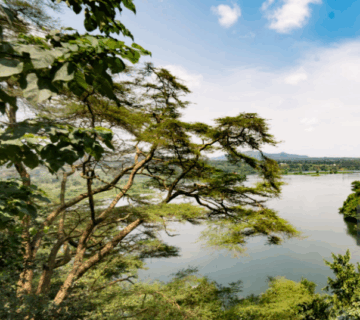
The crossing itself is worth building into your expectations rather than treating as dead travel time. Lake Victoria is the world’s largest tropical lake, and the open-water run out to Ngamba passes fishing canoes, the occasional cormorant or fish eagle working the surface, and views back toward Entebbe’s shoreline that most visitors never see from any other angle. On a clear morning it is a genuinely pleasant way to start the day, not just a means of getting from the mainland to the island.
Feeding Times and What You’ll See
The chimpanzees are fed on a set routine each morning and afternoon, and watching a feeding from the platform is the centerpiece of most visits, a genuinely lively, noisy scene as the group works out its own social dynamics around the food. Full-day visitors typically catch both feedings with time in between for lunch on the island, usually available for an extra 10 to 20 US dollars, and a slower look at the visitor center’s conservation displays.
What a Trip Actually Costs
Pricing here varies more than at most single-attraction stops in Uganda, since different operators bundle the boat transfer, park fee, and lunch differently, and rates shift with group size. Published packages have ranged anywhere from roughly 220 to over 600 US dollars per person depending on what is included and whether you are traveling solo or in a group, so treat any number you see online as a starting point and confirm the actual all-in price with your operator before booking rather than assuming a flat published rate applies to your specific trip.
Planning Your Visit
Half-Day, Full-Day, or Overnight
A half-day trip is enough to see one feeding and get a solid sense of the sanctuary, and works well as a single add-on day around an Entebbe stopover before or after a wider Uganda safari. A full day adds the second feeding and more unhurried time on the island, while overnight stays, booked through Wild Frontiers Uganda, are the option for travelers who want a genuinely slow visit with an early morning and late afternoon feeding on either side of a night actually spent on the lake.
Combining It With an Entebbe Stopover
Because most Uganda itineraries already route through Entebbe at the start or end of a trip, Ngamba Island is one of the easiest wildlife experiences in the country to bolt onto an existing itinerary without adding a dedicated extra destination. It pairs naturally with a relaxed final day before an evening flight out, or a gentle first activity to ease into the trip before heading upcountry to the parks.
Volunteering on Ngamba Island
Beyond a standard visit, the sanctuary has at times offered longer, more hands-on stays for travelers genuinely interested in the day-to-day work of chimp care, from food preparation to enclosure enrichment activities. Availability and structure of these programs shift over time, so confirm current options directly with the sanctuary’s booking partner rather than assuming a fixed volunteer schedule exists year-round.
Frequently Asked Questions
Can you touch or interact directly with the chimpanzees?
No, not as a standard visitor. Chimpanzees are powerful, unpredictable animals even when raised around humans, and visitors observe from a designated platform and boardwalk rather than entering the enclosure.
Is Ngamba Island suitable for children?
Yes, generally. It requires no trekking or strenuous walking, which makes it noticeably more accessible for families with younger children than gorilla or chimp trekking in the forest parks.
How is this different from chimp trekking at Kibale Forest?
Kibale involves tracking genuinely wild, free-ranging chimpanzees through forest on foot. Ngamba’s chimps are rescued orphans living in a protected, fenced sanctuary, viewed from a platform rather than tracked, which makes it a fundamentally different kind of encounter, not a lesser version of the same activity.
Do you need a permit like gorilla trekking?
No separate trekking permit is required. Access is arranged as a paid boat trip and entrance fee through the sanctuary’s booking partner rather than a daily-capped permit system.
What should I bring for the day?
Sun protection, insect repellent, a light rain jacket given Lake Victoria’s unpredictable weather, and a camera with some zoom reach, since the viewing platform keeps a respectful distance from the enclosure.
Is it ethical to visit a chimpanzee sanctuary like this?
Ngamba Island is run by a trust with credible conservation partners rather than a private roadside zoo, and its accreditation from the Global Federation of Animal Sanctuaries reflects genuine welfare standards. Visiting a legitimate sanctuary like this, where entrance fees directly fund lifetime animal care, is a materially different choice from visiting facilities that breed or handle wildlife for entertainment.
Recommended Safaris
Ngamba Island works well as a gentle bookend to a wider Uganda itinerary. See our Gorilla Trekking Uganda page for how it can fit around a gorilla-focused trip, and the 4 Days Shoebill Tracking and Gorilla Trekking Safari for a itinerary that similarly starts and ends near Entebbe. Travelers wanting a longer look at Uganda’s primates should also see the Uganda Gorilla Habituation Experience and our guide to Bwindi Impenetrable National Park. For a broader multi-destination trip, the 7 Days Serengeti and Bwindi Gorillas itinerary is worth a look too. When you are ready to add Ngamba Island to your Entebbe stopover, get in touch with our team and we will help you plan the boat transfer and timing around the rest of your trip.

No comment