
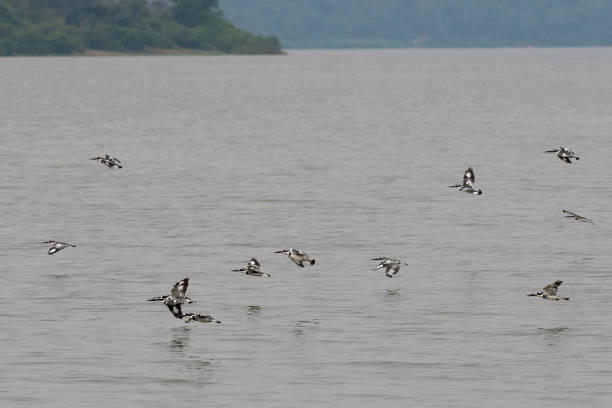
Kingfishers on the Kazinga Channel
Kingfishers on the Kazinga Channel: Which Species to Look For
The kingfishers on the Kazinga Channel are among the most colourful and fascinating birds visitors can observe during a wildlife safari in Uganda. From the tiny Malachite Kingfisher with its brilliant blue feathers to the powerful Giant Kingfisher capable of catching relatively large fish, these remarkable birds add excitement to boat safaris along one of Uganda’s most famous waterways.
Located within Queen Elizabeth National Park, the Kazinga Channel connects Lake Edward and Lake George, stretching approximately 32 kilometres through a landscape rich in wildlife. Its shallow waters, muddy banks, papyrus vegetation and overhanging branches provide excellent feeding habitats for several kingfisher species. The channel is particularly rewarding for birdwatchers because many kingfishers can be observed hunting, resting and moving along the shoreline.
For travellers interested in birdwatching in Uganda, learning how to identify different kingfishers can make a Kazinga Channel boat safari more enjoyable. Although some species look similar, their size, colours, hunting techniques and preferred habitats provide useful identification clues.
What Makes the Kazinga Channel Good for Kingfishers?
The Kazinga Channel is one of the most important freshwater habitats within Queen Elizabeth National Park.
Its waters support fish, aquatic insects, amphibians and other small animals that provide food for kingfishers.
The surrounding vegetation also offers suitable places for hunting, resting and breeding.
Unlike dense tropical forests, where birds can remain hidden, the Kazinga Channel has stretches of relatively open shoreline that allow visitors to observe kingfishers from boats.
Why Kingfishers Thrive Along the Channel
| Habitat feature | Benefit to kingfishers |
|---|---|
| Shallow freshwater | Provides access to small fish and aquatic prey |
| Overhanging branches | Offers hunting perches |
| Papyrus and reeds | Provides shelter and feeding opportunities |
| Exposed earth banks | May provide suitable nesting sites |
| Aquatic insects | Supports insect-eating species |
| Quiet shoreline sections | Offers feeding and resting areas |
The channel also supports pelicans, African Fish Eagles, herons, cormorants, African Skimmers and numerous other waterbirds.
Which Kingfisher Species Can You See on the Kazinga Channel?
Several kingfishers occur within Queen Elizabeth National Park, although not every species is equally likely to appear during a boat safari.
The Pied and Malachite Kingfishers are particularly important species to watch for along the channel.
Giant Kingfishers also occur around suitable waterways, while Woodland and Grey-headed Kingfishers are more closely associated with surrounding woodland habitats.
Kingfisher Identification Guide
| Species | Scientific name | Main identification feature | Best habitat to search |
|---|---|---|---|
| Pied Kingfisher | Ceryle rudis | Black-and-white plumage and hovering flight | Open water |
| Malachite Kingfisher | Corythornis cristatus | Brilliant blue upperparts and orange underparts | Reeds and shallow margins |
| Giant Kingfisher | Megaceryle maxima | Large body, shaggy crest and heavy bill | Wooded riverbanks |
| Woodland Kingfisher | Halcyon senegalensis | Bright blue wings and white head | Woodland near the channel |
| Grey-headed Kingfisher | Halcyon leucocephala | Grey head, chestnut belly and blue wings | Dry woodland and bushland |
The first three species are particularly relevant to waterside birdwatching, while the remaining two are useful additions when exploring the wider Queen Elizabeth National Park landscape.
1. Pied Kingfisher: The Black-and-White Fishing Specialist
The Pied Kingfisher is one of the most recognisable birds along the Kazinga Channel.
Unlike brightly coloured kingfishers, this species has striking black-and-white plumage.
It is especially famous for its ability to hover above water while searching for fish.
Pied Kingfishers can remain almost stationary in the air, rapidly beating their wings before diving towards prey.
How to Identify a Pied Kingfisher
Look for the following characteristics:
Black-and-white spotted plumage.
Prominent dark crest.
Long, pointed bill.
White underparts with dark breast markings.
Repeated hovering above water.
Rapid dives towards fish near the surface.
Adult males normally have two dark breast bands, while females have a single, often incomplete band.
Where to Look on the Kazinga Channel
Pied Kingfishers frequently hunt over open water and along suitable shoreline sections.
During a boat safari, visitors may observe individuals hovering several metres above the surface before diving.
They may also rest on exposed branches or other elevated perches while watching for fish.
Their conspicuous hunting behaviour makes them rewarding subjects for wildlife photographers.
2. Malachite Kingfisher: The Tiny Blue Jewel of the Channel
The Malachite Kingfisher is among the most colourful birds found around Uganda’s freshwater environments.
Despite measuring only approximately 13 centimetres in length, it has remarkably bright plumage.
The bird has brilliant metallic-blue upperparts, orange-rufous underparts, a small crest and a reddish-orange bill.
Its compact body and bright colours make it particularly attractive to birdwatchers.
How to Identify a Malachite Kingfisher
The main identification features include:
Small body measuring approximately 13 centimetres.
Metallic-blue head, back and wings.
Orange-rufous chest and belly.
Short crest with blue markings.
Bright reddish-orange bill in adults.
Preference for low branches and reeds beside water.
Young Malachite Kingfishers may have darker bills, so bill colour alone should not determine identification.
How Malachite Kingfishers Hunt
Malachite Kingfishers commonly sit quietly on reeds, papyrus stems or low branches overlooking shallow water.
When they notice suitable prey, they dive quickly into the water.
Their diet includes small fish, aquatic insects and other small freshwater animals.
After catching prey, the bird usually returns to a perch, where it may strike the prey against the branch before swallowing it.
Where to Find Them
Watch carefully around papyrus vegetation, sheltered channels and low branches close to the water.
Because these birds are small, binoculars are particularly useful.
A published scientific study of Malachite Kingfishers in Queen Elizabeth National Park examined observations concentrated around the Kazinga Channel, including records of a rare individual with unusually white plumage.
This demonstrates that even familiar kingfishers can provide unusual wildlife observations.
3. Giant Kingfisher: Africa’s Largest Kingfisher
The Giant Kingfisher is the largest kingfisher species in Africa.
Adults measure approximately 42–46 centimetres in length, making them considerably larger than Pied and Malachite Kingfishers.
Their heavy bodies, large bills and shaggy crests give them a powerful appearance.
Unlike the brightly coloured Malachite Kingfisher, Giant Kingfishers have mainly black, white and chestnut plumage.
How to Identify a Giant Kingfisher
Look for:
Large body and heavy build.
Prominent shaggy crest.
Powerful, pointed bill.
Black-and-white spotted upperparts.
Chestnut colouring on the underparts.
Strong flight between large waterside trees.
Male Giant Kingfishers have a broad chestnut breast band, while females have a spotted dark breast band and more extensive chestnut colouring lower on the belly.
What Do Giant Kingfishers Eat?
Giant Kingfishers feed on fish, crabs, frogs and other aquatic animals.
They often hunt from branches overlooking rivers and lakes.
When suitable prey appears, the bird dives towards the water and attempts to seize it using its large bill.
Because Giant Kingfishers can capture relatively large prey, they may spend considerable time handling food before swallowing it.
Where to Find Giant Kingfishers
Along the Kazinga Channel, search for large branches overlooking quieter sections of water.
Unlike Pied Kingfishers, which frequently hover, Giant Kingfishers more commonly launch directly from elevated perches.
Sightings are less predictable than those of Pied Kingfishers, but their size makes them easy to recognise when present.
4. Woodland Kingfisher: The Bright Blue Bird of the Trees
The Woodland Kingfisher is another attractive species occurring within Queen Elizabeth National Park.
Although it belongs to the kingfisher family, it does not depend primarily on catching fish.
Instead, it feeds largely on insects and small terrestrial animals.
This means visitors are more likely to encounter it in woodland and wooded grassland than directly above open water.
How to Identify a Woodland Kingfisher
Its distinctive features include:
Bright electric-blue wings and back.
White head and underparts.
Dark facial marking.
Large red-and-black bill.
Loud, repeated whistling calls.
Woodland Kingfishers frequently perch on exposed branches while searching for prey.
They may also be heard calling from trees before they become visible.
Where to Look
Search woodland habitats around Mweya, forest edges and other suitable wooded areas within Queen Elizabeth National Park.
A Woodland Kingfisher sighting is more likely during a game drive or woodland birdwatching excursion than during an open-water boat safari.
5. Grey-Headed Kingfisher: The Woodland Visitor
The Grey-headed Kingfisher is a medium-sized kingfisher found in wooded savannah and other suitable habitats.
It differs from aquatic kingfishers because it feeds mainly on insects, lizards and other small terrestrial animals.
Its grey head, chestnut underparts and bright blue wings create a distinctive appearance.
How to Identify a Grey-Headed Kingfisher
Look for the following features:
Pale grey head.
Chestnut-brown underparts.
Bright blue wings and tail.
Red bill.
Upright posture on exposed branches.
Grey-headed Kingfishers may occur seasonally, with local numbers influenced by movements and breeding activity.
Where to Find Them
Suitable habitats include dry woodland, bushland and wooded areas around the Kazinga Channel.
The Mweya area is one location where birdwatchers may search for this species.
It is better treated as a wider park birdwatching target rather than a typical open-water kingfisher.
How to Tell Pied, Malachite and Giant Kingfishers Apart
These three species are particularly important for visitors exploring the Kazinga Channel by boat.
Their differences become clear when comparing size, colour and hunting behaviour.
| Feature | Pied Kingfisher | Malachite Kingfisher | Giant Kingfisher |
|---|---|---|---|
| Size | Medium | Very small | Very large |
| Main colour | Black and white | Blue and orange | Black, white and chestnut |
| Crest | Dark and prominent | Small, blue | Large and shaggy |
| Hunting method | Frequently hovers | Dives from low perches | Dives from elevated perches |
| Main prey | Small fish | Small fish and aquatic insects | Fish, crabs and frogs |
| Best viewing area | Open water | Reeds and vegetation | Wooded shorelines |
For beginners, watching the bird’s hunting technique can be just as useful as examining its plumage.
How Kingfishers Catch Fish on the Kazinga Channel
Kingfishers use different hunting strategies depending on their size and preferred prey.
Pied Kingfishers are famous for hovering, allowing them to scan the water before diving.
Malachite Kingfishers usually hunt from low vegetation, making short, rapid dives.
Giant Kingfishers often watch from higher branches before plunging towards larger prey.
All three rely on keen eyesight and quick reactions.
After catching fish, kingfishers may return to a perch and strike the prey against a hard surface before swallowing it.
These feeding behaviours provide excellent opportunities for patient wildlife observation.
Best Time to See Kingfishers on the Kazinga Channel
Kingfishers can be observed throughout the year because the Kazinga Channel provides permanent freshwater habitat.
However, the time of day and prevailing weather conditions influence birdwatching opportunities.
Early morning often provides favourable light and comfortable temperatures.
Afternoon excursions can also be productive, particularly when birds are actively hunting along the shoreline.
Kingfisher Birdwatching Conditions
| Time or season | Birdwatching opportunities |
|---|---|
| Early morning | Feeding and perched kingfishers |
| Mid-morning | Pied Kingfishers hovering over open water |
| Afternoon | Hunting and resting birds |
| Late afternoon | Good photography opportunities |
| Wet season | Birdwatching among flooded vegetation |
| Dry season | Birds feeding around permanent water |
The dry season may improve access to park roads, although kingfisher sightings remain possible during wetter months.
Photography Tips for Kingfishers on a Boat Safari
Kingfishers are excellent wildlife photography subjects because of their colours and hunting behaviour.
However, photographing them from a moving boat presents challenges.
A telephoto lens of approximately 300–500 mm provides useful reach while allowing photographers to remain at a respectful distance.
For flying or diving birds, a shutter speed of approximately 1/1600–1/2500 second can help freeze movement when lighting permits.
For perched birds, slower shutter speeds may work, although boat movement must be considered.
Recommended Photography Techniques
Focus on the bird’s eye.
Use continuous autofocus for moving subjects.
Watch for repeated hunting from the same perch.
Photograph Malachite Kingfishers against natural vegetation.
Capture Pied Kingfishers while hovering.
Use a fast shutter speed for diving behaviour.
Avoid requesting unsafe boat movements for photographs.
A knowledgeable boat guide can help identify suitable viewing opportunities without disturbing wildlife.
Other Birds to Watch Along the Kazinga Channel
Although kingfishers are particularly attractive, the Kazinga Channel supports numerous additional bird species.
A boat safari may provide opportunities to observe large waterbirds, birds of prey and species feeding around the shoreline.
Common Birdwatching Targets
| Bird species | Main identification feature |
|---|---|
| African Fish Eagle | White head and chestnut-brown body |
| African Skimmer | Long lower bill used for skimming water |
| Great White Pelican | Large white body and enormous bill |
| Pink-backed Pelican | Greyish plumage with pinkish tones |
| African Darter | Long neck and pointed bill |
| Pied Kingfisher | Black-and-white plumage and hovering |
| Malachite Kingfisher | Brilliant blue and orange feathers |
| Grey Heron | Large grey body and long neck |
| African Jacana | Long toes used for walking on floating vegetation |
| Yellow-billed Stork | Yellow bill and white body |
The channel is also famous for large concentrations of hippopotamuses, Nile crocodiles, buffaloes and other wildlife.
Planning a Kazinga Channel Birdwatching Safari
Most visitors explore the Kazinga Channel during a guided boat excursion departing from the Mweya area.
Standard boat trips commonly last approximately two hours, although schedules and durations depend on the operator.
Dedicated birdwatchers may benefit from choosing a smaller boat or a specialist excursion where available.
Suggested Birdwatching Programme
| Activity | Recommended approach |
|---|---|
| Morning | Birdwatching around Mweya and suitable woodland |
| Midday | Rest and review bird sightings |
| Afternoon | Guided Kazinga Channel boat safari |
| Evening | Record sightings and review photographs |
Travellers should carry binoculars, drinking water, sun protection and a suitable bird identification guide.
For specialist photography, equipment should be protected against water spray and sudden weather changes.
Conservation of Kingfishers and Their Habitats
Kingfishers depend on healthy habitats containing suitable food sources and nesting locations.
Water pollution, vegetation clearance and disturbance around breeding sites can affect local populations.
Some species excavate nesting tunnels in exposed earth banks, making the protection of suitable shoreline areas important.
Responsible boat tourism can help protect these birds by maintaining safe viewing distances and avoiding disturbance near active nests.
Conserving freshwater habitats also benefits fish, amphibians, aquatic insects and numerous other waterbirds.
Why Kingfishers Are Worth Watching on the Kazinga Channel
Kingfishers are among the most rewarding birds to observe during a Kazinga Channel boat safari.
Their beautiful colours, different hunting techniques and close association with freshwater environments make them particularly interesting for wildlife enthusiasts.
The Pied Kingfisher impresses visitors with its hovering ability, while the Malachite Kingfisher attracts attention through its brilliant blue and orange plumage. The Giant Kingfisher offers an entirely different experience because of its large size and powerful fishing behaviour.
For birdwatchers exploring Queen Elizabeth National Park, learning to identify these species adds another dimension to the safari experience.
Whether you are watching a tiny Malachite Kingfisher perched among reeds or a Pied Kingfisher hovering above the water, the Kazinga Channel provides excellent opportunities to appreciate Uganda’s remarkable birdlife.







No comment