
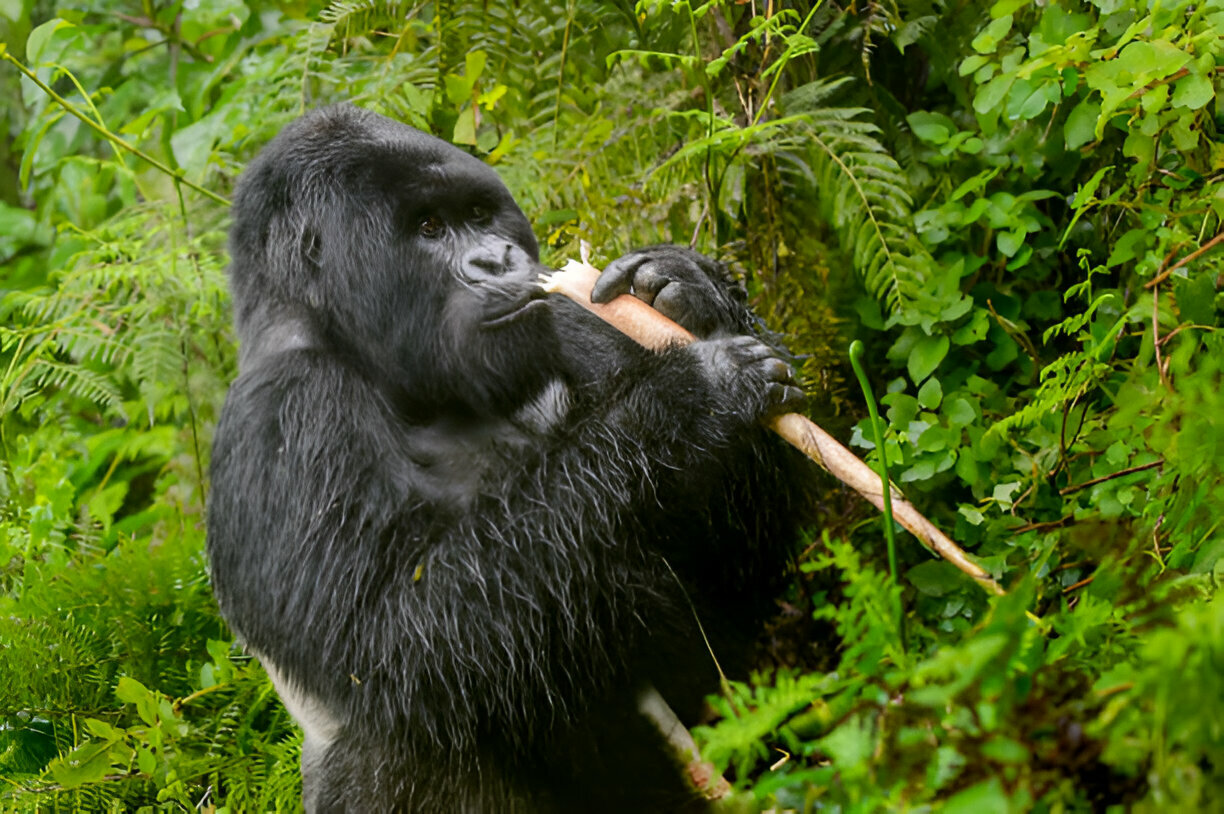
How Much Should You Tip on a Gorilla Trekking Safari?
Gorilla trekking is one of the most memorable wildlife experiences you can have in Africa. Whether you travel to Uganda’s Bwindi Impenetrable National Park, Mgahinga Gorilla National Park, or Rwanda’s Volcanoes National Park, your encounter with mountain gorillas depends on the work of several people. Rangers, guides, trackers, porters, drivers, and lodge staff all contribute to your experience.
Many travellers ask the same question before their safari: how much should you tip on a gorilla trekking safari? Knowing the usual tipping amounts helps you prepare your budget, show appreciation for good service, and avoid uncertainty when your trek ends.
Tipping is voluntary in Uganda and Rwanda. There is no single official amount that every traveller must pay. The appropriate amount depends on the quality of service, the difficulty of your trek, your budget, and whether you are tipping an individual or an entire team. The figures in this guide are practical planning estimates, rather than compulsory charges.
How Much Should You Tip on a Gorilla Trekking Safari?
For a typical gorilla trekking experience in Uganda or Rwanda, consider budgeting around $10 to $30 per traveller for your main ranger guide, $10 to $20 for your porter, and a separate contribution for trackers or the wider trekking team. You can also set aside money for your driver-guide and accommodation staff if they provide services during your safari.
The amounts vary between safari operators and lodges. Some recommend a collective tip for the trekking team, while others suggest separate gratuities for particular staff members. Before handing over money, ask your guide or tour operator how the local tipping arrangement works. This helps you avoid giving the same team multiple tips unintentionally.
A useful starting point is to prepare several small US dollar notes or local currency. Keep your tipping money separate from your spending money so you can give each person an appropriate amount without having to find change.
How Much Should You Tip Your Gorilla Trekking Ranger or Guide?
Your ranger guide plays an important role in your gorilla trekking experience. The guide leads the group through the forest, explains gorilla behaviour, communicates with tracking teams, and ensures that visitors follow the rules designed to protect people and gorillas.
A practical guideline is $10 to $30 per traveller for the main guide or ranger after the trek. You might choose the lower end for satisfactory service and a higher amount when the guide provides excellent explanations, handles difficult trail conditions professionally, and helps your group understand the gorillas without disturbing them.
For example, imagine you are trekking in Bwindi with two other travellers. If each person contributes $20 towards the main guide’s tip, the group gives $60 in total. That can be a reasonable collective gratuity for a good experience, although the amount remains entirely your choice.
Before presenting a group tip, clarify whether the suggested amount is per person or for the whole group. This distinction matters because a recommendation of $20 per traveller is very different from $20 shared by four visitors.
You should also remember that the ranger’s professional responsibilities remain the same regardless of the tip. Do not expect a gratuity to buy extra time with the gorillas, special access, or permission to ignore park rules.
How Much Should You Tip Gorilla Trackers?
Trackers are essential to gorilla trekking. They enter the forest early, follow signs of gorilla movement, and communicate the location of habituated gorilla families to the ranger teams. Their work helps trekking groups find the assigned gorilla family while reducing unnecessary searching.
A practical amount is $5 to $15 per traveller as a contribution towards the tracking team, depending on the local arrangement and your satisfaction with the experience. Some operators recommend a shared contribution rather than individual tips for every tracker.
For instance, a couple might decide to contribute $20 to a tracking team after a successful trek. If the group has several trackers and other personnel, ask the lead ranger whether a central collection point or shared tip is available.
You may not spend much time speaking directly with the trackers, and you might not see every person involved in locating the gorillas. That does not mean their work is unimportant. However, you are not required to tip every member of the team individually. A collective contribution is often easier and helps prevent confusion about who has received a gratuity.
How Much Should You Tip a Gorilla Trekking Porter?
Hiring a porter is one of the most useful decisions you can make on a gorilla trekking safari. Porters carry your backpack, assist you on slippery or steep sections, and sometimes offer a steady hand when you need help crossing difficult ground.
A porter can be particularly helpful in Bwindi Impenetrable National Park, where trails may involve steep slopes, thick vegetation, mud, and uneven ground. Conditions vary by location, season, and the gorilla family’s position, so even travellers who are reasonably fit may appreciate the assistance.
Consider tipping your porter around $10 to $20 after the trek, depending on the effort involved and the quality of assistance. Treat this as a suggested gratuity, separate from the porter-hire fee.
The hire fee pays for the service you requested. A tip is an additional expression of appreciation. Confirm the current porter fee with your tour operator or at the designated hiring point before the trek begins, because the charge can vary.
For example, if you hire a porter for the day and they carry your bag, help you navigate difficult sections, and support you throughout a demanding six-hour trek, a $15 or $20 tip may be appropriate if your budget allows. For a shorter trek with less assistance, you might choose a smaller amount.
Hiring a porter can also create an opportunity for people from communities near the national parks to earn income from tourism. You should hire someone because you value the service, not because you feel pressured to do so. If you need assistance, however, there is no reason to feel embarrassed about accepting it.
Should You Tip Armed Rangers and Security Personnel?
Some gorilla trekking arrangements include armed rangers or additional security personnel. Their role is to support safety and park management, rather than to provide a separate guiding service to every visitor.
Tipping arrangements for these staff members differ between parks and operators. In some cases, the main trekking-team gratuity is shared among the relevant personnel. In others, the operator may suggest a separate contribution.
Before offering individual tips, ask the lead guide whether the group contribution already covers the wider team. You can follow the local recommendation without feeling obliged to pay every person separately.
If you are advised to tip a particular staff member directly, an amount of around $5 to $10 may be a reasonable optional gesture when appropriate. This is a planning estimate, not an official rate or a requirement.
How Much Should You Tip Your Gorilla Safari Driver-Guide?
Your driver-guide may spend several days with you, collecting you from the airport, transferring you between lodges, explaining local culture, and taking you to the gorilla trekking briefing point. They may also help coordinate meals, accommodation, and other activities during your safari.
For a dedicated safari driver-guide, consider budgeting around $10 to $20 per traveller per day. Some travellers tip more for exceptional service, while others use a lower amount depending on their group size, safari arrangements, and budget.
For example, a couple on a three-day gorilla safari might decide to give their driver-guide $15 per person per day. That would amount to $90 for the two travellers over three days. This is an example of how to calculate a tip, not a required payment.
You can usually present the gratuity at the end of your safari, especially when the same driver-guide has accompanied you throughout the journey. If your trip includes several guides, clarify which person provided each service so you can distribute tips fairly.
For a group safari, consider agreeing on a contribution that reflects the number of guests and the length of the journey. A shared tip may be easier to organise than asking each traveller to make separate payments without a common understanding.
How Much Should You Tip Gorilla Lodge Staff?
Lodge staff work behind the scenes to make your stay comfortable. Their responsibilities may include preparing meals, cleaning rooms, serving drinks, maintaining the grounds, and helping guests with their luggage.
A practical guideline is $5 to $10 per traveller per night for a shared staff tip, adjusted to your budget and the lodge’s arrangements. Some properties suggest a contribution per stay instead, so check whether the amount is intended for each night or for the entire visit.
Many lodges provide a communal tip box at reception. This allows management to distribute gratuities among staff members who may not interact directly with guests. If a communal system is available, it is often a sensible way to recognise the work of the wider team.
Suppose you stay at a lodge for two nights and choose to contribute $5 per night. Your total contribution would be $10 per traveller. If you are travelling as a couple, you might contribute $20 in total.
You may also want to recognise an individual staff member who provides particularly helpful service. Before doing so, ask whether the lodge has a policy on individual tips. Some properties prefer guests to use the communal system to ensure that different departments receive a fair share.
How Much Should You Tip in Uganda Compared With Rwanda?
Uganda and Rwanda both offer mountain gorilla trekking, and the basic approach to tipping is similar. In both countries, gratuities are voluntary, and the amount depends on the service you receive and the recommendations provided by your operator.
In Uganda, the main trekking destinations are Bwindi Impenetrable National Park and Mgahinga Gorilla National Park. Travellers often hire porters to help with steep, muddy trails and difficult terrain. Your safari may also include a driver-guide, lodge staff, and other local activity guides.
In Rwanda, gorilla trekking takes place in Volcanoes National Park. Travellers may use porters and receive assistance from ranger guides and tracking teams. The same general tipping principles apply, but local arrangements and recommendations may differ.
You do not need to use a completely different tipping budget for each country. The suggested ranges in this article can serve as a starting point for either destination. Confirm the specific amounts with your safari operator before departure, particularly if your itinerary includes several trekking days or multiple accommodation properties.
Remember that these figures are not government-set tariffs. Different operators may recommend different amounts, and the service arrangements can affect how gratuities are collected and distributed.
When Should You Give Your Gorilla Trekking Tip?
For your ranger guide, porter, and trekking team, the most convenient time to tip is usually after you return from the trek. You can thank the staff personally and offer the gratuity once the activity has finished.
For lodge staff, use the communal tip box at the end of your stay or follow the property’s instructions. If you are tipping a driver-guide who accompanies you for several days, you can usually wait until the final transfer or the end of the safari.
Avoid waiting until you have left the destination to work out who should receive your tips. Preparing small notes before your trek makes the process easier, especially when you are staying in remote areas with limited access to cash services.
You should also avoid interrupting the trekking briefing or the time spent observing gorillas to discuss gratuities. Your attention should remain on the guide’s instructions and the rules governing the encounter.
What Currency Should You Use for Gorilla Trekking Tips?
US dollars are widely used for international safari payments and are commonly accepted for gratuities in the tourism industry. However, Ugandan shillings in Uganda and Rwandan francs in Rwanda are also useful, especially for smaller local payments.
Carry a mixture of small denominations so you can give an appropriate amount without expecting someone to provide change. If you plan to tip in US dollars, ask your safari operator whether the recipients can conveniently accept them and whether any conditions apply to the notes.
For example, a traveller in Uganda might carry $5, $10, and $20 notes alongside some Ugandan shillings. A traveller in Rwanda might carry similar dollar denominations and some Rwandan francs for local purchases and small gratuities.
Cash is particularly useful around remote trekking destinations, where access to ATMs and card-payment facilities may be limited. Plan your cash requirements before travelling to Bwindi, Mgahinga, or Volcanoes National Park.
Should You Tip If the Trek Is Difficult or Lasts All Day?
Gorilla trekking can last a few hours or extend through much of the day. The duration depends on the gorilla family’s location, terrain, weather, and the pace of the group. You should prepare for changing conditions rather than assume that every trek will follow the same schedule.
A challenging trek does not automatically require a larger tip. However, you may choose to give more when your guide handles difficult conditions professionally or your porter provides significant physical assistance.
For example, if your porter helps you safely navigate steep and muddy sections over several hours, you may decide that $20 is more appropriate than $10. If your ranger provides clear instructions, patiently answers questions, and helps the group follow gorilla viewing rules, you may also choose to recognise that service with a higher gratuity.
The decision remains yours. A difficult trek is not a reason to feel pressured into giving money beyond your budget. Tip according to your experience and means.
Is Tipping Mandatory on a Gorilla Trekking Safari?
No. Tipping is not mandatory, and there is no universal official tipping rate for gorilla trekking in Uganda or Rwanda. Published recommendations from safari operators differ, so it is best to treat them as guidance rather than fixed charges.
Your gorilla trekking permit, accommodation, transport, and other booked services should be budgeted separately from gratuities. If your itinerary includes porter hire or another service with a stated fee, confirm that charge before the activity begins.
You should never assume that a tip is included in your package unless your operator confirms it. Equally, you should not feel that you must tip every person you encounter. Focus on the staff who provided a service and follow any local arrangements for shared tips.
If you are uncertain about the quality of service or how a gratuity will be distributed, ask your guide or tour operator for clarification. You can also raise concerns about unsatisfactory service directly with the operator.
How to Prepare a Gorilla Trekking Tipping Budget
The easiest way to plan gratuities is to calculate them separately from the main cost of your safari. Start by estimating how many trekking days you have, how many nights you will spend at lodges, and how long your driver-guide will accompany you.
For a simple example, consider a traveller on a three-day Uganda gorilla safari with one trekking day and two lodge nights. They might budget $20 for the ranger guide, $15 for a porter, $10 towards the tracking team, $10 for lodge staff, and $30 for a driver-guide who provides services over three days.
That would amount to $85 in planned gratuities, assuming the suggested amounts are suitable for the services provided and the tracking contribution is not already included in another shared tip. This example excludes the porter-hire fee and any other compulsory or separately charged service.
A couple using the same per-person approach might budget approximately $170 in gratuities for the same itinerary, although the driver-guide tip may be calculated differently for a private vehicle. Your final total will depend on the actual arrangements and the amounts you choose.
The important step is to check how each tip is calculated. Some amounts are per traveller, some are per day, and others are shared by the group. Keeping those distinctions clear will help you avoid double-counting or underestimating your cash needs.
Respectful Tipping Etiquette During a Gorilla Safari
A tip is most appropriately given as a sincere expression of appreciation. Thank the person directly, offer the money discreetly, and avoid comparing what different travellers have contributed.
If you are travelling with other people, you can discuss a shared contribution with the group before the trek ends. However, no one should feel forced to contribute the same amount if their budget is different.
Follow the park’s rules at all times. Do not attempt to use a tip to influence a guide’s decisions, obtain special access to gorillas, extend the permitted viewing period, or get closer than the rules allow. Guides and rangers must prioritise visitor safety, gorilla welfare, and conservation requirements.
It is also useful to ask your tour operator about tipping before your safari begins. A responsible operator should explain which fees are already included, whether porter hire is separate, and how the trekking team’s gratuities are normally handled.
Planning Your Gorilla Trekking Safari in Africa
A well-planned gorilla trekking safari gives you time to prepare for the physical demands of the forest, understand the park’s rules, and budget for the services that support your trip. In Uganda, you can combine gorilla trekking in Bwindi or Mgahinga with cultural visits, scenic drives, and other wildlife experiences. In Rwanda, you can combine Volcanoes National Park with time in Kigali or other destinations, depending on your schedule.
When arranging your trip, confirm your permit, accommodation, transport, meals, and included services with your safari operator. Ask for a clear breakdown of the costs and request tipping guidance before you travel. This will help you arrive prepared and enjoy your experience without having to make every financial decision on the day of the trek.
Your gratuities should reflect your satisfaction with the service, your personal budget, and the local arrangements. You do not need to follow an exact formula. Prepare reasonable amounts, recognise the people who help you, and keep your focus on a safe and respectful encounter with mountain gorillas.


No comment