Hot Springs of Semuliki: How to Reach Them and What You Find There
Hidden within the lush forests of western Uganda are some of the country’s most fascinating natural wonders. The hot springs of Semuliki are unlike anything else you will find on a Uganda safari. Steam rises from the ground, boiling water bubbles continuously, and visitors can watch eggs and plantains cook in minutes using nothing but geothermal heat from beneath the earth’s surface. These remarkable springs are among the most popular attractions in Semuliki National Park and offer a fascinating mix of geology, culture, and rainforest scenery.
Many travelers visiting western Uganda are surprised to learn that Semuliki National Park sits within the Albertine Rift Valley, one of Africa’s most important biodiversity hotspots. The hot springs are evidence of the geological activity that has shaped this part of East Africa over millions of years.
Where Are the Semuliki Hot Springs?
The hot springs are located inside Semuliki National Park in western Uganda near the border with the Democratic Republic of Congo. The park lies in Bundibugyo District and is approximately 52 kilometers from Fort Portal. Visitors usually access the springs through Sempaya Gate, which serves as the main tourist entrance to the park.
Semuliki National Park covers approximately 220 square kilometers and protects part of the vast Ituri Forest ecosystem that extends into Congo. Despite being smaller than some of Uganda’s other national parks, it is home to an impressive variety of wildlife, birds, and unique plant species.
How to Reach the Hot Springs
Most visitors begin their journey from Kampala. The drive to Fort Portal takes about four to five hours via Mubende. From Fort Portal, travelers continue for approximately one to one and a half hours to reach Semuliki National Park.
The final section of the road is partly murram and may become slippery during heavy rains, making a four wheel drive vehicle useful during the wet seasons.
Travelers exploring western Uganda often combine Semuliki with destinations such as Kibale Forest National Park, Queen Elizabeth National Park, and the Rwenzori Mountains.
The journey itself is rewarding, offering spectacular views of the Rift Valley, tea plantations, and the foothills of the Rwenzori Mountains.
The Two Hot Springs
The Semuliki hot springs consist of two major geothermal features known as the Male Hot Spring and the Female Hot Spring.
The Male Hot Spring, locally called Bintente, is a broad bubbling pool measuring approximately 10 to 12 meters across. Steam rises continuously from its surface, creating dramatic views throughout the day. Visitors sometimes notice footprints of wildlife around the area because animals are occasionally attracted to the minerals and warmth surrounding the spring.
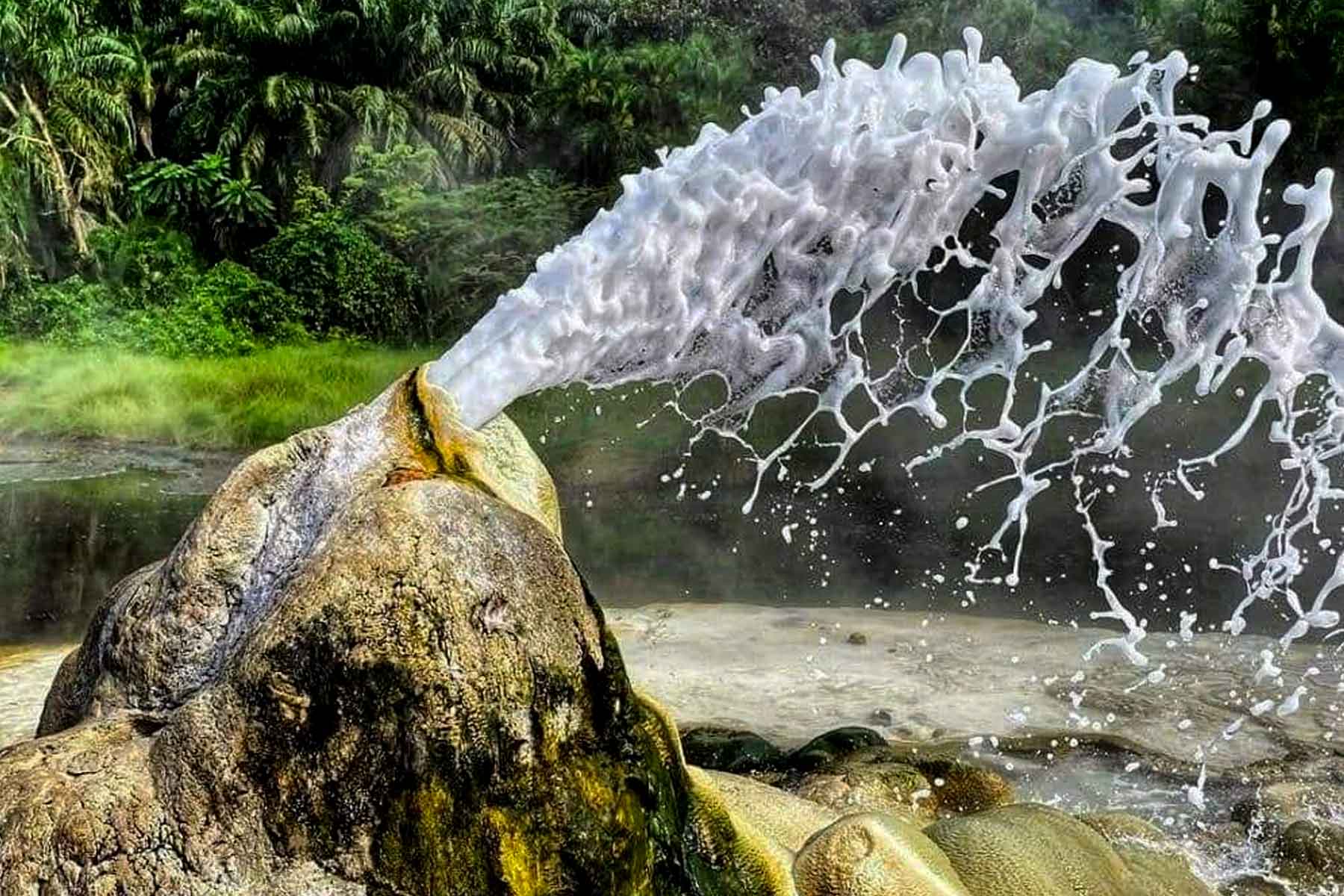
The Female Hot Spring, known as Nyansimbi, is the more dramatic of the two. Water temperatures exceed 100 degrees Celsius, causing the spring to boil vigorously. Steam can often be seen from a considerable distance. Unlike the Male Hot Spring, Nyansimbi resembles a natural geyser, with boiling water continuously bubbling from beneath the earth’s surface.
The Walk to the Springs
Visiting the hot springs includes guided walks through sections of the rainforest.
The Male Hot Spring is located only a short walk from the park offices. The Female Hot Spring requires a guided walk of approximately 30 minutes through forest trails. During this walk, visitors can enjoy tropical vegetation and may spot monkeys and birds along the way.
The trail is maintained throughout the year, although sections can become muddy during the rainy seasons. Visitors are advised to wear comfortable walking shoes or waterproof footwear when rainfall is heavy.
Cooking Eggs in Boiling Water
One of the most famous activities at Semuliki’s hot springs is boiling eggs using the geothermal water.
Park guides often demonstrate how eggs and plantains can be cooked directly in the spring without the use of fire or cooking equipment. The water temperature at the Female Hot Spring is high enough to cook food within a few minutes.
Watching food cook naturally using underground geothermal heat is one of the most memorable parts of the visit. It also demonstrates just how hot the water is and why visitors should never touch it.
Cultural Significance of the Hot Springs
The Semuliki hot springs are important cultural sites for local communities.
According to traditional beliefs, the Male and Female springs are associated with ancestral spirits. Oral traditions tell stories of individuals who mysteriously disappeared at the locations where the springs now exist, giving rise to the names Bintente and Nyansimbi.
Historically, rituals were performed at the springs, and many local communities continue to regard them with cultural significance. Park guides often share these stories during the tour, allowing visitors to appreciate both the scientific and cultural aspects of the site.
Wildlife Around the Hot Springs
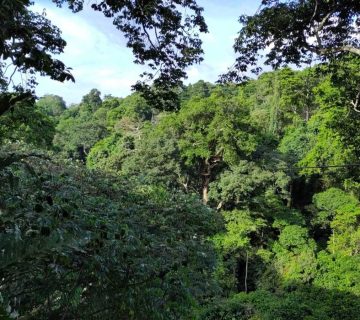
Semuliki National Park is known for its remarkable biodiversity. The hot springs are surrounded by lowland tropical rainforest that supports numerous species of birds, primates, and mammals.
The park is home to more than 400 bird species, making it one of Uganda’s leading birdwatching destinations. Visitors walking to the springs may hear the calls of forest birds and occasionally spot monkeys moving through the trees.
Wildlife tracks are frequently observed near the springs, particularly those of small mammals that visit the area. The combination of rainforest, geothermal activity, and wildlife makes the hot springs one of Uganda’s most unique attractions.
Best Time to Visit
The hot springs can be visited throughout the year. Uganda’s dry seasons from June to September and December to February are generally considered ideal because the forest trails are easier to walk.
During the rainy seasons, the surrounding vegetation becomes especially green and beautiful, although sections of the trail may become muddy.
Morning visits are particularly enjoyable because temperatures are cooler and the rising steam creates spectacular views against the rainforest backdrop.
What to Pack
Visitors planning to explore the hot springs should wear comfortable walking shoes and lightweight clothing suitable for tropical conditions.
It is advisable to carry drinking water, insect repellent, sunscreen, and a camera. A light rain jacket is useful because weather conditions in western Uganda can change quickly.
Since the activity involves guided walks rather than strenuous hiking, most visitors can comfortably enjoy the experience regardless of their fitness level.
Combining Semuliki With Other Destinations
Many safari itineraries combine Semuliki National Park with nearby attractions. Its location makes it an excellent addition to western Uganda safaris that include chimpanzee trekking, game drives, crater lake tours, and mountain adventures.
Travelers often visit Semuliki after exploring Kibale Forest National Park or before continuing to Queen Elizabeth National Park. The park’s unique ecosystem provides a refreshing contrast to Uganda’s more famous wildlife destinations.
The hot springs are particularly popular among visitors looking to discover lesser-known attractions while exploring Uganda’s western tourism circuit.
Why Visit the Semuliki Hot Springs?
The Semuliki hot springs offer something that few destinations in East Africa can match. They combine science, culture, adventure, and natural beauty in one experience. Watching boiling water emerge naturally from the earth while standing in the middle of a tropical rainforest creates an unforgettable memory.
For travelers seeking experiences beyond traditional safaris, the hot springs provide an excellent opportunity to explore one of Uganda’s hidden gems while learning about the geological forces that continue to shape the African continent. The journey may require a few extra hours on the road, but for many visitors, the sight of steam rising from the rainforest floor makes every kilometer worthwhile.