
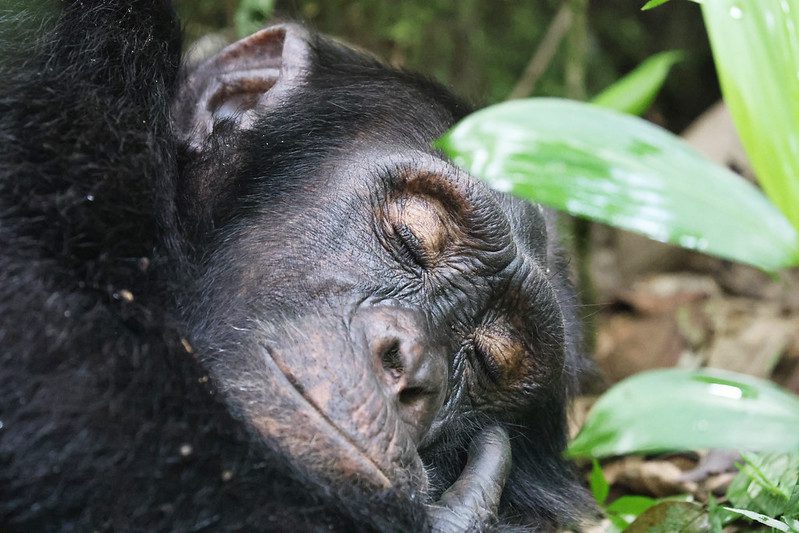
Chimpanzees and gorillas are both members of the great ape family, although they differ greatly in appearance, behaviour, and habitat. This comparative research will dive into the differences between these two remarkable primates. Chimpanzee trekking-Gorilla trekking-primate safaris-Uganda tracking safaris.
Chimpanzees and gorillas have distinct physical characteristics.
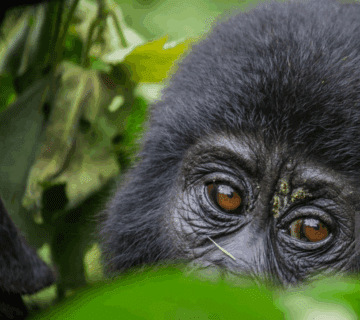
Chimpanzees and gorillas have various physical characteristics that distinguish them from one another. Chimpanzees are smaller than humans, standing 3-4 feet tall and weighing 70-130 pounds on average. Gorillas, on the other hand, are significantly bigger, standing 4-6 feet tall and weighing 200-400 pounds on average. Gorillas also have a characteristic sagittal crest on their skull, which chimpanzees lack. Furthermore, gorillas have larger arms and a wider chest, whereas chimps have longer legs and a more slender frame.
Social structures and communication methods
Chimpanzees and gorillas both have intricate social systems and communication techniques. Chimpanzees live in large groups of up to 150 people, each led by a dominant male. They communicate via various vocalisations, facial expressions, and body movements. Gorillas, on the other hand, live in groups of up to 30 people, each led by a dominant silverback male. They communicate via a variety of vocalisations, like grunts, roars, and hoots, as well as body languages such as chest beating and charging. Grooming is also used as a method of social connection and communication in both species.
Diet and foraging practises.
While both chimpanzees and gorillas are mostly herbivores, their diets and foraging patterns are distinct. Chimpanzees are known to consume a broader range of items, such as fruits, leaves, insects, and even small animals. They are also competent at utilising tools to extract food, such as fishing for termites with sticks. Gorillas, on the other hand, largely consume leaves, stems, and shoots, as well as fruits on occasion. They spend a lot of time hunting for food since their diet demands that they ingest a lot of plants to satisfy their nutritional needs.
How the Trekking Experience Compares
Trekking the two species feels quite different on the ground. Chimpanzee trekking, most famously in Kibale Forest National Park, tends to involve more walking and a livelier encounter, chimps move through the canopy and forest floor in fast-changing groups, so you’re often following sound and movement rather than a fixed location. Gorilla trekking is generally a more physically demanding hike to reach the family, but once you arrive, the encounter is calmer and more contained: gorillas spend long stretches resting, feeding, and grooming in one area, giving you a full uninterrupted hour with a habituated family. Both require a permit and a guided trek with rangers, but chimp permits are generally more affordable and more available on shorter notice than gorilla permits.
Where to See Each in East Africa
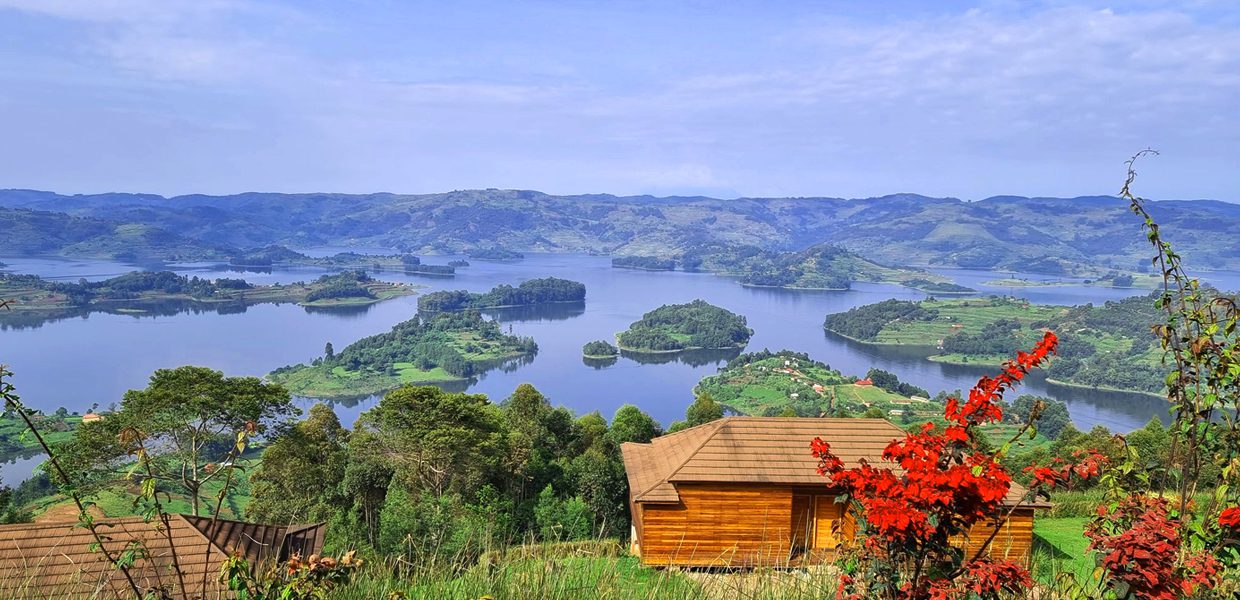
Kibale Forest National Park in western Uganda is the region’s premier chimpanzee destination, home to one of the highest chimp densities in Africa, with Rwanda’s Nyungwe Forest offering a strong alternative. For gorillas, Bwindi Impenetrable National Park and Mgahinga Gorilla National Park in Uganda, alongside Volcanoes National Park in Rwanda, hold nearly the entire wild mountain gorilla population. Because Kibale and Bwindi are both in Uganda, though several hours apart by road, many travelers combine both treks into a single primate-focused itinerary.
Conservation Status: A Different Picture
Chimpanzees are classified as Endangered by the IUCN, with an estimated 170,000 to 300,000 remaining across a wide range of West, Central, and East African habitat, a much larger and more scattered population than gorillas. Mountain gorillas, by contrast, number just over 1,000 individuals confined to two small pockets of habitat, but that population has been steadily growing thanks to decades of intensive, permit-funded conservation, one of the few genuine great-ape recovery stories. Chimpanzees face a more diffuse set of threats across their wider range, including habitat fragmentation, poaching, and disease, that have proven harder to address at the same concentrated scale.
Which Should You Choose?
If your priority is an energetic, unpredictable encounter with a highly vocal, tool-using primate, chimpanzee trekking is hard to beat, and it’s a strong choice if your schedule or budget is tighter, since permits are cheaper and treks shorter. If you want the deeply calm, close-range hour with a massive, family-oriented silverback and his troop, gorilla trekking is the classic bucket-list experience, worth the higher permit cost and the earlier planning it requires. Neither is objectively “better,” they’re genuinely different wildlife experiences, which is exactly why so many travelers choose to do both.
Combining Both on One Trip
Uganda is one of the few places in the world where you can realistically do both chimpanzee and gorilla trekking on a single itinerary, typically pairing a few days in Kibale Forest with a visit to Bwindi or Mgahinga, often alongside classic game drives in Queen Elizabeth National Park in between. All in Africa Safaris can help you build a primate-focused itinerary that fits both treks in without an overly rushed pace.
Genetic Kinship: How Close Are They to Us?
Chimpanzees share roughly 98.7 percent of their DNA with humans, making them our closest living relatives, closer to us genetically than they are to gorillas. Gorillas, while still remarkably close at around 98 percent shared DNA, sit one branch further out on the evolutionary tree; humans and chimpanzees diverged from a common ancestor an estimated 6 to 7 million years ago, while the gorilla lineage split off earlier, roughly 8 to 10 million years ago. This genetic closeness shows up behaviorally too: chimpanzees display tool use, complex problem-solving, and social politics, including alliances and occasional violent conflict between groups, that researchers have long compared to early human social structures.
Intelligence and Tool Use
Chimpanzees are famous for their tool use, stripping leaves from twigs to fish termites out of mounds, using stones to crack open hard-shelled nuts, and even fashioning simple spears for hunting small prey in some populations. This behavior varies by region and is passed down culturally within groups rather than being universal across the species, evidence of genuine learned tradition rather than pure instinct. Gorillas show far less tool use in the wild, though captive gorillas have demonstrated similar problem-solving capacity when given the opportunity, suggesting the gap has more to do with different ecological pressures than a fundamental difference in intelligence.
Vocalizations You Might Actually Hear
On a trek, sound often reaches you before sight does. Chimpanzees are considerably louder and more vocal than gorillas, their pant-hoot calls, rising whoops that build to a crescendo, can carry over a kilometer through dense forest and are used to announce location, food finds, or excitement to the wider group. Gorillas are comparatively quiet, communicating mostly through low grunts, occasional roars when alarmed, and the well-known chest-beating display, which is more often a communication signal than a genuine threat. If you’re trekking chimps, expect an audible, sometimes chaotic forest; with gorillas, expect a stiller, more hushed encounter punctuated by occasional vocalizations.
A Quick Side-by-Side Summary
Chimpanzees: smaller, louder, more mobile, tool-using, found in bigger and more geographically spread groups, generally cheaper and quicker to arrange a permit for. Gorillas: larger, calmer, more stationary once located, led by a single dominant silverback, found only in a few tightly protected forest pockets, and requiring more advance planning and a higher permit cost. Both treks are led by professional rangers, both involve real forest hiking, and both deliver an hour that most travelers describe as one of the most memorable of their entire trip.
Rules and Etiquette on Each Trek
Both experiences share core rules rooted in disease prevention and animal welfare: a minimum viewing distance, typically seven meters, a ban on flash photography, and a requirement that visibly sick travelers postpone their trek rather than risk exposing a wild ape population to human illness. Group sizes are capped on both treks, eight visitors per gorilla family, generally slightly larger for chimp groups given their bigger overall numbers, and both require a permit booked well in advance, though chimp permits typically have more same-week availability than the more tightly limited gorilla permits.
Cost Considerations
Permit pricing is one of the more concrete practical differences between the two treks, gorilla permits run substantially higher than chimp permits across Uganda, Rwanda, and the DRC, reflecting the far smaller, more intensively protected gorilla population and the correspondingly higher cost of conservation per individual animal. For travelers working with a tighter budget or limited time, chimp trekking alone offers a genuinely rich primate encounter at a fraction of the cost, while those set on gorillas should expect to budget accordingly and book well ahead, since permits at popular parks sell out months in advance during peak season.
Making the Decision for Your Trip
If you can only choose one and time or budget is the deciding factor, chimp trekking in Kibale delivers a genuinely full primate safari experience on its own, especially paired with the park’s other 12 primate species. If gorillas have been the trip’s driving motivation from the start, that experience is worth prioritizing and building the rest of the itinerary around. And if your schedule allows, doing both remains the single best way to appreciate just how different two closely related great apes can be.




No comment