
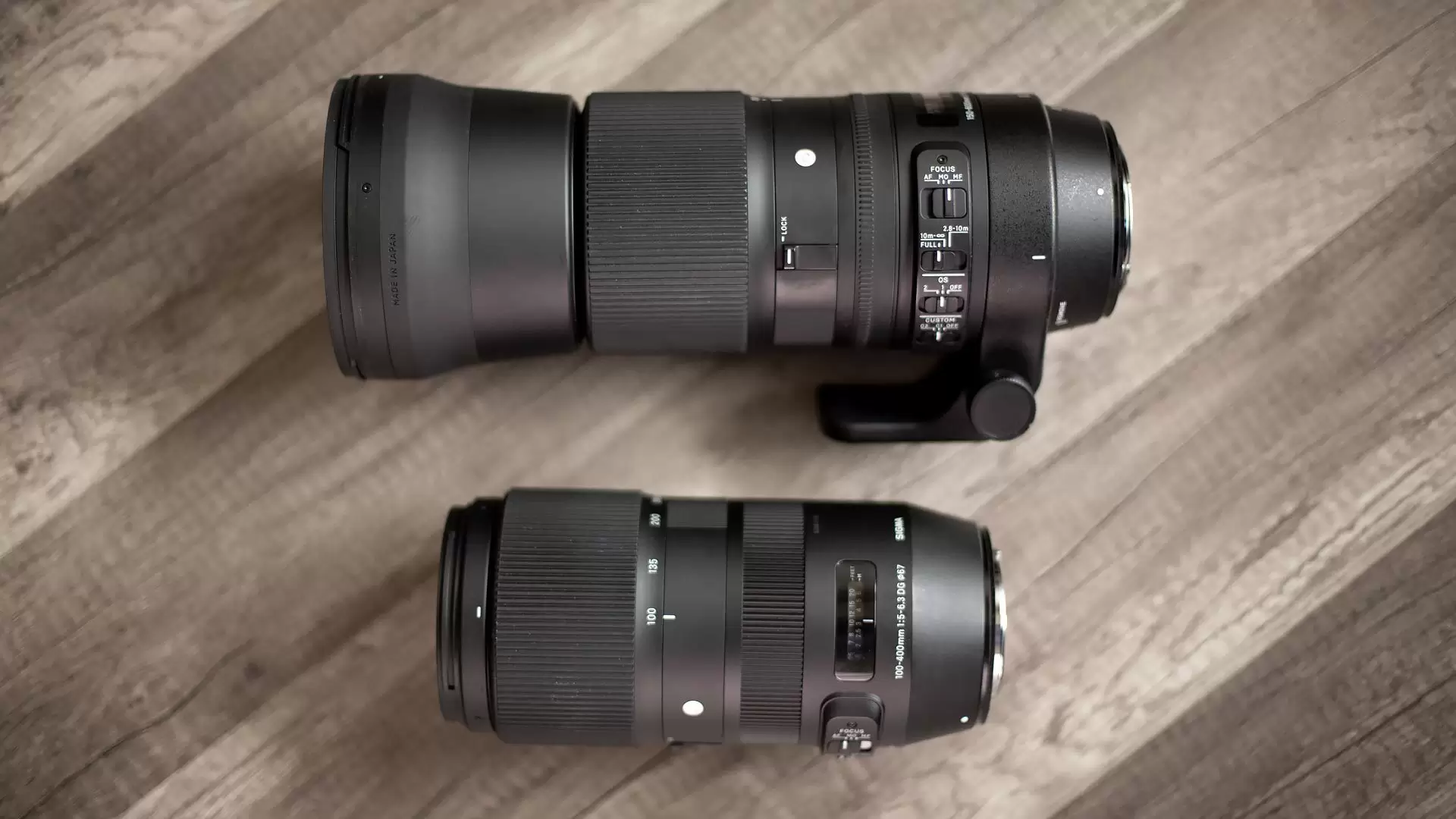
Which Lens Is Best for Safari: 100-400 mm, 150-600 mm or a Prime?
Choosing the best lens for safari photography can make a considerable difference to the quality of your wildlife photographs. During a safari in Uganda, Kenya, Tanzania or Rwanda, you may photograph elephants standing beside your vehicle, lions resting beneath trees or distant leopards hiding among branches. Each situation requires a different approach to focal length, focusing and composition.
Three popular options for wildlife photographers are the 100-400 mm zoom lens, the 150-600 mm zoom lens and fixed-focal-length prime lenses. Each offers advantages, depending on the animals you hope to photograph, your camera equipment and your budget.
A 100-400 mm lens provides flexibility, while a 150-600 mm lens offers greater reach for distant wildlife. Prime lenses, particularly 300 mm, 400 mm and 600 mm models, can deliver excellent image quality and strong low-light performance, although specifications vary considerably.
Understanding their differences will help you choose a suitable lens for your African safari.
Why Choosing the Right Safari Lens Is Important
Wildlife photography involves changing distances and unpredictable animal movements.
An elephant may approach relatively close to your safari vehicle, while a leopard might remain high in a distant tree. Birds may appear briefly before flying away.
Your lens determines how much of the subject fills the frame and how easily you can adjust your composition.
A suitable safari lens should offer:
Enough reach for wildlife photographed at a safe distance.
Reliable autofocus for moving animals.
Good image quality in different lighting conditions.
Manageable weight during long game drives.
Flexibility when photographing animals at varying distances.
Compatibility with your camera body.
The best choice depends on your photography priorities rather than focal length alone.
1. The 100-400 mm Lens for Safari Photography
A 100-400 mm zoom lens is one of the most versatile options for African wildlife photography.
Its focal length range allows you to photograph both large animals and moderately distant subjects without changing lenses.
Advantages of a 100-400 mm Lens
The main advantage is flexibility.
At 100 mm, you can photograph elephants, giraffes and buffaloes when they are relatively close.
At 400 mm, you can capture tighter portraits of lions, leopards and antelopes.
This range is particularly useful during game drives when animals change position unexpectedly.
Many 100-400 mm lenses are also lighter and easier to handle than longer telephoto alternatives, although weight depends on the model.
Limitations of a 100-400 mm Lens
The main limitation is reach.
Small birds and distant animals may appear too small in the frame.
Some 100-400 mm lenses also have relatively narrow maximum apertures at the long end, making low-light photography more challenging.
However, modern cameras with good high-ISO performance can help compensate for limited light.
Best Safari Destinations for a 100-400 mm Lens
This lens is particularly suitable for destinations where large mammals may be photographed at moderate distances.
Examples include:
Amboseli National Park, Kenya.
Maasai Mara, Kenya.
Serengeti National Park, Tanzania.
Tarangire National Park, Tanzania.
Queen Elizabeth National Park, Uganda.
A 100-400 mm lens is an excellent choice for travellers seeking a manageable, all-round wildlife photography setup.
2. The 150-600 mm Lens for Safari Photography
A 150-600 mm zoom lens offers greater magnification than a 100-400 mm lens.
This makes it particularly useful for photographing smaller or more distant wildlife.
Advantages of a 150-600 mm Lens
The longer focal length allows you to capture detailed photographs without approaching animals.
At 600 mm, distant birds, antelopes and predators can fill more of the frame.
This lens is especially useful for bird photography.
For example, photographing an African fish eagle perched on a distant tree may be easier at 600 mm than at 400 mm.
The zoom range also provides flexibility when subjects move closer.
Limitations of a 150-600 mm Lens
These lenses are generally larger and heavier than 100-400 mm alternatives.
They can become tiring to hold during long photography sessions.
Their maximum apertures are also commonly relatively narrow, particularly at 600 mm.
This can make photography difficult during early morning and late afternoon game drives.
A 150-600 mm lens may also feel restrictive when elephants or giraffes approach close to the vehicle.
Best Situations for a 150-600 mm Lens
Consider this lens if your safari focuses on:
Bird photography.
Distant predators.
Small antelopes.
Wildlife in open grasslands.
Detailed animal portraits.
Animals that remain far from safari tracks.
It is particularly useful when you expect to photograph wildlife at longer distances.
3. Prime Lenses for Safari Photography
Prime lenses have a fixed focal length.
Unlike zoom lenses, they cannot change magnification without moving the camera or changing lenses.
Popular wildlife prime lenses include 300 mm, 400 mm and 600 mm models.
Advantages of Prime Lenses
Many professional telephoto prime lenses offer excellent image sharpness and wide maximum apertures.
For example, a 400 mm f/2.8 lens allows more light into the camera than a 400 mm f/5.6 lens at the same shutter speed.
This can help photographers capture animals during low-light conditions.
High-end prime lenses may also offer excellent autofocus performance and subject separation.
Limitations of Prime Lenses
Prime lenses offer less framing flexibility.
If an elephant moves closer to your vehicle, a 600 mm lens may become too long to photograph its entire body.
Large professional primes can also be extremely expensive and heavy.
However, smaller fixed-focal-length lenses are available, and some are lighter than comparable zoom lenses.
Prime lenses are therefore most suitable for photographers who understand their preferred subjects and shooting distances.
4. Comparing Safari Photography Lenses
The following table summarises the main differences.
| Feature | 100-400 mm | 150-600 mm | Telephoto prime |
|---|---|---|---|
| Focal length | Flexible zoom | Extended zoom | Fixed |
| Wildlife portraits | Excellent | Excellent | Excellent |
| Bird photography | Good | Excellent | Excellent with suitable focal length |
| Close large animals | More flexible | Less flexible | Depends on focal length |
| Low-light performance | Model-dependent | Often limited at long end | Potentially excellent |
| Weight | Usually moderate | Usually heavier | Varies considerably |
| Cost | Mid-range to premium | Mid-range to premium | Budget to very expensive |
| Beginner suitability | Excellent | Good | More specialised |
No single lens is perfect for every safari situation.
5. Which Lens Is Best for Photographing the Big Five?
The Big Five include lions, leopards, elephants, buffaloes and rhinoceroses.
These animals differ considerably in size and behaviour.
Lions and Leopards
A 100-400 mm lens works well when predators are within moderate viewing distances.
For distant leopards resting in trees, a 150-600 mm lens may be more useful.
A wide-aperture prime can help in low light, particularly when photographing resting animals.
Elephants and Buffaloes
Large mammals often require less magnification.
A 100-400 mm lens provides flexibility for full-body photographs and close-up portraits.
At very close viewing distances, even 100 mm may be too long for wide compositions.
Rhinoceroses
Rhinos can be photographed using either zoom range, depending on distance and local viewing regulations.
Always respect your guide’s instructions and maintain appropriate distances.
6. Best Lens for Bird Photography on Safari
Bird photography often requires greater reach than large-mammal photography.
African safari destinations support many bird species, including kingfishers, hornbills, eagles and bee-eaters.
Small birds can remain difficult to photograph even with a 400 mm lens.
A 150-600 mm zoom provides additional reach and is often a practical choice for birdwatchers.
A 500 mm or 600 mm prime can also produce excellent results, especially when paired with suitable autofocus equipment.
However, photographing flying birds requires practice.
Long lenses have narrower fields of view, making fast-moving subjects more difficult to track.
7. Choosing a Lens for Different Safari Destinations
Your destination can influence your lens choice.
| Safari destination | Recommended option | Main reason |
|---|---|---|
| Maasai Mara | 100-400 mm | Flexible wildlife photography |
| Serengeti | 100-400 mm or 150-600 mm | Large mammals and distant wildlife |
| Amboseli | 100-400 mm | Elephants and landscape compositions |
| Tarangire | 100-400 mm | Elephants and varied viewing distances |
| Queen Elizabeth | 100-400 mm | General wildlife photography |
| Murchison Falls | 100-400 mm or 150-600 mm | Mammals and bird photography |
| Lake Naivasha | 150-600 mm | Waterbirds and distant subjects |
These are general recommendations. Your actual requirements depend on safari activities and expected viewing conditions.
8. Understanding Camera Sensor Size
Camera sensor size affects the field of view produced by a lens.
For example, a 400 mm lens on a camera with a 1.5× crop factor provides a field of view similar to a 600 mm lens on a full-frame camera.
However, the physical focal length remains 400 mm.
Crop-sensor cameras can help frame distant subjects more tightly, but image quality also depends on sensor resolution, light and lens performance.
Consider your existing camera body before purchasing a new telephoto lens.
9. Lens Weight and Comfort During Game Drives
Long safari drives can involve several hours of photography.
Holding a heavy lens throughout the day may become uncomfortable.
A 100-400 mm lens is often easier to manage inside a safari vehicle than a larger 150-600 mm lens.
Professional prime lenses may require additional support.
A beanbag can provide stable support when used on a suitable vehicle surface.
However, avoid placing equipment where it could fall or obstruct other passengers.
Check your safari vehicle’s roof hatch and window arrangements before choosing your setup.
10. Camera Settings for Different Safari Lenses
Appropriate camera settings help you get better results regardless of your lens.
| Photography subject | Suggested shutter speed | Aperture |
|---|---|---|
| Resting lion | 1/500 second | Widest practical aperture |
| Walking elephant | 1/1000 second | f/5.6–f/8 |
| Flying eagle | 1/2000 second or faster | Widest practical aperture |
| Running cheetah | 1/2000 second or faster | f/4–f/5.6 if available |
| Distant leopard | 1/1000 second | Widest practical aperture |
These are starting points.
Adjust your settings according to available light, subject movement and camera performance.
Use continuous autofocus for moving animals.
11. Should You Carry More Than One Lens?
Carrying two lenses can provide greater flexibility.
For example, a 100-400 mm lens paired with a 24-70 mm lens allows you to photograph wildlife portraits and wider landscapes.
A dedicated bird photographer might prefer a 150-600 mm lens alongside a shorter zoom.
However, changing lenses during dusty game drives can expose your camera sensor to dust.
If possible, carry two camera bodies with different lenses attached.
For travellers using one camera, minimise unnecessary lens changes.
12. Which Safari Lens Should You Choose?
Your decision should reflect your photography experience and priorities.
Choose a 100-400 mm lens if:
You are photographing wildlife for the first time.
You want flexibility during game drives.
You photograph large mammals regularly.
You prefer manageable equipment.
You need one lens for varied wildlife subjects.
Choose a 150-600 mm lens if:
You enjoy photographing birds.
You expect distant wildlife sightings.
You want greater magnification.
You are comfortable carrying heavier equipment.
Choose a prime lens if:
You specialise in wildlife photography.
You prioritise low-light performance or image quality.
You understand the limitations of fixed focal lengths.
Your budget allows suitable equipment.
Choosing the best lens for safari photography depends on your preferred subjects, camera equipment and travel conditions.
For most first-time safari photographers, a 100-400 mm zoom lens offers an excellent balance of flexibility, reach and portability.
A 150-600 mm lens is particularly useful for bird photography and distant wildlife.
Prime lenses can deliver outstanding results for experienced photographers, although they may involve greater expense and less flexibility.
Before buying, consider renting your preferred lens and testing it with your camera.
The right lens should help you photograph wildlife comfortably while respecting safe viewing distances and natural animal behaviour.


No comment