
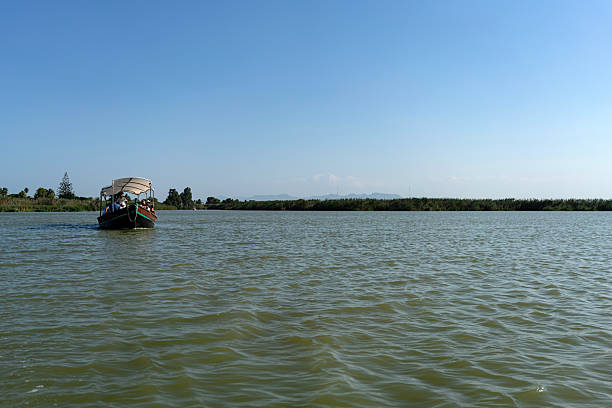
Reflection and Water Photography on Boat Safaris
Reflection and water photography on boat safaris offers an exciting way to capture African wildlife and landscapes. Rivers, lakes and wetlands provide beautiful opportunities to photograph animals drinking, birds feeding and reflections appearing across calm water. Unlike traditional game drives, boat safaris allow photographers to observe wildlife at water level, creating unusual perspectives and memorable compositions.
In East Africa, destinations such as the Kazinga Channel in Uganda, the Nile River in Murchison Falls National Park and Lake Naivasha in Kenya provide excellent opportunities for water photography. These locations support diverse wildlife, including hippos, crocodiles, elephants and numerous bird species.
However, photographing reflections from a moving boat presents several challenges. Water movement, changing sunlight and boat vibrations can affect image quality. Understanding camera settings, composition techniques and wildlife safety will help you capture sharper photographs.
Whether you are a beginner or an experienced photographer, these practical techniques can improve your results during African boat safaris.
Why Boat Safaris Are Excellent for Wildlife Photography
Boat safaris provide a different perspective on wildlife compared with traditional vehicle-based game drives.
Travelling along rivers and lakes allows you to photograph animals near the water, often against natural backgrounds.
You may encounter elephants drinking, buffaloes cooling themselves, hippos resting near the surface and birds hunting fish.
Water also creates interesting photographic opportunities through reflections, ripples and changing light.
During calm conditions, an animal standing near the shoreline may appear twice in your photograph: once above the water and again in its reflection.
These compositions can be particularly effective during early morning and late afternoon excursions.
1. Understanding Reflections in Wildlife Photography
Reflections occur when light bounces off a surface, such as water, and creates a visible image.
Calm water generally produces clearer reflections than moving water.
However, small ripples can create interesting patterns that make photographs more artistic.
Perfect Reflections
A nearly still water surface can produce a recognisable reflection of an animal, tree or landscape.
For example, a giraffe drinking beside a quiet lake may produce a reflection of its long neck and head.
These opportunities often appear during calm mornings.
Distorted Reflections
Moving water creates stretched, broken or abstract reflections.
These can work well when photographing colourful birds, vegetation or sunset lighting.
Instead of waiting for completely calm water, experiment with the shapes created by ripples.
2. Best East African Destinations for Boat Safari Photography
Several destinations provide excellent opportunities for photographing wildlife and reflections.
Kazinga Channel, Uganda
The Kazinga Channel connects Lake Edward and Lake George within Queen Elizabeth National Park.
Boat safaris provide opportunities to photograph hippos, crocodiles, buffaloes, elephants and waterbirds.
Photographers can capture wildlife resting along the shoreline or moving through shallow water.
The channel also offers opportunities for photographing reflections during suitable weather conditions.
Murchison Falls National Park, Uganda
Boat trips along the Nile provide opportunities to photograph hippos, crocodiles, elephants and numerous bird species.
The journey towards Murchison Falls also offers dramatic river landscapes.
Water movement becomes stronger near the falls, making fast shutter speeds particularly useful.
Lake Naivasha, Kenya
Lake Naivasha supports numerous waterbirds and provides opportunities for photographing hippos and lakeside landscapes.
Bird photography is especially rewarding when subjects remain close to the water.
Lake Bunyonyi, Uganda
Lake Bunyonyi is known for its islands, surrounding hills and peaceful scenery.
Although it is primarily a landscape and cultural destination rather than a traditional big-game safari location, it offers beautiful opportunities for reflection photography.
Early morning conditions may produce particularly attractive images of hills and islands mirrored in the water.
3. Choosing the Right Camera Equipment
Boat safari photography requires equipment that can handle movement and changing conditions.
A versatile zoom lens is often more practical than carrying several lenses.
Recommended Lenses
| Lens | Best photography subjects | Main advantage |
|---|---|---|
| 24–70 mm | Landscapes and reflections | Wide compositions |
| 70–200 mm | Large mammals near water | Flexible framing |
| 100–400 mm | Birds and distant wildlife | Greater reach |
| 150–600 mm | Small birds at longer distances | Strong magnification |
| Wide-angle lens | Lakes and river landscapes | Captures surrounding scenery |
A 100–400 mm lens is particularly useful for wildlife photography because animals may remain some distance from the boat.
For landscapes and reflections, a wider lens can help include the surrounding environment.
Avoid changing lenses unnecessarily when the boat is moving or water spray is present.
4. Best Camera Settings for Boat Safari Photography
Boat movement makes sharp photographs more difficult.
Even when the water appears calm, small vibrations can affect your camera.
Using a sufficiently fast shutter speed helps reduce motion blur.
Recommended Starting Settings
| Subject | Shutter speed | Aperture | ISO |
|---|---|---|---|
| Hippo resting in water | 1/1000 second | f/5.6 | Auto ISO |
| Bird flying above water | 1/2000 second | f/5.6–f/8 | Auto ISO |
| Elephant drinking | 1/1000 second | f/5.6 | Auto ISO |
| Calm landscape reflection | 1/500 second | f/8 | Auto ISO |
| Crocodile near shoreline | 1/1000 second | f/5.6–f/8 | Auto ISO |
These settings are starting points.
Adjust according to available light, boat movement and your camera’s capabilities.
Continuous autofocus can help when photographing moving animals or flying birds.
RAW format provides additional flexibility during editing.
5. Composition Techniques for Reflection Photography
Composition determines whether your reflection photograph looks balanced and interesting.
Use Symmetry
Symmetrical compositions work well when the reflection is clear.
Position the waterline near the centre of the frame when you want the subject and its reflection to receive equal attention.
For example, a tree reflected in a calm lake may create a pleasing symmetrical image.
Leave Space Around the Reflection
Avoid cropping the reflected portion of an animal.
If you are photographing an elephant standing near water, leave enough space below the shoreline to include the reflection.
Use Leading Lines
Riverbanks, reeds and reflections can direct attention towards your subject.
These elements can create depth within the photograph.
Keep Backgrounds Simple
Busy vegetation may distract attention from reflections.
Whenever possible, look for clean backgrounds and clear separation between the subject and surrounding features.
6. Photographing Hippos During Boat Safaris
Hippos are common photography subjects in several East African waterways.
They often remain partially submerged, with their eyes, ears and nostrils visible above the surface.
These features create interesting close-up compositions.
Capturing Hippos at Water Level
A low camera position can make hippo photographs more engaging.
However, remain seated or positioned safely according to your guide’s instructions.
Use a telephoto lens rather than asking the boat operator to approach too closely.
Hippos are powerful wild animals and can be dangerous when disturbed.
Never attempt to attract their attention or encourage them to open their mouths.
7. Photographing Elephants and Buffaloes Near Water
Elephants and buffaloes frequently visit rivers and lakes to drink or cool themselves.
These situations provide opportunities for behaviour photography.
An elephant using its trunk to collect water can produce an excellent image.
Buffaloes standing in shallow water may create interesting reflections.
Try capturing the complete interaction between the animal and the water.
For example, photograph the moment an elephant sprays water over its body.
A faster shutter speed can freeze individual droplets.
8. Bird Photography on Boat Safaris
Waterbirds are among the most rewarding subjects during boat excursions.
Depending on your destination, you may photograph:
African fish eagles.
Kingfishers.
Herons.
Egrets.
Cormorants.
Pelicans.
African jacanas.
Photographing Birds in Flight
Use continuous autofocus and a fast shutter speed.
Start around 1/2000 second for flying birds.
Leave space in the direction the bird is travelling.
Photographing Birds With Reflections
A bird standing in shallow water may create a clear reflection.
Focus on the bird’s eye and include the reflected image when possible.
Early morning light can produce attractive results.
9. Using Natural Light for Water Photography
Lighting conditions strongly affect reflections.
Early Morning
Morning light is often soft, and wind may be relatively calm.
These conditions can create clear reflections.
Late Afternoon
Late afternoon light can produce warm colours across the water.
Animals drinking near sunset may create attractive silhouettes.
Midday
Strong sunlight can cause glare and bright reflections.
A polarising filter may help reduce glare in some situations, but it can also weaken the reflections you want to photograph.
Adjust the filter carefully rather than using maximum polarisation automatically.
10. Protecting Your Camera During Boat Safaris
Water, spray and movement can damage photography equipment.
Use a protective camera bag and keep electronic devices away from exposed edges.
Carry a clean microfibre cloth to remove moisture from your lens.
Avoid placing your camera directly on wet surfaces.
A waterproof or water-resistant bag can provide additional protection.
If your boat travels through rough water, secure your camera before attempting photographs.
Never stand suddenly or lean outside the boat to improve your composition.
11. Common Boat Photography Mistakes
Several mistakes can reduce image quality.
Using slow shutter speeds: Boat movement can blur photographs even when wildlife remains still.
Ignoring reflections: Look below the subject before choosing your composition.
Cropping water details: Leave space for ripples, reflections and movement.
Photographing against excessive glare: Adjust your shooting angle when possible.
Changing lenses too frequently: Water spray and dust may reach the camera sensor.
Getting too close to wildlife: Allow your guide to maintain appropriate distances.
12. Editing Reflection and Water Photographs
Editing helps improve exposure, colours and contrast.
Begin by adjusting brightness and white balance.
Reduce excessive highlights caused by sunlight reflecting from water.
Recover shadows when necessary, especially around animals photographed against bright backgrounds.
Use moderate sharpening to preserve details in wildlife subjects.
Avoid excessive clarity adjustments that make water appear unnatural.
If your reflection photograph contains symmetrical elements, straighten the horizon carefully.
A slightly tilted waterline can weaken an otherwise strong composition.
13. Safety During Boat Safari Photography
Wildlife safety and boat safety should always come first.
Follow these precautions:
Wear a life jacket where required or advised.
Follow the boat guide’s instructions.
Remain seated when instructed.
Avoid leaning over the boat’s edge.
Never touch or feed wildlife.
Keep a safe distance from hippos and crocodiles.
Secure loose equipment.
Protect cameras during rough water conditions.
A responsible boat operator will position the vessel according to safety requirements rather than photography demands.
Reflection and water photography on boat safaris provides excellent opportunities to capture African wildlife and landscapes.
Calm lakes, flowing rivers and wetland environments create interesting compositions involving reflections, movement and natural light.
Destinations such as the Kazinga Channel, Murchison Falls and Lake Naivasha offer rewarding subjects, including hippos, elephants, crocodiles and waterbirds.
Successful photographs depend on appropriate camera settings, careful composition and patient observation.
By protecting your equipment and following safety instructions, you can enjoy memorable boat safari photography while respecting wildlife and its natural environment.

No comment