
Intore Dance Explained: History, Costumes and Where to Watch It
Intore dance in Rwanda is one of the country’s most recognisable cultural traditions, combining powerful drumming, impressive jumping movements, colourful costumes and performances that celebrate bravery, discipline and national heritage. Often called the Dance of Heroes, Intore has deep connections to Rwanda’s royal history and traditional warrior culture.
For travellers exploring Rwanda, watching an Intore performance provides an opportunity to experience the country’s cultural identity beyond mountain gorilla trekking, wildlife safaris and historical museums.
Today, Intore performances take place at cultural centres, community tourism attractions, festivals and special celebrations. Visitors can enjoy traditional music, learn about the meaning of different movements and discover how this remarkable dance has been preserved across generations.
What Is Intore Dance?
Intore is a traditional Rwandan performance associated with selected warriors who demonstrated courage, discipline and physical ability.
The word Intore means the chosen ones, reflecting the historical importance of those selected for special training.
The performance features coordinated movements, energetic leaps, rhythmic drumming and symbolic displays of strength.
Quick Facts About Intore Dance
| Feature | Description |
|---|---|
| Country | Rwanda |
| Traditional name | Intore |
| Meaning | The chosen ones |
| Popular description | Dance of Heroes |
| Historical connection | Royal court and warrior traditions |
| Main instruments | Traditional drums and horns |
| Famous costume | Long, flowing warrior headdress |
| Main movements | Jumping, stamping and coordinated formations |
| Cultural significance | Courage, unity and celebration |
| UNESCO recognition | Inscribed in 2024 |
The History of Intore Dance
Intore has its origins in Rwanda’s traditional royal society.
Historically, selected young men received training associated with the royal court and military organisation.
These individuals developed physical skills, discipline and knowledge of cultural responsibilities.
Intore performances became associated with royal ceremonies, important gatherings and celebrations of victory.
The Role of Rwanda’s Kings
Rwanda’s traditional kings were known as Abami, with Mwami referring to an individual king.
The royal court played an important role in preserving music, poetry and ceremonial traditions.
Warrior performances demonstrated loyalty, strength and the ability to act together.
These traditions helped establish Intore as an important expression of royal culture.
What Was Itorero Training?
Historically, selected Intore received training through institutions known as Itorero.
Training extended beyond dancing.
Participants learned cultural values, public speaking, leadership principles, traditional games and performing arts.
Why Training Was Important
The programme encouraged discipline, confidence and cooperation.
Young people developed skills associated with community responsibilities.
Dance was therefore part of a broader system of cultural education rather than entertainment alone.
Today, different cultural institutions and community groups continue teaching Intore traditions.
The Meaning Behind Intore Movements
Intore dancing is highly coordinated.
Performers often arrange themselves in lines resembling warriors preparing for battle.
They move together while responding to drum rhythms and traditional songs.
The Famous Warrior Jump
One of the most memorable movements involves dancers leaping into the air.
These impressive jumps demonstrate strength, balance and physical control.
Other movements imitate warriors advancing, defending themselves or celebrating victory.
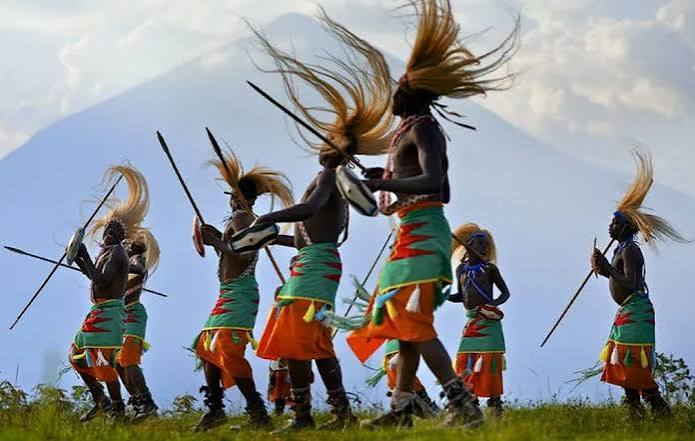
Performers may carry symbolic spears and shields.
The dance tells a story through movement rather than ordinary spoken dialogue.
Traditional Intore Costumes
Costumes are an essential part of the performance.
They help communicate historical identity and enhance the dramatic movements.
The most recognisable feature is the long warrior headdress.
Understanding the Costume
| Costume element | Cultural significance |
|---|---|
| Long warrior headdress | Strength and noble appearance |
| Traditional cloth | Cultural identity |
| Decorative belts | Costume structure and appearance |
| Beads and ornaments | Artistic decoration |
| Symbolic spear | Warrior traditions |
| Shield | Protection and courage |
Modern costumes may use different materials while preserving traditional designs.
The Famous Intore Headdress
The warrior headdress is called umugara.
It resembles a flowing mane and creates dramatic movement when dancers turn or jump.
Historically, traditional examples used animal hair and other materials.
Modern performers may use alternative fibres.
Why the Headdress Matters
The flowing strands exaggerate head and shoulder movements.
They create an impressive visual effect during energetic dancing.
The design is also associated with the strength and noble appearance of a lion.
For many visitors, the headdress is the most memorable feature of an Intore performance.
Women in Traditional Rwandan Dance
A complete Rwandan traditional dance presentation may include performances by both men and women.
While the classic warrior dance has historically been associated with men, women perform graceful movements within the wider dance tradition.
The Umushagiriro Dance
Umushagiriro is often described as the dance of cows.
Women perform flowing arm movements that evoke the graceful horns and movements of cattle.
Traditional clothing may include the elegant umushanana.
These performances reflect the historical importance of cattle in Rwandan society.
Together, the different dance forms create a rich cultural presentation.
Traditional Drumming and Music
Music provides the foundation for Intore performances.
Traditional drums, known as ingoma, create strong rhythms that guide the dancers.
Drumming ensembles may include seven to nine performers, although arrangements vary.
Why Drumming Is Important
Different rhythms signal changes in movement.
The sound builds excitement as dancers increase their speed.
Traditional horns, songs and poetry may accompany the performance.
The combination of music and movement creates an atmosphere that is both powerful and celebratory.
Intore and Rwanda’s Cultural Identity
Intore remains important because it connects modern communities with historical traditions.
The dance celebrates values associated with courage, cooperation and achievement.
It also creates opportunities for different generations to participate in cultural activities.
UNESCO Recognition
In December 2024, Intore was inscribed on UNESCO’s Representative List of the Intangible Cultural Heritage of Humanity.
This recognition acknowledges the importance of preserving the dance and its associated knowledge.
Schools, cultural organisations and community groups help transmit the tradition to younger generations.
Where to Watch Intore Dance in Rwanda
Travellers can experience Intore through organised cultural performances across the country.
Availability depends on the destination, season and local schedule.
Recommended Cultural Locations
| Location | Visitor experience |
|---|---|
| King’s Palace Museum, Nyanza | Royal history and arranged cultural performances |
| Ethnographic Museum, Huye | Traditional dance and heritage presentations |
| Gorilla Guardians, Musanze | Community cultural performances |
| Kigali cultural events | Professional dance troupes |
| Selected safari lodges | Performances arranged for guests |
Visitors should confirm performance arrangements before travelling.
King’s Palace Museum in Nyanza
King’s Palace Museum provides an excellent setting for learning about Intore’s royal background.
The museum contains reconstructed traditional royal buildings and historical exhibitions.
Visitors can also see the famous long-horned Inyambo cattle.
Why Visit Nyanza?
The former royal capital helps explain how traditional ceremonies influenced Rwanda’s cultural identity.
Arranged dance performances can complement a guided museum visit.
However, visitors should not assume performances are available throughout every day.
Ethnographic Museum in Huye
The Ethnographic Museum in Huye preserves collections associated with traditional Rwandan life.
It also supports cultural performances and educational activities.
What Makes Huye Special?
Visitors can explore exhibitions before attending an arranged dance performance.
This provides historical context for the costumes, instruments and movements.
The museum is particularly convenient for travellers exploring southern Rwanda.
Gorilla Guardians Cultural Village
Gorilla Guardians, formerly known as Iby’Iwacu Cultural Village, operates near Volcanoes National Park.
The attraction introduces visitors to different aspects of local culture.
What Can Visitors Experience?
Activities may include traditional dancing, drumming, food preparation and cultural demonstrations.
Intore-style performances are among the experiences commonly associated with the village.
The attraction is convenient for travellers staying around Musanze or Kinigi.
Watching Intore in Kigali
Kigali hosts cultural events, festivals and performances organised by professional dance groups.
Some hotels and event venues arrange traditional entertainment.
Visitors may also encounter Intore during national celebrations and organised cultural programmes.
However, these performances do not follow one fixed public timetable.
Ask your hotel or tour operator about confirmed events.
How Long Does an Intore Performance Last?
Performance duration depends on the venue and programme.
A short cultural presentation may last approximately 15–30 minutes.
Longer programmes can include traditional songs, drumming and several dance styles.
Visitors should ask what is included when booking a cultural experience.
Can Visitors Join the Dancing?
Some community performances invite visitors to learn simple movements.
Participation is usually voluntary.
Tips for First-Time Participants
Follow instructions from the performers.
Avoid handling ceremonial objects without permission.
Wear comfortable clothing.
Respect the cultural meaning of the performance.
Joining a short demonstration can make the experience more memorable.
Photography During Performances
Intore dance creates excellent photography opportunities because of its movement and colourful costumes.
Fast shutter speeds help capture jumping dancers.
Wider photographs can include drummers and the complete performance group.
Photography Etiquette
Request permission before recording.
Avoid blocking other spectators.
Do not interrupt performers for photographs.
Some cultural organisations may restrict commercial filming.
Respect these arrangements.
Responsible Cultural Tourism
Watching Intore can support musicians, dancers and cultural organisations.
Visitors should choose performances that fairly compensate participants.
Avoid demanding unpaid demonstrations.
Support community groups preserving traditional skills.
Learning about the meaning of the dance is just as important as watching its impressive movements.
Why Intore Dance Is Worth Experiencing
Intore dance provides a fascinating introduction to Rwanda’s cultural heritage.
Its dramatic warrior movements, flowing costumes, powerful drumming and traditional storytelling create a memorable performance.
The dance also reflects historical connections between royal leadership, cultural education and community identity.
For travellers visiting Rwanda, attending an Intore performance adds cultural depth to experiences such as gorilla trekking, museum visits and city tours.
Whether watched in Nyanza, Huye, Musanze or Kigali, Intore offers an opportunity to appreciate the creativity, history and traditions of the Rwandan people.





No comment