
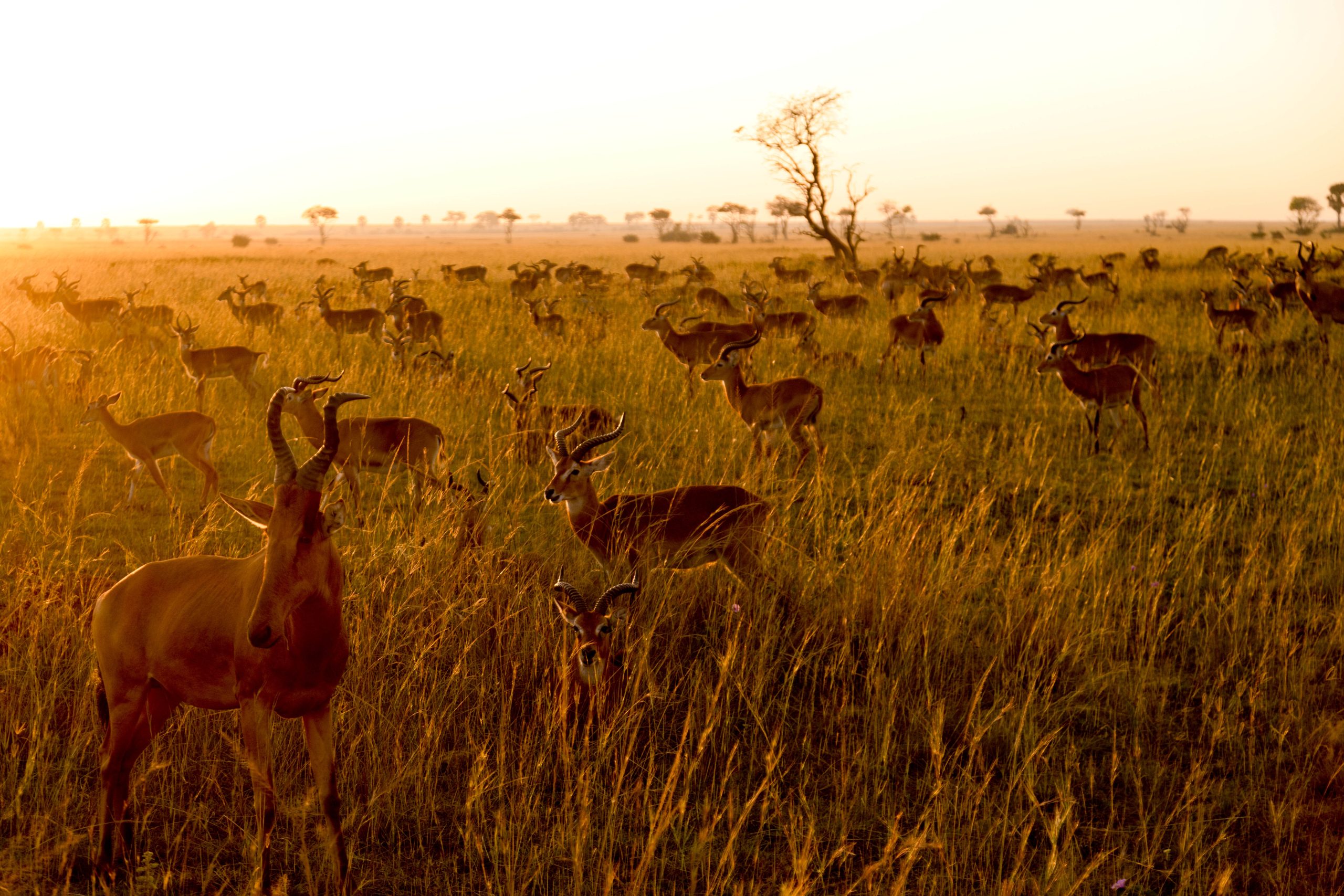
Time Zones and Daylight in East Africa: Why the Sun Sets So Early
If you are travelling to East Africa for a safari, you may be surprised by how early the sun sets compared with what you are used to at home. You could spend the day watching elephants in Uganda, tracking mountain gorillas in Rwanda, or exploring the Serengeti in Tanzania, only to find that daylight begins fading around 6:00 pm. For visitors arriving from Europe or North America, this can make the days feel shorter than expected, especially during a wildlife safari when many activities depend on natural light.
East Africa sits close to the equator, which influences how sunrise and sunset change throughout the year. Unlike countries farther north or south, where summer days can be much longer than winter days, equatorial destinations experience relatively consistent daylight throughout the year. The sun generally rises around 6:00 am and sets around 6:00 pm, although exact times vary by location, date, and local geography.
Understanding time zones and daylight hours helps you plan game drives, gorilla trekking, road transfers, photography sessions, and evening activities. It also helps you adjust to local time after a long international flight and avoid scheduling too many activities late in the day.
Understanding East Africa’s Time Zones
Several East African countries share the same standard time zone. Uganda, Rwanda, Kenya, and Tanzania all use East Africa Time, commonly abbreviated as EAT. This time zone is UTC+3, meaning local time is three hours ahead of Coordinated Universal Time.
For example, when it is 12:00 noon in Uganda, it is also 12:00 noon in Rwanda, Kenya, and Tanzania. Travelling between these four countries does not normally require you to adjust your watch.
These countries do not observe seasonal daylight saving time. Their clocks remain on UTC+3 throughout the year. This differs from countries such as the United Kingdom, where clocks change seasonally, and parts of North America, where daylight saving time affects the relationship between local time and East African time.
The difference matters when booking international flights, arranging airport pickups, attending online meetings, and communicating with family at home. A flight itinerary may display departure and arrival times in the local time of each airport, so always check the time zone when calculating connections.
For safari travellers, the consistent time zone makes travel between Uganda, Rwanda, Kenya, and Tanzania relatively straightforward. If you fly from Entebbe to Nairobi or travel by road from Uganda into Rwanda, you generally do not need to change your watch.
Why Does the Sun Set Around 6:00 pm?
East Africa’s location near the equator explains why daylight hours remain fairly stable throughout the year. As Earth travels around the sun, the angle at which sunlight reaches different regions changes. These seasonal changes produce long summer days and short winter days in places far from the equator.
Near the equator, the difference between day length in different seasons is much smaller. Daylight remains close to twelve hours for much of the year, with sunrise and sunset occurring at broadly similar times.
In Kampala, Uganda, sunrise often occurs shortly before or after 7:00 am or around 6:30 am, depending on the date and calculation method, while sunset commonly falls around 6:30 pm to 7:00 pm. Kigali, Nairobi, and many other East African destinations experience a similar general pattern, although exact times differ.
The sun does not necessarily set at precisely 6:00 pm everywhere. Local longitude, the date, elevation, terrain, and atmospheric conditions influence the time and appearance of sunset. Mountains and forested valleys can also make a location feel darker before the sun has technically set.
This consistency can be useful when planning a safari. You can usually expect daylight activities to begin early in the morning and finish during the early evening throughout the year. However, you should still check the actual sunrise and sunset times for your destination and travel dates.
Why East African Days Feel Shorter to Some Visitors
Travellers from Europe, Canada, and the northern United States may be accustomed to summer sunsets after 8:00 pm or even 9:00 pm. When they arrive in Uganda or Tanzania and see the sun setting around 6:30 pm, the evening can feel surprisingly short.
The difference is particularly noticeable for visitors arriving during the northern hemisphere’s summer. While their home country may enjoy extended daylight, East Africa continues to follow its relatively stable equatorial daylight pattern.
Your body clock can also affect how long the day feels. If you arrive after an overnight flight, jet lag may make you feel tired before sunset. You might wake up earlier than usual, feel sleepy during the afternoon, or struggle to remain alert during an evening meal.
Adjusting your expectations helps. Rather than planning a late start followed by several activities, organise your safari around the natural daylight schedule. Begin wildlife activities early, leave time for lunch and rest, and finish outdoor excursions before darkness.
Sunrise and Sunset During an East African Safari
Sunrise is especially important for wildlife viewing. Many animals are active during the cooler hours of the morning, making early game drives rewarding for visitors hoping to see predators, elephants, giraffes, buffaloes, antelopes, and other wildlife.
Your guide may recommend leaving your lodge before sunrise or shortly afterward, depending on park regulations, the location of your accommodation, and the planned activity. Early departures also help you reach wildlife viewing areas before temperatures rise.
Late afternoon can be another productive period for wildlife viewing. Animals may become more active as temperatures fall, and the softer light can create excellent conditions for photography. However, you need to allow enough time to return to your accommodation or reach the appropriate park exit before the relevant closing time.
Sunset does not mark the end of every safari activity. Some lodges offer evening meals, cultural experiences, or activities that take place after dark. Night game drives are available in certain destinations where permitted, but they are not allowed everywhere. Check the rules of the specific park or reserve before including one in your itinerary.
How Daylight Affects Gorilla Trekking in Uganda and Rwanda
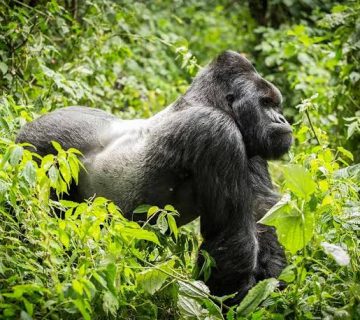
Gorilla trekking is one of East Africa’s most sought-after wildlife experiences, and daylight plays an important role in planning the day. In Uganda’s Bwindi Impenetrable National Park and Rwanda’s Volcanoes National Park, visitors normally gather for an early morning briefing before entering the forest with trained guides and trackers.
The briefing time depends on the park, trekking sector, and local arrangements. After the briefing, the trek can take several hours, depending on the location of the gorilla family, terrain, weather, and the pace of the group.
Although the sun usually sets in the early evening, you should not assume that every gorilla trek finishes at the same time. Some groups find gorillas relatively quickly, while others spend much longer walking through steep or densely forested terrain.
If your trek takes place in Bwindi, the forest canopy can reduce available light even during the middle of the day. Wet trails and uneven ground can also make walking more difficult. Follow your guide’s instructions and carry the equipment recommended for the conditions.
Plan your accommodation and road transfers around the trekking location. Avoid scheduling a long cross-country drive immediately after a demanding trek, particularly if you need to cross an international border later that day.
Daylight and Game Drives in Uganda’s National Parks
Daylight influences game drives in Uganda’s major wildlife destinations, including Queen Elizabeth National Park and Murchison Falls National Park.
Morning game drives often begin early, when temperatures are cooler and wildlife may be active. Your guide can use the available light to search for animals, interpret tracks, and identify movement across the savannah.
Afternoon game drives provide another opportunity to observe wildlife before the light fades. The timing of the return journey depends on your accommodation, the route, park regulations, and the day’s sightings.
At Murchison Falls National Park, the distance between some accommodation areas and wildlife viewing locations can make an early departure particularly useful. In Queen Elizabeth National Park, game drives may be combined with a boat cruise along the Kazinga Channel, but the activities need to be scheduled around the relevant departure times.
If you want to photograph wildlife, plan for the morning and late afternoon when sunlight is often softer. Strong midday sunlight can create harsh shadows and bright highlights, although it can still be useful for observing animals in open areas.
Daylight in Kenya’s Maasai Mara and Tanzania’s Serengeti
The Maasai Mara in Kenya and the Serengeti in Tanzania are famous for their large wildlife populations and seasonal wildebeest migration. Both destinations offer extensive opportunities for game drives, but the timing of your activities depends on local park regulations and the location of your accommodation.
Early morning drives can offer good opportunities to see predators and other animals before the day becomes hot. Late afternoon drives may provide attractive lighting for wildlife photography and opportunities to observe animals becoming active again.
If you are visiting the Serengeti during the Great Migration, your guide may need to travel considerable distances to reach the areas where wildebeest and other wildlife are concentrated. The migration changes location throughout the year, so the best route depends on the season and recent wildlife movements.
Do not assume that an early sunset means you will see the migration near your lodge. Choose accommodation according to the expected wildlife location and allow realistic driving times.
Daylight also affects photography. The first and last hours of sunlight can produce warm colours and softer shadows, while midday light may be stronger. Your guide can help position the vehicle for suitable viewing opportunities without disturbing the animals.
The Best Time of Day for Wildlife Photography
If photography is one of your main safari priorities, understanding daylight can improve your results. Many wildlife photographers favour the early morning and late afternoon because the sun is lower in the sky and the light often produces more detail and natural colour.
During the middle of the day, the sun can create strong contrast, especially in open savannah landscapes. Animals may also seek shade or rest during hotter hours, although sightings always depend on local conditions.
In forests such as Bwindi and Kibale, available light can be limited even when the sky is bright outside. A camera with good low-light performance, a suitable lens, and a stable shooting technique can help. For gorilla photography, follow your guide’s instructions and the applicable wildlife rules, and avoid using flash where prohibited or inappropriate.
A practical approach is to keep your camera ready before sunrise, use the first hours of daylight for wildlife viewing, and take advantage of late afternoon when the schedule allows. Carry spare batteries because cooler mornings, heavy camera use, and long outings can affect how much power you have available.
Planning Road Transfers Around Sunset
Road transfers are an important part of many East African safaris. Travelling between national parks can involve winding roads, rural settlements, mountainous terrain, and stretches where lighting is limited.
Although the sun may set around 6:30 pm in many locations, darkness can make some journeys slower or less comfortable. Road conditions, weather, livestock, pedestrians, and visibility can all affect travel after sunset.
Ask your safari operator to estimate transfer times using the actual route rather than relying only on the distance between destinations. Where possible, begin long journeys early in the morning and plan to arrive at your accommodation before dark.
This is particularly useful when travelling from Entebbe towards western Uganda, moving between Bwindi and Queen Elizabeth National Park, or crossing from Uganda into Rwanda. The exact travel time depends on the route, road conditions, border procedures, and stops along the way.
If your international flight departs early in the morning, consider spending your final night close to the airport. Travelling from a remote national park on the day of departure can create unnecessary pressure if delays occur.
Time Differences Between East Africa and Europe or North America
The time difference between East Africa and your home country changes when that country observes daylight saving time. Uganda, Rwanda, Kenya, and Tanzania remain on UTC+3 throughout the year, while many European and North American locations change their clocks seasonally.
For example, the United Kingdom is normally two or three hours behind East Africa, depending on the time of year. Central European locations are usually one or two hours behind. The difference with the United States and Canada varies considerably according to the city and season.
If you are arranging a video call, booking an international flight, or contacting a safari operator from home, check the current time difference rather than relying on a fixed number.
This is especially important for travellers working remotely during a safari. A meeting scheduled for 9:00 am in New York may take place in the afternoon or evening in East Africa, depending on the date. Confirm the time zone when accepting invitations and use calendar settings that adjust automatically.
How to Adjust to East African Time After Arrival
Your adjustment to local time depends on where you are travelling from and how much sleep you get during the journey. If you arrive after an overnight flight, you may feel tired during the afternoon or wake earlier than expected the following morning.
Try to follow the local schedule as soon as practical. Get daylight exposure during the day, drink enough water, and avoid taking a long afternoon nap if it would prevent you from sleeping at night. If you are very tired, a short rest may help you recover before your safari begins.
Allow a little flexibility on your arrival day. An overnight stay in Entebbe or Kigali can be useful before a long road transfer or early gorilla trekking briefing.
If you are travelling across several countries in East Africa, the consistent time zone makes the journey easier. You can focus on travel times, activity schedules, and daylight conditions rather than repeatedly adjusting your watch.
How to Make the Most of Daylight on Safari
The best way to use daylight is to organise your activities around the natural rhythm of the destination. Begin game drives early, allow sufficient time for forest trekking, and schedule long road journeys so that you are not rushing to reach your accommodation after dark.
Keep in mind that daylight is relatively stable, but sunrise and sunset times still vary by location and date. Check the forecast and local sunrise and sunset times before travelling, particularly if you have photography plans or a long transfer.
Ask your guide about the best departure time for each activity. A good schedule should account for park regulations, animal activity, road conditions, and your accommodation’s location.
You should also leave room for rest. A safari that begins before sunrise every day can become tiring, especially when combined with long drives and challenging forest walks. Balance early departures with enough sleep and occasional slower mornings when your itinerary allows.
Final Advice on Time Zones and Daylight in East Africa
East Africa’s position near the equator means daylight hours remain relatively consistent throughout the year. Uganda, Rwanda, Kenya, and Tanzania use East Africa Time, UTC+3, and do not change their clocks seasonally. In many destinations, sunrise and sunset occur at broadly similar times, with the sun setting during the early evening.
For safari travellers, this pattern makes it easier to plan wildlife activities, but it also means you should not expect the long summer evenings familiar in parts of Europe or North America. Early starts and well-planned transfers help you make the most of the available light.
Check local sunrise and sunset times for your travel dates, coordinate activities with your guide, and avoid leaving long journeys until late in the day. With realistic schedules, you can enjoy wildlife viewing, gorilla trekking, photography, and cultural experiences without feeling rushed by the early sunset.




No comment