
Do Wildlife Cameras and Camera Traps Help Rangers?
Imagine a leopard moving quietly through Uganda’s Bwindi Impenetrable Forest in the middle of the night. No tourists are nearby, and the forest rangers are patrolling another section of the park. However, a small camera attached to a tree records the leopard as it passes. The next morning, conservation staff can examine the photograph and learn more about wildlife activity in the area.
This is one example of how modern technology supports wildlife conservation. Wildlife cameras and camera traps help rangers and researchers observe animals, monitor habitats and collect information that would otherwise be difficult to obtain.
Across East Africa, conservation teams increasingly use technology alongside traditional tracking methods. From Uganda’s national parks to Kenya’s wildlife reserves and Tanzania’s extensive protected areas, camera traps can provide valuable evidence about animal movements and conservation challenges.
But how do these cameras work, and do they genuinely help wildlife rangers?
What Are Wildlife Cameras and Camera Traps?
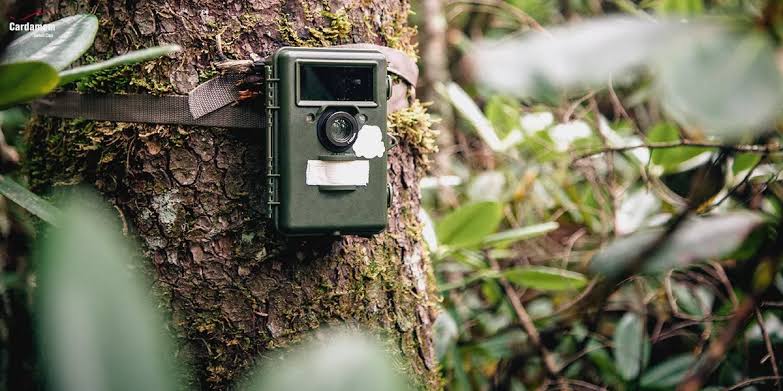
A camera trap is a remotely operated camera designed to photograph or record animals without requiring someone to stand nearby.
Most camera traps contain motion and infrared sensors that detect changes in heat and movement.
When an animal passes within the detection area, the camera automatically takes photographs or records video.
Some cameras store images on memory cards, while connected models can transmit information through mobile or satellite networks.
Camera traps are commonly attached to trees or secured at carefully selected locations.
Unlike ordinary photography equipment, they can operate for extended periods with minimal human involvement.
1. Camera Traps Help Rangers Monitor Hidden Wildlife
Many animals are difficult to observe during ordinary patrols.
Leopards, aardvarks, pangolins and other secretive species may remain hidden during daylight hours.
Camera traps allow conservation teams to collect photographs of these animals without following them continuously.
For example, a camera positioned along a forest trail may record a leopard passing during the night.
Researchers can examine the image, identify the species and document its presence.
This information is particularly useful in dense forests where direct wildlife sightings are uncommon.
Camera traps also help researchers understand which habitats animals use.
However, a photograph confirms an animal’s presence at a particular location and time, not necessarily its population size.
2. Wildlife Cameras Support Anti-Poaching Work
Illegal hunting and wildlife trafficking threaten protected animals in several parts of Africa.
Camera traps can sometimes assist rangers by documenting suspicious activity.
Connected cameras may transmit alerts when movement is detected in monitored areas.
However, not every camera trap provides real-time information.
Many devices store photographs locally and require conservation staff to retrieve the memory cards.
How Cameras Assist Rangers
Wildlife cameras can help conservation teams:
- Document activity in selected monitored areas.
- Identify possible human disturbances.
- Record evidence for further investigation.
- Understand patterns of wildlife movement.
- Support decisions about conservation priorities.
Camera traps do not replace patrols or law enforcement.
Rangers must verify information, follow appropriate procedures and assess risks before responding.
3. Camera Traps Help Researchers Study Animal Populations
Understanding wildlife populations is important for conservation planning.
Park authorities need information about species distribution, population changes and habitat use.
Camera traps provide records that researchers can analyse over time.
For animals with distinctive coat patterns, such as leopards, photographs may help identify particular individuals.
Researchers can then apply appropriate statistical methods to estimate population characteristics.
However, simply counting photographs does not reveal the number of animals living in a park.
One leopard might trigger the same camera repeatedly.
Reliable population estimates require carefully designed surveys and analysis.
4. Rangers Can Study Animal Behaviour Without Disturbance
Some wildlife species change their behaviour when people approach.
They may retreat into vegetation, stop feeding or move away.
Camera traps allow researchers to observe natural activity with relatively little human presence.
For example, a camera placed near an animal trail may record elephants moving between feeding areas.
Another camera could document nocturnal mammals emerging from their shelters.
These observations help conservation teams understand daily activity patterns.
Camera traps may also reveal interactions between predators and prey.
However, cameras must be installed responsibly to minimise disturbance, particularly around nesting sites and sensitive habitats.
5. Wildlife Cameras Help Protect Endangered Species
Endangered animals often require careful monitoring.
Camera traps can provide useful records of rare species without requiring researchers to approach them directly.
In suitable habitats, conservation teams may use camera traps to investigate the presence of pangolins, forest mammals and other difficult-to-observe wildlife.
Photographs can help confirm whether a species continues to use a particular area.
Repeated surveys may also reveal changes in its distribution.
However, camera traps do not automatically identify every individual or prove that a population is increasing.
Their information becomes more useful when combined with field observations and scientifically designed monitoring programmes.
6. Camera Traps Work During the Night
Many African mammals are most active after sunset.
This makes them difficult to observe during daytime game drives.
Camera traps equipped with infrared illumination can record wildlife in darkness.
Depending on the equipment, night photographs may appear in black and white.
These images can reveal feeding behaviour, animal movements and interactions that researchers would otherwise miss.
For example, nocturnal animals such as porcupines, aardvarks and certain carnivores may appear on camera recordings.
This information helps rangers develop a more complete understanding of wildlife activity.
7. Camera Traps Help Identify Important Wildlife Corridors
Wildlife corridors connect habitats and allow animals to move between feeding, breeding and resting areas.
Some animals travel beyond national park boundaries or between protected landscapes.
Camera traps can help researchers document species using particular routes.
When combined with GPS tracking, field surveys and habitat information, these records can support conservation planning.
For example, repeated elephant photographs along a particular passage may suggest regular use of that route.
Conservation teams can investigate whether roads, fences or other developments threaten animal movement.
Protecting connectivity is important for maintaining healthy wildlife populations.
8. How Camera Traps Are Useful in East African National Parks
East Africa contains different wildlife habitats where remote monitoring can support conservation research.
| Wildlife Destination | Country | Potential Camera Trap Uses |
|---|---|---|
| Bwindi Impenetrable National Park | Uganda | Monitoring forest mammals |
| Queen Elizabeth National Park | Uganda | Recording carnivore activity |
| Murchison Falls National Park | Uganda | Studying savannah wildlife movements |
| Maasai Mara National Reserve | Kenya | Monitoring predators and herbivores |
| Serengeti National Park | Tanzania | Researching wildlife distribution |
| Akagera National Park | Rwanda | Supporting wildlife monitoring |
These examples describe suitable applications of camera-trap technology rather than confirming that every listed park operates a particular camera network.
The equipment and methods used depend on conservation programmes and management priorities.
9. What Are the Limitations of Wildlife Camera Traps?
Although camera traps provide useful information, they also have disadvantages.
Batteries eventually run out, memory cards become full and equipment can fail.
Heavy rainfall, vegetation movement and changing temperatures may affect image quality or trigger unnecessary photographs.
Cameras can also miss animals that pass outside their detection area.
Other challenges include:
- Equipment purchase and maintenance costs.
- Theft or damage.
- Large numbers of images requiring review.
- Limited network coverage.
- Incorrect species identification.
- Privacy concerns when people are photographed.
Researchers must account for these limitations when interpreting camera-trap records.
10. Can Artificial Intelligence Improve Wildlife Cameras?
Artificial intelligence can help researchers process large collections of camera-trap photographs.
Some software systems classify images according to the animals detected.
For example, AI may help separate photographs containing elephants from images containing vegetation or other objects.
This can reduce the time researchers spend reviewing thousands of recordings.
Advanced systems may also help prioritise certain alerts.
However, automated identification can produce mistakes.
Poor lighting, unusual angles and partially hidden animals may reduce accuracy.
Important conservation decisions should therefore rely on appropriately verified information.
11. Are Camera Traps Better Than Wildlife Rangers?
Camera traps and wildlife rangers perform different but complementary functions.
A camera can record an animal passing through a particular location, even when nobody is present.
However, it cannot independently assess every conservation problem or respond to injured wildlife.
Rangers contribute field experience, habitat knowledge, patrol skills and practical conservation management.
They also work with neighbouring communities and respond to wildlife emergencies.
Camera-trap information becomes most useful when trained personnel interpret it alongside other evidence.
12. Can Tourists Use Camera Traps During Safaris?
Travellers interested in wildlife photography may wonder whether they can install their own camera traps.
However, national parks generally regulate activities involving equipment placement and wildlife monitoring.
Visitors should never install cameras inside protected areas without the necessary permission.
Unauthorised equipment may disturb wildlife, interfere with conservation projects or create privacy concerns.
If you want to learn about camera-trap research, ask your safari guide whether an authorised conservation education programme is available.
You can also support organisations conducting legitimate wildlife monitoring.
13. Why Responsible Camera Placement Matters
Camera traps should be installed with wildlife welfare and human privacy in mind.
Conservation teams must consider whether equipment could disturb animals or expose sensitive locations.
Photographs of endangered species may contain information that should not be publicly distributed.
Similarly, images of local residents require careful handling.
Good camera-trap programmes establish clear procedures for data storage, access and appropriate use.
Responsible management helps ensure the technology benefits conservation without creating unnecessary risks.
Do Camera Traps Really Help Rangers?
Yes. Wildlife cameras and camera traps can help rangers and researchers monitor elusive animals, understand habitat use, document wildlife movements and support conservation activities.
They are particularly valuable in remote forests and savannahs where continuous human observation is difficult.
However, they cannot replace experienced wildlife rangers, properly designed surveys or effective protected-area management.
Across Uganda, Kenya, Tanzania and Rwanda, thoughtfully managed camera-trap programmes can contribute to better conservation decisions.
The greatest value of wildlife cameras comes from combining reliable technology with the knowledge and experience of people protecting Africa’s animals.




No comment