
Lake Bunyonyi: The Complete Travel Guide
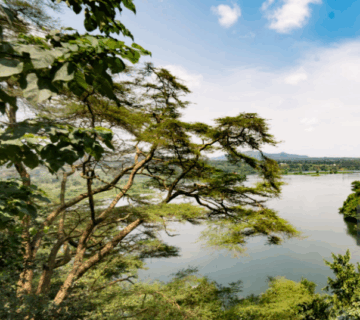
Lake Bunyonyi sits tucked into the terraced hills of southwestern Uganda, close enough to Kabale and the Rwanda border that most travelers pass near it on the way to gorilla trekking, and good enough on its own that a growing number stay two or three nights rather than one. This complete travel guide covers what actually matters: the lake’s 29 islands and their history, why it is one of the only genuinely safe swimming lakes in East Africa, how to get around by dugout canoe, and the practical details of getting there and choosing where to stay.
Key Highlights
- 29 islands scattered across a lake ringed by steep, terraced hillsides, often nicknamed Uganda’s “Switzerland”
- One of the very few lakes in East Africa confirmed free of bilharzia, crocodiles, and hippos, making it genuinely safe for swimming
- Akampene, known as Punishment Island, carries a dark and well-documented history worth understanding before you visit
- Getting between islands by dugout canoe is still the most authentic, and cheapest, way to experience the lake
- Roughly 7 kilometers from Kabale town, making it an easy, worthwhile stop on the way to or from gorilla trekking in Bwindi or Mgahinga

Getting to Know Lake Bunyonyi
Location and Basic Geography
Lake Bunyonyi lies in Uganda’s Kigezi region, between the towns of Kabale and Kisoro, close enough to the Rwanda border that some itineraries treat it as a natural stopover between Uganda and Rwanda gorilla trekking. The lake stretches roughly 22 kilometers long and up to 6 kilometers wide, sitting at an elevation of about 1,962 meters, which gives the whole area a noticeably cooler climate than Uganda’s lower-lying parks, along with the steeply terraced hillsides that have earned it comparisons to alpine Europe.
How Deep Is It, Really?
This is worth addressing directly because the numbers you will see quoted vary wildly. Local guides and much of the tourism material describe Lake Bunyonyi as Africa’s second-deepest lake, with depths reaching as much as 900 meters. That figure gets repeated often enough to sound authoritative, but it has not been confirmed by rigorous scientific survey; measured hydrological data instead puts the lake’s maximum depth closer to 40 meters, with the water column becoming oxygen-poor below roughly 7 meters. Either way, it is genuinely deep for a crater-and-valley lake of its size, and inexperienced swimmers should still treat the open water with real caution regardless of which number turns out to be closer to the truth.
The 29 Islands
Akampene, Punishment Island
The best-known and darkest island story belongs to Akampene, known as Punishment Island. Among the Bakiga people, unmarried women who became pregnant were historically abandoned here, left to either starve, attempt a swim to the mainland, or be rescued by a man willing to take her as a wife without paying the customary bride price. The practice continued into the early 20th century before dying out, and guides on the lake today tell the story as a deliberate piece of history rather than folklore, which makes a canoe visit to the island considerably more sobering than its small size suggests.
Bwama and Njuyeera, the Leprosy Islands
A very different history belongs to Bwama and Njuyeera, sometimes called Sharp’s Island. In 1931, English missionary Leonard Sharp established a leprosy treatment center here, using the islands’ natural isolation as a way to treat patients away from surrounding communities during an era when segregation was standard medical practice for the disease. The site later evolved into a school, and the islands remain a point of interest for visitors curious about the region’s colonial-era medical history.
The Rest of the 29
Most of the remaining islands are smaller and far less visited, ranging from privately owned plots with a single homestead to uninhabited patches of reed and forest that shift slightly in outline as water levels rise and fall through the year. A handful host lodges built specifically around the island-isolation appeal, reachable only by canoe or a short boat transfer, which is part of why choosing an island stay rather than a mainland shoreline lodge genuinely changes the character of a visit here.
Why Lake Bunyonyi Is Safe to Swim In
No Bilharzia, No Crocodiles, No Hippos
Lake Bunyonyi is one of only a handful of lakes in East Africa where travelers can swim without worrying about bilharzia-carrying snails, crocodiles, or hippos, all three of which make swimming a genuine risk in most of Uganda’s other lakes and rivers. The lake’s cool, high-altitude water appears to be inhospitable to the snail species that transmit bilharzia, and neither crocodiles nor hippos have ever been established here, which is precisely why so many lodges around the lake build their whole pitch around lakeside swimming and water sport.
What That Actually Means for Your Itinerary
In practice, this makes Lake Bunyonyi one of the easiest places in the country to build in genuine downtime, a swim off a lodge jetty or a slow afternoon on the water, without the constant low-level caution that governs most of Uganda’s other water bodies. It is a real point of contrast worth building into your itinerary deliberately rather than treating the lake purely as a scenic overnight stop between gorilla trekking days.
Getting Around by Dugout Canoe
Why the Canoe Is Still the Best Way to See the Lake
Traditional dugout canoes remain the most common way locals and visitors alike move between the lake’s islands and shoreline communities, and renting one, either self-paddled or with a local guide doing the paddling, is genuinely the best way to experience Lake Bunyonyi rather than just look at it from a lodge balcony. Motorized boats exist for longer transfers or larger groups, but they trade away the quiet that makes a canoe crossing between islands memorable in the first place.
What a Half-Day on the Water Looks Like
A typical half-day canoe outing covers two or three islands, often including Akampene for its history and a stop at one of the smaller, less-visited islands for birding or a village visit, with plenty of time on the water itself to take in the terraced hillsides from a completely different angle than the shoreline view. Birders should keep binoculars close throughout, since the lake and its reed-fringed shallows have recorded over 200 bird species.
Hiking the Terraced Hillsides
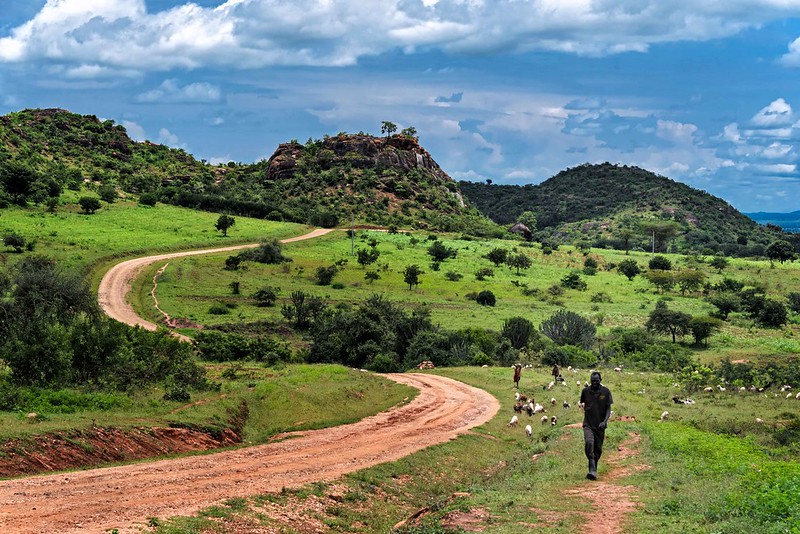
Beyond the water, the steep, terraced slopes ringing the lake are genuinely walkable, and a guided hike up into the surrounding hills rewards you with the kind of wide, layered view over the islands and open water that no lakeside photo quite captures. The terraces themselves are still actively farmed, mostly with sorghum, beans, and Irish potatoes, which makes a hillside walk as much a look at rural Kigezi life as it is a scenic outing, and a natural pairing with the canoe time spent down on the water.
Planning Your Visit to Lake Bunyonyi
Getting There
Kabale town sits roughly 7 kilometers from the lake and functions as the practical gateway, reachable by road from Kampala in around 7 to 8 hours or, more commonly, as a stop on the way to or from Bwindi Impenetrable National Park or Mgahinga Gorilla National Park, both within easy reach for gorilla and golden monkey trekking. Most travelers arrive as part of a wider southwestern Uganda circuit rather than as a dedicated round trip from Kampala.
Best Time to Visit
Lake Bunyonyi is a year-round destination, but the drier months, June through September and December through February, bring the clearest skies for the classic terraced-hillside views and the most comfortable conditions for canoeing and hiking around the shoreline. The wetter months still work well for a low-key lodge stay, just pack for the cooler, damper highland climate either way.
Where to Stay
Accommodation ranges from simple budget guesthouses on the mainland shoreline to private island lodges accessible only by boat, several of them genuinely built for the swim-off-the-jetty experience the lake is known for. Because so many properties sit directly on the water or on their own small island, choosing where to stay here is as much a part of planning the trip as choosing what to do once you arrive.
Combining It With Rwanda
Because the lake sits so close to the Rwanda border, some itineraries use it as the last Ugandan stop before crossing over for Volcanoes National Park gorilla or golden monkey trekking, or the first stop back into Uganda after finishing in Rwanda. Either direction, the border crossing near Kisoro adds only a modest detour, which makes a Bunyonyi overnight a genuinely efficient way to break up a two-country primate-trekking trip rather than a pure sightseeing add-on.
Frequently Asked Questions
Is Lake Bunyonyi actually Africa’s second-deepest lake?
That claim is widely repeated by local guides and tourism material, but it is not supported by rigorous hydrological survey, which instead puts the measured maximum depth at around 40 meters. Treat the 900-meter figure as local lore rather than a confirmed scientific fact.
Can you really swim in Lake Bunyonyi?
Yes, and it is one of the few lakes in Uganda where that is genuinely recommended rather than risky, since it is free of bilharzia, crocodiles, and hippos. Inexperienced swimmers should still respect the lake’s real depth and any lodge-specific guidance on currents.
How many days should I spend at Lake Bunyonyi?
One night is enough to see the highlights by canoe, but two or three nights let you actually slow down, which is arguably the point of adding Lake Bunyonyi to an itinerary built mostly around gorilla trekking.
Is Lake Bunyonyi on the way to gorilla trekking in Uganda?
Yes. Its location near Kabale puts it naturally on the route to both Bwindi Impenetrable National Park and Mgahinga Gorilla National Park, which is why so many itineraries build in a night or two here either before or after trekking.
What is Punishment Island’s real history?
Akampene was historically used by the Bakiga people to abandon unmarried pregnant women, a practice that ended in the early 20th century. Guides tell the story as documented regional history rather than legend, and it is one of the more sobering stops on a canoe tour of the lake.
Recommended Safaris
Lake Bunyonyi pairs naturally with gorilla and golden monkey trekking in this corner of Uganda. Start with our Gorilla Trekking Uganda page for an overview of how the region fits together, and see our Mgahinga Gorilla National Park guide for the park closest to the lake. Travelers wanting more time with a gorilla family should look at the Uganda Gorilla Habituation Experience, and those building a longer trip can see the 7 Days Serengeti and Bwindi Gorillas itinerary or the 10-Day Rwanda & Uganda Gorilla Adventure Group Safari, both of which pass through this part of the country. When you are ready to add Lake Bunyonyi to your itinerary, get in touch with our team and we will help you plan the logistics and lodge choice.

No comment