
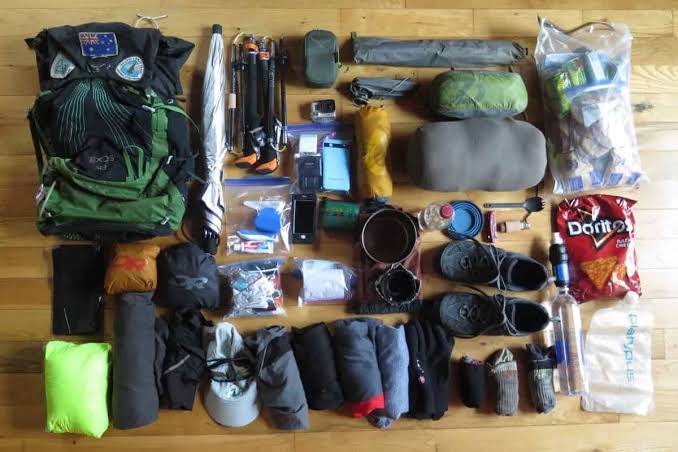
Essential Gear Every Birder Needs for an East Africa Safari
The East Africa Safari can change the way you see birds. A flash of blue across a woodland track the call of a turaco in the forest or an African fish eagle perched above a quiet lake can turn an ordinary morning into a treasured memory. Uganda, Kenya, Tanzania and Rwanda offer bird diversity with habitats ranging from open savannas and wetlands to highland forests and mountain slopes. To enjoy these experiences fully preparation matters. The essential gear helps you notice details stay comfortable protect the gear and make the most of every opportunity in the field.
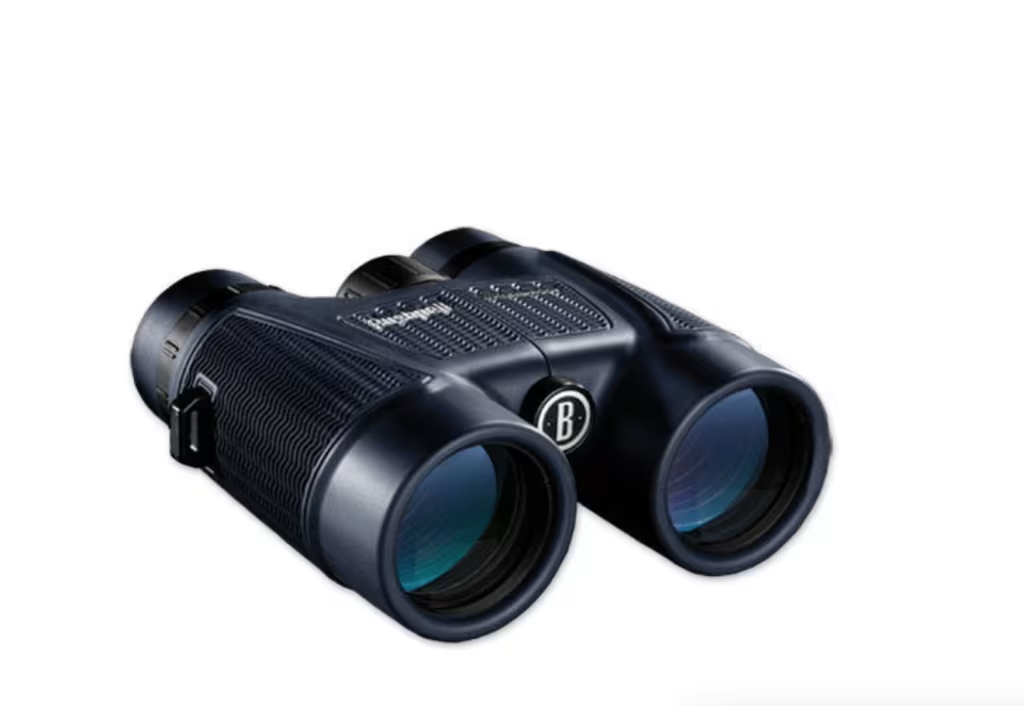
Binoculars: Your Important Birding Tool
For most people the binoculars will be the single most useful piece of equipment on the East Africa Safari. Birds rarely remain still for long. Many species keep their distance. A good pair of binoculars allows you to identify markings observe behavior and enjoy birds without disturbing them.
For an East Africa Safari, an 8×42 or 10×42 pair is a choice. Eight-power binoculars generally provide a field of view and can be easier to hold steady when a bird suddenly appears. Ten-power binoculars provide magnification and can be useful when watching distant birds across wetlands or open grassland.
Good binoculars do not have to be the expensive available. Prioritize optics, comfortable handling, waterproof construction and dependable performance in changing weather. Before the East Africa Safari begins spend time using the binoculars. Learning to raise the binoculars and locate a bird without searching for too long can make a major difference when a rare species appears for only a few seconds.
Choose a Comfortable Pair
Comfort becomes especially important during birding sessions. You may spend minutes watching a bird high in a tree or scanning a wetland for movement. A lightweight pair of binoculars with a neck strap will make these moments much easier.
A Camera With the Right Lens
A camera can help you preserve the details that make the East Africa Safari unforgettable. You do not need equipment to create meaningful images but a camera with a suitable telephoto lens gives you more opportunities to photograph distant birds.
A lens in the 300mm to 600mm range can be useful, for safari photography. A longer lens allows you to photograph birds without approaching them closely. If you use a smartphone consider carrying it as an option. Modern phones can capture habitat photographs, landscapes and close subjects when conditions are favorable.
Extra batteries and memory cards are essential. A spectacular bird sighting is not the moment to discover that the essential gear battery is empty or that storage is full. Keep batteries charged each evening and carry memory capacity for several days of photography.
Field Guide and Bird Identification App
Even people who know a lot about birds can use a field guide. East Africa has different kinds of birds and some of them look very similar. A guide that covers Uganda, Kenya, Tanzania and Rwanda can help you see the differences in feathers, where they live the sounds they make how big they’re where they live.
A bird identification app can also be helpful. Download the information you need before going to places where internet might not be available. Some places where you go bird watching might not have internet. Relying on the internet might mean you don’t have any help when you need it.
Writing down what you see adds another part to your trip. Write down where you saw the bird what kind of place it was, the date, what it was doing and any special features. Even a simple notebook can become a record after your trip.
Clothing for Changing East African Conditions
Bird watching often starts early in the morning when it can be cool. Later in the day the same place might be very hot and sunny. Wearing layers gives you the ability to adjust during the morning.
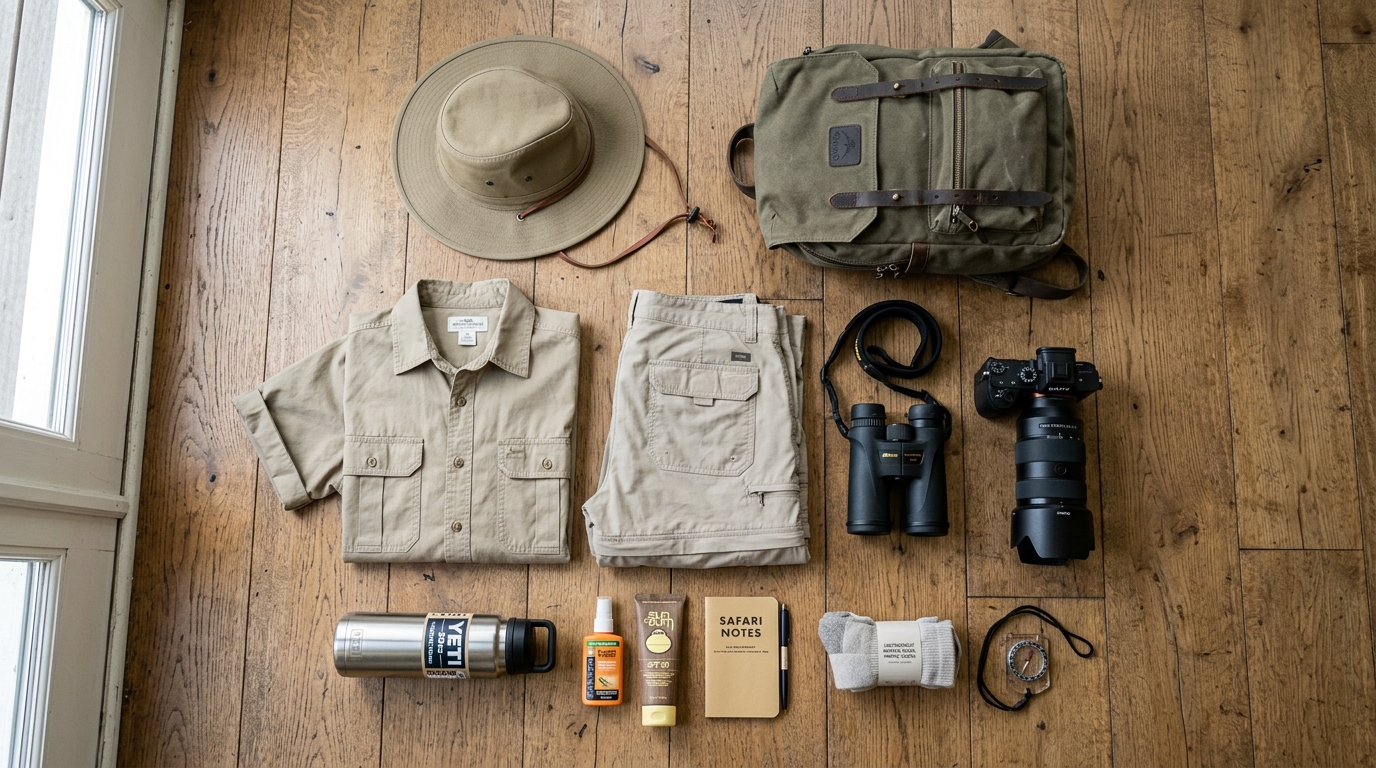
Pick clothes that’re neutral colors like khaki, green, brown or gray. These colors are easy to use in places and help you stay less noticeable. Light pants and shirts with sleeves can protect your skin from bugs, plants and the sun.
A hat with a brim is good when you are watching birds in open areas. A light rain jacket can protect you if it rains suddenly. Good walking shoes with a grip are important if you are going through forests, wetlands or rocky ground.
Pack for Both Forest and Savanna
The places where birds live in East Africa can change a lot during one trip. You might spend one day looking at grasslands and another day walking under thick trees. Bring clothes that work in both places of only thinking about one type of land.
Protection From Sun, Dust and Rain
The sun in Africa can be very strong especially when you are outside for a time. Sunscreen, sunglasses and a hat should be part of your things to carry. Pick sunglasses that protect your eyes but still let you see colors clearly.
A small bag that keeps things dry can protect your camera, phone, notebook and other important things when it rains. Dust is also something to think about. Driving on dirt roads can create a lot of dust so keeping your equipment safe in cases when you are not using it can help it longer.
A small cloth made of microfiber can be very useful. You can use it to clean dust, smudges or wet spots from your binoculars and camera lenses without hurting them.
A Comfortable Daypack
A small daypack helps you keep your things organized and easy to reach. You can carry binoculars, camera gear, water, snacks, sunscreen, a notebook, rain gear and personal items without carrying much.
Choose a bag with straps and enough pockets to stop delicate items from moving around. A bag that resists water is helpful in forests and during sudden rain.
Don’t carry things than you will really use. Bird watching is often about waiting and watching. A heavy bag can be uncomfortable during walks and might take your attention away from the birds.
Essential Small Accessories
Some of the useful things for a trip don’t take up much space. A spare cable, a battery pack, a travel adapter, a flashlight a water bottle you can use again and a small first aid kit can all be very helpful.
A small battery pack is especially helpful when you are away from places to charge your phone. Your phone can act as a camera a map, a way to identify birds, a way to talk and a notebook so keeping it charged is useful.
If you use a tripod or a monopod choose carefully. They can help with camera lenses but they might not always be easy to carry when you are in a car. For times using the camera’s special features and holding it steady is enough.
The Gear You Cannot Buy
Things you can buy can make your bird watching better. Being patient is one of the best tools you have. A rare bird might show up after you have been watching quietly for a time. A bird in the forest might appear because of the sound it makes before you see it. Sometimes the best moment is just hearing a sound in a new place.
Learn to listen carefully as you look. Bird sounds can help you find birds that are hiding in the leaves. Watch the movement in trees look at branches and check the edges of water carefully. Small details can lead to sightings.
Respect, for animals should be part of how you use your equipment and how you act. Don’t use flash if it might bother the birds stay at a distance and follow what your guide or local wildlife workers tell you.
Essential Gear Every Birder Needs for an East Africa Safari
The way to get ready is to bring the right tools and keep a realistic mindset. Your binoculars might help you spot a bird. Your camera might help you save that moment forever. Your field guide might help you learn about the birds you see.. The real magic happens when you just sit still and wait.
Whether you are walking through the wetlands of Uganda, the mountain forests of Rwanda, the Rift Valley in Kenya or the big savannas of Tanzania every place feels different. A quiet road might suddenly show you a bird of prey. A lake might be full of hundreds of waterbirds. A walk through a forest can change your life just because you saw one bird through the leaves.
Prepare, Observe and Stay Curious
Before you start your safari check all your gear. Charge your batteries. Pack your daypack. Make sure you know how to use your binoculars and your camera. If you do this work now you will not have to worry about gear when you’re out in the wild.
Once you are there please remember to slow down. You might not see every bird on your list. That is okay. That is how birding works. The real fun is, in noticing the birds that’re actually right in front of you. A bright roller, an eagle, a quiet owl or a tiny sunbird can become your favorite memory of the whole trip.
Essential Gear Every Birder Needs for an East Africa Safari will help you watch birds with ease and confidence but your own curiosity is what matters most. East Africa has many amazing birds waiting for you in the forests the wetlands, the lakes, the mountains and the savannas. If you prepare well and take your time to watch every morning can bring something
The best thing you take home might not be a photo or a long list of names. It might just be the feeling of standing in the African landscape. You will hear the birds calling around you and realize that you are seeing something truly special that you can never truly replace.


No comment