
Ebola in Africa: History, Outbreaks, Economic Impact and What It Means for Uganda Tourism
Ebola has been giving Africa trouble for almost fifty years now. It first appeared in 1976, and outbreaks have kept popping up ever since. Some fizzle out fast, barely making the news. Others turn into full-blown emergencies that cross borders. Either way, the damage was never just about case counts. Hospitals, businesses, governments, trade, tourism — all of it gets touched sooner or later.
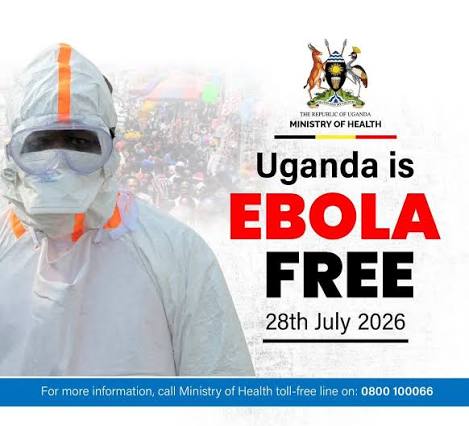
Uganda knows this story well. It’s had several outbreaks of its own, and it sits right next door to the Democratic Republic of the Congo, which is in the middle of a major Bundibugyo virus outbreak that started in May 2026. Uganda picked up imported cases from that outbreak. It stopped local transmission before it could take hold, though, and declared the outbreak over on 28 July 2026.
That distinction matters a lot for tourism: active outbreak versus outbreak that’s already been handled. Travelers deserve real information, not headline panic, so they can make their own calls. And safari operators owe it to their clients to take health precautions seriously and follow actual official guidance instead of winging it.
Where Ebola Was First Identified
Ebola showed up in 1976, in two outbreaks that happened almost at the same time. One hit what was then Zaire, now the Democratic Republic of the Congo. The other hit Sudan, in what’s today South Sudan.
The Congo outbreak was centered near a village called Yambuku, in the north of the country. The virus actually gets its name from the nearby Ebola River. It was brutal. 318 cases, 280 deaths — an extremely high fatality rate even by Ebola’s usual standards.
Much of the early spread came down to hospital practices, honestly. A patient at Yambuku Mission Hospital got an injection with a contaminated needle, and staff kept reusing needles and syringes on other patients afterward. Fairly standard practice at the time, and a disaster in this particular case. Close contact within families and clinics did the rest.
Sudan’s outbreak, happening at almost the same moment, recorded 284 cases and 151 deaths. It started among cotton factory workers, then spread hard through hospitals, where infection control just wasn’t ready for a disease nobody had ever seen before.
Those first two outbreaks taught everyone something that’s still true today: Ebola can jump from wildlife into people, sure, but what actually drives an epidemic is what happens next. Close contact with sick people. Contaminated materials. That kind of thing.
How Ebola Spreads
It’s not one single virus behind all this, either. Ebola comes from several related viruses in the orthoebolavirus group — Ebola virus itself, Sudan virus, Bundibugyo virus — and each has caused different outbreaks over the years.
The first jump into humans usually happens through contact with infected wildlife. Fruit bats are the leading suspect as a natural reservoir for some of these viruses, though scientists still haven’t pinned down the exact source for every strain.
Once someone is infected and symptomatic, the virus travels through direct contact with bodily fluids: blood, vomit, diarrhea, urine, breast milk, semen. Contaminated bedding, clothing, needles and medical equipment can carry it too.
Funerals carry their own risk. A body can stay infectious after death, so traditional burial practices involving close contact with the deceased have historically been a major transmission route.
The incubation period runs anywhere from two to 21 days, and people generally aren’t contagious before symptoms show up. That 21-day window is the backbone of outbreak response — it’s what health workers use to track anyone who might’ve been exposed.
Worth saying plainly: Ebola doesn’t spread through casual contact. Being in the same country as an outbreak, or sitting near someone who’s infected without touching their bodily fluids, doesn’t put you at risk. Which is why an outbreak in one corner of a country doesn’t mean the whole country is exposed.
How Many Times Has Ebola Broken Out?
Ebola has kept coming back since 1976. The Democratic Republic of the Congo has had it worst, with repeated outbreaks hitting different provinces over the decades.
Beyond the DRC, the list of countries touched by Ebola includes Uganda, Sudan, South Sudan, Gabon, the Republic of the Congo, Guinea, Liberia, Sierra Leone, Nigeria, Senegal, Mali and South Africa.
An exact count of “how many outbreaks” is harder to pin down than you’d think, since some countries have had multiple separate events in a single year, or clustered across neighboring regions. Better to think of Ebola as something that recurs regularly than as a disease with one clean global tally.
Most outbreaks stay small and burn out fast. A few have gotten enormous.
The 2014–2016 West African epidemic is the one everyone points to. Guinea, Liberia and Sierra Leone went through a prolonged crisis — roughly 28,600 reported cases, more than 11,300 deaths. Nigeria, Senegal and Mali all saw imported cases tied to that same epidemic but managed to stop it from taking hold.
That epidemic changed the conversation around Ebola for good. It proved the disease could leave remote villages behind and move into major cities, crossing borders as it went.
The 2014–2016 West African Epidemic
The epidemic started in Guinea in late 2013, though it wasn’t officially confirmed until March 2014. From there it spread into Liberia and Sierra Leone and became the largest Ebola epidemic on record at the time.
Plenty of factors made it hard to control. People moved across borders freely. Healthcare systems were already stretched thin. A lot of healthcare workers got infected. In some places, communities were wary of government teams and international responders showing up uninvited.
The epidemic also proved that fear alone can wreck an economy. Tourism dried up, businesses slowed, workers stayed home, international travelers canceled trips by the thousands. Some countries with zero actual Ebola cases still took a hit, simply because outsiders lumped the whole region together and stayed away.
The World Bank warned the fallout could get severe if the epidemic kept spreading: lost tourism revenue, weaker investment, disrupted agriculture and trade, falling productivity, rising government costs.
The lesson for Uganda is straightforward. Ebola’s economic damage was never just about case counts. Perception alone can shift tourism demand, airline routes, hotel bookings, business decisions — the whole picture.
Uganda’s History With Ebola
Uganda has plenty of experience with this disease, unfortunately — outbreaks from both Sudan virus and Bundibugyo virus over the years.
One of the earliest major ones hit in 2000, spreading across Gulu, Masindi and Mbarara districts. Sudan virus was the cause, and it was one of the largest Ebola outbreaks the country had dealt with at that point.
A Bundibugyo virus outbreak followed in 2007. This one mattered for a different reason — it’s actually how scientists first identified Bundibugyo virus as its own distinct species.
Then 2022 happened. Uganda confirmed Sudan virus disease that September, starting in Mubende District and eventually spreading to Kampala and several other districts. WHO put the total at 164 cases (confirmed and probable) and 77 deaths before Uganda declared it over in January 2023.
A smaller Sudan virus outbreak followed in 2025, closed out by that April.
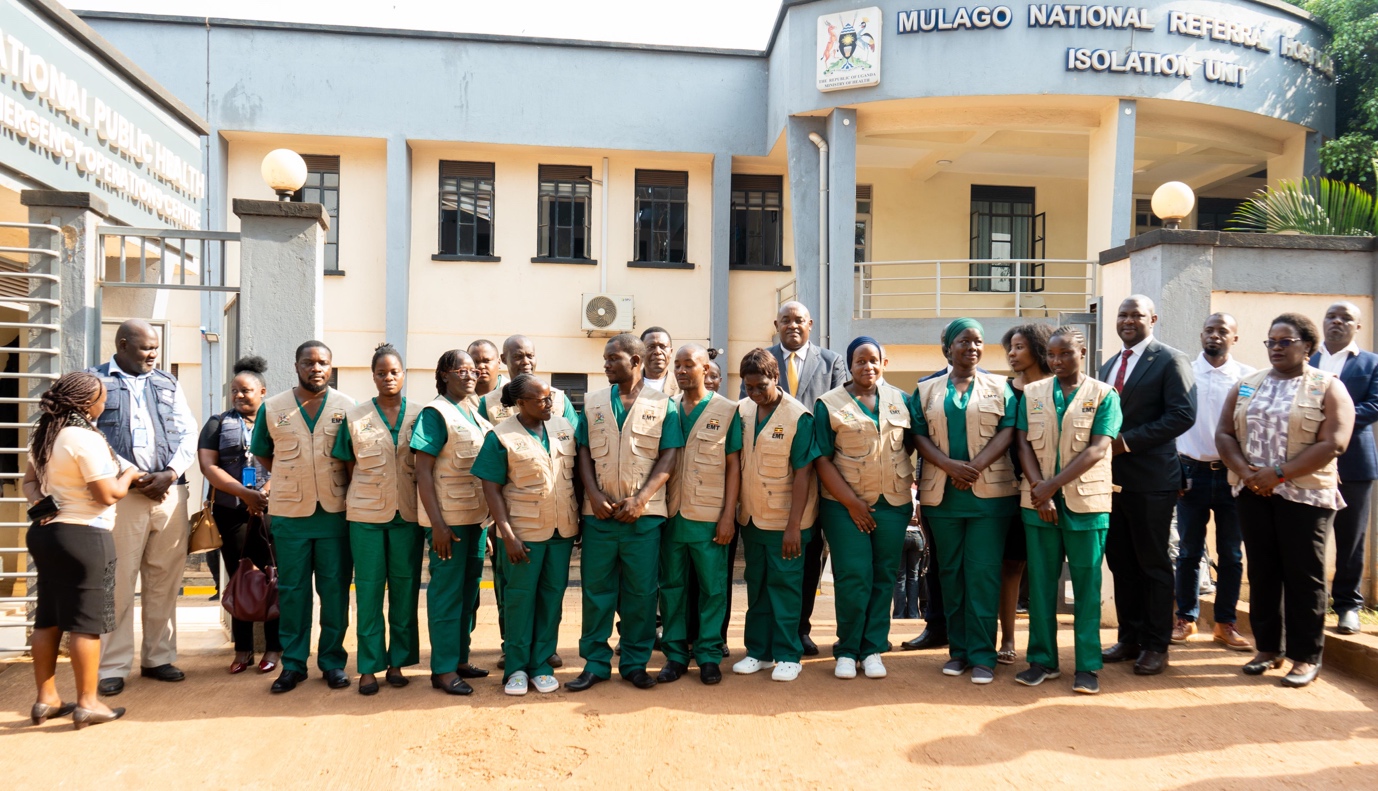
All of it added up. Sharper surveillance, stronger lab capacity, better contact tracing, more practiced emergency response — Uganda had all of this in place well before 2026 came around.
The 2026 Outbreak Began in the DRC
The current regional outbreak started in the Democratic Republic of the Congo in May 2026, first identified in the Mongbwalu health zone in Ituri Province. Bundibugyo virus again.
Ituri is a busy crossroads region. Lots of population movement, active trade, constant travel for work, healthcare, family — all the usual reasons people cross borders in that part of the world.
Inside the DRC, the outbreak grew fast. By August 2026, WHO was reporting thousands of confirmed cases and more than two thousand deaths across several provinces, making it the largest Ebola outbreak the DRC has ever recorded.
It crossed borders too, in a sense. Confirmed cases linked to the DRC outbreak showed up in Uganda, France and Germany, though none of them saw sustained transmission take hold. That’s part of why cross-border surveillance has become such a critical piece of the response.
How Ebola Reached Uganda in 2026
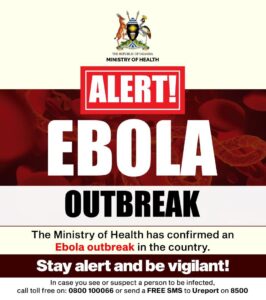
Uganda confirmed its 2026 outbreak on 15 May, after finding an imported case tied to the DRC.
The first patient was an old man admitted to a private hospital, severely ill. He died soon after, and lab testing confirmed Bundibugyo virus. A second imported case turned up not long after that, and further digging found more infections among contacts and healthcare workers linked to those imported cases.
In total, WHO reported 20 confirmed cases in Uganda, two of them fatal. Most were imported; the rest were contacts and healthcare workers connected to them. And here’s the part that matters most for the tourism sector: WHO documented no community transmission in Uganda during this outbreak. Cases stayed concentrated in Kampala and Wakiso, nowhere near the country’s major tourism destinations.
How Uganda Got It Under Control
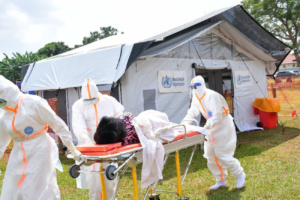
Uganda leaned on a familiar playbook here. Identify suspected cases. Run lab tests. Isolate patients. Trace contacts. Monitor anyone exposed. Tighten infection control in hospitals. Handle burials safely. Step up screening at points of entry.
Contact tracing did most of the heavy lifting. Anyone exposed to a confirmed case got monitored for 21 days, so health workers could catch new symptoms fast if they showed up. Hospitals tightened infection control too, since healthcare workers face real risk treating Ebola patients. At borders and airports, authorities screened travelers with recent ties to affected areas.
Bottom line: early detection plus fast action worked. Instead of letting imported cases snowball into community spread, Uganda’s health system caught them and followed the trail to the end.
Uganda Declared Ebola-Free in July 2026
Uganda officially closed out the outbreak on 28 July 2026, after going the required stretch without a new locally transmitted case. For tourism, that’s a big deal.
It doesn’t mean surveillance just stops, though. The DRC’s outbreak is still going, and given how much movement crosses that shared border, WHO still classifies Uganda as at risk of another imported case and recommends keeping surveillance elevated.
The takeaway for travelers is simple. Uganda isn’t in an active outbreak right now. The regional picture still needs watching, sure — but that’s different. Check current official sources before a trip. Not old social posts, not vague headlines about “Ebola in Africa.”
The Economic Effects on Revenue
Ebola hits national revenue from multiple directions at once.
Tourism usually feels it first. Trips get cancelled, hotels lose bookings, safari companies lose clients, guides lose work, and restaurants, transport companies and local suppliers all end up with fewer customers. Government revenue can drop as business activity slows — even while government spending climbs to cover labs, medical supplies, surveillance teams, treatment centers, healthcare staff, public education. Foreign investment can dry up too, since companies get cautious about sending staff or committing capital anywhere near an affected region.
The 2014–2016 West African epidemic made this painfully visible. Tourism cratered. Trade slowed. Economic activity across the region basically stalled.
Uganda’s 2026 outbreak is a different story. Putting a specific dollar figure on lost tourism, import or export revenue wouldn’t be accurate without an official economic assessment backing it up, and given how fast this one got contained, with no sustained community transmission, the comparison to 2014 only goes so far anyway.
Effects on Imports and Exports
Trade takes its own hit too. Border procedures slow down once health screening ramps up, transport companies face extra requirements, and moving goods or workers across borders gets delayed.
International buyers can get skittish, worrying about contamination or disruption even for exports that have nothing to do with the outbreak directly. Imports slow too, if transport routes see less traffic or companies pull back from the affected area altogether.
This hits especially hard for a country like Uganda, which leans heavily on regional trade with Kenya, Tanzania, Rwanda, South Sudan and the DRC. Uganda’s 2026 challenge was walking a fine line: protect public health without choking off trade and movement that people genuinely depend on.
The Impact on Tourism
Tourism is uniquely sensitive to health scares. International travelers, after all, can just choose to go somewhere else.
Uganda’s tourism economy runs on gorilla trekking, chimpanzee tracking, wildlife safaris, birdwatching, cultural experiences, mountain trips, nature tourism generally. Most of that happens nowhere near where the 2026 cases turned up.
Geography matters here. An outbreak centered in Kampala doesn’t mean every national park in the country has Ebola circulating. But travelers can still get rattled — by a foreign travel advisory, or just by seeing the word “Ebola” next to a country they were planning to visit.
That’s where safari companies earn their keep, honestly: communicating the real situation clearly. At All in Africa Safaris, that means giving clients the actual facts — where the outbreak happened, whether Uganda is currently affected, what authorities are advising, and whether anywhere on the itinerary has special entry rules.
Why Travelers Can Feel Reasonably Reassured
Uganda’s official declaration is a solid basis for cautious confidence, and it wasn’t just a press release. The country went through an established public health process: the required waiting period, zero new locally transmitted cases, and the most recent imported case had already tested negative and been discharged before anyone made the announcement.
Travelers should still keep in mind that the DRC’s outbreak hasn’t ended. People cross that border constantly for trade, healthcare, family, so another imported case in Uganda can’t be ruled out completely. Which is exactly why surveillance and preparedness haven’t stopped.
Honestly, that ongoing vigilance should be reassuring, not alarming. A country can be officially Ebola-free and still keep the systems running that would catch a new case fast if one showed up.
Countries With Special Rules for Recent Uganda Travelers
Travel requirements vary country to country, and they can shift fast.
Canada has temporary Ebola-related measures for anyone who’s recently been in Uganda, the DRC or South Sudan: health monitoring, and for some travelers, a 21-day quarantine. The US has its own version — enhanced screening, and depending on nationality and travel history, possible restrictions. Australia’s issued similar advice, warning travelers they might face screening, entry requirements or quarantine depending on circumstances.
None of this proves Uganda has an active outbreak right now. Governments add precautionary measures based on recent travel history and the incubation period alone, regardless of a country’s actual status. In practice, it just means clients on a multi-country trip need to check their final destination’s rules before they leave.
The 21-Day Monitoring Period, Explained
Ebola’s incubation period runs two to 21 days. That’s the basis for the standard monitoring window. Anyone identified as a contact of a confirmed case gets monitored for 21 days from their last exposure: daily temperature and symptom checks, any signs of illness reported right away. WHO also recommends contacts skip international travel during that window unless they’ve cleared it with health authorities first.
That’s separate from Uganda’s 42-day process for declaring an outbreak fully over. Double the max incubation period, used for national surveillance after the last patient’s recovered and gone home. Uganda finished that process and was declared Ebola-free on 28 July 2026.
For travelers who aren’t identified as contacts, though, the 21-day window isn’t some blanket quarantine slapped on every visitor. Entry and onward-travel rules just depend on individual circumstances and whatever the destination country actually requires.
If you’re planning a multi-country safari, the timing can sometimes work out. Spending time in Uganda first might let a traveler satisfy a waiting period before reaching the next stop, assuming that country’s rules line up. Safari companies should confirm the specific requirements before the trip, not just assume. Uganda can make a sensible first stop on a regional itinerary when someone’s health status, travel history and destination rules all line up. But anyone actually flagged as an Ebola contact needs to follow health authority instructions, not treat a safari itinerary as a way around it.
How All in Africa Safaris Handles This
Responsible planning means building health monitoring in from day one. Before every trip, the company checks the latest updates from Uganda’s Ministry of Health, the WHO, national parks authorities, and whatever destination countries are on the itinerary.
Clients hear about the current health situation before they travel. If a government adds a new requirement, they hear about that too, as fast as possible. Drivers and guides know basic infection prevention and know what to do if a client gets seriously ill mid-safari. Anyone showing symptoms that could be Ebola, or any serious infectious disease, gets a medical assessment. Not waved along to the next stop on the itinerary.
Accommodation partners keep solid hygiene standards, vehicles stay clean. For gorilla trekking specifically, unwell visitors follow park and medical guidance — wildlife tourism carries its own weight of responsibility here, since human illness can pose a real risk to great apes.
And if public health authorities advise against travel to a specific area? The right move is adjusting the itinerary. Not finding a workaround.
Responsible Travel Beats Fear
Ebola inspires fear for good reason. It can be severe, even fatal. But fear shouldn’t crowd out accurate information — the two aren’t the same thing, even though they often get treated that way.
Just entering an African country where Ebola has occurred historically doesn’t put anyone at risk. Transmission needs specific exposure, and health systems have gotten a lot better at identifying cases, tracing contacts, monitoring people who might actually be at risk.
Uganda’s 2026 response is a solid real-world example: imported cases identified, contacts traced, transmission stopped, outbreak declared over. That’s public health preparedness doing its job, protecting residents and, in the process, protecting the confidence international visitors need to keep booking trips. A safari company’s role is to operate inside that system. Not to go making medical claims of its own.
Looking Past the 2026 Outbreak
The arc from 1976 to 2026 says a lot about how far public health systems have actually come. In 1976, hospitals were scrambling just to recognize a brand-new disease. Contaminated needles fueled the spread, healthcare workers faced enormous risk, and nobody really had a playbook yet. By 2014, the West African epidemic tested international organizations, governments and local communities against something far bigger: multiple countries, major cities, sustained transmission.
Uganda’s later outbreaks built real national capacity along the way: surveillance, contact tracing, lab testing, isolation protocols, community engagement. All of that was already in place by 2026. The outbreak also drove home how much regional cooperation matters, since disease doesn’t respect borders, especially where people cross them constantly for trade, healthcare, work, family. Uganda containing this outbreak is really part of a bigger regional effort. Not some standalone win.
A Safe and Informed Future for Tourism
Uganda’s official Ebola-free declaration on 28 July 2026 is a genuinely big deal for the tourism industry. It came after a proper public health process. Not a rushed press release.
At the same time, the ongoing outbreak in the DRC means Uganda can’t fully stand down its surveillance. Cross-border movement keeps the door open, just a crack, to another imported case down the line.
For travelers, the smart move is looking at the actual current situation instead of generalized anxiety about “Africa” as some single place. Uganda has shown, more than once now, that it can respond to Ebola effectively, and the 2026 outbreak was contained with no documented community spread. The responsibility for All in Africa Safaris is straightforward: plan safaris around current government guidance, communicate health requirements honestly, adjust itineraries whenever the official picture changes.
Requirements can also change after a safari’s already booked. A country might add screening, monitoring or quarantine rules based on recent travel history alone, symptoms or no symptoms. Checking the rules shortly before departure isn’t optional. It’s essential.
Worth being upfront about one thing: spending 14 days in Uganda doesn’t automatically clear you for entry somewhere else, and it shouldn’t get marketed that way. The actual monitoring window for Ebola is 21 days, and every destination country sets its own entry rules. A responsible safari company can still help build a workable itinerary around all this. It just means checking the latest regulations for the whole trip, not assuming there’s a shortcut.
At the end of the day, Ebola’s history shows public health and tourism don’t have to be enemies. Accurate information, solid surveillance, sound government policy, careful trip planning — put those together and tourism can keep going while health authorities keep communities safe. Uganda’s wildlife destinations remain a huge part of East Africa’s tourism story. Gorilla trekking, chimpanzee experiences, savanna safaris, birdwatching, mountain adventures, cultural tourism: all of it keeps providing income for communities and businesses across the country.
The real lesson from Ebola isn’t “avoid Africa.” It’s understand exactly where an outbreak is happening, follow official guidance, and pick operators who actually take safety seriously. For All in Africa Safaris, that means keeping accurate information, responsible planning and client safety at the center of everything. As Uganda keeps its surveillance elevated and the DRC keeps responding to its own outbreak, staying informed is still the most responsible path forward.
Information Sources Used for Accuracy
The facts in this article were checked against current and historical material from the World Health Organization, Uganda’s Ministry of Health, the U.S. Centers for Disease Control and Prevention, the World Bank, the Africa Centres for Disease Control and Prevention, and official government travel-health resources. 2026 figures were verified against WHO reporting through 21 August 2026, including its most recent rapid risk assessment and outbreak updates.

No comment