,Mabamba Swamp: Uganda’s Shoebill Capital
The sun is still really low when you get into your canoe. It slides into the reeds. The water is calm and grey. The only sound you hear is the paddle going in and out of the water. Ahead of you, the Shoebill is standing really still in the shallow water. This is Mabamba Swamp: Uganda’s Shoebill Capital. It is a wetland on the north side of Lake Victoria. The Shoebill is a strange-looking bird that has made this quiet fishing town one of the best places to see birds in East Africa.
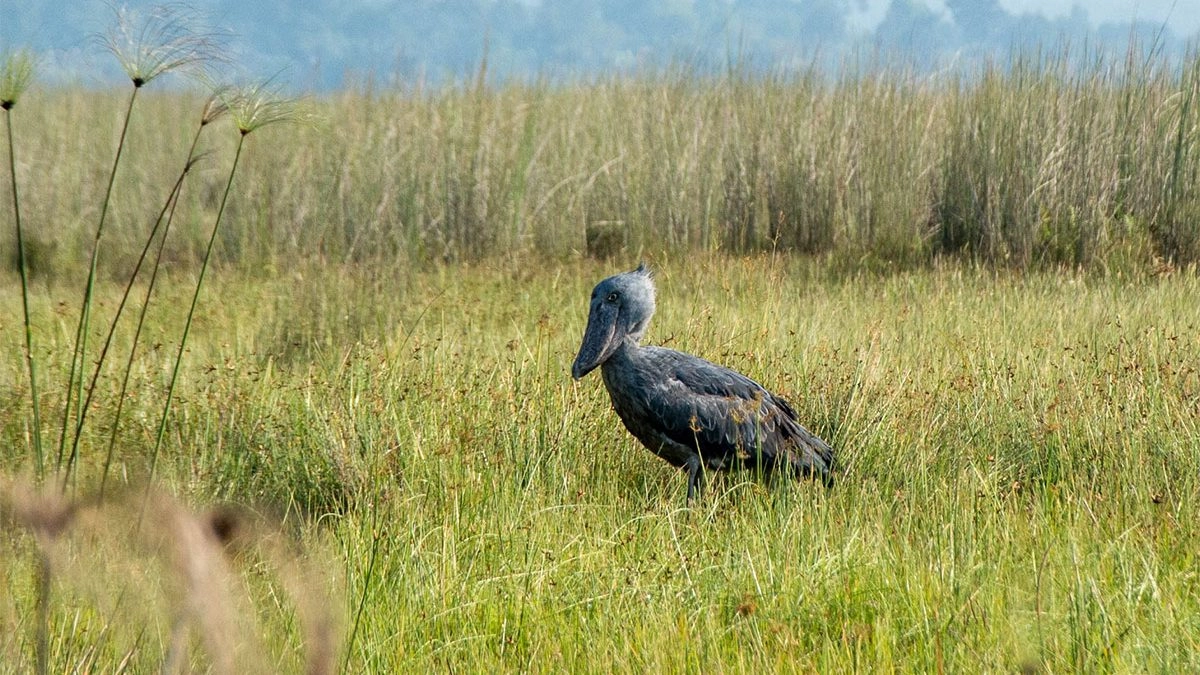
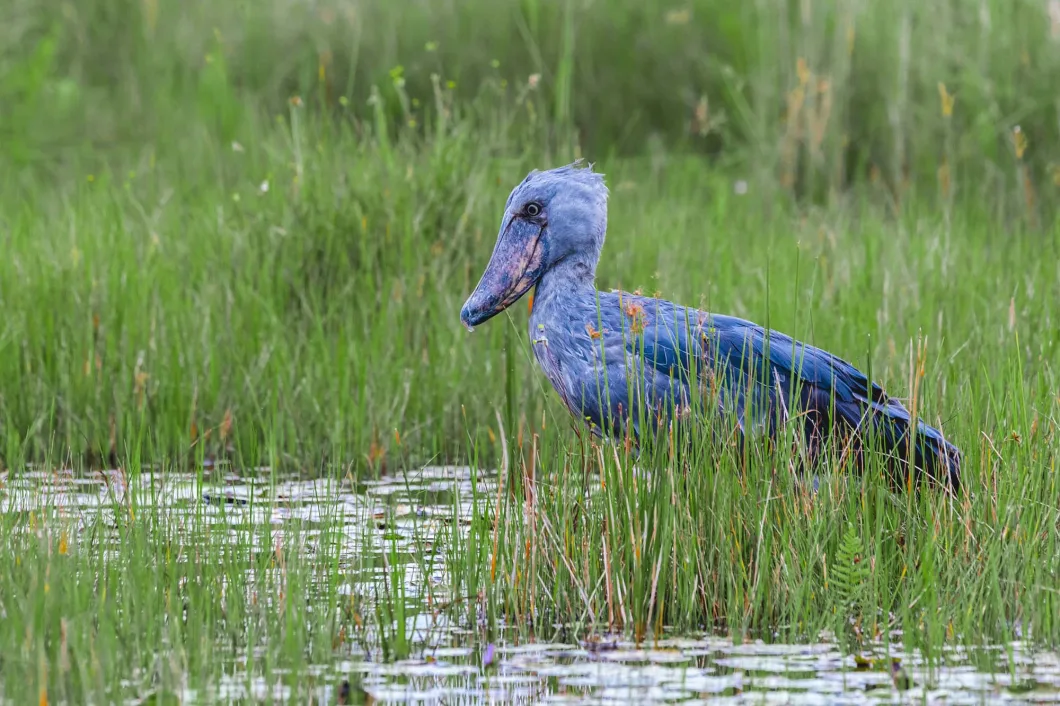
If you do not know what a Shoebill looks like, it is a bird almost five feet tall. Its beak is shaped like a shoe. Its eyes look really old. The Shoebill’s scientific name is Balaeniceps rex. It does not move much, so people often think it is a statue. Mabamba Swamp is the place to go if you want to see a Shoebill in the wild, not in a zoo. You can see it standing in the mud and reeds where it has been eating for a time.
Why Mabamba Swamp: Uganda’s Shoebill Capital is so popular with bird watchers
Mabamba Swamp is 30 kilometers southwest of Entebbe. You can get there in the morning with a drive and a boat ride from the village of Kasanje. The swamp has a lot of papyrus, water lilies, and open water. It is an important wetland. The Shoebill is picky; it needs water with a lot of fish and thick papyrus. Mabamba has both of these things.
You will not find a lot of people here. Mabamba is a place where local fishermen still work every day. Your guide will paddle a wooden canoe, not a loud motorboat. This is because the noise from the motorboat scares the birds away. Trips to see the Shoebill usually start early in the morning or late in the afternoon. This is when the Shoebill is most active and looking for its food, lungfish. A trip to see the Shoebill usually lasts two to three hours and costs between 40 and 60 US dollars per person. This includes the canoe, the guide, and the fee to get into the site.
Mabamba Swamp has more than 300 different kinds of birds. You might see the African jacana walking on pads with its long toes hear the headed coucal calling from the reeds. You might see flocks of pygmy geese flying low over the water. The papyrus gonolek and blue swallow are also found here. These are birds that serious bird watchers travel a long way to see. The malachite kingfisher is blue and orange. Can be seen along the edges of the water. The African fish eagle flies overhead, making a cry that sounds like Africa. Few places have as many different kinds of birds as Mabamba Swamp.
Getting to know the Shoebill
It is helpful to know why the Shoebill looks the way it does before you go looking for one. The Shoebill’s big beak is not just for looking; it is a really useful tool. The sharp edges on the inside of the beak help it grip fish like lungfish and eels. The hooked tip of the beak helps it kill its prey before swallowing. Adult Shoebills are between four and five feet tall. Can weigh up to twelve pounds. Their wings are really big, stretching over seven feet when they fly.
What surprises people who see the Shoebill for the first time is how still it stays. The Shoebill saves energy by standing still for a long time, waiting for a fish to come up to the surface. When it catches a fish, it happens fast. Sometimes you can hear a noise that sounds like the Shoebill is laughing. Locals call this the Shoebill’s laugh. Hearing it on a morning is a really special moment that you will remember for a long time.
The Shoebill is a bird, and it has its own territory. This is why seeing a Shoebill at Mabamba feels special. You are not watching a lot of birds; you are watching one bird, the same one that guides have been watching for months or years. The Shoebill is doing what it has been doing for thousands of years.
What Makes Mabamba Swamp So Special
Mabamba Swamp is a cool place. The shoebill is a rare bird. There are fewer than 8,000 shoebills left in the wild. They live in swamps in Uganda, South Sudan, Zambia and a few other countries. Uganda has a lot of shoebills. Mabamba Swamp is one of the places to see them. The guides who work there say that you have a 90 percent chance of seeing a shoebill.
The people who live near Mabamba Swamp take care of it. They run the canoe trips. Train the guides. They also use some of the money from tourism to help their village. The fishermen used to think that shoebills were a nuisance. Now they protect them because tourists want to see them. This did not happen overnight. It took time and a lot of education.
The guides at Mabamba Swamp are very knowledgeable. They grew up in the area. Know the swamp like the back of their hand. They can tell you which channel a bird likes to use at tide. They can even tell you where the fish will be based on the wind direction. If you book a trip with a guide, you will be helping the community.
Planning Your Trip to Mabamba Swamp
Getting to Mabamba Swamp is easy if you stay in Entebbe. Entebbe is close to the airport. You can get to Mabamba Swamp by road. Most people visit Mabamba Swamp for half a day. They often combine it with a visit to the Botanical Gardens or a boat ride on Lake Victoria. If you do not have a lot of time, you can visit Mabamba Swamp in the morning. Be back at your hotel by lunch.
When you pack for your trip, do not forget to bring binoculars. You will want to get a look at the shoebill. Wear clothes that’re neutral in color. Bright colors can scare the birds away. Bring a hat. Sunscreen too. The sun can be strong on the water. If you plan to walk in the areas, wear rubber boots.
The best time to visit Mabamba Swamp is during the season. This is from December to February and June to August. During this time, the water level is low. The shoebills are easier to find. If you visit during the season, the birds will be spread out, and it may take longer to find them.
Bring some cash with you. You will need it to pay for the entry fee and to tip your guide. A tip of 10,000 to 20,000 shillings is standard. If you want to take photos, ask your guide to position the canoe so that the sun is behind you.
Tips for Taking Good Photos of Shoebills
Taking photos of shoebills is not easy. You need to be patient. Bring a zoom lens with you. The guides will keep a distance from the birds so that they do not get scared away. A 300mm lens or longer is best. Take photos in the morning when the light is soft. Keep your camera ready at all times. You never know when a shoebill will appear.
If you are traveling with a group, consider splitting into canoes. This will make it easier to get close to the birds without scaring them. A canoe with many people can be noisy and will scare the birds away.
Why Mabamba Swamp is Worth Protecting
Mabamba Swamp is a special place. It is in danger. The swamp is being threatened by agriculture, fishing, and development. The papyrus that the birds live in is being harvested. This can hurt the birds if it is not done sustainably. When you visit Mabamba Swamp, you are helping to protect it. The money you pay to get in and to hire a guide helps the community to take care of the swamp.
Tourism is very important for Mabamba Swamp. It helps the community to protect the swamp and the shoebills. The villagers are now monitoring the sites and restricting boat traffic. This helps the shoebill chicks to survive.
If you are planning a trip to Uganda and you like birds, you should visit Mabamba Swamp. It is a special place. Seeing a shoebill up close is an experience you will never forget. Mabamba Swamp is a place to visit, and it is worth protecting.