
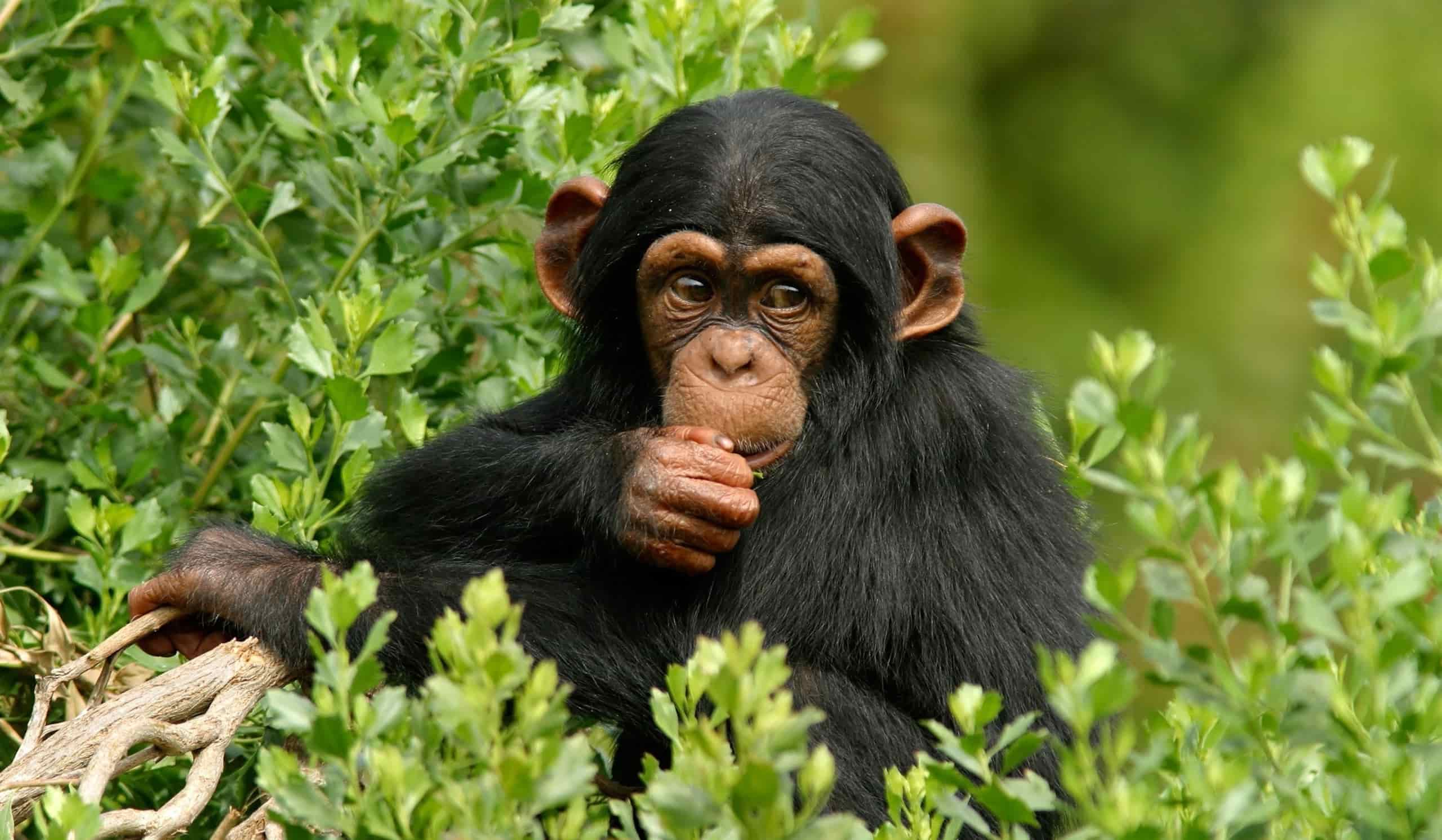
What Ngogo’s Chimpanzees Taught Scientists About Territory
Deep inside Uganda’s Kibale National Park, chimpanzees move through the forest in groups, searching for fruit, grooming companions and communicating through loud calls. Occasionally, several adult males travel quietly towards the edge of their community’s territory. Their movements become cautious, and they pay close attention to signs of neighbouring chimpanzees.
These observations have helped scientists understand Ngogo chimpanzee territorial behaviour, one of the most remarkable subjects in African primate research.
For more than three decades, researchers have studied Ngogo’s chimpanzees, documenting how they defend their home range, cooperate during boundary patrols and sometimes compete violently with neighbouring communities.
Their discoveries have changed scientific understanding of territorial behaviour and revealed how access to land can influence chimpanzee survival and reproduction.
1. Where Is the Ngogo Chimpanzee Community?
Ngogo is located within Kibale National Park in western Uganda.
Kibale protects tropical forests supporting chimpanzees, monkeys, birds and numerous other wildlife species.
The Ngogo research area contains productive forest habitats with food resources capable of supporting unusually large numbers of chimpanzees.
For many years, Ngogo was recognised as the largest chimpanzee community documented in the wild, reaching more than 200 individuals at its peak.
Its unusual size provided researchers with opportunities to study cooperation, competition and relationships between neighbouring communities.
Long-term research began in the 1990s through work led by scientists including David Watts and John Mitani.
2. What Does Territory Mean to Chimpanzees?
A chimpanzee territory is an area used and defended by members of a particular community.
It contains feeding trees, resting places, travel routes and other important resources.
Chimpanzees do not maintain visible boundaries like fences.
Instead, their home ranges overlap or meet along forest areas where encounters with neighbours may occur.
Why Does Territory Matter?
A suitable territory provides access to:
- Fruiting trees and other food sources.
- Water and resting areas.
- Safe places for mothers and infants.
- Space for movement and feeding.
- Resources supporting community survival.
Territory size and food availability can influence competition between chimpanzee communities.
Researchers at Ngogo investigated whether defending and expanding territory could provide measurable benefits.
3. How Ngogo Chimpanzees Patrol Their Boundaries
One of Ngogo’s important discoveries concerns coordinated territorial patrols.
Researchers observed groups of chimpanzees, often adult males, travelling towards the edges of their community’s range.
Their behaviour during these movements can differ from ordinary feeding or travel.
What Happens During a Patrol?
Chimpanzees may move quietly, remain alert and listen for neighbouring groups.
They sometimes travel close together while checking unfamiliar areas.
Patrol members may investigate sounds, tracks or other signs of chimpanzees.
Occasionally, they encounter individuals from neighbouring communities.
Some encounters end with avoidance or displays, while others escalate into aggression.
Researchers have studied these patrols to understand how chimpanzees cooperate when facing potential danger.
4. Why Do Male Chimpanzees Cooperate?
Territorial patrols can be risky.
A chimpanzee travelling towards a neighbouring community may encounter several unfamiliar males.
Nevertheless, Ngogo males repeatedly participated in cooperative patrols.
Research using approximately 20 years of observations found that cooperation involved more than helping close relatives.
Unrelated males also participated in activities that could benefit the wider community.
Scientists suggested that protecting territory may improve long-term opportunities for reproduction and group survival.
This behaviour demonstrates that chimpanzee cooperation can involve risks and benefits extending beyond immediate individual rewards.
5. The Discovery That Changed Territorial Research
One of Ngogo’s most significant findings emerged from observations recorded between 1999 and 2008.
Researchers documented lethal attacks by Ngogo chimpanzees against individuals from neighbouring communities.
A scientific study published in 2010 reported 18 directly observed fatal attacks and three additional cases inferred from evidence.
Many incidents occurred along the northeastern boundary of Ngogo’s territory.
In 2009, researchers noticed that Ngogo chimpanzees were increasingly using land previously occupied by neighbouring chimpanzees.
The 22% Territorial Expansion
The research documented an approximately 22% increase in Ngogo’s territory.
This was important because it provided strong evidence linking lethal intergroup aggression with territorial expansion.
Earlier studies had documented chimpanzee aggression, but Ngogo offered particularly convincing observations connecting attacks with subsequent land acquisition.
Researchers could compare years of conflict with measurable changes in the community’s range.
The finding demonstrated that territorial competition can have lasting ecological consequences.
6. What Did Researchers Learn About Food and Territory?
Chimpanzees depend heavily on forest foods, particularly fruit.
Access to productive feeding areas can influence how individuals spend their time and where communities travel.
Researchers proposed that territorial expansion could provide additional feeding resources.
A larger territory may reduce pressure on particular food trees and improve access to seasonal fruits.
However, more land does not automatically guarantee better nutrition.
Its value depends on vegetation, food availability and the ability to use the area safely.
Ngogo’s long-term observations provided an opportunity to investigate whether territorial gains affected reproductive success.
7. Did Territorial Expansion Improve Reproduction?
Later research investigated what happened after Ngogo’s territorial expansion.
A study reported in 2025 identified substantial changes in births and infant survival.
Researchers compared reproductive outcomes before and after the community gained territory.
| Research Measure | Before Expansion | After Expansion |
|---|---|---|
| Births during comparable three-year periods | 15 | 37 |
| Probability of death before age three | 41% | 8% |
| Territory | Original range | Approximately 22% larger |
The findings associated territorial expansion with improved reproductive outcomes.
However, this does not mean aggression always produces such results or that similar patterns occur in every chimpanzee population.
Scientists must consider ecological conditions and other influences when interpreting the findings.
8. When Ngogo’s Large Community Divided
Another remarkable discovery involved the gradual division of the Ngogo community.
Around 2015, researchers began noticing growing separation between chimpanzees occupying different parts of the community’s range.
Individuals that had previously belonged to one community increasingly associated with particular social groups.
The separation eventually produced two distinct communities called Ngogo West and Ngogo Central.
By 2018, adult males from the two communities were no longer maintaining peaceful social relationships.
Why Was This Important?
Permanent chimpanzee community divisions are rarely documented.
Ngogo offered researchers an unusual opportunity to observe how relationships between familiar individuals could change as a community separated.
Some chimpanzees that had previously groomed and cooperated later treated former companions as outsiders.
This helped scientists examine how social bonds, cooperation and territorial identity develop over time.
9. How Conflict Developed Between Former Companions
Following the split, researchers documented aggressive encounters between members of Ngogo West and Ngogo Central.
Scientific observations included fatal attacks in 2018 and 2019.
The events were particularly striking because some individuals involved had previously belonged to the same community.
Researchers examined how social relationships deteriorated and why former companions became territorial rivals.
However, they cautioned against assuming that chimpanzee conflict is identical to human warfare.
Chimpanzees and humans have different social histories, ecological circumstances and cultural institutions.
Ngogo’s findings are valuable for studying animal behaviour without reducing either species to simple comparisons.
10. What Makes Ngogo Different From Other Chimpanzee Communities?
Ngogo’s unusually large historical population made it an important location for studying relationships between community size, cooperation and territorial behaviour.
Other chimpanzee communities, including Kanyawara in Kibale and Sonso in Budongo Forest, have also contributed important scientific findings.
| Research Site | Important Research Focus |
|---|---|
| Ngogo, Kibale | Territorial expansion, cooperation and community division |
| Kanyawara, Kibale | Feeding ecology, reproduction and social relationships |
| Sonso, Budongo | Communication, social behaviour and tool-use traditions |
| Gombe, Tanzania | Long-term social relationships and territorial conflict |
Differences between communities help researchers understand how chimpanzee behaviour responds to local ecological and social conditions.
11. What Can Safari Visitors Learn From Ngogo?
Ngogo’s research offers a deeper perspective on chimpanzee behaviour.
Visitors tracking chimpanzees in Uganda may observe grooming, feeding, travelling and vocal communication.
These everyday activities form part of the same complex social systems researchers investigate.
However, Ngogo is primarily a long-term research site.
Ordinary Kibale chimpanzee tracking does not automatically provide access to Ngogo’s research communities.
Travellers should book authorised tourism activities through the appropriate wildlife authorities.
A qualified guide can explain chimpanzee social relationships without disturbing the animals.
12. Why Ngogo’s Research Matters for Conservation
Chimpanzees are endangered, making the protection of their forest habitats essential.
Ngogo’s studies show that chimpanzee communities depend on more than individual feeding trees.
They also require connected forest landscapes supporting movement, reproduction and natural social behaviour.
Habitat fragmentation may affect how communities use territory and interact with neighbours.
Long-term research helps conservation organisations understand these needs.
The Ngogo Chimpanzee Project also supports conservation work, including activities addressing threats from illegal snares.
Protecting chimpanzees requires safeguarding both the animals and the ecosystems supporting their communities.
What Ngogo Taught the World
Ngogo’s chimpanzees have transformed scientific understanding of territorial behaviour.
Researchers documented coordinated boundary patrols, cooperation among males, territorial expansion and the consequences of a large community splitting into separate groups.
Their findings demonstrated that competition over land can influence chimpanzee ecology and reproductive success.
At the same time, Ngogo reminds us that chimpanzee behaviour cannot be described only through conflict. These animals also form lasting relationships, care for offspring and cooperate in complex social groups.
Understanding Ngogo’s chimpanzees helps scientists explain how territory shapes wildlife societies and why protecting Uganda’s forests remains so important.







No comment