
Trekking Poles for Gorilla Hikes: Who Needs Them?
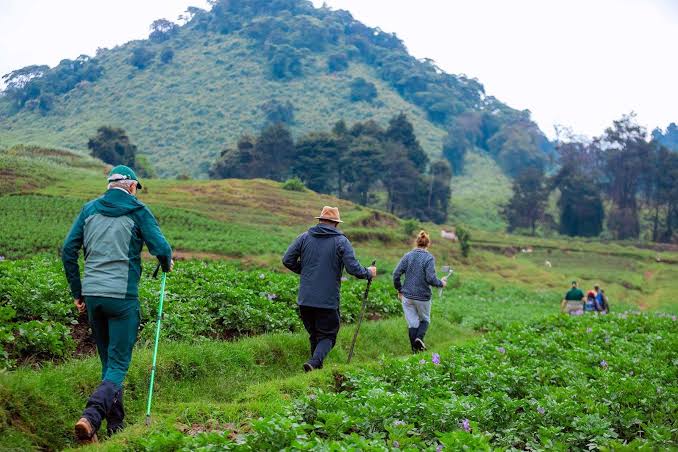
Trekking poles for gorilla hikes are useful walking accessories for travellers exploring the mountain gorilla habitats of Uganda and Rwanda. Gorilla trekking is one of Africa’s most memorable wildlife experiences, but reaching a gorilla family can involve walking through dense forests, climbing steep slopes and crossing slippery trails.
Popular trekking destinations include Bwindi Impenetrable National Park and Mgahinga Gorilla National Park in Uganda, as well as Volcanoes National Park in Rwanda.
Although some gorilla families are reached after relatively short walks, others require several hours of hiking through challenging terrain. Rain, mud, exposed roots and uneven forest paths can make walking more demanding.
Trekking poles provide additional support and can help travellers maintain their balance, particularly during descents.
However, not every visitor needs specialist hiking poles. Some people prefer a simple wooden walking stick, while experienced hikers may be comfortable without additional equipment.
This guide explains who benefits from trekking poles, which designs work best and how to use them safely during a gorilla trekking adventure.
What Are Trekking Poles?
Trekking poles are handheld walking supports designed to improve stability during hiking.
They usually feature adjustable shafts, comfortable handles and tips suitable for different surfaces.
Hikers can use one pole or a pair, depending on terrain and personal preference.
Main Features of Trekking Poles
| Feature | Purpose |
|---|---|
| Adjustable length | Adapts to different terrain |
| Comfortable grip | Supports hand positioning |
| Wrist strap | Helps retain the pole |
| Rubber tip | Provides grip on suitable surfaces |
| Metal tip | Useful on selected rough trails |
| Lightweight shaft | Reduces carrying effort |
| Collapsible design | Easier luggage packing |
The most suitable poles are comfortable, strong and easy to adjust.
Do You Need Trekking Poles for Gorilla Trekking?
Trekking poles are not compulsory for most gorilla trekking experiences.
However, they can be particularly helpful on steep, muddy or uneven forest trails.
The decision depends on fitness, balance, previous hiking experience and expected terrain.
Who Benefits Most?
| Traveller | Trekking pole recommendation |
|---|---|
| First-time hikers | Often useful |
| Older travellers | May provide extra support |
| Visitors with balance difficulties | Consider after medical advice |
| Experienced mountain hikers | Personal preference |
| Travellers carrying cameras | One pole may be convenient |
| Visitors with knee discomfort | May reduce some walking strain |
| Families with eligible teenagers | Optional |
| Fit regular hikers | Useful but not essential |
Walking poles improve support but cannot eliminate the risk of slipping or falling.
Why Gorilla Trekking Can Be Challenging
Mountain gorillas live in forested and mountainous environments.
Unlike ordinary game drives, gorilla trekking requires visitors to follow trails and sometimes walk through thick vegetation.
Common Trekking Challenges
| Challenge | Effect on walking |
|---|---|
| Steep hills | Greater physical effort |
| Muddy paths | Reduced grip |
| Exposed roots | Trip hazards |
| Dense vegetation | Restricted movement |
| Uneven ground | Balance difficulties |
| Rainfall | Slippery surfaces |
| Long descents | Additional knee strain |
The difficulty of a trek is not always predictable because gorilla families move through their habitat.
Trekking Poles in Bwindi Impenetrable National Park
Bwindi is one of Uganda’s best-known gorilla trekking destinations.
The forest contains steep hillsides, valleys and dense vegetation.
Trekking takes place in different sectors, including Buhoma, Ruhija, Rushaga and Nkuringo.
Bwindi Trekking Conditions
| Sector | General terrain consideration |
|---|---|
| Buhoma | Forest slopes and variable routes |
| Ruhija | Elevated forest terrain |
| Rushaga | Hills and uneven trails |
| Nkuringo | Potentially demanding slopes |
Actual difficulty depends on the assigned gorilla family, starting location and weather.
Travellers should not assume that every trek in one sector will be easy or difficult.
Trekking Poles in Mgahinga Gorilla National Park
Mgahinga Gorilla National Park lies within Uganda’s Virunga mountain region.
Its landscape includes volcanic slopes, bamboo vegetation and mountain forest.
Trails may be steep, especially after rainfall.
Why Poles Can Help in Mgahinga
Poles may provide extra balance on uneven slopes.
They can help hikers maintain a steady rhythm.
They may reduce some pressure on knees during descents.
However, trekking poles should never be used to pull on vegetation or disturb wildlife.
Trekking Poles in Volcanoes National Park
Rwanda’s Volcanoes National Park offers gorilla trekking through bamboo forests, mountain vegetation and volcanic terrain.
Some treks involve relatively gentle approaches, while others require more demanding climbs.
Rwanda Gorilla Trekking Considerations
Wet ground can become slippery.
Volcanic terrain may contain rocks and exposed roots.
Weather conditions can change during the morning.
A sturdy walking pole can provide welcome support, especially for visitors unfamiliar with mountain hiking.
One Trekking Pole or Two?
Some hikers prefer one walking pole, while others use two.
Both approaches have advantages.
Single Pole vs Two Poles
| Feature | One pole | Two poles |
|---|---|---|
| Balance | Moderate additional support | Support on both sides |
| Weight | Less to carry | Slightly more |
| Camera access | One hand remains free | Both hands occupied |
| Uphill walking | Useful | May assist rhythm |
| Downhill walking | Helpful | Can provide better support |
| Dense vegetation | Easier to manage | May become awkward |
For travellers carrying cameras, a single pole can be a practical compromise.
Do Trekking Poles Help With Knee Pain?
Trekking poles may reduce some loading on the knees by allowing the arms to share part of the effort.
This can be useful when descending steep forest slopes.
However, they are not a treatment for existing knee injuries.
Tips for Travellers With Knee Problems
Consult a healthcare professional before booking a demanding trek.
Choose comfortable hiking boots.
Use appropriately adjusted poles.
Walk at a manageable pace.
Inform your guide about mobility concerns.
Consider hiring a porter for additional practical support.
Travellers with significant joint problems should not assume trekking poles alone will make a difficult hike suitable.
Are Wooden Walking Sticks Available?
At some gorilla trekking starting points, wooden walking sticks may be available through local arrangements.
These can provide useful support without requiring visitors to carry specialist equipment internationally.
Wooden Stick vs Trekking Pole
| Feature | Wooden walking stick | Adjustable trekking pole |
|---|---|---|
| Availability | May be offered locally | Usually brought by traveller |
| Adjustable height | Generally limited | Common |
| Weight | Varies | Often lighter |
| Grip | Simple handle | Designed grip |
| Packing | No international transport needed | Collapsible models available |
| Cost | May be inexpensive or provided | Depends on purchase |
Ask your safari operator what walking supports are available at the intended trekking location.
Choosing the Right Trekking Pole Material
Most commercial trekking poles use aluminium or carbon fibre.
Material Comparison
| Material | Advantage | Limitation |
|---|---|---|
| Aluminium | Durable and relatively affordable | Often heavier |
| Carbon fibre | Lightweight | Can break under certain stresses |
| Wood | Simple and practical | Limited adjustment |
For most gorilla trekkers, comfortable aluminium poles provide a sensible balance between durability and cost.
Expensive equipment is not necessary for a single trekking experience.
How Long Should Your Trekking Poles Be?
Correct adjustment improves comfort and control.
On relatively level ground, a common starting point is adjusting the pole so the elbow bends at approximately 90 degrees.
Length Adjustment Guide
| Terrain | Suggested adjustment |
|---|---|
| Level ground | Comfortable elbow bend |
| Uphill | Slightly shorter |
| Downhill | Slightly longer |
| Uneven forest | Adjust as required |
Avoid extending poles beyond their manufacturer’s marked limits.
Test the locking mechanism before beginning the trek.
How to Use Trekking Poles Uphill
Climbing steep slopes requires controlled movements.
Poles may help maintain a steady walking rhythm.
Uphill Technique
Keep the poles slightly ahead or beside your body.
Plant the tips securely.
Take short, controlled steps.
Avoid leaning heavily onto unstable poles.
Use the poles for balance rather than attempting to pull your entire body uphill.
Your guide can help identify safer footholds.
How to Use Trekking Poles Downhill
Descending muddy slopes can be more difficult than climbing.
Trekking poles are particularly useful when controlling movement downhill.
Downhill Technique
Shorten your steps.
Keep your knees slightly bent.
Plant poles securely before transferring weight.
Avoid overreaching.
Maintain a controlled pace.
Do not rush to keep up with faster members of the trekking group.
Trekking Poles During Rainy Months
Rain can make forest trails slippery and muddy.
Uganda and Rwanda receive rainfall during different parts of the year, and showers can occur outside the main rainy periods.
Wet-Weather Trekking Precautions
| Item | Purpose |
|---|---|
| Trekking poles | Additional stability |
| Waterproof boots | Foot protection |
| Good boot tread | Better traction |
| Rain jacket | Weather protection |
| Gaiters | Reduce mud entering footwear |
| Waterproof backpack cover | Protect belongings |
Poles are most effective when combined with appropriate footwear and careful walking.
Should You Hire a Porter Instead?
Porters can assist visitors by carrying bags and providing practical support along suitable sections of the trekking route.
Hiring a porter also creates a local employment opportunity.
Porter vs Trekking Pole
| Support | Main benefit |
|---|---|
| Trekking pole | Personal balance |
| Porter | Assistance with luggage and walking |
| Both together | Combined practical support |
A porter is not a replacement for professional medical assistance or specialised mobility equipment.
Visitors with substantial mobility limitations should discuss available trekking arrangements with the park authorities before booking.
Trekking Poles and Wildlife Safety
Gorilla trekking takes place under strict conservation rules.
Visitors must follow ranger instructions at all times.
Poles should never be used to touch, threaten or approach gorillas.
Important Wildlife Rules
Keep the required distance from gorillas.
Remain calm around wildlife.
Follow ranger directions.
Avoid sudden movements.
Do not point poles towards animals.
Secure your equipment when instructed.
The permitted viewing period and visitor behaviour are controlled to protect both gorillas and people.
Can You Carry Trekking Poles on Flights?
Airline baggage rules vary.
Trekking poles may be restricted from cabin baggage because of their pointed tips or design.
Flight Packing Advice
Check your airline’s baggage rules.
Use collapsible poles where practical.
Protect sharp tips.
Pack poles securely in checked luggage when required.
Avoid assuming walking poles are permitted in hand luggage.
Travellers using small domestic safari aircraft should also confirm baggage weight restrictions.
What Else Should Gorilla Trekkers Pack?
Trekking poles are only one part of a practical hiking kit.
Essential Gorilla Trekking Equipment
| Item | Purpose |
|---|---|
| Hiking boots | Foot and ankle support |
| Long trousers | Protection from vegetation |
| Long-sleeved shirt | Skin protection |
| Rain jacket | Wet-weather comfort |
| Gardening-style gloves | Protection when touching vegetation |
| Drinking water | Hydration |
| Snacks | Energy during hiking |
| Daypack | Carrying essentials |
| Trekking poles | Optional walking support |
Pack lightweight equipment to avoid unnecessary fatigue.
Common Trekking Pole Mistakes
Some travellers purchase poles without practising how to use them.
Others carry poorly adjusted equipment that creates discomfort.
Mistakes to Avoid
Using poles that are too long.
Failing to secure locking mechanisms.
Planting tips on unstable rocks.
Leaning excessively on one pole.
Using damaged equipment.
Blocking narrow forest paths.
Forgetting to follow ranger instructions.
Practising with trekking poles before travelling helps develop confidence.
Frequently Asked Questions
Are Trekking Poles Compulsory for Gorilla Trekking?
No. They are optional walking supports, although many visitors find them useful on muddy or steep trails.
Can Beginners Use Trekking Poles?
Yes. Beginners can benefit from additional balance, particularly after practising correct pole adjustment and technique.
Are Trekking Poles Better Than Wooden Sticks?
Adjustable trekking poles offer more features, but a sturdy wooden walking stick can also provide useful support.
Can Older Travellers Complete Gorilla Trekking?
Some older travellers complete gorilla treks successfully. Suitability depends on individual health, fitness, terrain and available assistance rather than age alone.
Are Trekking Poles Worth Bringing?
Trekking poles can improve balance, confidence and comfort during gorilla trekking in Uganda and Rwanda.
They are particularly useful for first-time hikers, travellers concerned about slippery slopes and visitors who prefer additional walking support.
However, experienced hikers may not need them, and locally available wooden walking sticks can provide a practical alternative.
The best choice depends on your physical abilities, trekking experience and personal comfort rather than assuming every visitor needs expensive hiking equipment.
With suitable footwear, responsible guiding and realistic preparation, gorilla trekking can remain one of East Africa’s most rewarding wildlife experiences.

No comment