
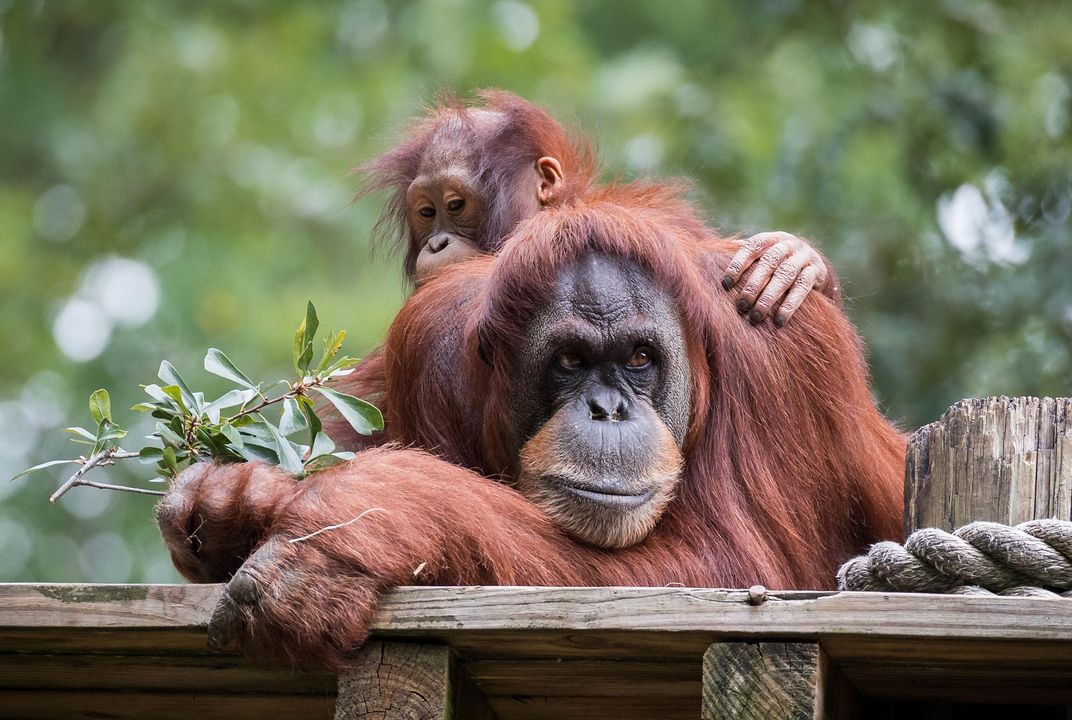
Telling Monkeys From Apes
Telling Monkeys From Apes: What Visitors Often Get Wrong
Imagine walking through Uganda’s Kibale National Park when your guide points towards a chimpanzee resting in a tree. A few minutes later, a red-tailed monkey jumps between branches nearby. Both animals have expressive faces, grasping hands and dark fur, but they belong to different branches of the primate family tree.
Understanding the differences between monkeys and apes is an important skill for travellers exploring East Africa’s wildlife destinations. Many first-time safari visitors assume every tree-climbing primate is a monkey or that all large primates are apes. Others believe intelligence, body size or habitat alone can identify an animal.
The differences are more interesting than these common assumptions suggest. Learning a few simple identification features can help you recognise chimpanzees, gorillas, baboons and forest monkeys with greater confidence.
1. Are Monkeys and Apes the Same Animals?
Monkeys and apes are both primates, an order of mammals that also includes humans, lemurs, lorises and bush babies.
However, monkeys and apes belong to different evolutionary groups.
Apes are classified within the superfamily Hominoidea. Living non-human apes include gorillas, chimpanzees, bonobos, orangutans and gibbons.
Monkeys belong to two broad groups: Old World monkeys and New World monkeys.
The monkeys found naturally in Uganda, Kenya, Tanzania and Rwanda are Old World monkeys.
These include baboons, colobus monkeys, vervet monkeys and various guenons.
Although monkeys and apes share evolutionary ancestors, they developed different anatomical and behavioural characteristics.
2. Mistake One: Thinking Every Primate Has a Tail
One of the easiest ways to distinguish monkeys from apes is by examining the tail.
Most monkeys have visible tails, while living apes do not.
During a forest walk, a long tail hanging from a branch usually indicates a monkey rather than an ape.
For example, black-and-white colobus monkeys have long tails with striking white tufts.
Red-tailed monkeys have reddish colouring along their tails, while olive baboons have long, curved tails.
Chimpanzees and gorillas have no external tails.
Is the Tail Rule Always Correct?
Not completely.
Some monkey species have extremely short or nearly invisible tails.
Therefore, lacking an obvious tail does not automatically make an animal an ape.
Nevertheless, for the monkey and ape species commonly encountered on East African safaris, tail presence is an excellent identification clue.
3. Mistake Two: Assuming Big Primates Must Be Apes
Body size can help identify wildlife, but it is not a reliable scientific distinction.
Gorillas are the largest living primates, and adult chimpanzees are generally larger than many forest monkeys.
However, some monkeys are also relatively large.
Adult male olive baboons, for example, can be powerful animals with muscular bodies and prominent canine teeth.
Meanwhile, gibbons are comparatively small apes found in Asia.
A large baboon is still a monkey, while a small gibbon is still an ape.
Quick Size Comparison
| Primate | Monkey or Ape? | General Appearance |
|---|---|---|
| Mountain gorilla | Ape | Large and powerful |
| Chimpanzee | Ape | Muscular with long arms |
| Olive baboon | Monkey | Robust with a long muzzle |
| Black-and-white colobus | Monkey | Slender with a long tail |
| Red-tailed monkey | Monkey | Relatively small and agile |
| Gibbon | Ape | Small-bodied with long arms |
Size should always be considered alongside other physical characteristics.
4. Mistake Three: Believing All Tree-Climbing Primates Are Monkeys
Many visitors associate monkeys with climbing trees and apes with living on the ground.
However, both groups can climb.
Chimpanzees regularly move through forest canopies, feed in trees and construct sleeping nests above the ground.
Young gorillas are also capable climbers, although large adult mountain gorillas spend considerable time on the forest floor.
Colobus monkeys, blue monkeys and red-tailed monkeys are particularly skilled at moving between branches.
Olive baboons and patas monkeys, meanwhile, spend much of their active time on the ground.
Habitat use therefore cannot identify an animal on its own.
5. Mistake Four: Thinking Only Apes Are Intelligent
Apes are widely recognised for sophisticated problem-solving, communication and tool use.
Chimpanzees can modify sticks to collect insects, while gorillas demonstrate complex social relationships and learning abilities.
However, monkeys also possess remarkable intelligence.
Vervet monkeys use alarm calls that can communicate information about different kinds of predators.
Baboons recognise relationships within their troops, while some monkeys solve problems involving food and objects.
The differences between primate species reflect their evolutionary histories and environments.
Intelligence cannot be accurately measured using one behaviour alone.
It is therefore misleading to describe monkeys as unintelligent simply because their abilities differ from those of great apes.
6. Mistake Five: Confusing Baboons With Chimpanzees
Baboons and chimpanzees are sometimes confused by visitors seeing them from a distance.
Both have dark facial skin, strong limbs and complicated social relationships.
However, their physical appearances are quite different.
How to Identify a Baboon
Olive baboons have long, dog-like muzzles, olive-grey coats and visible tails.
They frequently travel across open ground in savannah and woodland habitats.
How to Identify a Chimpanzee
Chimpanzees have relatively flatter faces, muscular upper bodies and no tails.
They often move on all fours using their knuckles.
Chimpanzees generally inhabit forest and woodland environments.
| Feature | Olive Baboon | Chimpanzee |
|---|---|---|
| Classification | Monkey | Ape |
| Tail | Present | Absent |
| Face | Long muzzle | Relatively flatter |
| Movement | Walking and running on all fours | Knuckle-walking and climbing |
| Typical habitat | Savannah and woodland | Forest and woodland |
These differences become easier to recognise with experience.
7. Mistake Six: Calling Gorillas Giant Monkeys
Mountain gorillas are among Uganda’s most famous wildlife attractions.
However, they are great apes, not monkeys.
Gorillas belong to the family Hominidae, which also includes chimpanzees, bonobos, orangutans and humans.
Mountain gorillas are distinguished by their broad chests, powerful shoulders and tailless bodies.
Adult males may develop a silver-grey area of hair across their backs, giving rise to the name silverback.
In Uganda, mountain gorillas occur in Bwindi Impenetrable National Park and Mgahinga Gorilla National Park.
Visitors should use the correct name when discussing gorilla trekking or describing wildlife photographs.
8. Mistake Seven: Assuming All Apes Live in Africa
Africa supports gorillas, chimpanzees and bonobos.
However, not all apes are African.
Orangutans live naturally in parts of Indonesia and Malaysia, while gibbons occur in Asian forests.
Humans are also biologically classified as great apes.
For safari travellers, the non-human apes most relevant to East and Central Africa are gorillas, chimpanzees and bonobos.
Understanding their natural distribution prevents confusion when planning wildlife experiences.
9. Mistake Eight: Thinking Bush Babies Are Monkeys
Bush babies are sometimes called small monkeys because of their large eyes, long tails and ability to jump between branches.
However, they belong to a different primate group known as strepsirrhines.
This group also includes lemurs and lorises.
Bush babies are mainly nocturnal and are adapted to moving through trees after dark.
They can be encountered during appropriate guided night walks in Uganda’s forests.
Pottos belong to the same broader primate branch, although their movements are much slower.
Neither bush babies nor pottos are monkeys or apes.
10. Monkeys vs Apes: The Main Differences
| Characteristic | Monkeys | Apes |
|---|---|---|
| Classification | Old World and New World monkey groups | Superfamily Hominoidea |
| Tail | Usually present | Absent |
| Body size | Small to large | Small to very large |
| Shoulder structure | Generally less adapted for overhead movement | Generally more mobile shoulders |
| Movement | Walking, running, climbing and leaping | Climbing, suspensory movement or knuckle-walking, depending on species |
| Intelligence | Complex learning and communication | Complex learning and communication |
| African examples | Baboons, vervets and colobus | Gorillas, chimpanzees and bonobos |
These are broad biological patterns rather than rules covering every individual species.
11. Where Can You See Monkeys and Apes in Uganda?
Uganda offers excellent opportunities to observe both groups.
Kibale National Park
Kibale supports chimpanzees alongside red colobus, black-and-white colobus, red-tailed monkeys and blue monkeys.
It is an excellent destination for learning how different primates share forest habitats.
Bwindi Impenetrable National Park
Bwindi protects mountain gorillas as well as several monkey species, including L’Hoest’s monkeys and black-and-white colobus.
A guided forest walk complements gorilla trekking.
Mgahinga Gorilla National Park
Mgahinga is known for mountain gorillas and endangered golden monkeys.
Visitors can compare the behaviour of great apes and smaller forest primates during separately booked activities.
Murchison Falls National Park
Murchison Falls is particularly suitable for observing olive baboons and patas monkeys.
Neither species is an ape, despite their relatively large bodies and complex social behaviour.
12. How to Identify Primates During a Safari
When you encounter an unfamiliar primate, begin with a few simple observations.
First, check whether the animal has a visible tail.
Next, examine its face, body proportions and movement.
Notice whether it travels mainly on the ground or through trees.
Listen to its calls and observe how it interacts with other individuals.
Finally, ask your guide to identify the species.
A reliable identification involves several features rather than one assumption.
Avoid approaching wildlife for a closer view. Binoculars and camera zoom are safer ways to observe distant animals.
13. Why Correct Identification Matters for Conservation
Correctly identifying primates helps travellers understand the different conservation challenges facing African wildlife.
Mountain gorillas depend on protected mountain forests, while chimpanzees require large, connected habitats.
Many monkeys also face threats from deforestation, hunting and habitat fragmentation.
However, their conservation circumstances vary by species.
Understanding these differences encourages visitors to appreciate smaller primates rather than concentrating only on gorillas and chimpanzees.
Responsible tourism should protect all wildlife, regardless of size or popularity.
Look Beyond the Familiar Names
Telling monkeys from apes becomes easier once you understand the main differences.
Most monkeys have tails, while apes do not. Apes generally have different shoulder and body proportions, but intelligence, climbing ability and body size alone cannot reliably separate the groups.
For travellers exploring Uganda and neighbouring countries, recognising these distinctions adds meaning to every forest walk and game drive.
Whether you encounter a powerful silverback, a playful chimpanzee or a troop of red-tailed monkeys, each species has its own adaptations and social relationships.
The most rewarding primate safari begins with curiosity, careful observation and an appreciation of the differences that make every species remarkable.







No comment