
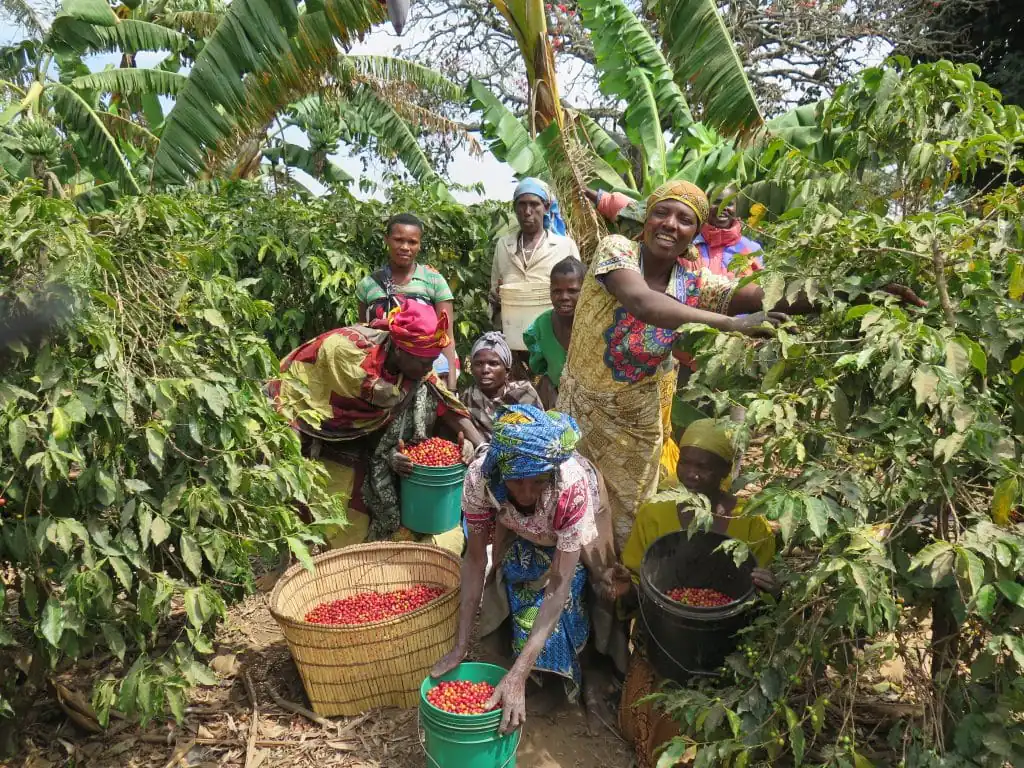
Tanzania Coffee Farm Visits on Kilimanjaro and in Mbeya
Tanzania coffee farm visits offer travellers an opportunity to explore the country’s agricultural traditions, meet local farmers and discover how coffee travels from a bright red cherry to a delicious cup. From the fertile volcanic slopes of Mount Kilimanjaro to the green Southern Highlands around Mbeya, Tanzania produces some of East Africa’s most distinctive Arabica coffee.
Unlike ordinary coffee tastings in city cafés, farm visits introduce travellers to growing, harvesting, drying, roasting and brewing techniques.
Visitors can walk through plantations, observe traditional processing methods and learn how coffee supports rural livelihoods.
Whether exploring villages near Moshi or agricultural communities around Mbeya, a guided coffee experience adds cultural depth to a Tanzania holiday.
Why Is Tanzania Famous for Coffee?
Coffee is among Tanzania’s important agricultural exports.
The country produces both Arabica and Robusta varieties, although highland Arabica is particularly associated with Kilimanjaro and the Southern Highlands.
Fertile soils, suitable temperatures and seasonal rainfall support coffee cultivation.
Tanzania Coffee Growing Regions
| Region | Main coffee characteristics |
|---|---|
| Kilimanjaro | Highland Arabica, often grown with bananas |
| Arusha | Arabica around Mount Meru |
| Mbeya | Southern Highlands Arabica |
| Songwe | Important Arabica production area |
| Ruvuma | Major Arabica-growing region |
| Kagera | Predominantly Robusta |
Each growing area has its own agricultural practices and local traditions.
Kilimanjaro Versus Mbeya Coffee Experiences
Both destinations provide opportunities to understand coffee production, but their visitor experiences differ.
| Feature | Kilimanjaro | Mbeya |
|---|---|---|
| Main gateway | Moshi | Mbeya city |
| Coffee type | Arabica | Predominantly Arabica |
| Landscape | Volcanic mountain slopes | Rolling highlands |
| Farming style | Small family gardens | Smallholders and estates |
| Tourism development | Established coffee excursions | More limited organised tourism |
| Cultural experience | Chagga traditions | Southern Highland communities |
| Recommended visit | Half-day or full-day | Half-day or full-day by arrangement |
Kilimanjaro is generally easier for travellers seeking established coffee tourism, while Mbeya rewards visitors interested in working agricultural communities.
Coffee Farming on Mount Kilimanjaro
The lower slopes of Mount Kilimanjaro contain productive agricultural landscapes.
Coffee trees grow alongside bananas, vegetables and other crops.
Many farms belong to Chagga families who have cultivated the mountain’s slopes for generations.
Why Coffee Grows Well Here
The volcanic soils contain minerals that support agriculture.
Mountain rainfall and relatively cool conditions suit Arabica coffee.
Shade provided by banana plants and other trees helps create a favourable growing environment.
This combination makes the Kilimanjaro foothills particularly attractive for agricultural tourism.
Materuni Village Coffee Tours
Materuni is one of the most popular destinations for coffee experiences near Moshi.
The village lies on Kilimanjaro’s lower slopes and is known for its coffee gardens, traditional Chagga hospitality and waterfall excursions.
What Happens During a Materuni Coffee Tour?
Visitors walk through family-owned coffee gardens.
Guides explain how Arabica trees grow and produce cherries.
Guests may participate in demonstrations involving roasting, grinding and brewing coffee.
Traditional songs sometimes accompany the preparation process.
The experience usually ends with a freshly prepared cup of locally grown coffee.
Traditional Chagga Coffee Preparation
Chagga coffee experiences frequently demonstrate traditional processing techniques.
Visitors learn how coffee is prepared using simple tools and considerable manual effort.
From Cherry to Cup
| Stage | What happens |
|---|---|
| Harvesting | Ripe coffee cherries are selected |
| Pulping | Outer fruit is removed |
| Fermentation | Remaining sticky material breaks down |
| Washing | Beans are cleaned |
| Drying | Moisture is reduced |
| Roasting | Beans develop aroma and flavour |
| Grinding | Roasted beans are crushed |
| Brewing | Ground coffee is prepared for drinking |
Some demonstrations use prepared beans rather than completing every processing stage, which normally takes several days.
Combining Coffee With Materuni Waterfall
Many visitors combine a coffee farm tour with a walk to Materuni Waterfall.
The route passes through green farmland, banana plantations and village landscapes.
Suggested Full-Day Experience
Begin with a morning drive from Moshi.
Walk towards Materuni Waterfall with a local guide.
Enjoy the scenery and return to the village.
Participate in a coffee preparation demonstration.
Finish with a traditional Chagga lunch.
This combination provides an enjoyable balance between culture, agriculture and nature.
Exploring Other Kilimanjaro Coffee Villages
Materuni is not the only community offering coffee experiences.
Villages around Moshi and the lower Kilimanjaro slopes also contain small farms.
What Makes Village Visits Different?
Smaller programmes may provide quieter experiences with fewer visitors.
Travellers can learn about household farming, local food production and seasonal agricultural activities.
Visits should be arranged through responsible community guides or farm hosts.
Coffee Farming in Mbeya
Mbeya lies in Tanzania’s Southern Highlands, a region known for cool highland conditions and productive agricultural landscapes.
Coffee cultivation takes place across suitable highland areas, including farms in Mbeya Region and neighbouring Songwe.
Why Visit Mbeya Coffee Farms?
The experience often focuses more directly on commercial agriculture and everyday farming.
Visitors may learn how producers manage coffee trees, harvest ripe cherries and deliver coffee to processing facilities.
The surrounding countryside offers attractive landscapes of hills, villages and cultivated land.
Understanding Mbeya and Mbozi
Mbozi is particularly important to southern Tanzania’s coffee industry.
Although sometimes grouped with Mbeya in travel descriptions, Mbozi is administratively located in Songwe Region, west of Mbeya.
Its agricultural landscape is strongly associated with Arabica production.
What Can Travellers Learn?
Farm visits may introduce coffee nurseries, plantation management and harvesting techniques.
Depending on arrangements, visitors might also observe coffee washing stations or drying facilities.
These experiences are less standardised than established Kilimanjaro tours and should be booked in advance.
Arabica Coffee in Tanzania
Arabica is valued for its distinctive flavours and aromatic qualities.
It generally performs well in cooler highland environments.
Understanding Coffee Characteristics
| Characteristic | Arabica coffee |
|---|---|
| Growing environment | Cooler highlands |
| Flavour | Often fruity or floral |
| Acidity | Frequently bright |
| Aroma | Complex and distinctive |
| Processing | Commonly washed |
| Main Tanzanian areas | Northern and Southern Highlands |
Actual flavour depends on variety, altitude, processing and roasting.
Coffee Harvesting in Tanzania
Coffee harvesting seasons vary according to region, altitude and rainfall.
In many highland areas, the main harvesting period occurs during the middle and later months of the year.
What Visitors May Observe
During harvest, farmers select ripe red cherries.
Outside harvest season, visitors can still examine trees and learn about processing.
Some farms provide roasting demonstrations throughout the year.
Ask whether harvesting will be taking place when booking.
How Coffee Cherries Become Green Beans
Fresh coffee cherries contain seeds surrounded by fruit.
Processing removes the surrounding material before roasting.
Washed Coffee Processing
Farmers first remove the outer skin and pulp.
Beans undergo controlled fermentation or other mucilage-removal processes.
They are washed and dried to suitable moisture levels.
The protective parchment layer is subsequently removed.
The resulting green beans can be graded and prepared for roasting or export.
Coffee Roasting and Tasting
Roasting transforms green coffee beans into the familiar brown product used for brewing.
Heat creates chemical reactions responsible for coffee’s aroma and flavour.
Different Roast Profiles
| Roast | Common characteristics |
|---|---|
| Light | Brighter acidity and delicate flavours |
| Medium | Balanced flavour and sweetness |
| Dark | Stronger roasted notes and bitterness |
During tastings, visitors may compare different roast levels.
Freshly prepared coffee provides an opportunity to appreciate how processing influences flavour.
How Much Do Coffee Farm Tours Cost?
Tour prices depend on location, transport, activities and group size.
Established Kilimanjaro programmes generally offer clearer advertised packages.
Indicative Tour Costs
| Experience | Approximate cost |
|---|---|
| Short Kilimanjaro coffee visit | USD 25–50 |
| Guided village coffee experience | USD 35–65 |
| Coffee and waterfall excursion | USD 50–100 |
| Private cultural coffee tour | USD 70–150+ |
| Mbeya farm visit | Quotation required |
Prices are indicative and may change.
Mbeya visits should be arranged directly with farms or suitable local operators.
What Should Be Included in a Coffee Tour?
A worthwhile experience should provide meaningful interaction with coffee farming rather than only a brief demonstration.
Booking Checklist
Confirm whether the price includes transport.
Ask if a farmer or knowledgeable guide will lead the visit.
Check whether coffee tasting is included.
Find out whether lunch costs extra.
Ask about opportunities to purchase coffee directly from producers.
Request the total price before confirming.
Buying Coffee Directly From Farmers
Purchasing locally roasted coffee can support farming communities.
However, visitors should inspect the product before buying.
Coffee Buying Tips
Choose properly sealed packaging.
Check the roasting date where available.
Ask whether the beans are whole or ground.
Confirm the origin of the coffee.
Compare prices fairly.
Remember that freshly roasted beans generally retain their flavour longer than pre-ground coffee.
Best Time to Visit Coffee Farms
Coffee farms can be visited throughout the year.
However, weather and agricultural activities influence the experience.
Seasonal Planning
| Period | General experience |
|---|---|
| January–March | Farm walks and demonstrations |
| April–May | Increased rainfall in many areas |
| June–September | Harvest activity in some regions |
| October–December | Harvesting or processing in selected areas |
Exact harvesting periods differ between Kilimanjaro, Mbeya and individual farms.
What to Wear for a Coffee Farm Visit
Most farm visits involve walking on uneven agricultural paths.
Comfortable clothing and suitable shoes make the experience easier.
Recommended Items
Wear closed walking shoes.
Carry drinking water.
Bring a lightweight rain jacket.
Use sunscreen and a sun hat.
Carry a camera and small amount of cash.
Ask permission before photographing farmers or their homes.
Combining Coffee Tours With Tanzania Safaris
Coffee experiences fit naturally into broader Tanzania itineraries.
Travellers beginning a Kilimanjaro climb can visit a farm near Moshi.
Those travelling through the Southern Highlands can organise an agricultural excursion around Mbeya.
Suggested Travel Combinations
| Destination | Additional experience |
|---|---|
| Moshi | Kilimanjaro foothill walks |
| Materuni | Waterfall excursion |
| Arusha | Cultural sightseeing |
| Mbeya | Highland scenery |
| Songwe | Agricultural communities |
| Kitulo area | Seasonal mountain landscapes |
Allow enough time to appreciate the surrounding communities rather than rushing between attractions.
Responsible Coffee Tourism
Coffee tourism can support smallholder farmers and rural employment.
Visitors should choose programmes that provide fair compensation to local hosts.
Avoid damaging crops.
Respect private farmland.
Purchase products directly from producers when practical.
Ask questions respectfully and recognise the work involved in growing coffee.
Why Tanzania Coffee Farm Visits Are Worth Experiencing
Tanzania coffee farm visits reveal the people, landscapes and agricultural knowledge behind the country’s famous coffee.
Kilimanjaro offers accessible cultural experiences featuring Chagga traditions, coffee gardens and mountain scenery.
Mbeya and neighbouring Southern Highland districts provide opportunities to understand larger agricultural production systems and rural livelihoods.
For travellers interested in food, culture and meaningful community experiences, visiting a coffee farm transforms an everyday cup of coffee into a memorable part of a Tanzania journey.


No comment