
Solar Chargers and Power Banks: What Works in Tents and Under Canopy
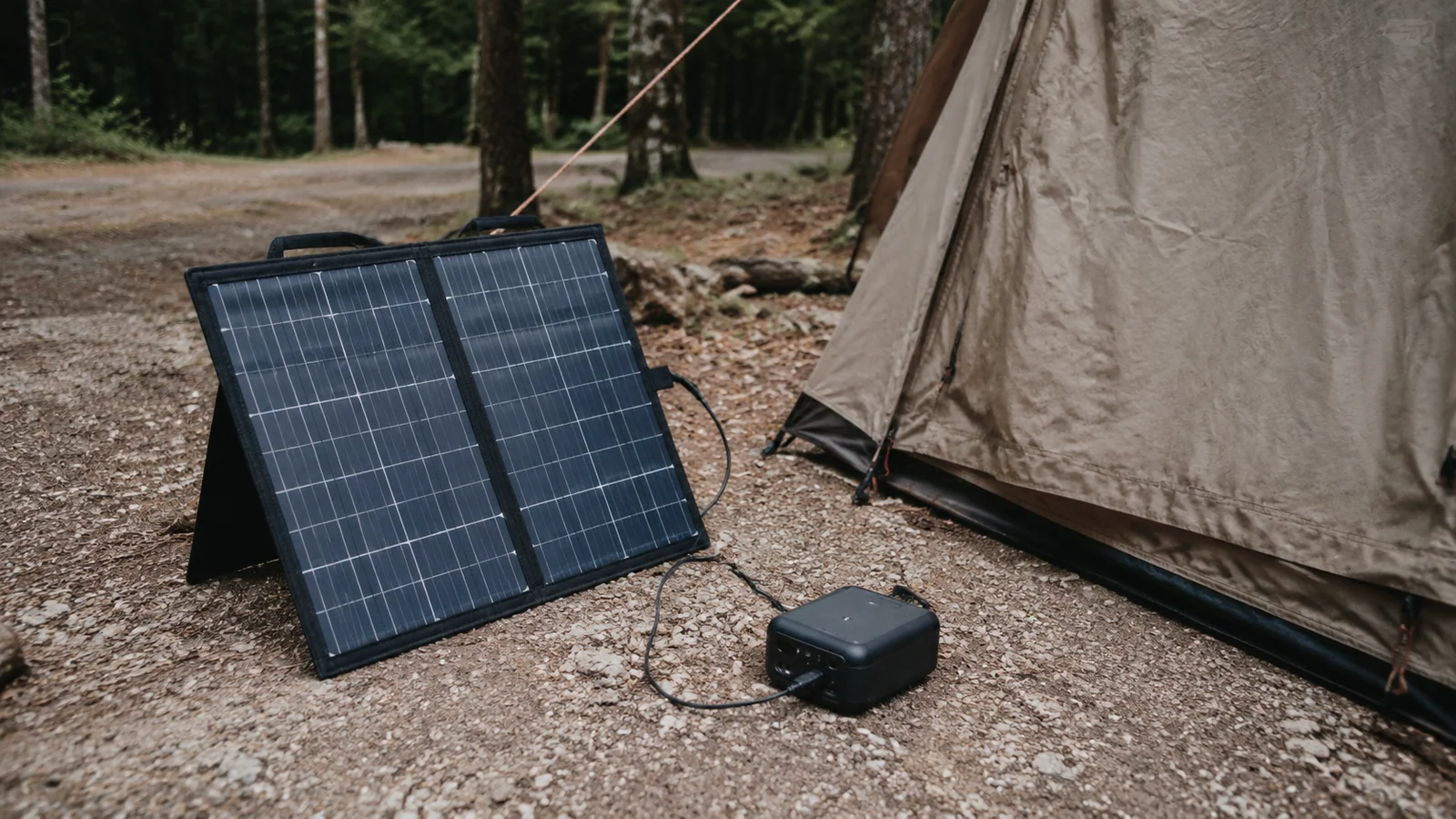
Solar chargers and power banks for African safaris are useful accessories for travellers visiting remote wildlife destinations in Uganda, Kenya, Tanzania and Rwanda. Whether staying in a luxury tented camp, trekking through tropical rainforest or spending several days away from major towns, keeping electronic devices charged can be challenging.
Many safari travellers carry smartphones, cameras, GPS devices, rechargeable torches and other equipment. These devices are useful for photography, communication, navigation and keeping travel documents accessible.
However, not every safari lodge provides continuous electricity. Some remote camps operate solar power systems, generators or batteries with limited charging hours.
Portable power banks offer a reliable way to store electricity for later use, while solar chargers can generate additional power when exposed to sufficient sunlight.
The challenge is understanding which option works best in different environments. A solar panel that performs well in open sunshine may produce very little electricity beneath dense forest vegetation.
This guide explains how solar chargers and power banks work, which products are practical for safari travel and how to keep essential devices charged in remote East African camps.
Why Charging Equipment Matters on Safari
Electricity availability varies between safari accommodation types.
Large lodges may provide power throughout the day, while smaller wilderness camps sometimes restrict electricity to specific hours.
Common Charging Challenges
| Situation | Possible problem |
|---|---|
| Remote tented camp | Limited electricity |
| Gorilla trekking | No charging facilities on trails |
| Long game drive | Devices run out of battery |
| Forest accommodation | Limited direct sunlight |
| Boat excursion | No accessible power sockets |
| Overnight camping | Restricted charging opportunities |
| Long road transfer | Limited charging ports |
Travellers should confirm charging arrangements before arriving at remote accommodation.
What Is a Portable Power Bank?
A power bank is a rechargeable battery designed to store electricity and transfer it to other devices.
Most models use USB connections to charge smartphones, cameras and other compatible equipment.
Power banks are particularly useful because they work without direct sunlight after being charged.
Main Power Bank Features
| Feature | Purpose |
|---|---|
| Battery capacity | Determines stored energy |
| USB-A port | Charges compatible devices |
| USB-C port | Supports modern electronics |
| Power Delivery | Allows compatible faster charging |
| Battery indicator | Shows remaining capacity |
| Multiple outputs | Charges several devices |
| Compact construction | Easier packing |
The best power bank depends on the devices being carried and how long travellers expect to remain without electricity.
What Is a Solar Charger?
A portable solar charger uses photovoltaic panels to convert sunlight into electricity.
Some models connect directly to electronic devices, while others charge a separate power bank.
Common Solar Charger Types
| Type | Main characteristic |
|---|---|
| Small integrated solar power bank | Compact but usually slow solar charging |
| Folding solar panel | Larger collection surface |
| USB solar charger | Charges compatible devices |
| Portable solar kit | May include battery storage |
| Larger camping solar panel | Greater output but more weight |
For safari travellers, a folding solar panel paired with a power bank can be more practical than relying on a tiny built-in solar panel.
Solar Chargers vs Power Banks: Main Differences
| Feature | Solar charger | Power bank |
|---|---|---|
| Requires sunlight | Yes | No, once charged |
| Stores electricity | Only with integrated storage | Yes |
| Works at night | Not without storage | Yes |
| Forest performance | Often limited | Unaffected by shade |
| Weight | Depends on panel size | Depends on battery capacity |
| Reliability | Weather-dependent | Depends on remaining charge |
| Best use | Sunny outdoor locations | Everyday backup charging |
For most safari holidays, a power bank should be the primary portable charging option.
Solar panels are better considered an additional charging source.
How Much Power Bank Capacity Do You Need?
Power bank capacity is commonly expressed in milliampere-hours, or mAh.
However, the number of device charges depends on battery voltage, conversion losses and device capacity.
Practical Capacity Guide
| Capacity | Suggested use |
|---|---|
| 5,000 mAh | Short outings |
| 10,000 mAh | Day trips and occasional charging |
| 20,000 mAh | Multi-day safaris |
| 25,000 mAh | Heavy smartphone use |
| 30,000 mAh | Extended travel, subject to airline rules |
A 20,000 mAh power bank may provide roughly three full charges for some modern smartphones, although actual results vary.
Understanding Watt-Hours
Watt-hours measure stored electrical energy.
This measurement is important when comparing power banks and checking airline restrictions.
A typical 20,000 mAh lithium-ion power bank rated at a nominal 3.7 volts stores approximately 74 watt-hours.
Power Bank Energy Examples
| Nominal capacity | Approximate energy at 3.7 V |
|---|---|
| 5,000 mAh | 18.5 Wh |
| 10,000 mAh | 37 Wh |
| 20,000 mAh | 74 Wh |
| 25,000 mAh | 92.5 Wh |
| 30,000 mAh | 111 Wh |
Always check the manufacturer’s stated watt-hour rating because battery designs differ.
Can You Carry Power Banks on Safari Flights?
Power banks contain lithium batteries and are generally subject to aviation safety restrictions.
They normally belong in carry-on baggage rather than checked luggage.
Many airlines permit power banks up to 100 Wh under applicable conditions. Batteries above 100 Wh may require approval or be prohibited, depending on the airline.
Airline Safety Checklist
Carry power banks in hand luggage.
Check the watt-hour rating.
Protect exposed terminals.
Avoid damaged or swollen batteries.
Confirm restrictions for small domestic aircraft.
Follow airline instructions regarding use and charging during flights.
Rules may differ between international airlines and safari flight operators.
Do Solar Chargers Work Inside Safari Tents?
Solar panels need suitable light exposure to generate electricity effectively.
Inside a canvas safari tent, sunlight may be substantially reduced.
Solar Charging Conditions
| Location | Expected performance |
|---|---|
| Direct outdoor sunshine | Best potential output |
| Partial shade | Reduced output |
| Beneath thick canvas | Usually poor |
| Inside a dark tent | Little or no useful charging |
| Under dense forest canopy | Often very limited |
| Cloudy outdoor conditions | Reduced and variable output |
Placing a solar charger beside a tent window does not guarantee effective charging.
Solar Charging Under Rainforest Canopy
East African rainforests contain tall trees and dense vegetation that block substantial amounts of direct sunlight.
This is particularly relevant when visiting Bwindi, Kibale and Nyungwe.
Forest Charging Challenges
Tree cover reduces available sunlight.
Cloud cover further lowers output.
Moving shadows interrupt charging.
Humidity creates additional equipment concerns.
Rain can prevent safe exposure of unsuitable electronics.
A charged power bank is generally more dependable beneath dense forest canopy.
Solar Chargers in Uganda
Uganda offers different safari environments, from open savannah to tropical rainforest.
Solar charging performance therefore varies considerably.
Uganda Charging Conditions
| Destination | Practical consideration |
|---|---|
| Bwindi Impenetrable National Park | Dense forest shade |
| Kibale National Park | Significant canopy cover |
| Queen Elizabeth National Park | Open areas may provide good sunlight |
| Murchison Falls National Park | Exposed locations can support solar charging |
| Kidepo Valley National Park | Open landscapes, but heat protection matters |
| Lake Mburo National Park | Mixed vegetation and open areas |
Do not leave charging equipment unattended in wildlife areas.
Solar Chargers in Kenya Safari Camps
Kenya’s Maasai Mara, Amboseli and Samburu contain open landscapes where portable solar panels may receive useful sunlight.
However, rainfall, cloud cover and shaded camp locations can reduce performance.
Kenya Charging Tips
Charge power banks whenever lodge electricity is available.
Use solar panels only in approved locations.
Keep electronic devices protected from dust.
Avoid placing batteries in direct extreme heat.
Carry appropriate charging cables.
Charging Equipment in Tanzania
Tanzania’s Serengeti and Tarangire contain open savannah environments.
Many safari camps already use solar power systems to operate lighting and other facilities.
However, a lodge’s solar installation does not guarantee unlimited electricity for guests.
Tanzania Safari Charging Advice
Ask whether tents contain charging sockets.
Confirm electricity operating hours.
Carry a suitable power bank.
Check whether camera batteries can be charged at reception.
Avoid using high-powered equipment without permission.
Charging Equipment in Rwanda
Rwanda’s Volcanoes National Park and Nyungwe region often experience cloudy conditions and forest shade.
Portable solar charging may be unreliable during certain activities.
For gorilla trekking and rainforest walks, a pre-charged power bank is usually the more practical option.
Visitors should charge their devices at the lodge before departing.
How Many Watts Should a Solar Charger Have?
Portable solar panels are advertised using wattage ratings.
These values describe performance under specified test conditions rather than guaranteed output throughout the day.
Solar Panel Comparison
| Rated output | Suggested purpose |
|---|---|
| 5 W | Limited emergency charging |
| 10 W | Small-device charging in good sunlight |
| 20 W | More practical phone or power-bank charging |
| 30 W | Additional capacity |
| 40 W or more | Larger charging needs, with added bulk |
Actual output may be considerably lower because of clouds, shade, panel angle and temperature.
Charging Cameras on Safari
Wildlife photographers often carry multiple camera batteries.
Many modern cameras support USB charging, while others require dedicated battery chargers.
Camera Charging Checklist
Confirm the camera’s charging requirements.
Carry spare compatible batteries.
Use the correct USB cable.
Check power bank output specifications.
Keep chargers dry.
Avoid charging damaged batteries.
Some professional camera chargers require more power than basic USB power banks can provide.
Protecting Charging Equipment From Rain
Wet-season safari travel creates additional challenges for electronic accessories.
Power banks, charging ports and cables should be protected from moisture.
Rain Protection Tips
Use waterproof storage bags.
Keep charging ports covered.
Dry equipment before connecting cables.
Avoid charging exposed electronics during rainfall.
Do not seal already wet devices inside airtight bags.
Allow condensation to clear before charging.
A waterproof bag protects stored equipment but does not make electrical charging safe in wet conditions.
Preventing Batteries From Overheating
High temperatures can affect lithium-ion battery performance and safety.
A power bank left on a vehicle dashboard or inside a closed car may become excessively hot.
Battery Safety Precautions
Keep batteries away from direct intense sunlight.
Avoid covering devices while charging.
Do not use visibly damaged power banks.
Stop charging if a device becomes unusually hot.
Use suitable charging accessories.
Follow manufacturer temperature limits.
Never place a power bank directly beneath a solar panel where heat can build up.
Can You Charge Devices During Game Drives?
Some safari vehicles provide USB sockets or charging outlets.
Others may have no passenger charging facilities.
Vehicle Charging Options
| Option | Consideration |
|---|---|
| USB charging port | Convenient when available |
| 12 V vehicle socket | Requires suitable adapter |
| Power bank | Independent backup |
| Portable solar panel | Usually impractical while moving |
| Camera battery charger | Must match power supply |
Ask your safari operator about available facilities before departure.
Choosing the Best Charging Setup
Different travellers require different amounts of power.
Recommended Safari Charging Combinations
| Traveller | Suggested setup |
|---|---|
| Occasional phone user | 10,000 mAh power bank |
| Regular photographer | 20,000 mAh bank and spare batteries |
| Multi-day camper | Larger approved power bank and optional solar panel |
| Gorilla trekker | Compact charged power bank |
| Family travelling together | Multiple suitable power banks |
| Remote camping enthusiast | Folding solar panel with battery storage |
The goal is to balance useful capacity with luggage weight and airline restrictions.
How to Make Batteries Last Longer
Reducing electricity consumption can be more effective than carrying additional charging equipment.
Battery-Saving Tips
Lower screen brightness.
Enable battery-saving mode.
Download maps before travelling.
Turn off unnecessary wireless connections.
Avoid excessive background applications.
Use airplane mode when appropriate.
Carry spare camera batteries.
These habits are especially useful during long transfers and remote overnight stays.
Common Charging Mistakes
Travellers sometimes expect small solar power banks to recharge quickly beneath forest canopy.
Others purchase large batteries without checking airline restrictions.
Mistakes to Avoid
Relying entirely on solar charging.
Carrying incompatible cables.
Buying oversized power banks.
Leaving batteries in direct heat.
Charging wet equipment.
Forgetting plug adapters.
Failing to test chargers before departure.
Good preparation helps avoid unexpected power shortages.
Frequently Asked Questions
Do Solar Chargers Work in Safari Tents?
They usually perform poorly beneath canvas or inside shaded tents. Direct outdoor sunlight is much more effective.
Is a 20,000 mAh Power Bank Enough?
For many travellers, yes. Actual charging capacity depends on device batteries and electricity consumption.
Can I Take a Power Bank on a Small Safari Aircraft?
Often yes, subject to airline lithium-battery restrictions. Carry it in hand luggage and confirm the permitted watt-hour rating.
Is Solar Charging Reliable in Bwindi?
Dense canopy and variable weather make it unreliable. A pre-charged power bank is preferable.
Reliable Charging on Safari
Solar chargers and power banks provide useful backup electricity for travellers exploring remote areas of Uganda, Kenya, Tanzania and Rwanda.
However, these devices serve different purposes.
A power bank stores electricity and works independently of sunlight, making it a dependable option for most safari activities.
Solar chargers can supplement electricity supplies in open, sunny locations but become less effective beneath forest canopy or inside safari tents.
For most East African safaris, the best choice is a quality power bank supported by a portable solar panel only when suitable sunlight and safe charging conditions are available.




No comment