
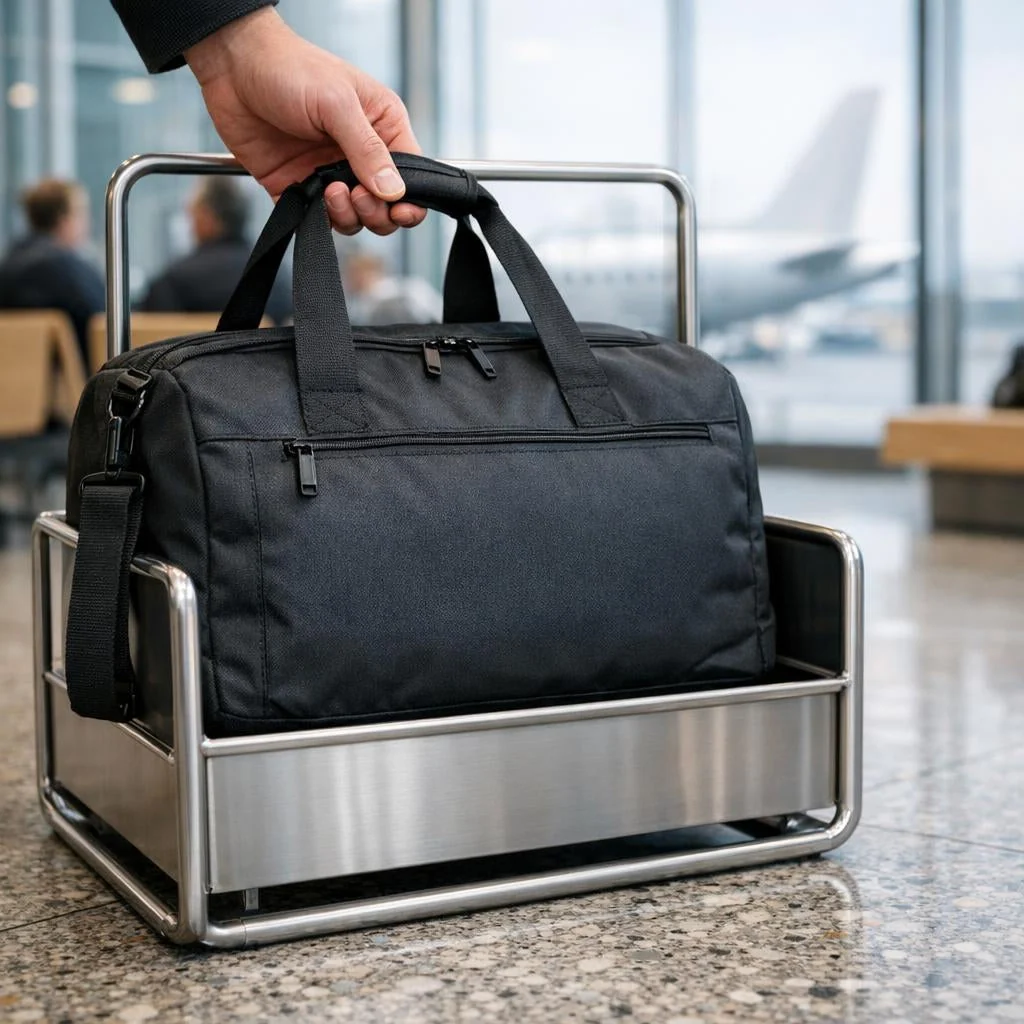
Soft Duffel vs Suitcase: What Fits Small Aircraft Weight Limits
Soft duffel vs suitcase for safari flights is an important comparison for travellers planning wildlife holidays in Uganda, Kenya, Tanzania and Rwanda. Small aircraft are commonly used to connect major airports with remote national parks, luxury safari camps and wilderness airstrips.
Unlike large international passenger aircraft, many safari planes have limited luggage compartments. Travellers carrying heavy suitcases, rigid bags or oversized camera equipment may discover that their luggage does not meet the airline’s requirements.
Popular fly-in safari routes connect Nairobi with the Maasai Mara, Arusha with the Serengeti and Entebbe with airstrips serving Uganda’s wildlife destinations.
A soft-sided duffel bag is often recommended because it can fit more easily into compact aircraft storage spaces. However, some operators accept suitably sized soft-sided suitcases, while others enforce strict restrictions on wheels, frames and baggage dimensions.
This guide explains the differences between duffel bags and suitcases, typical safari flight weight limits, packing techniques and how to avoid excess baggage charges.
Why Small Safari Aircraft Have Luggage Restrictions
Safari aircraft transport passengers between regional airports and relatively remote landing strips.
Many are smaller than conventional commercial aircraft, with limited cabin and baggage space.
Weight distribution is also important for aircraft performance and safety.
Main Reasons for Baggage Limits
| Reason | Explanation |
|---|---|
| Aircraft size | Smaller luggage compartments |
| Weight restrictions | Aircraft operating limitations |
| Passenger numbers | Combined aircraft load |
| Airstrip conditions | Runway performance requirements |
| Baggage dimensions | Narrow loading openings |
| Safety regulations | Secure equipment storage |
Airlines may weigh both checked luggage and hand baggage before departure.
What Is a Soft Duffel Bag?
A soft duffel is a flexible travel bag, usually made from canvas, nylon or polyester.
Most designs have a zippered main compartment and carrying handles.
Some include shoulder straps or detachable backpack straps.
Main Duffel Bag Features
| Feature | Benefit |
|---|---|
| Flexible sides | Easier storage |
| Lightweight fabric | More weight available for belongings |
| Wide opening | Convenient packing |
| Shoulder strap | Easier carrying |
| Compact design | Suitable for small compartments |
| Foldable construction | Convenient storage |
A simple duffel without a rigid base is particularly practical for many fly-in safaris.
What Is a Suitcase?
Suitcases generally have structured sides and may include wheels, telescopic handles and internal frames.
They are convenient for airports, hotels and conventional holidays.
However, their rigid construction can create difficulties on smaller safari aircraft.
Suitcase Features
| Feature | Advantage or limitation |
|---|---|
| Wheels | Easy movement on smooth surfaces |
| Hard shell | Protects against some impacts |
| Telescopic handle | Convenient at airports |
| Internal compartments | Organised packing |
| Rigid frame | Less flexibility in aircraft storage |
| Empty weight | May reduce usable baggage allowance |
Some safari airlines accept suitable suitcases, but passengers should confirm restrictions before departure.
Soft Duffel vs Suitcase: Main Comparison
| Feature | Soft duffel | Hard suitcase |
|---|---|---|
| Flexibility | High | Limited |
| Empty weight | Often lighter | Often heavier |
| Small aircraft storage | Frequently preferred | May be restricted |
| Wheeled transport | Usually absent | Common |
| Clothing organisation | Depends on packing | Often convenient |
| Protection from impacts | Moderate | More structured |
| Wet-weather protection | Material-dependent | Material-dependent |
| Safari suitability | Usually excellent | Operator-dependent |
For travellers using several small aircraft, a soft duffel is usually the more practical option.
How Much Luggage Can You Carry on Safari Flights?
Small aircraft baggage allowances vary by airline, route and aircraft type.
A commonly encountered combined allowance is approximately 15 kilograms per passenger, including checked and hand luggage.
Other operators may permit different weights.
Illustrative Safari Flight Allowances
| Flight arrangement | Planning consideration |
|---|---|
| Small scheduled bush flight | Often around 15 kg total |
| Selected domestic flights | May permit 20 kg or another allowance |
| Light aircraft charter | Aircraft-specific restrictions |
| International commercial flight | Separate baggage policy |
| Specialist camera charter | Additional arrangements may be possible |
These are general examples, not guaranteed allowances. Always follow the written baggage policy for your specific flight.
Does the 15 kg Limit Include Hand Luggage?
For some safari flight operators, the published allowance includes all passenger baggage.
This means handbags, camera bags and other items may count towards the total.
Example Weight Breakdown
| Item | Weight |
|---|---|
| Soft duffel | 1.5 kg |
| Clothing and shoes | 7 kg |
| Toiletries | 1.5 kg |
| Camera equipment | 3 kg |
| Personal accessories | 2 kg |
| Total | 15 kg |
This example demonstrates why weighing every bag before departure is useful.
It does not represent an airline-approved allowance for any particular route.
Why Baggage Shape Matters
Even a bag that weighs less than the limit may be unsuitable if it cannot fit into the aircraft’s baggage compartment.
A rigid suitcase may have the correct weight but excessive dimensions.
Shape Considerations
Soft-sided bags can compress slightly.
Rigid luggage retains its full dimensions.
Wheels and handles may increase overall size.
Oversized bags can be difficult to secure.
Choose luggage according to both weight and dimensions.
What Size Duffel Is Best for a Safari?
For many travellers, a medium-sized soft duffel is sufficient for a week-long safari.
Suggested Duffel Capacities
| Capacity | Suitable use |
|---|---|
| 30–40 litres | Short safari |
| 40–50 litres | Lightweight week-long safari |
| 50–60 litres | Longer journey with careful packing |
| 60–70 litres | Bulky items, subject to dimensions |
| Over 70 litres | Often unnecessary for light aircraft |
Capacity alone does not determine whether a bag is accepted. Check the operator’s maximum dimensions.
Safari Flight Baggage Rules in Kenya
Kenya’s Maasai Mara, Amboseli and Samburu are popular destinations for fly-in safaris.
Safarilink publishes a 15 kg combined baggage limit for many safari routes, with a 20 kg allowance on certain coastal and regional routes.
Soft bags are required under its published baggage conditions.
Kenya Packing Advice
Choose a flexible duffel.
Include your camera bag when calculating total weight.
Check the allowance for the exact destination.
Arrange excess baggage before departure where available.
Safari Flight Baggage Rules in Tanzania
Tanzania’s Serengeti, Ruaha and Nyerere National Park are served by smaller aircraft.
Coastal Aviation publishes a standard 15 kg allowance including hand luggage. It strongly recommends soft bags, although they are not universally compulsory under its policy.
For example, its published cargo opening measures 76 × 48 × 29 cm.
A flexible bag can therefore be more practical than a hard suitcase.
Safari Flight Baggage Rules in Uganda
Uganda’s domestic safari flights connect Entebbe with airstrips serving destinations such as Bwindi and Murchison Falls.
Aerolink Uganda’s published conditions specify a 15 kg allowance in soft bags, including hand baggage.
Travellers should confirm the current policy with their operator, particularly when carrying photographic equipment.
What About Flights in Rwanda?
Rwanda’s safari itineraries often involve road transfers, although private charter arrangements may be available.
Luggage restrictions depend on the aircraft and charter operator.
Never assume that a baggage allowance from an international flight also applies to a smaller connecting aircraft.
Packing Clothes Within 15 kg
Packing lightweight, versatile clothing helps reduce unnecessary baggage.
Seven-Day Safari Packing Example
| Item | Suggested quantity |
|---|---|
| Lightweight shirts | 4–5 |
| Trousers | 2 |
| Shorts | 1–2 |
| Fleece or jacket | 1 |
| Rain jacket | 1 |
| Underwear | 7 sets |
| Socks | 4–5 pairs |
| Comfortable shoes | 1 pair packed |
| Toiletries | Travel-sized |
| Hat | 1 |
Wear your heaviest appropriate shoes during travel when practical.
Lodge laundry services can reduce the amount of clothing required.
Camera Equipment and Weight Limits
Photographers sometimes carry multiple cameras, lenses, batteries and accessories.
This equipment can quickly consume a large portion of the baggage allowance.
Camera Packing Advice
Select equipment according to intended wildlife activities.
Carry only essential lenses.
Use padded protection inside a suitable bag.
Confirm whether camera equipment counts towards the combined allowance.
Ask about additional baggage arrangements before paying for flights.
Never assume expensive equipment can automatically travel in the passenger cabin.
Excess Baggage and Additional Charges
Some airlines permit excess luggage when aircraft capacity allows.
Others offer advance baggage purchases or additional freight seats.
Possible Solutions
| Problem | Possible solution |
|---|---|
| Slightly overweight bag | Repack or arrange excess allowance |
| Large photographic equipment | Request additional baggage capacity |
| Oversized suitcase | Transfer belongings to soft luggage |
| Unnecessary clothing | Store securely before the safari |
| Large group luggage | Arrange special transport |
| Heavy specialist equipment | Consider an appropriate charter |
Paying an excess baggage fee does not guarantee acceptance if aircraft limits would be exceeded.
Can You Store Your Main Suitcase?
Some airlines, airports, hotels and safari operators offer luggage storage.
For example, travellers may leave bulky international luggage at a suitable facility before continuing to national parks.
Storage Precautions
Confirm the facility’s security arrangements.
Check opening hours.
Ask about storage charges.
Keep valuables and essential medicine with you.
Allow time to collect luggage before your international departure.
A storage arrangement can be especially useful when combining a city holiday with a fly-in safari.
Travelling With Children
Families should check baggage allowances for children and infants.
An infant travelling without a separate seat may not receive an independent baggage allowance.
Family Packing Tips
Share non-essential items where appropriate.
Carry necessary child medication.
Confirm rules for pushchairs and child equipment.
Choose manageable luggage sizes.
Request special baggage arrangements before travel.
Do not assume that unused luggage allowance can automatically be transferred between passengers.
Is a Wheeled Duffel Acceptable?
Some manufacturers sell soft duffels with wheels and rigid bases.
Although these bags appear flexible, their frames may prevent compression.
Wheeled Duffel Considerations
| Feature | Potential problem |
|---|---|
| Rigid base | Cannot compress |
| Large wheels | Increase dimensions |
| Pull handle | Takes storage space |
| Flexible upper section | May still be suitable |
| Heavy construction | Reduces packing allowance |
Check the airline’s exact baggage rules rather than relying on the label soft duffel.
Protecting Your Duffel From Rain
Safari airstrips are often exposed to weather.
Rain can occur while luggage is being transferred between aircraft and vehicles.
Use waterproof internal packing bags.
Protect documents and electronics.
Choose durable zips.
Avoid assuming that ordinary nylon fabric is completely waterproof.
Common Safari Packing Mistakes
Some travellers arrive with large hard-shell suitcases after flying internationally.
Others forget that hand luggage counts towards the small-aircraft allowance.
Avoid overpacking, ignoring dimensional restrictions or assuming excess baggage will always be accepted.
Weigh the complete luggage collection before leaving your hotel.
Frequently Asked Questions
Are Soft Duffels Compulsory on Safari Flights?
They are required by some operators and strongly recommended by others. Check the rules for your specific flight.
Is 15 kg Enough for a Seven-Day Safari?
For many travellers, yes, particularly when packing lightweight clothing and using lodge laundry services.
Can I Carry My Camera Bag Separately?
Possibly, but its weight may count towards the total allowance.
What Happens if My Suitcase Does Not Fit?
The airline may refuse it, require repacking or arrange alternative carriage when available. Additional charges may apply.
Which Bag Should You Choose?
Choosing between a soft duffel and suitcase is an important part of preparing for a fly-in safari.
Small aircraft serving Uganda, Kenya and Tanzania frequently operate with strict baggage weight and size restrictions.
Soft duffels are generally preferable because they are lightweight, flexible and easier to load into irregular compartments.
Suitcases may be acceptable on selected routes, but rigid designs create additional difficulties.
For most travellers using small safari aircraft, a lightweight, soft-sided duffel packed within the airline’s confirmed allowance is the safest practical choice.





No comment