
Matatu Rides in Nairobi: Routes, Fares and Safety Tips for Visitors
Matatu rides in Nairobi offer travellers an affordable and colourful way to explore Kenya’s capital. These privately operated minibuses and buses carry thousands of passengers between the city centre, residential neighbourhoods, shopping areas and transport hubs every day.
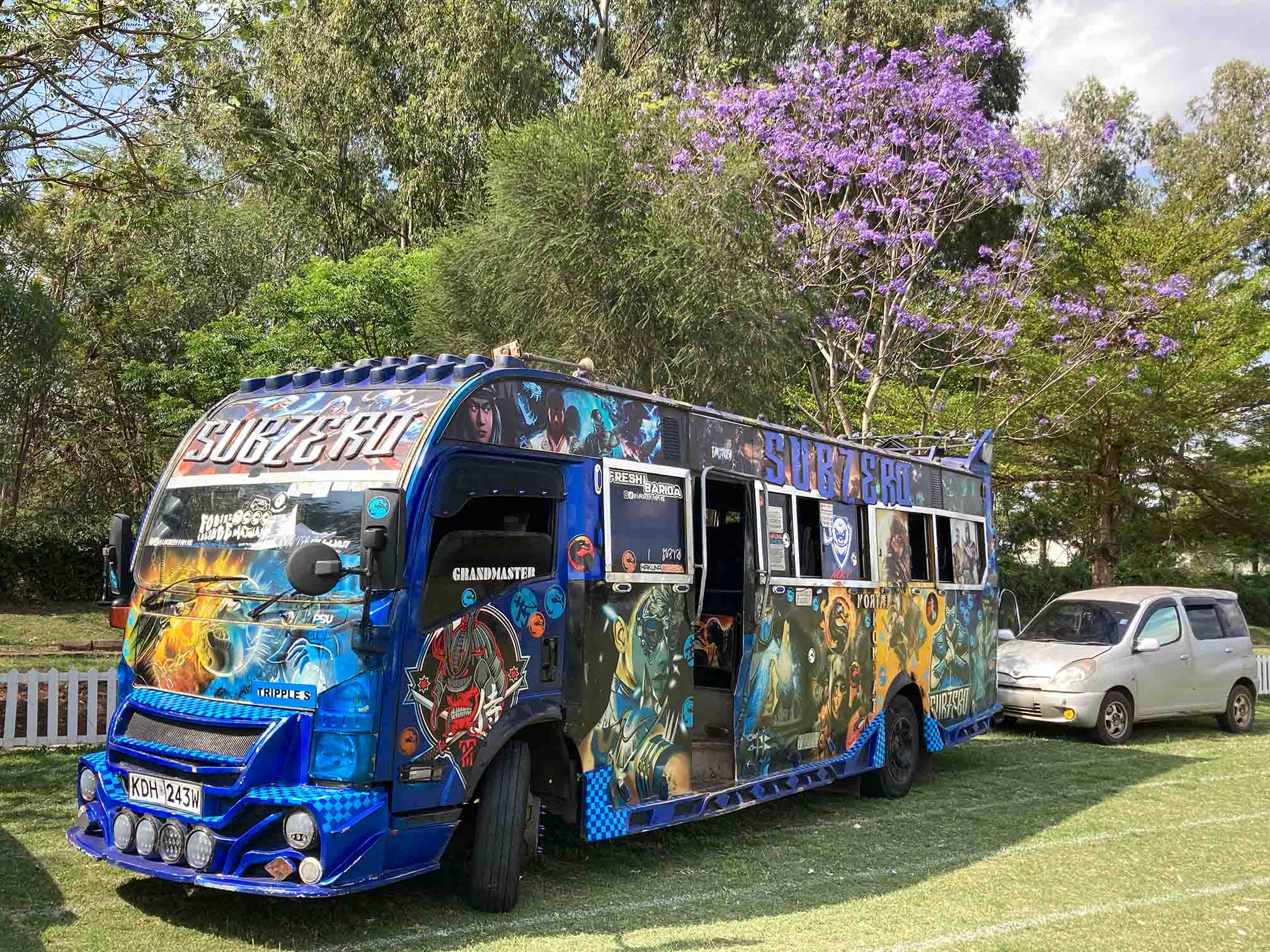
Unlike conventional tourist transfers, matatus provide a close look at everyday Nairobi life. Some vehicles feature colourful artwork, bright lighting and energetic music, while others offer a quieter and more conventional journey.
For first-time visitors, however, Nairobi’s matatu system can appear confusing. Different route numbers, busy boarding stages, changing fares and unfamiliar destinations require some preparation.
Understanding how matatus operate makes it easier to enjoy this important part of Kenya’s urban culture while travelling confidently and safely.
What Is a Matatu?
A matatu is a privately operated public service vehicle carrying passengers along an established route.
Some are small minibuses, while others are larger buses.
Matatus commonly operate under savings and credit cooperative societies, known as SACCOs, or transport companies.
Their services connect Nairobi’s central business district with surrounding neighbourhoods and towns.
Quick Facts About Nairobi Matatus
| Feature | Description |
|---|---|
| Transport type | Shared minibus or bus |
| Main operating area | Nairobi and surrounding towns |
| Payment currency | Kenyan shilling |
| Typical city fare | KES 30–100 |
| Longer journeys | Often KES 100–200 or more |
| Main boarding points | Designated matatu stages |
| Common payment methods | Cash and M-Pesa |
| Best time for visitors | Daylight, outside rush hours |
Fares and boarding arrangements vary between operators.
Why Are Matatus Popular in Nairobi?
Matatus are an essential part of Nairobi’s transport network.
They provide frequent connections to neighbourhoods where taxis would be expensive for daily travel.
Passengers use them for commuting, shopping, school journeys and visiting relatives.
For travellers, matatus offer an opportunity to experience the city’s everyday atmosphere while spending relatively little money.
However, they are less convenient when carrying large suitcases or travelling on unfamiliar routes after dark.
Understanding Matatu Route Numbers
Most Nairobi matatus display route numbers and destination names.
These numbers help passengers identify services travelling towards particular neighbourhoods.
However, some numbers are associated with different route variations.
Common Nairobi Matatu Routes
| Route | Main destination | Important areas |
|---|---|---|
| 24 / 24C | Karen and Hardy | Lang’ata Road, Galleria |
| 46 | Kawangware | Hurlingham, Lavington |
| 111 | Ngong Town | Ngong Road, Junction Mall |
| 105 / 106 | Kangemi corridor | Waiyaki Way, Westlands |
| 125 / 126 | Ongata Rongai | Lang’ata Road, Rongai |
| 34 | Airport corridor | Mombasa Road |
| 32A | Yaya Centre | Kilimani, Hurlingham |
These are common route associations, not guaranteed routes for every vehicle. Always confirm the destination with the conductor before boarding.
Where Do You Board Matatus?
Nairobi has several central boarding areas, commonly called stages.
Different stages serve different destinations.
Some are located near major commercial streets, while others operate around bus terminals.
Important Boarding Areas
The Railways area serves several routes towards southern Nairobi and neighbouring towns.
The Archives and Ambassador areas provide access to various eastern and other city routes.
The Odeon and Koja areas are useful for selected western and northern services.
Boarding arrangements occasionally change because of traffic-management measures.
Ask a uniformed stage attendant or transport operator for directions when necessary.
How Much Do Matatu Rides Cost?
Matatus generally cost less than private taxis.
However, fares are not always fixed throughout the day.
Operators may increase prices during heavy rainfall, rush hours or periods of high demand.
Estimated Nairobi Matatu Fares
| Journey type | Approximate fare |
|---|---|
| Short urban journey | KES 30–50 |
| Medium-distance city route | KES 50–100 |
| CBD to Ngong | KES 80–150 |
| CBD to Rongai | KES 100–150 |
| Longer suburban journey | KES 100–200+ |
These are indicative 2026 planning ranges, not official fixed tariffs.
How to Pay Your Fare
Most passengers pay the conductor, commonly called the makanga.
Payment may be collected after boarding or before departure.
Cash remains common, particularly for short journeys.
Some operators also accept M-Pesa payments.
Payment Tips
Carry small Kenyan shilling notes or coins.
Confirm the fare before boarding.
If using M-Pesa, check the recipient information before sending payment.
Keep enough money for a return journey or alternative transport.
Avoid displaying large amounts of cash at crowded stages.
What Happens During a Matatu Ride?
After boarding, choose an available seat and secure your belongings.
The conductor usually collects fares and announces stops.
Passengers may request to alight at recognised stages along the route.
How to Ask the Driver to Stop
Tell the conductor your destination when boarding.
A useful Kiswahili phrase is Nishukishe hapa, meaning “Let me get off here.”
Another common phrase is Stage inayofuata, meaning “The next stop.”
If uncertain, ask the conductor to alert you when your destination approaches.
Understanding Nairobi’s Matatu Culture
Matatus are famous for their artwork and entertainment.
Some vehicles display murals celebrating musicians, footballers and popular culture.
Others feature elaborate interior lighting and powerful sound systems.
Why the Designs Matter
Decorated matatus reflect Nairobi’s creative youth culture.
Owners and operators use distinctive designs to attract passengers.
For photographers and cultural enthusiasts, the vehicles provide interesting examples of contemporary urban art.
However, not every matatu has elaborate decoration, and comfort varies considerably.
Are Matatus Safe for Tourists?
Many Nairobi residents use matatus daily without problems.
Visitors can also use them successfully when taking reasonable precautions.
However, crowded stages, unfamiliar routes and inconsistent driving standards create risks.
Essential Safety Tips
Travel during daylight whenever possible.
Use established, clearly marked boarding stages.
Confirm your destination and fare before boarding.
Wear a seat belt where provided.
Keep valuables inside zipped bags.
Avoid displaying expensive phones or cameras.
Never board a dangerously overcrowded vehicle.
Leave any vehicle whose driving feels unsafe.
Choose a different vehicle if the operator appears aggressive or the vehicle seems poorly maintained.
Protecting Your Phone and Money
Petty theft can occur in crowded public transport areas.
Mobile phones are particularly vulnerable when passengers stand close to roads or busy stages.
Keep your phone out of sight when not using it.
Protecting Your Belongings
Carry backpacks in front of your body at crowded stages.
Keep handbags closed and close to you.
Avoid placing valuables in outside pockets.
Do not leave bags unattended.
Remain aware when boarding or leaving the vehicle.
A small cross-body bag is often more convenient than a large backpack.
Best Time to Use Matatus
Nairobi experiences heavy weekday commuting traffic.
Matatu journeys are often more comfortable outside peak periods.
Typical Traffic Conditions
| Time | General conditions |
|---|---|
| 5:00–6:30 am | Often lighter traffic |
| 6:30–9:30 am | Busy morning commute |
| 10:00 am–3:30 pm | Generally more comfortable |
| 4:00–8:00 pm | Heavy evening congestion |
| After 8:30 pm | Often lighter roads, but less suitable for unfamiliar visitors |
Mid-morning is usually a practical time for a visitor’s first matatu journey.
Using Matatus to Visit Karen
Karen is a popular Nairobi suburb associated with the Karen Blixen Museum, restaurants and the Giraffe Centre.
Some Route 24 services travel towards Karen through the Lang’ata Road corridor.
However, individual destinations may require additional walking or a connecting taxi.
Planning a Karen Visit
Check whether your matatu serves the correct part of Karen.
Ask the conductor about the nearest suitable stage.
Some attractions are separated by considerable distances.
A private transfer may be more convenient when visiting several sites in one day.
Can You Use a Matatu to Reach Nairobi National Park?
Public transport serves roads near Nairobi National Park, particularly the Lang’ata corridor.
However, a matatu does not provide an ordinary wildlife game drive inside the park.
Visitors need authorised safari transport to explore wildlife-viewing roads.
For convenience and safety, arrange a guided safari vehicle rather than attempting to walk from a roadside stage into wildlife areas.
Travelling to JKIA by Matatu
Route 34 services are associated with the Mombasa Road and airport corridor.
However, passengers must confirm whether a particular service reaches their intended airport terminal or requires another connection.
Is It Recommended?
Matatus can be economical for experienced travellers with light luggage.
They are less convenient for visitors carrying several suitcases or travelling to early international flights.
A pre-arranged airport transfer provides greater comfort and more predictable luggage handling.
Matatus Versus Ride-Hailing Taxis
Both transport options serve different purposes.
| Feature | Matatu | Ride-hailing taxi |
|---|---|---|
| Cost | Usually cheaper | More expensive |
| Privacy | Shared | Private |
| Luggage space | Limited | Usually better |
| Route flexibility | Fixed route | Door-to-door |
| First-time convenience | Moderate | Generally easier |
| Cultural experience | Strong | Limited |
Visitors can combine both options depending on their itinerary.
Travelling With Children
Families should choose vehicles with sufficient seating and working seat belts.
Avoid overcrowded matatus.
Keep children seated and supervised.
Travellers with infants, pushchairs or several bags may find private transport more practical.
Never allow children to stand near an open vehicle doorway while travelling.
Respecting Local Passengers
Public transport is an everyday service for Nairobi residents.
Visitors should avoid treating passengers as tourist attractions.
Ask permission before photographing people.
Avoid loud conversations that disturb others.
Be patient during boarding and payment.
Learning simple Kiswahili expressions can make interactions friendlier.
Common Mistakes Visitors Should Avoid
First-time passengers sometimes board vehicles based only on route numbers.
Others fail to confirm fares or recognise their destination stage.
How to Avoid Problems
Know your destination before leaving.
Check the full destination name displayed on the vehicle.
Carry small change.
Allow additional journey time.
Use a reliable map to follow your progress when practical.
If confused, ask the conductor for assistance or move to a safe, well-lit location before arranging alternative transport.
Responsible Public Transport Travel
Using shared transport can reduce the number of individual vehicle journeys.
However, environmental performance varies according to vehicle condition, occupancy and emissions.
Visitors can support responsible operators by choosing roadworthy vehicles and respecting public transport regulations.
Public transport also provides an opportunity to understand Nairobi beyond conventional tourist attractions.
Why Matatu Rides Are Worth Experiencing
Matatu rides offer visitors a memorable introduction to Nairobi’s everyday life.
Their colourful designs, lively atmosphere and extensive routes make them an important part of the city’s identity.
Although the system requires preparation, understanding route numbers, fares, boarding stages and safety precautions makes journeys easier.
For adventurous travellers seeking an affordable and culturally interesting way to explore Kenya’s capital, a carefully planned daytime matatu ride can become a memorable part of their Nairobi experience.





No comment