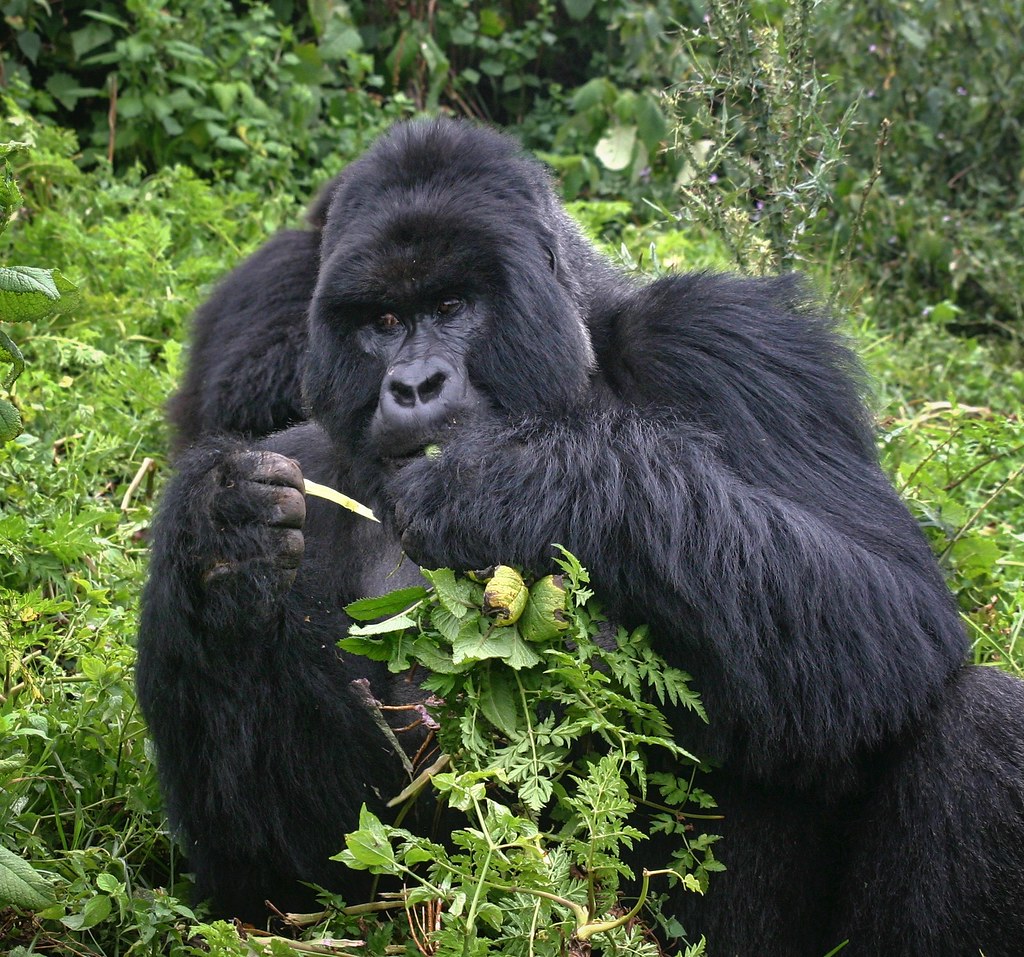
Inside the Gorilla Research That Saved the Species From Extinction
The first thing you need to understand about gorilla research is that it almost didn’t happen. Not because the science was too hard. Because no one thought it was worth doing.
Until the 1950s, gorillas were studied only as specimens. Dead ones. Brought back from the wild and dissected in museums. Scientists knew what a gorilla looked like inside. They had no idea how gorillas actually lived. Then came George Schaller.
In 1959, Schaller did something that seems obvious now but was radical then. He went to the Virunga Volcanoes and just… watched. For over a year. He observed gorillas in their natural habitat. He documented their diet, their social groups, their daily movements. He conducted the first real census of mountain gorilla populations.
What he found was alarming. There weren’t many of them. A few hundred at most. Living in a patch of forest that was shrinking every year.
Schaller published his findings in 1963. The book was called The Mountain Gorilla. It was a landmark study — detailed, patient, revolutionary. But it was just the beginning.
The Woman Who Changed Everything
Louis Leakey — the famous paleoanthropologist — read Schaller’s work and had an idea.
Leakey believed that studying great apes could teach us about early human ancestors. He’d already sent Jane Goodall to study chimpanzees. He’d sent Birutė Galdikas to study orangutans.He needed someone for gorillas.He found Dian Fossey.
Fossey had no formal scientific training when she started. She was an occupational therapist from Kentucky who fell in love with Africa on a whim. But she was stubborn, fearless, and utterly devoted.
In 1967, she pitched two tents in the rainforest between Mount Karisimbi and Mount Bisoke. She named the camp Karisoke — a marriage of the two volcano names.
She was 35 years old. Alone. At 3,000 meters elevation, in a forest so wet and cold that her notebooks molded within weeks.
“Little did I know then that by setting up two small tents in the wilderness of the Virungas I had launched the beginnings of what was to become an internationally renowned research station,” she wrote later.
She stayed for nearly twenty years.
What Fossey Discovered — And Why It Mattered
Before Fossey, the world thought gorillas were monsters.King Kong. The gorilla. The image was a snarling, chest-beating brute that would tear you apart if you got close.Fossey showed something completely different.
Through her research — and through the photographs of Bob Campbell, who documented her work — the world saw gorillas as they really were.Gentle. Social. Protective of their young. Almost… human.
You watch a mother groom her baby. A silverback rest his hand on a female’s shoulder. Two juveniles tumble through the vegetation, clearly playing.That was Fossey’s gift. She didn’t just collect data. She told a story. She made people care.But she also discovered something darker.
Poachers were killing gorillas. Not for food — for trophies. For babies sold to zoos. Fossey found severed heads of silverbacks. Infant gorillas chained in villages, waiting to be smuggled out of the country.
So her research expanded. She started what she called “active conservation” — removing snares, tracking poachers, patrolling the park boundaries at night.
Her methods were controversial. She burned poachers’ camps. She confronted them directly. She made enemies.In 1985, she was found murdered in her cabin at Karisoke. The case was never fully solved.
The Research Center She Left Behind
Here’s what most people don’t know. Fossey’s death didn’t end the research. It accelerated it. Karisoke didn’t close. It grew.
Today, the Karisoke Research Center is run by the Dian Fossey Gorilla Fund. More than 100 expert trackers protect about half of Rwanda’s mountain gorilla families every single day.
And the research?
It’s become one of the longest-running field studies of any animal species on Earth.
Decades of data. Generations of gorillas, followed from birth to death. Detailed records on behavior, health, social dynamics, genetics, and ecology.
Scientists from around the world come to Karisoke. The database is enormous. Hundreds of scientific publications have been based on this research.Here’s what that data has revealed.
What Decades of Research Taught Us
Gorillas are more flexible than we thought.
For years, researchers thought gorilla society was rigid. One silverback. Several females. Their offspring. That’s it.
But long-term observation revealed something more complex.
About 30 to 40% of groups in the Virunga region have more than one adult male. Young males sometimes stay with their natal group instead of leaving. They wait. They help. And when the dominant silverback dies, they inherit the group.
DNA analysis showed something even more surprising. Subordinate males — the ones who stay — father about 15% of the infants in the group. There’s an evolutionary advantage to patience.
Females have more choice than anyone realized.
Fossey called it “kidnapping” when a female left one group for another. She thought the males were taking them by force.
We know better now. Females choose. They might move between several groups before settling down with a silverback. They’re looking for familiar males — not relatives, but not strangers either. And once they choose? They’re remarkably loyal. The average breeding pair stays together for ten years.
Gorillas respond to threats with surprising intelligence.
Research on snare encounters revealed something remarkable.
When a gorilla group encounters a snare — those wire traps set for antelope — they don’t just get unlucky. They change their behavior.
Scientists tracked eight gorilla groups for years, using GPS data to map their movements. They found that after a snare encounter, gorillas increased their daily travel distance significantly. Their site fidelity — how often they returned to the same areas — decreased noticeably.
They learn. They adapt. They avoid places where danger lurks.That behavioral flexibility is one reason they’ve survived.
How Research Became Action
Data alone doesn’t save species.
What saved mountain gorillas was what happened after the research.
Transboundary cooperation.
Mountain gorillas don’t know about borders. They move between Rwanda, Uganda, and the Democratic Republic of Congo freely.
For decades, conservation efforts were fragmented. Each country did its own thing. Poachers just crossed to the other side.
In the early 1990s, that changed. A coalition of conservation organizations brought the three countries together.
They standardized patrols. Shared data. Coordinated anti-poaching efforts. Worked across borders like the gorillas do.
Community engagement.
Here’s something the early conservationists didn’t understand. You can’t protect gorillas by threatening the people who live near them.
Local communities were poor. The forest was their resource. If you told them they couldn’t use it — couldn’t collect firewood, couldn’t hunt bushmeat — they resented the gorillas.So they flipped the model.
They started revenue-sharing programs. A portion of gorilla permit fees went directly to communities. Schools were built. Clinics were funded. Water systems were installed.One report described it as a “paradigm shift.” Communities began to see gorillas as an asset, not a threat.
One woman in Kinigi, Rwanda put it simply: “Growing up, I used to walk hours to school, but today it only takes my child five minutes. These benefits bring us closer to the mountain gorillas and are a reminder that protecting them is key because it benefits us too.”
Veterinary intervention.
Gorilla Doctors — a specialized veterinary team — emerged from the research. They monitor gorilla health constantly. When a gorilla shows signs of illness — a cough, a limp, unusual behavior — they respond.
They’ve removed snares from injured gorillas. Treated respiratory infections. Performed interventions that would have been impossible without decades of habituation and research.
Habituation science.
Research taught us how to habituate gorillas — the slow, patient process of getting them comfortable with human presence.
It takes years. Daily contact. Consistent, non-threatening behavior. But the results are transformative. Habituated gorillas can be visited by tourists. Tourists bring revenue. Revenue funds conservation.
A recent study on western lowland gorillas showed that even gorillas with generations of trauma from poaching can learn to trust humans. It took over seven years of near-daily contact. But fear and aggression eventually gave way to curiosity and indifference.
“Gorillas have the capacity to distinguish between threatening people, such as poachers, and non-threatening people, such as researchers and tourists,” the lead author noted.That capacity — the gorillas’ ability to learn who to trust — is one of the most hopeful findings in primatology.
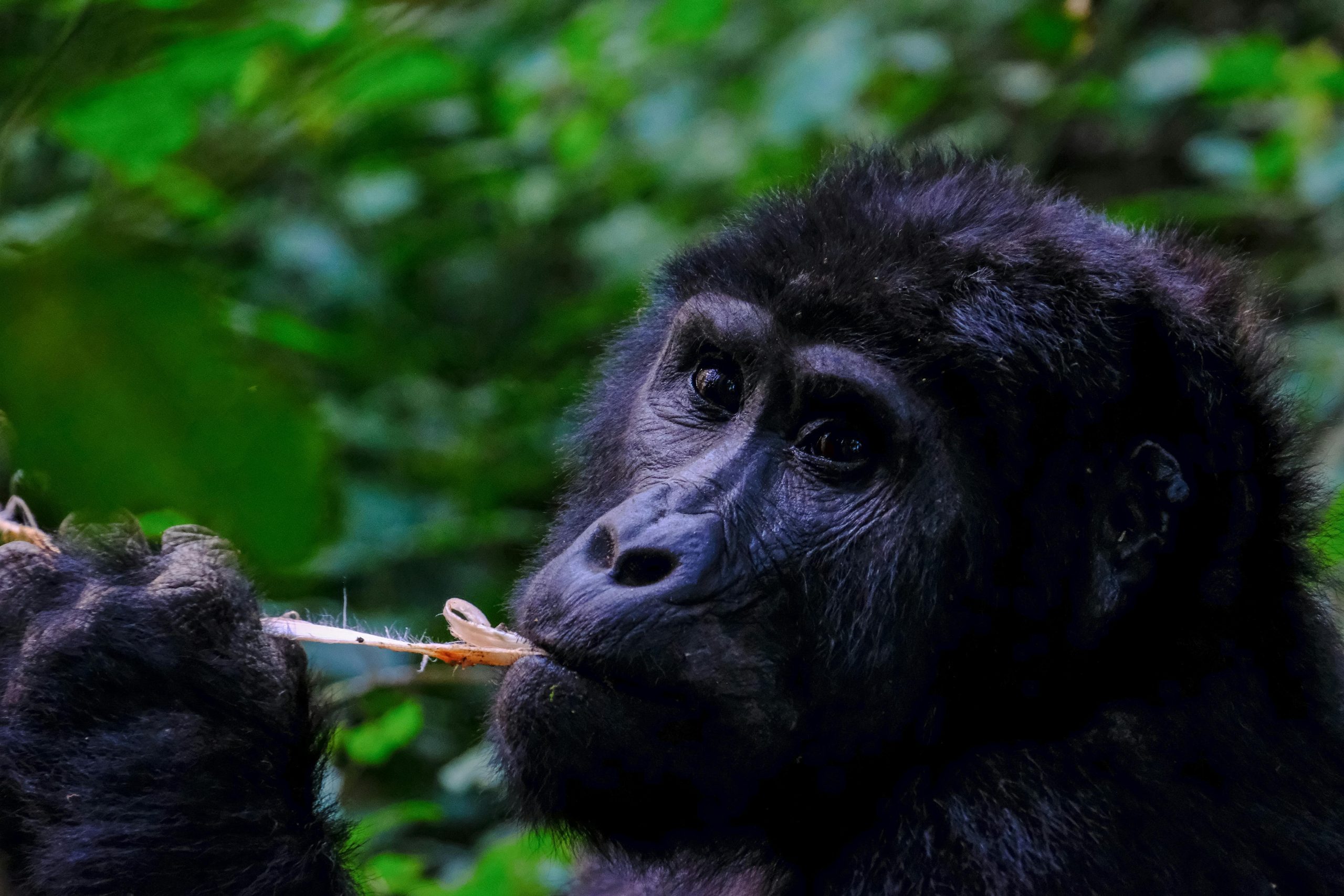
The Numbers That Prove It Worked
Let me give you the cold, hard numbers.In the early 1980s, the mountain gorilla population hit its lowest point. Fewer than 400 individuals remained in the wild.
Experts predicted extinction by the end of the century.Dian Fossey herself believed that. In a 1973 lecture, she estimated about 500 gorillas remained and speculated they might not survive.She was wrong. Thank God.
By 2018, the population had grown to over 1,000. That year, the IUCN Red List downgraded mountain gorillas from “Critically Endangered” to “Endangered”.Not a huge number. Still fragile. Still dependent on conservation.But growing. For the first time in a century, growing.
The Research That’s Still Happening
You might think the work is done.It’s not. The Karisoke Research Center is still there. Still collecting data. Still training the next generation of conservationists. Every year, hundreds of local university students participate in field courses, learning conservation methods and scientific techniques.
Researchers are asking new questions.How does climate change affect gorilla habitat? What’s the long-term impact of tourism on gorilla stress levels? Can population viability models help us manage isolated groups at risk of extinction?
One recent study modeled the survival of six Grauer’s gorillas in the Democratic Republic of Congo — a tiny, isolated population with only two breeding females. The models showed that releasing at least three additional females could drop the extinction risk below one percent.That’s the kind of research happening now. Not just watching gorillas. Actively planning their survival.
The Humans Who Made It Possible
I want to name some of them, because they don’t get named enough.The trackers. The ones who go into the forest before sunrise, every single day, and find the gorillas before tourists arrive. Many of them have worked at Karisoke for decades. They know the gorilla families like their own relatives.The vets. The ones who treat gorillas with respiratory infections and snare wounds, often at great personal risk.
The community liaisons. The ones who sit in village meetings and explain, patiently, why protecting gorillas benefits everyone.The researchers. The ones who spend years in the forest, collecting data, writing papers, publishing findings that most people will never read.And the gorillas themselves. The ones who tolerated us. Who learned to trust us. Who gave us a chance to save them.
The Honest One
I visited Karisoke once. Not the original camp — that’s closed to visitors now. But the new research and education center that opened a few years ago.
There’s a moment in the exhibit where you watch old footage of Dian Fossey. Grainy. Black and white. She’s crawling through the vegetation, making gorilla sounds, trying to get closer.
And then you turn around and look out the window. At the forest. At the volcanoes. At the place where, right now, a tracker is sitting with a gorilla family, recording data that will help ensure their survival.
The research saved them.Not just the science. The patience. The decades of watching and waiting and learning. The refusal to give up when everyone said it was hopeless.
Fossey wrote something once. I think about it often.”When you realize the value of all life, you dwell less on what is past and concentrate on the preservation of the future.”She didn’t live to see the future she helped create.But we’re living in it.And thanks to the research she started — and the thousands of people who continued it — so are the gorillas.