How Disease Transmission Between Humans and Gorillas Is Prevented
The first time a ranger asked if I had a cough, I almost laughed.It was 6:00 AM. I was standing in the briefing area in Bwindi, shivering, sipping tea, barely awake. A ranger walked down the line of tourists, looking at each of us carefull “Anyone feeling unwell? Cough? Fever? Runny nose? Sore throat?”
A few people shook their heads. One woman raised her hand.”I have allergies,” she said. “Just sneezing. It’s not contagious.”The ranger didn’t argue. Didn’t explain. Just nodded and said gently, “I’m sorry. You can’t trek today.”
The woman’s face fell. She’d spent thousands of dollars on permits. Flown across the world. Planned this trip for years.
And she was being told no because of allergies.I felt terrible for her. But I also remember thinking: That seems extreme.Then I learned the truth.
A mild cold for you can kill a gorilla.Not maybe. Not sometimes. Respiratory diseases have swept through gorilla families and left babies dead and silverbacks fighting for their lives.
The ranger wasn’t being cruel. He was being careful.And the systems that keep gorillas safe from our germs? They’re some of the most rigorous, science-based, and quietly effective conservation measures in the world.Here’s how it works.
The 98% Problem
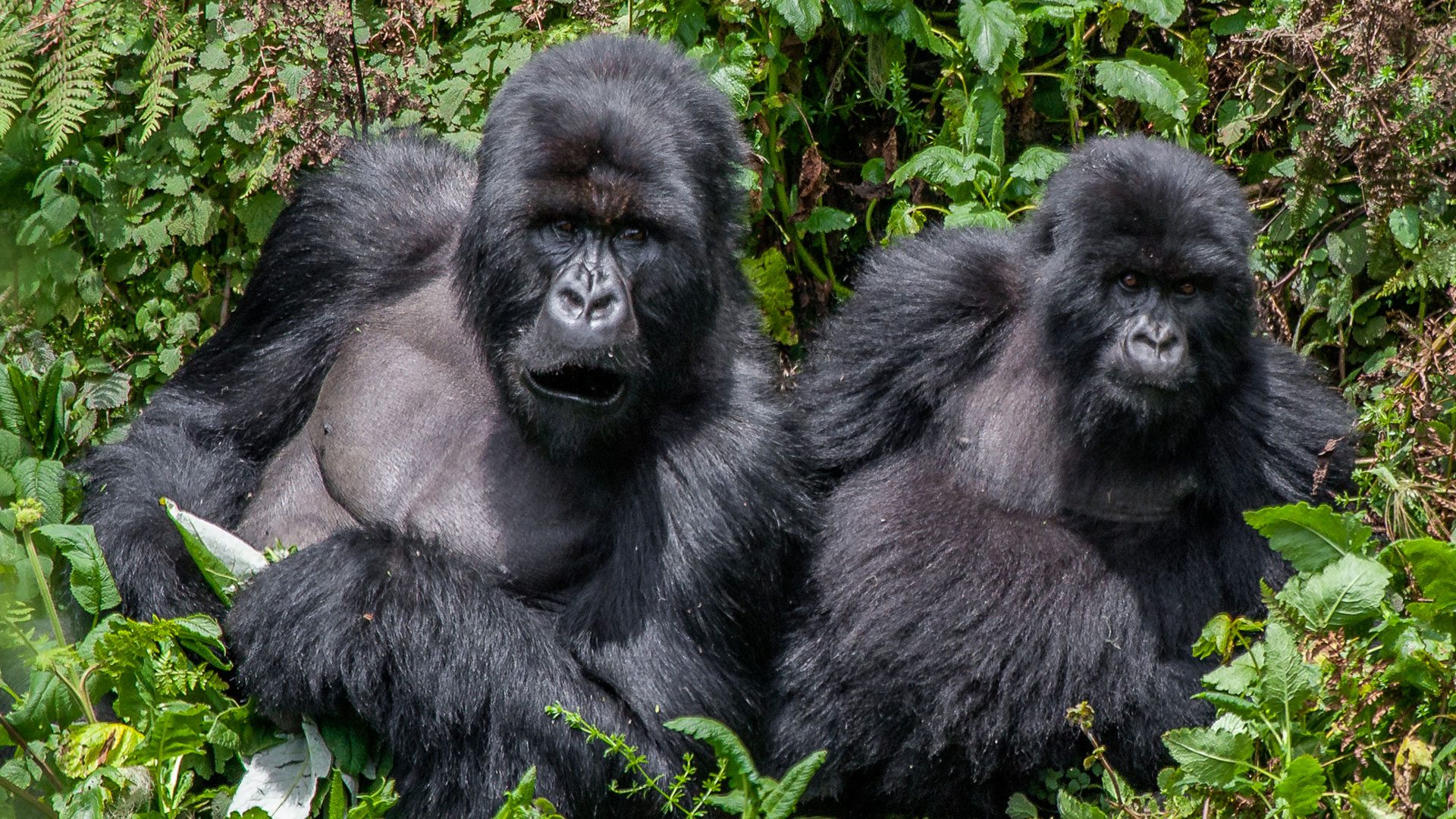
Let me start with the basic science.Humans and gorillas share about 98% of their DNA.That closeness is beautiful. It’s why we can look into a gorilla’s eyes and feel recognition. It’s why their families look so much like our families.But it’s also a nightmare for disease transmission.
The common cold? Gorillas can catch it. The flu? Gorillas can catch it. COVID-19? Gorillas have caught it. Measles, mumps, chicken pox, tuberculosis, intestinal parasites — all of it can jump from humans to gorillas.And here’s the part that keeps conservationists up at night.
What makes you sneeze for three days might give a gorilla pneumonia. What makes you stay home from work with a fever might kill a baby gorilla.
Why? Because gorillas haven’t evolved immunity to human diseases. They’ve never been exposed. Their immune systems don’t know how to fight back.A disease that’s mild for us can be catastrophic for them.
The Pre-Trek Health Screening (The One That Feels Awkward)
That morning health check isn’t just a formality.It’s the first line of defense.Every single tourist, before every single trek, is assessed for signs of illness. Rangers are trained to spot symptoms — a red nose, watery eyes, a frequent cough, visible fatigue.
If you’re sick, you don’t trek.Not “you can still go but wear a mask.” Not “maybe just stay a little farther back.”No.
You stay behind. You get a refund or a rescheduled permit. You don’t enter the forest.I’ve seen tourists argue with this rule. I’ve seen tears. I’ve seen anger.And I’ve seen rangers hold firm, every single time.
“It’s not about you,” one ranger told me after a particularly difficult encounter with a sick tourist. “It’s about the gorillas. They didn’t ask for us to visit them. The least we can do is not bring our illnesses into their home.”
If you’re feeling unwell on the morning of your trek, do the right thing. Tell the ranger. Stay back.The gorillas will still be there when you’re healthy.
The Mask Rule (The One That Annoyed Everyone)
Before 2020, masks weren’t required during gorilla treks.Then COVID-19 happened.
And suddenly, the 98% DNA sharing became terrifying. If gorillas could catch human colds, they could absolutely catch this new, dangerous virus.The rules changed overnight.
Masks became mandatory. Not just recommended. Mandatory. During the entire hour with the gorillas. Even outside, even in the fresh air, even when you were out of breath from the hike.
Tourists complained. Masks are hot. Masks are uncomfortable. Masks fog up your camera lens.But the science was clear. Respiratory viruses spread through droplets. Masks block droplets. No mask, no trek.
Even now, after COVID-19 has faded from the headlines, masks remain required in most gorilla trekking destinations.Rwanda and Uganda both mandate them. Congo does too.
And here’s something most tourists don’t realize. The guides and rangers wear masks too. All day. Every trek. Even when they’re not sick. Even in the humid forest where masks feel suffocating.They do it to protect the gorillas. The least we can do is the same.
The Distance Rule (Closer Than You Think, Farther Than You Want)
Seven meters.About 23 feet.That’s the official distance tourists must keep from the gorillas.It sounds simple. Stay back. Don’t get close.
But in practice? It’s harder than you’d expect.Gorillas move. They walk toward you sometimes. A baby tumbles in your direction. A silverback decides to rest exactly where you’re sitting.
When a gorilla approaches you, the rule isn’t “stay seven meters away no matter what.” The rule is “you move back, not the gorilla.”If a gorilla walks toward you, you retreat. Slowly. Calmly. You maintain the distance even if the gorilla doesn’t care about it.Why seven meters?Research.
Scientists studied how close is too close. They measured gorilla stress responses at different distances. They tracked disease transmission events. They modeled the minimum safe distance that balances tourism access with gorilla protection.
Seven meters is the number they landed on.Close enough for an incredible experience. Far enough that respiratory droplets — the kind that carry colds and flus — don’t reach the gorillas.Unless you cough or sneeze directly at them. Which brings me to my next point.
The “Turn Your Head” Rule (The One Nobody Talks About)
Here’s a rule that isn’t in the official briefing, but every guide will enforce.If you need to cough or sneeze, turn your head away from the gorillas. Cover your mouth. Aim toward the ground. Better yet, step back an extra few meters.It sounds obvious. But in the moment — when you’re sitting there, breathless from the hike, and a sneeze builds in your nose — it’s easy to forget.The guides don’t forget.
They watch. They listen. If someone coughs without turning away, the guide will quietly motion for them to step back. If someone sneezes toward the gorillas, the guide might end the visit early.
I saw this happen once. A tourist sneezed — a big, uncontrolled sneeze — directly in the direction of a mother and baby. The silverback looked up. The guide stood immediately.”Time to go,” he said.”But we’ve only been here twenty minutes,” the tourist protested.The guide didn’t argue. Just started walking. The group followed.
Later, he explained. “That sneeze could have carried droplets seven meters easily. The silverback was already watching. If I’d stayed, he might have charged. And if he caught our cold? That’s weeks of sickness for his whole family.”He wasn’t angry. Just tired.”Most tourists are careful,” he said. “But it only takes one mistake.”
The Quarantine Rule for Researchers (The One You Never See)
Tourists aren’t the only humans who spend time with gorillas.Researchers do too. Trackers. Veterinarians. Habituation teams.And they follow stricter rules than any tourist.Before researchers are allowed to approach gorillas, they may be required to quarantine. Days of isolation. Health checks. Proof that they aren’t carrying anything contagious.
Veterinarians wear full protective gear — masks, gloves, coveralls — when treating gorillas. Not because the gorillas are dangerous. Because the vets might be carrying something the gorillas can’t fight.
Trackers who spend every day with gorillas are monitored constantly. If a tracker shows signs of illness, they’re pulled from the field immediately. No arguments. No “maybe it’s just allergies.”
It’s the same for habituation teams — the people who spend years getting wild gorillas comfortable with human presence. They’re tested regularly. They’re vaccinated against everything possible. They’re careful in ways tourists never see.Because they know.They’ve seen what happens when diseases slip through.
What Happens When Prevention Fails (The Outbreaks)
I wish I could tell you prevention always works.It doesn’t.Outbreaks happen. Respiratory viruses have swept through gorilla families in Rwanda, Uganda, and Congo.
In 2009, a human metapneumovirus outbreak killed a baby gorilla and sickened several others. The virus was traced to humans — probably tourists or researchers who didn’t know they were contagious.
In 2020, gorillas in a sanctuary in Congo tested positive for COVID-19. They recovered, but it was a close call.
In Bwindi, outbreaks of scabies — a skin disease caused by mites — have been traced to humans. Tourists, researchers, even local community members who didn’t realize they were carrying the mites.Each outbreak triggers an emergency response.
Veterinarians rush in. Sick gorillas are treated. Families are monitored. Tourism may be suspended.And prevention protocols are reviewed. Made stricter. Enforced more carefully.The outbreaks are tragic. But they’ve also made the system stronger.
The Vaccination Requirement (The One That Protects Everyone)
You can’t trek gorillas without proof of certain vaccinations.Yellow fever is mandatory. If you’re coming from a country with yellow fever risk, you need the vaccine and the certificate.
Other vaccines are strongly recommended. Hepatitis. Measles. Tetanus. Flu. COVID-19.Some tour operators require flu shots. Some require COVID boosters. The rules vary, but the logic is the same.A vaccinated tourist is less likely to carry a disease into the forest.
It’s not just about protecting yourself. It’s about protecting the gorillas from what you might be carrying without knowing it.Before my last trek, my tour operator asked for proof of flu and COVID vaccination. I almost rolled my eyes. Then I remembered the gorillas.Got the shots. Didn’t complain.
The “No Trekking If You’ve Been Near Sick People” Rule
Here’s a rule that surprises most tourists.If you’ve been in close contact with someone who has a contagious illness — even if you feel fine — you might not be allowed to trek.The reasoning is simple. You could be incubating the disease. Not showing symptoms yet. But still contagious.Most tour operators will ask about recent exposure. They’ll reschedule your trek if there’s any risk.
It’s frustrating. It’s inconvenient. It’s also the right thing to do.One tour operator told me about a client who lied about being near a sick friend. Went on the trek. Felt fine the whole time.Two days later, she developed a fever. A mild flu. She was fine.
But the gorilla family she visited? They got sick too. Not severely, thank God. But the vets had to intervene.”That client never knew she caused it,” the operator said. “But I knew. And I still feel guilty that I didn’t push harder when I asked her about exposure.”That story stuck with me.
The Hand Hygiene Rule (Small Thing, Big Impact)
Before you enter the forest, you’ll be asked to sanitize your hands.Not just once. Multiple times. At the briefing. At the trailhead. Before you approach the gorillas.Why?Because your hands touch things. Your face. Your water bottle. Your camera. The vegetation along the trail.
If you’ve got germs on your hands, you can leave them in the forest. Gorillas touch the same vegetation. They groom each other. They put their hands in their mouths.
Hand sanitizer breaks that chain.It’s small. It’s simple. It takes two seconds.But it’s one of the most effective disease prevention measures in existence.Don’t skip it.
What Tourists Can Do (The Honest List)
After years of trekking and talking to rangers and researchers, here’s what I’ve learned about being a responsible tourist.
Be honest about your health. If you’re sick, don’t trek. Not “maybe it’s just allergies.” Not “it’s probably nothing.” If you have symptoms, stay back. The gorillas are more important than your photos.
Get vaccinated. Flu. COVID. Whatever your tour operator recommends. Do it.
Wear your mask. Even if it’s hot. Even if it fogs your glasses. Even if you hate it. Wear it correctly — over nose and mouth — the entire time you’re near the gorillas.
Keep your distance. Seven meters. If a gorilla approaches you, move back. Don’t wait for the guide to tell you.
Turn your head to cough or sneeze. Away from the gorillas. Cover your mouth. Step back if you can.
Sanitize your hands. Often. Before entering the forest. Before approaching the gorillas. Before touching your face or camera.
Don’t eat near the gorillas. Food smells attract them. And sharing food could share diseases. Keep snacks in your bag until you’re well away from the family.
Follow the guide’s instructions immediately. If they say step back, step back. If they say it’s time to leave, leave. They’re not being strict. They’re being careful.
The Honest One
I think about that woman with allergies sometimes. The one who wasn’t allowed to trek.At the time, I felt terrible for her.Now I feel something different.Respect.
Because somewhere, a ranger made a difficult call. He chose the gorillas over a tourist’s disappointment. He enforced a rule that felt unfair but was absolutely necessary.
That’s what conservation looks like. Not glamorous. Not always popular. Just… careful. Meticulous. Unwilling to take chances with lives that aren’t ours.
Gorillas can’t ask us to wear masks. Can’t tell us to keep our distance. Can’t demand that we stay home when we’re sick.They depend on us to do the right thing without being asked.
Most tourists do. Most rangers enforce. Most of the time, the system works.But it works because people take it seriously. Because rules exist. Because someone is willing to say “no” even when it’s hard.The next time a ranger asks if you have a cough, don’t be annoyed.Be grateful.Someone is protecting the gorillas from the worst thing we bring into the forest.Ourselves.