
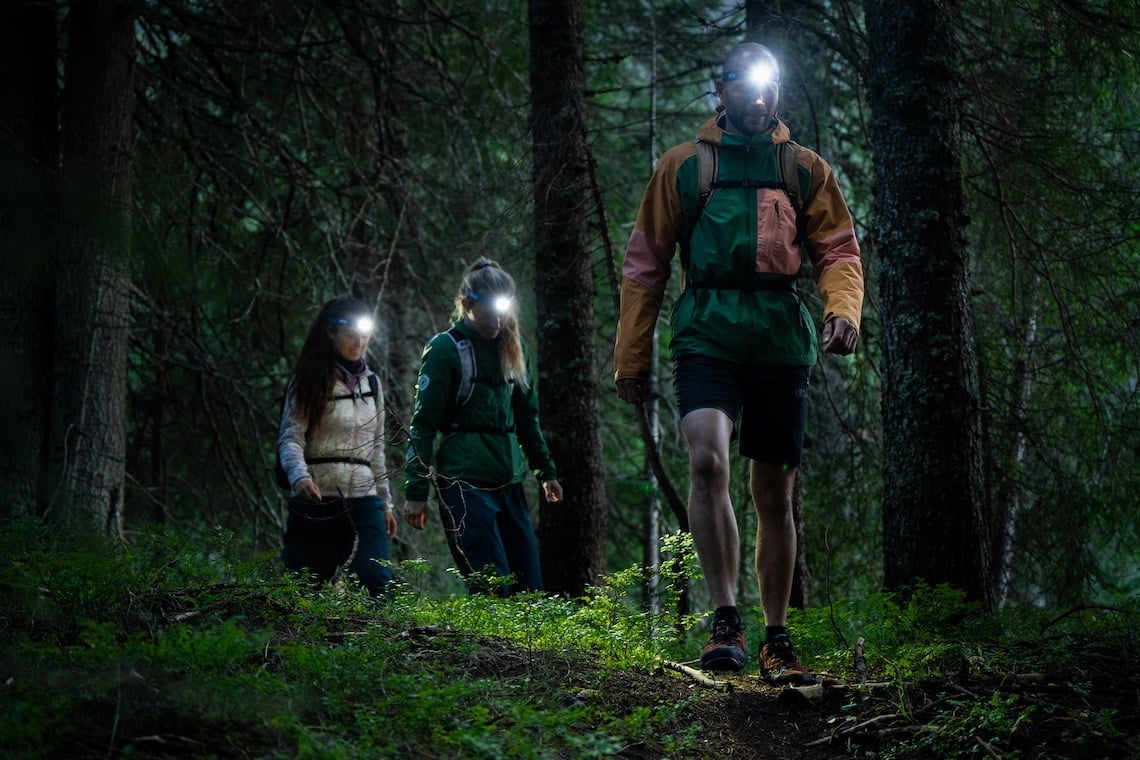
Headlamps and Torches: Which Brightness You Need for Camp Walks
Headlamps and torches for safari camp walks are essential accessories for travellers staying in remote wildlife lodges, tented camps and camping sites across Uganda, Kenya, Tanzania and Rwanda. Although safari holidays are famous for exciting daytime wildlife encounters, evenings in the African wilderness can be equally memorable.
After sunset, safari camps often become very dark. Many properties use limited outdoor lighting to conserve electricity, protect the natural environment and maintain a peaceful wilderness atmosphere.
Guests may need additional light when organising luggage, reading inside their tents or preparing for early morning game drives.
However, choosing the right torch involves more than finding the brightest model. A powerful beam may disturb other guests, temporarily affect night vision or illuminate wildlife unnecessarily.
For travellers staying in unfenced safari camps, lighting must also be used alongside established wildlife safety procedures.
This guide explains the differences between headlamps and handheld torches, how brightness is measured and which lighting features are most useful for East African safari holidays.
Why Do You Need a Torch on Safari?
Many safari lodges provide electric lighting, but remote camps may operate generators or solar systems with restricted electricity hours.
Some pathways also have limited illumination.
A personal torch provides useful backup lighting when accommodation electricity is unavailable.
Common Uses for Safari Lighting
| Situation | Why lighting helps |
|---|---|
| Inside a safari tent | Finding personal belongings |
| Early morning preparation | Dressing before sunrise |
| Organising luggage | Locating equipment |
| Campsite facilities | Seeing nearby obstacles |
| Power interruptions | Emergency illumination |
| Reading before bed | Personal comfort |
| Vehicle preparation | Checking bags and equipment |
A torch is primarily a convenience and preparedness tool. It does not make walking among dangerous wildlife safe.
What Is a Headlamp?
A headlamp is a small torch attached to an adjustable headband.
It directs light wherever the wearer looks, leaving both hands available.
Headlamps are commonly used for camping, hiking and outdoor activities.
Main Headlamp Features
| Feature | Purpose |
|---|---|
| Adjustable headband | Comfortable fit |
| Multiple brightness settings | Controls light output |
| Rechargeable battery | Convenient power supply |
| Red-light mode | Less disruptive low-level illumination |
| Adjustable beam angle | Directs light |
| Water resistance | Protection against rain |
| Battery indicator | Shows remaining power |
For travellers who want a compact and practical lighting accessory, a headlamp is often an excellent choice.
What Is a Handheld Torch?
A handheld torch is a portable light carried in one hand.
Torches are available in different sizes, from small pocket models to larger rechargeable devices.
Some produce narrow beams designed to illuminate objects farther away.
Main Advantages of Handheld Torches
They are easy to direct without moving your head.
Some provide longer beam distances.
They can be shared between travellers.
Many models offer strong illumination.
However, carrying a torch occupies one hand, which may be inconvenient when handling luggage.
Headlamp vs Torch: Main Differences
| Feature | Headlamp | Handheld torch |
|---|---|---|
| Hands-free operation | Yes | No |
| Packing convenience | Excellent | Depends on size |
| Beam direction | Follows head movement | Controlled by hand |
| Reading inside tents | Convenient | Suitable |
| Battery options | Rechargeable or replaceable | Rechargeable or replaceable |
| Walking visibility | Good | Good |
| Long-distance illumination | Model-dependent | Often available |
| Best overall safari use | Personal lighting | Backup or focused lighting |
For many travellers, a headlamp is more versatile than a traditional handheld torch.
Understanding Torch Brightness: What Are Lumens?
Lumens measure the total amount of visible light emitted by a source.
A torch with a higher lumen rating generally produces more light.
However, brightness alone does not determine how far a beam reaches.
Beam shape, reflector design and optical efficiency also matter.
General Brightness Guide
| Brightness | Practical use |
|---|---|
| 5–20 lumens | Reading or locating small items |
| 20–50 lumens | Low-level tent lighting |
| 50–100 lumens | General campsite tasks |
| 100–200 lumens | Walking on permitted camp paths |
| 200–400 lumens | Brighter outdoor tasks |
| 500+ lumens | Specialised illumination |
These are practical guidelines rather than universal safety requirements.
How Many Lumens Do You Need for Camp Walks?
For ordinary walking on an approved, maintained campsite path, approximately 100–200 lumens can provide useful illumination.
However, this assumes that walking is permitted and the area is considered suitable for guests.
At wildlife camps requiring escorts, guests should not walk independently regardless of torch brightness.
Recommended Brightness by Activity
| Activity | Suggested brightness |
|---|---|
| Reading inside a tent | 5–30 lumens |
| Dressing and organising luggage | 20–80 lumens |
| Walking on an approved path | 100–200 lumens |
| Checking equipment outdoors | 100–300 lumens |
| Emergency backup | Adjustable brightness |
| Guided night wildlife activity | Follow guide instructions |
An adjustable headlamp covering several brightness levels is often more practical than a single extremely powerful setting.
Why the Brightest Torch Is Not Always Best
Extremely bright torches can create unnecessary problems in safari camps.
A powerful beam may shine into neighbouring tents or temporarily reduce other people’s night vision.
It can also disturb wildlife when directed towards animals.
Problems With Excessive Brightness
Higher battery consumption.
Shorter operating time.
Unwanted glare.
Discomfort for nearby guests.
Unnecessary illumination of wildlife.
Greater risk of drawing attention to yourself.
Use only the brightness required for the task.
Why Red-Light Mode Is Useful
Some headlamps provide a red-light setting.
Red light at low intensity can make simple tasks easier while causing less disruption to dark adaptation than a bright white light.
It is useful for reading labels, finding small belongings and moving around inside accommodation.
Red Light vs White Light
| Feature | Red light | White light |
|---|---|---|
| Reading nearby objects | Suitable at short distances | Good |
| Preserving dark adaptation | Often preferable at low intensity | Bright modes can disrupt it |
| Long-distance visibility | Limited | Better |
| Battery consumption | Model-dependent | Model-dependent |
| General camp tasks | Useful | Useful |
Red light is not invisible to wildlife and should not be treated as permission to approach animals.
Lighting in Unfenced Safari Camps
Many East African safari camps allow wildlife to move through their grounds.
Hippos, elephants, buffaloes and other animals may occasionally pass near accommodation.
This creates important safety considerations.
Essential Night Walking Rules
Never leave your tent without permission where escorts are required.
Contact reception before moving around the camp.
Wait for the designated escort.
Follow the approved route.
Do not use a torch to approach wildlife.
Avoid shining bright beams directly into animals’ eyes.
Return indoors when instructed.
A brighter torch does not replace a trained camp escort.
Headlamps for Gorilla Trekking Accommodation
Gorilla trekking visitors often stay near Bwindi, Mgahinga or Rwanda’s Volcanoes National Park.
Some lodges are surrounded by forest vegetation and have limited outdoor lighting.
A headlamp can be particularly useful when preparing before an early departure.
Gorilla Trekking Camp Uses
Locating hiking boots.
Preparing rain jackets.
Packing camera batteries.
Finding trekking documents.
Organising daypacks.
Checking essential equipment.
Most gorilla treks take place during daylight, so visitors generally do not need powerful night-hiking torches for the trekking activity itself.
Lighting for Uganda Safari Camps
Uganda offers accommodation in savannah parks, forests and waterfront areas.
Different locations create different lighting needs.
Uganda Safari Lighting Guide
| Destination | Practical consideration |
|---|---|
| Bwindi | Forest accommodation and early departures |
| Queen Elizabeth | Wildlife movement near some camps |
| Murchison Falls | Remote lodges and riverside accommodation |
| Kibale | Shaded forest surroundings |
| Kidepo Valley | Remote wilderness conditions |
| Lake Mburo | Wildlife and campsite safety |
Guests should follow each property’s specific night-time movement rules.
Headlamps for Kenya’s Safari Camps
Kenya’s Maasai Mara, Amboseli and Samburu contain many tented camps.
Some properties use solar lighting, while others provide continuous electricity.
Kenya Safari Lighting Tips
Carry a compact headlamp.
Choose adjustable brightness.
Keep spare charging equipment.
Avoid unnecessary night walks.
Follow camp escort instructions.
Do not attempt to locate animals by walking towards their sounds.
A reliable headlamp is useful even when the camp provides bedside lighting.
Lighting in Tanzania’s Serengeti Camps
Tanzania’s Serengeti and other wilderness destinations feature remote safari camps where natural darkness is part of the experience.
Some tented camps have limited exterior lighting.
Serengeti Lighting Considerations
Use a low setting inside tents.
Keep a torch accessible beside the bed.
Avoid illuminating neighbouring accommodation.
Never leave tents to investigate animal calls.
Follow ranger and camp staff instructions.
Headlamps can be useful for organising belongings before early morning game drives.
Lighting in Rwanda’s Forest Lodges
Rwanda’s forest and mountain lodges often experience cool evenings, mist and rainfall.
A water-resistant headlamp can be useful during these conditions.
Travellers should choose equipment that remains comfortable when worn with a jacket or warm hat.
Always confirm whether night walking is permitted.
Rechargeable vs Battery-Powered Torches
Both rechargeable and replaceable-battery models are suitable for safari travel.
Power Source Comparison
| Feature | Rechargeable | Replaceable batteries |
|---|---|---|
| Repeated use | Convenient | Requires replacements |
| Charging access | Needed | Not required |
| Running costs | Usually lower over time | Depends on battery use |
| Remote locations | Needs charging plan | Spare batteries useful |
| Environmental waste | Usually reduced | More disposable batteries |
| Emergency preparedness | Depends on charge | Depends on spare batteries |
A rechargeable headlamp with reliable battery life is a practical option for many travellers.
How Long Should a Headlamp Battery Last?
Battery life varies depending on brightness, battery capacity and temperature.
A headlamp may operate for many hours on its lowest setting but considerably less time at maximum output.
Battery Planning
| Usage | Recommended approach |
|---|---|
| Occasional tent lighting | Charge before departure |
| Several nights camping | Carry backup power |
| Long remote safari | Check charging arrangements |
| Daily headlamp use | Recharge regularly |
| Emergency preparedness | Maintain reserve battery capacity |
Look for manufacturer runtime information at several brightness settings.
Are Waterproof Headlamps Necessary?
Rainfall can occur unexpectedly during East African safaris.
A water-resistant headlamp is therefore preferable to equipment with no moisture protection.
Common Water-Resistance Ratings
| Rating | General meaning |
|---|---|
| IPX4 | Resistant to water splashes |
| IPX5 | Resistant to water jets |
| IPX7 | Tested for temporary immersion under specified conditions |
| IPX8 | Tested under manufacturer-defined immersion conditions |
An IP rating does not guarantee unlimited waterproofing.
Check whether charging covers and battery compartments are properly closed.
Choosing a Comfortable Headlamp
Comfort is especially important when wearing a headlamp for extended periods.
Features to Consider
Adjustable elastic headband.
Low overall weight.
Simple controls.
Multiple brightness settings.
Secure battery compartment.
Comfortable fit over a hat.
A compact model is usually sufficient for normal safari accommodation activities.
What About Torch Beam Distance?
Two torches with the same lumen rating may produce different beam distances.
A focused beam illuminates a narrower area farther away.
A wide beam spreads light across nearby surroundings.
Beam Type Comparison
| Beam type | Best use |
|---|---|
| Wide flood beam | Reading and camp tasks |
| Focused spot beam | Viewing more distant objects |
| Adjustable beam | Flexible activities |
| Mixed beam | General outdoor use |
For camp organisation and approved pathways, a wide or mixed beam is often more comfortable.
Packing a Safari Lighting Kit
Travellers do not need several expensive torches.
A small lighting kit can provide suitable backup.
Recommended Safari Lighting Equipment
| Item | Purpose |
|---|---|
| Adjustable headlamp | Main personal light |
| Small backup torch | Emergency lighting |
| Charging cable | Recharging |
| Power bank | Electricity backup |
| Spare approved batteries | Additional power |
| Protective pouch | Organisation |
| Cleaning cloth | Equipment care |
Check airline rules for loose lithium batteries and power banks before flying.
Common Mistakes Travellers Make
Some travellers purchase extremely powerful torches without considering battery life or comfort.
Others forget to charge their headlamps before leaving towns.
Mistakes to Avoid
Buying a headlamp without adjustable settings.
Ignoring battery runtime.
Choosing uncomfortable headbands.
Leaving equipment exposed to rainfall.
Shining lights directly at wildlife.
Using a torch as a reason to walk alone at night.
Forgetting backup charging arrangements.
Testing your headlamp before travelling helps avoid inconvenience.
Frequently Asked Questions
Is a 100-Lumen Headlamp Enough for Safari Camps?
For many ordinary camp tasks and approved paths, yes. Actual suitability depends on the beam and environment.
Do I Need a 500-Lumen Torch?
Usually not for normal safari accommodation activities. Higher brightness may be useful for particular tasks but is not essential.
Are Red-Light Headlamps Better?
Red-light modes are useful for low-level tasks and reducing disruption to night vision, but white light remains better for many practical activities.
Can I Walk Alone With a Powerful Torch?
Not when camp rules require an escort. Wildlife safety depends on staff instructions, not torch brightness.
Should I Bring a Spare Torch?
A compact backup is useful, especially in remote areas where charging opportunities may be limited.
Choosing the Right Safari Headlamp or Torch
Headlamps and torches are practical accessories for travellers staying in remote safari camps across East Africa.
A headlamp is often the most convenient option because it provides hands-free lighting for organising luggage, preparing for early game drives and completing simple campsite tasks.
For most travellers, an adjustable headlamp offering approximately 20–200 lumens across its settings is a sensible starting point.
More powerful torches may be useful for specialised activities, but excessive brightness is unnecessary for ordinary camp use.
The best safari lighting combines comfortable equipment, reliable battery life, sensible brightness settings and strict respect for camp wildlife safety procedures.

No comment