
12-Day Tanzania Wildlife & Zanzibar Group Safari
Fixed Group Departure
Price: [PRICE TO BE CONFIRMED] per person sharing (based on a group of 8-16 travellers)
Upcoming departure dates:
- 14th – 25th February 2027 (low season)
- 5th – 16th July 2027
- 10th – 21st August 2027
- 6th – 17th September 2027
Travelling on other dates? This same route runs privately year-round — see our private Tanzania safari itineraries.
Overview
This fixed-date group departure covers Tanzania’s classic northern safari circuit, Tarangire, Serengeti and Ngorongoro Crater, before flying to Zanzibar for four days of Stone Town history, spice farms and white-sand beach relaxation. Travelling with 8 to 16 fellow group members brings the per-person cost down while keeping the same lodges, game drives and guiding as a private safari.
The safari-then-beach structure is one of our most popular group formats: nine days of wildlife-focused travel followed by a genuine chance to unwind rather than flying home straight from the bush.
Twelve days also means this trip doesn’t have to choose between Tanzania’s three signature parks. Tarangire’s elephants, the Serengeti’s endless plains and migration, and Ngorongoro’s crater floor each get a proper two or three-day allocation rather than a rushed single overnight, before the group heads to the coast for four days that feel genuinely restful rather than tacked on.
Trip Highlights
- Tarangire elephant herds
- Serengeti game drives
- Ngorongoro Crater floor safari
- Zanzibar Stone Town and spice tour
- Zanzibar beach relaxation
Detailed Itinerary
Day 1: Arrival in Arusha
Meet the group at Kilimanjaro International Airport and transfer to Arusha for a welcome briefing and dinner.
Meals: Dinner
Day 2: Transfer to Tarangire National Park
Drive to Tarangire, known for its ancient baobab trees and some of Tanzania’s largest elephant herds, with an afternoon game drive.
Meals: Breakfast, Lunch and Dinner
Day 3: Tarangire Full Day Game Drive
A full day exploring Tarangire’s river and swamp systems, which draw wildlife from a wide area during the dry months.
Meals: Breakfast, Lunch and Dinner
Day 4: Transfer to Serengeti National Park
Drive to the Serengeti via the Ngorongoro Conservation Area, with a stop at the crater rim viewpoint en route.
Meals: Breakfast, Lunch and Dinner
Day 5: Serengeti Game Drive
A full day of game viewing across the Serengeti’s plains, with your guide tracking the wildebeest migration’s likely position for the season.
Meals: Breakfast, Lunch and Dinner
Day 6: Serengeti Full Day Safari
A second full day in the Serengeti, exploring different areas of the park for the best chance of predator sightings and, depending on season, migration river crossings.
Meals: Breakfast, Lunch and Dinner
Day 7: Transfer to Ngorongoro and Crater Floor Game Drive
Descend into the Ngorongoro Crater for a game drive across its concentrated wildlife-rich floor, home to one of Africa’s densest predator populations.
Meals: Breakfast, Lunch and Dinner
Day 8: Fly to Zanzibar
Transfer to Arusha or Kilimanjaro Airport for a short flight to Zanzibar, arriving in time to settle into your beach hotel.
Meals: Breakfast and Dinner
Day 9: Stone Town and Spice Farm Tour
A guided walk through Stone Town’s UNESCO-listed streets and markets, followed by a spice farm tour covering Zanzibar’s clove, vanilla and cinnamon plantations.
Meals: Breakfast and Dinner
Day 10: Zanzibar Beach Day
A free day to relax on Zanzibar’s white-sand beaches, with optional snorkelling or a sunset dhow cruise available.
Meals: Breakfast and Dinner
Day 11: Zanzibar Free Day
A second free beach day, or join an optional excursion to Prison Island or a deep-sea fishing trip.
Meals: Breakfast and Dinner
Day 12: Departure
Transfer to Zanzibar Airport for your departure flight, marking the end of the group safari.
Meals: Breakfast
Your Destinations in Depth
Tarangire National Park
Tarangire is known for its ancient baobab trees, some over a thousand years old, and for holding one of Tanzania’s largest elephant populations, drawn to the Tarangire River during the dry season when water elsewhere becomes scarce.
Serengeti National Park
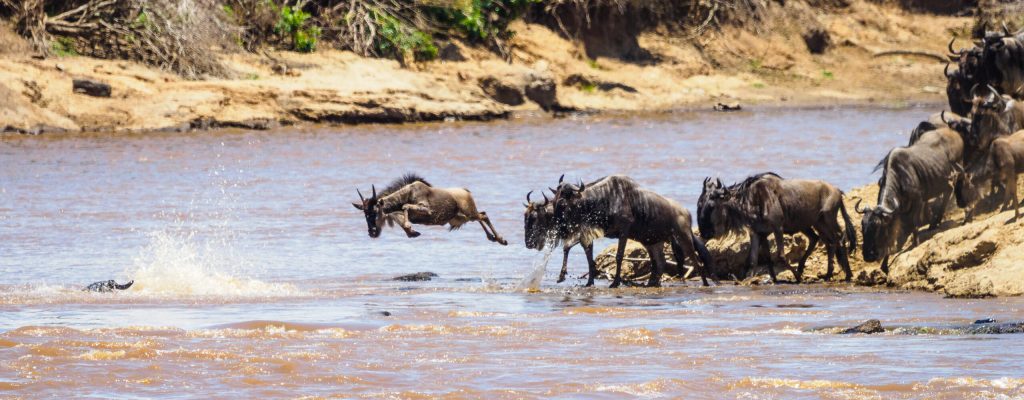
The Serengeti’s endless plains support the largest terrestrial mammal migration on Earth, with over a million wildebeest and hundreds of thousands of zebra moving through the ecosystem annually in search of fresh grass and water.
Ngorongoro Crater
The world’s largest intact volcanic caldera, Ngorongoro’s crater floor concentrates an estimated 25,000 large mammals within a fixed 260 square kilometre area, giving it one of the highest densities of predators anywhere in Africa.
Zanzibar
Once the centre of the East African spice and slave trade, Zanzibar’s Stone Town blends Swahili, Arab, Persian and European influences into a UNESCO World Heritage old town, while the island’s beaches and coral reefs offer a genuine change of pace after nine days of game drives.
The Great Migration Explained
Roughly two million wildebeest, zebra and gazelle move in a continuous, roughly circular route through the Serengeti-Mara ecosystem each year, driven by rainfall patterns and the search for fresh grazing. The herds calve on the southern plains around January to March, move through the central and western Serengeti as the dry season sets in, and reach the northern Serengeti and Kenya’s Maasai Mara around July to October, before the cycle begins again. Because the exact timing shifts year to year with rainfall, no operator can guarantee a specific river crossing on a specific date, which is why our guides track recent reports and adjust routing within the days you have rather than promising an exact spectacle.
Health and Travel Documents
Comprehensive travel insurance covering trip cancellation, medical evacuation and adventure activities such as any optional water sports in Zanzibar is strongly recommended. Tanzania requires a yellow fever certificate for entry if arriving from a country with risk of transmission, and most nationalities can apply for a Tanzania e-visa online before travel. We recommend consulting a travel health clinic about malaria prevention, particularly for the Zanzibar portion of the trip.
Group Safari FAQs
Is this the best time to see the Great Migration?
The migration’s exact location shifts throughout the year, moving through the western and northern Serengeti roughly June to October and the southern plains around calving season from January to March. Our July, August and September departures are timed for strong migration viewing chances, while our February departure suits travellers prioritising lower rates and quieter parks over migration timing.
Do I need a separate flight to Zanzibar?
No, the short domestic flight from northern Tanzania to Zanzibar is included in the group price and arranged as part of the itinerary.
What if the minimum group size isn’t reached?
If a departure doesn’t reach the minimum group size, we will offer an alternative date, a switch to a private departure at the private rate, or a full refund.
Is Zanzibar safe and enjoyable for all travellers?
Yes, Zanzibar is a well-established, welcoming tourist destination, and our group stays are at vetted beach hotels with easy access to Stone Town and organised excursions.
What deposit and cancellation terms apply?
A deposit secures your place on the departure, with the balance due closer to travel. Park fees, the Zanzibar flight and some lodge bookings are committed well ahead of departure and are non-refundable once confirmed, so cancellation terms scale with how close to departure you cancel. Travel insurance covering trip cancellation is strongly recommended.
Is there a dedicated trip leader for the full 12 days?
A driver-guide leads the nine-day safari portion from Arusha through to the Zanzibar flight, and a separate local host coordinates your Zanzibar stay, since safari guiding and beach-based excursions are typically handled by different specialists in this region.
What is the typical group size and age range?
Groups run from 8 to 16 travellers, generally spanning late twenties through seventies. The itinerary is entirely vehicle and boat-based with no strenuous trekking, making it accessible to most travellers regardless of fitness level.
Best Time for This Itinerary
The wildebeest migration’s exact location shifts through the year, generally moving through the western and northern Serengeti from June to October and the southern plains around calving season from January to March. Our July, August and September departures are timed for strong migration viewing chances in the northern Serengeti, while the February departure suits travellers who prioritise lower rates and quieter parks over migration timing, and still offers excellent resident wildlife viewing plus calving season if the timing aligns.
Conservation Impact
Park fees across Tarangire, Serengeti and Ngorongoro fund Tanzania National Parks Authority ranger patrols and anti-poaching operations across one of the largest protected ecosystems on Earth. The Ngorongoro Conservation Area in particular operates a multiple land-use model balancing wildlife protection with the resident Maasai population’s grazing rights, a rare model of coexistence between conservation and indigenous pastoralist communities.
Why Travel With All in Africa Safaris
Our Tanzania driver-guides track the migration’s seasonal movement closely and adjust the Serengeti routing within your scheduled days to maximise your group’s chances of a strong sighting, rather than following a fixed route regardless of where the herds actually are. Running both the safari and Zanzibar legs as one coordinated trip, rather than two separately booked halves, is part of what keeps the group rate competitive.
Photography Notes
The Serengeti’s open plains reward a longer lens for distant predator and migration shots, particularly in the golden hour after the morning game drive begins. In Ngorongoro, the crater’s compact size means closer sightings are common, so a mid-range zoom often works better than in the Serengeti. In Zanzibar, an underwater housing or action camera is worth arranging in advance if you plan to snorkel.
What to Pack
- Neutral-coloured, breathable clothing for game drives
- A warm layer for cool early mornings in the Ngorongoro highlands
- Sun protection and a hat
- Swimwear and reef-safe sunscreen for Zanzibar
- Binoculars
- A light rain jacket outside the driest months
What to Expect Travelling With a Group
Groups on this departure run from 8 to 16 travellers, sharing 4×4 safari vehicles in pairs or small clusters so everyone gets a window seat rotation rather than being packed into one oversized truck. The shift from safari lodges to a beach hotel on Day 8 tends to change the group’s mood noticeably, from early wake-up calls and game-drive excitement to a slower, more social pace built around the pool and beach rather than a schedule.
Currency and Costs on the Ground
Tanzanian shillings are useful for small local purchases, while US dollars printed after 2009 are widely accepted for park fees, tips and most lodge and hotel bills on both the mainland and in Zanzibar. Card payments are increasingly accepted at larger hotels, though cash remains more reliable at smaller stops and local markets in Stone Town.
Extend Your Group Safari
Travellers with extra time sometimes add an extra Zanzibar night for more beach time, or a pre-trip night in Arusha to recover from long-haul flights before the safari begins. Ask your booking consultant about extending either end of this fixed departure privately.
A Trip Report From the Road
Guides who run this circuit often note that the transition from Ngorongoro’s crater floor to Zanzibar’s beaches produces some of the most enthusiastic feedback on the whole trip, precisely because the contrast is so complete: from cool highland mornings scanning for lions to warm ocean water and Swahili coastal cuisine within 24 hours. Building in that contrast deliberately, rather than treating Zanzibar as an afterthought tacked onto a safari, is why this itinerary consistently rates well with repeat group travellers.
Tour Includes
- Park fees
- Domestic flight to Zanzibar
- Travel in a 4×4 safari vehicle
- Professional guide
- Accommodation and meals as listed
Tour Excludes
- International flights
- Visa and insurance
- Alcoholic drinks
- Tips
- Optional Zanzibar excursions