
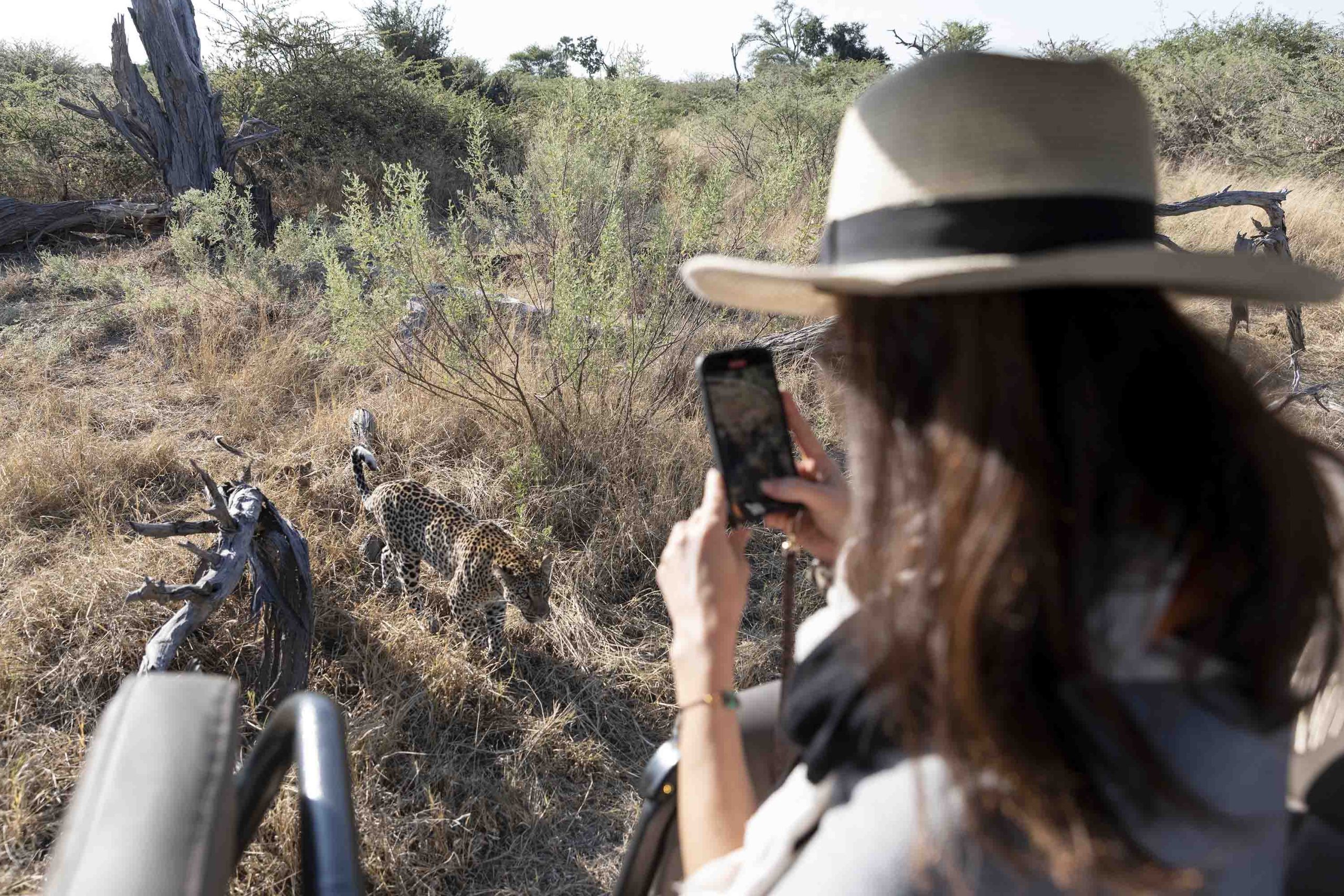
Filming Wildlife With a Phone or a Mirrorless Camera: Which Is Better for Safari?
Filming wildlife with a phone or a mirrorless camera is an important consideration for travellers preparing for an African safari in Uganda, Kenya, Tanzania and Rwanda. Wildlife encounters provide remarkable opportunities to record lions hunting, elephants crossing the savannah, giraffes feeding, mountain gorillas moving through forests and colourful birds displaying their natural behaviour.
Modern smartphones can produce impressive wildlife videos, especially in good lighting. They are lightweight, easy to operate and convenient for travellers who want to share their experiences with family and friends.
Mirrorless cameras, meanwhile, offer larger sensors, interchangeable lenses and greater control over video settings. These advantages can be particularly valuable when filming distant animals, moving wildlife or scenes in difficult lighting.
However, expensive camera equipment does not automatically produce better footage. Stability, timing, composition and an understanding of animal behaviour often make a greater difference.
This guide compares smartphones and mirrorless cameras for safari filming, explains their strengths and limitations, and provides practical techniques for recording beautiful wildlife videos.
Why Film Wildlife During an African Safari?
Wildlife videos capture movement, sound and behaviour that still photographs cannot always communicate.
A photograph can show a lion standing in the grass, but a video can record its movement, calls and interactions with other animals.
Popular Wildlife Filming Opportunities
| Wildlife experience | What makes the video interesting |
|---|---|
| Lions in the Maasai Mara | Movement, interactions and behaviour |
| Elephants in Amboseli | Herd movements and family interactions |
| Gorillas in Bwindi | Feeding, movement and social behaviour |
| Wildebeest in the Serengeti | Large herds and migration activity |
| Hippos in Queen Elizabeth | Water movements and vocalisations |
| Birds in Akagera | Flight, feeding and colourful displays |
| Chimpanzees in Kibale | Climbing and social interactions |
Short, carefully composed clips often communicate an experience more effectively than lengthy recordings.
Smartphone vs Mirrorless Camera: Main Differences
Both devices can produce excellent safari videos, but their strengths differ.
Camera Comparison
| Feature | Smartphone | Mirrorless camera |
|---|---|---|
| Portability | Excellent | Depends on lens |
| Ease of use | Very easy | Requires practice |
| Zoom capability | Model-dependent | Extensive lens options |
| Low-light performance | Variable | Often better with suitable equipment |
| Stabilisation | Often very effective | Camera and lens-dependent |
| Manual settings | Sometimes available | Usually extensive |
| Audio recording | Convenient | Often supports external microphones |
| Battery management | Simple | Spare batteries useful |
| Overall cost | May already be owned | Additional equipment expense |
For casual travellers, a modern smartphone may be sufficient. Enthusiastic wildlife photographers may benefit from a mirrorless system.
When Is a Smartphone Better for Safari Filming?
Smartphones are particularly useful when animals are relatively close and lighting conditions are favourable.
They are convenient for quickly recording unexpected moments.
Smartphone Advantages
A phone can be ready within seconds.
It requires little additional equipment.
Video stabilisation is often automatic.
Clips can be edited directly on the device.
Files are easy to share.
The same device can capture travel memories, landscapes and short videos.
Smartphones are especially practical for travellers who prefer lightweight luggage.
Where Smartphones Struggle With Wildlife Video
Wild animals are not always close to safari vehicles.
A leopard resting in a distant tree or a bird sitting across a river may be difficult to record clearly.
Common Smartphone Limitations
| Challenge | Possible result |
|---|---|
| Distant animals | Limited subject detail |
| Heavy digital zoom | Reduced image quality |
| Low light | Increased noise |
| Fast movement | Tracking difficulties |
| Bright backgrounds | Exposure problems |
| Long recording sessions | Battery drain and overheating |
A smartphone with a dedicated telephoto camera may perform better than one relying mainly on digital enlargement.
When Is a Mirrorless Camera Better?
Mirrorless cameras are useful for travellers who want greater control and flexibility.
Interchangeable lenses allow photographers to select suitable focal lengths for different animals and landscapes.
Mirrorless Camera Advantages
Long telephoto lenses bring distant subjects closer.
Larger sensors can provide better image quality in challenging conditions.
Manual exposure controls help maintain consistent brightness.
Advanced autofocus systems may assist with moving animals.
Compatible external microphones can improve recorded sound.
However, these advantages depend on the camera, lens and operator.
Choosing the Right Lens for Wildlife Video
A suitable lens is often more important than purchasing the most expensive camera body.
Safari Video Lens Guide
| Focal length | Practical use |
|---|---|
| 16–35 mm | Landscapes and camp surroundings |
| 24–70 mm | General travel scenes |
| 70–200 mm | Medium-distance wildlife |
| 100–400 mm | Distant animals |
| 150–600 mm | Birds and distant wildlife |
These focal lengths refer to commonly used full-frame equivalents or lens ranges. Field of view changes with sensor size.
Long lenses can be difficult to hold steadily, especially when filming from a moving vehicle.
Understanding 4K vs 1080p Video
Video resolution determines the number of pixels recorded.
Many smartphones and mirrorless cameras support both Full HD and 4K recording.
Video Resolution Comparison
| Resolution | Main advantage | Consideration |
|---|---|---|
| 1080p | Smaller files | Less cropping flexibility |
| 4K | Greater detail | Larger files |
| 4K at 60 fps | Smooth motion | More storage and power |
| High-frame-rate recording | Slow-motion opportunities | Camera-dependent limitations |
For most safari travellers, 4K at 25 or 30 frames per second is a practical starting point when supported.
Full HD remains useful when storage capacity is limited.
Which Frame Rate Should You Use?
Frame rate describes how many individual frames are recorded each second.
Recommended Frame Rates
| Frame rate | Suitable use |
|---|---|
| 24 fps | Cinematic-style footage |
| 25 fps | Standard video in many regions |
| 30 fps | General wildlife filming |
| 50 fps | Smooth movement |
| 60 fps | Action and slow-motion editing |
| 120 fps | Specialised slow motion |
Higher frame rates often require more light and storage.
A lion resting in the shade may not need the same settings as a bird taking flight.
How to Keep Safari Videos Steady
Camera shake is one of the most common problems when filming wildlife.
Safari vehicles may vibrate, and long lenses exaggerate small movements.
Stabilisation Techniques
Hold your device with both hands.
Keep your elbows close to your body.
Use built-in stabilisation when appropriate.
Avoid unnecessary movement.
Rest the camera on suitable support.
Film when the vehicle is stationary.
Never lean dangerously outside a safari vehicle to obtain a better angle.
A stable shot is generally more enjoyable than constantly moving the camera.
Filming Wildlife From an Open Safari Vehicle
Open vehicles and raised-roof safari Land Cruisers provide excellent viewing opportunities.
However, passengers must work around limited space and other travellers.
Vehicle Filming Etiquette
| Good practice | Why it matters |
|---|---|
| Remain in permitted seating positions | Protects passengers |
| Avoid sudden movements | Reduces disturbance |
| Keep equipment secure | Prevents accidents |
| Share viewing space | Respects other guests |
| Follow guide instructions | Supports wildlife safety |
| Avoid excessive talking | Improves recorded sound |
Never ask a guide to approach animals more closely than park rules permit.
Filming Mountain Gorillas in Uganda and Rwanda
Gorilla trekking in Bwindi, Mgahinga and Volcanoes National Park presents special filming challenges.
Forest vegetation creates uneven lighting, while gorillas may move behind branches or remain partly hidden.
Gorilla Video Tips
Choose equipment you can carry comfortably.
Use suitable low-light settings.
Avoid unnecessary equipment changes.
Keep movement slow and controlled.
Follow ranger instructions.
Do not use flash or bright artificial lighting.
Respect the required viewing distance and permitted visit duration.
Gorilla conservation rules always take priority over filming.
Filming Lions and Big Cats
Kenya’s Maasai Mara and Tanzania’s Serengeti offer excellent opportunities to record lions, cheetahs and leopards.
Big cats may remain still for long periods before moving suddenly.
Big Cat Filming Tips
Begin recording before anticipated movement.
Keep the animal’s eyes in focus.
Leave space in the frame for movement.
Avoid constant zoom adjustments.
Record several short sequences.
Do not pressure guides to disturb resting or hunting animals.
Patience is one of the most valuable wildlife filming skills.
Filming Elephants and Large Mammals
Elephants provide opportunities to capture walking behaviour, feeding, social interactions and movement around water.
A medium or telephoto lens can record these scenes without requiring the vehicle to approach closely.
For smartphones, wider footage showing animals within the landscape may look better than poor-quality digital zoom.
Filming Birds on Safari
Bird photography and videography can be particularly challenging because many species move quickly.
Bird Video Recommendations
Use suitable telephoto reach.
Choose reliable autofocus.
Practise tracking moving subjects.
Use faster shutter speeds when necessary.
Record natural behaviour rather than only static portraits.
Avoid disturbing nesting or feeding birds.
Birds often require greater patience and technical control than large mammals.
Audio: The Forgotten Part of Safari Video
Natural wildlife sounds can make safari footage more engaging.
Bird calls, flowing rivers, insect sounds and elephant vocalisations help communicate the atmosphere of a destination.
Audio Recording Tips
Avoid talking during important clips.
Reduce wind noise where possible.
Use an appropriate microphone windscreen.
Record short environmental sound sequences.
Keep microphones protected from dust and rain.
Never use recorded animal calls to attract or manipulate wildlife unless authorised for a legitimate conservation purpose.
Managing Bright Sunlight and Shadows
African safari conditions can change quickly.
Bright savannah sunlight may produce strong highlights, while forest environments often contain deep shadows.
Exposure Tips
Avoid constantly changing brightness during a clip.
Protect important highlight detail.
Use exposure locking when useful.
Check results on the camera screen.
Adjust settings when moving between sunshine and shade.
Mirrorless cameras generally offer more extensive manual exposure control, but some smartphones also provide useful options.
Smartphone Filming in Portrait or Landscape
Video orientation should match the intended use.
Orientation Guide
| Format | Best use |
|---|---|
| Landscape 16:9 | YouTube, websites and television |
| Portrait 9:16 | Reels, Stories and short-form videos |
| Square 1:1 | Selected social media posts |
Landscape filming is often preferable for wildlife scenes involving wide landscapes or several animals.
Portrait filming can work well for close-up subjects and mobile-focused content.
Storage and Battery Planning
Video files consume considerably more storage than ordinary photographs.
4K footage can fill memory cards quickly, depending on compression and recording settings.
Safari Video Equipment Checklist
| Item | Purpose |
|---|---|
| Spare camera batteries | Extended recording |
| Power bank | Smartphone charging |
| Memory cards | Additional storage |
| Portable SSD | Video backups |
| Card reader | File transfers |
| Charging cables | Equipment compatibility |
| Dry bag | Moisture protection |
Back up important footage regularly rather than storing an entire safari on one device.
Editing Wildlife Videos After Safari
Editing helps transform individual clips into a connected travel story.
Smartphones offer convenient editing applications, while computer software provides greater control.
Simple Editing Workflow
Back up the original video files.
Organise clips by destination.
Select the strongest wildlife moments.
Remove unnecessary footage.
Adjust exposure and colour.
Improve sound where appropriate.
Arrange clips into a logical sequence.
Export in a suitable format.
Avoid excessive colour changes that make animals appear unnatural.
Common Safari Filming Mistakes
Travellers sometimes spend too much time adjusting equipment and miss the wildlife experience itself.
Other common problems include unstable footage and excessive digital zoom.
Mistakes to Avoid
Filming every encounter continuously.
Using excessive zoom.
Ignoring battery levels.
Forgetting spare memory cards.
Recording unnecessarily long clips.
Blocking other guests.
Disturbing wildlife for better footage.
Failing to back up recordings.
Good safari filmmaking involves preparation, patience and responsible behaviour.
Frequently Asked Questions
Is a Smartphone Good Enough for Safari Videos?
Yes. A modern smartphone can produce excellent footage in good lighting, especially when wildlife is relatively close.
Is a Mirrorless Camera Worth Bringing?
It can be worthwhile for travellers interested in distant wildlife, birds, professional-quality footage and greater manual control.
Should I Film Wildlife in 4K?
4K is useful when storage and battery capacity allow, but 1080p remains suitable for many travel videos.
What Is the Best Camera for Gorilla Trekking?
A lightweight camera with good low-light performance and suitable zoom is practical. The best choice depends on experience, budget and trekking conditions.
Can I Use a Tripod During Gorilla Trekking?
Equipment use depends on current park rules and ranger instructions. Bulky supports may also be inconvenient in dense forest.
Phone or Mirrorless Camera for Safari?
Both smartphones and mirrorless cameras can capture remarkable African wildlife videos.
Smartphones provide convenience, portability and simple editing. They are particularly suitable for casual travellers, short travel videos and wildlife encounters at manageable distances.
Mirrorless cameras offer greater flexibility, particularly when recording distant animals, birds and challenging lighting conditions.
However, the best results depend on more than equipment specifications.
For casual safari travellers, a good smartphone may be enough. For dedicated wildlife filmmakers, a mirrorless camera with a suitable telephoto lens offers greater creative control and filming flexibility.
Whichever device you choose, concentrate on stable footage, natural behaviour, good lighting and responsible wildlife viewing.



No comment