
Bat-Eared Foxes on the Serengeti Plains: What Their Ears Do
The morning sun rises over Tanzania’s Serengeti plains as a small fox walks slowly through the short grass. Its greyish coat blends into the dry ground, but two enormous ears stand upright above its head. Suddenly, the fox stops, tilts its head and digs into the soil. Moments later, it finds an insect hidden beneath the surface.
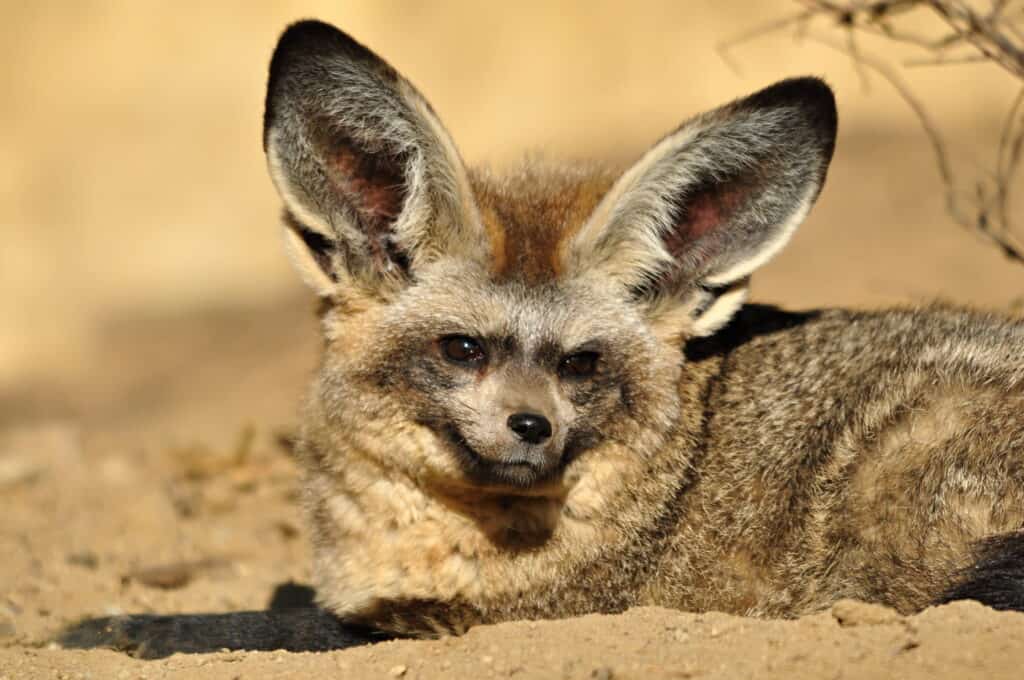
Bat-eared foxes in Serengeti are among the most interesting small predators to observe on an African safari. Unlike lions and cheetahs, these foxes depend largely on insects rather than large prey. Their oversized ears help them locate food, detect danger and cope with the heat of the African savannah.
Although they are easy to overlook during game drives, understanding their unusual adaptations makes them rewarding animals to watch.
1. What Are Bat-Eared Foxes?
The bat-eared fox, scientifically known as Otocyon megalotis, is a small member of the dog family, Canidae.
Its name comes from its enormous ears, which resemble those of some bats.
Adults typically weigh approximately 3–5 kilograms and have greyish-brown coats, dark legs, pointed faces and bushy tails.
Unlike many larger carnivores, bat-eared foxes specialise in feeding on insects.
They inhabit short-grass plains, open savannahs and semi-arid environments across parts of eastern and southern Africa.
2. Why Do Bat-Eared Foxes Have Such Large Ears?
A bat-eared fox’s ears are among its most important survival adaptations.
They serve several purposes, including locating insects and regulating body temperature.
The ears can reach approximately 13 centimetres in length, an impressive size for such a small animal.
Three Important Functions
| Ear Function | How It Helps |
|---|---|
| Locating food | Detects faint movements of insects |
| Detecting danger | Helps identify approaching animals |
| Regulating temperature | Allows heat to escape through blood vessels |
These abilities are especially useful in open habitats where food can be difficult to find and temperatures become high.
3. How Their Ears Help Them Find Termites
Termites form an important part of the bat-eared fox’s diet.
Some termites move through underground tunnels, while others emerge to collect grass and other plant material.
Bat-eared foxes use sensitive hearing to detect the quiet sounds of moving insects.
A fox may walk slowly with its ears directed towards the ground.
After detecting movement, it may stop, listen and dig or snap at the insects.
Its hearing is sufficiently sensitive to detect some insects moving beneath the soil.
This ability allows the fox to locate food that would otherwise remain hidden.
4. Why Termites Are So Important
Bat-eared foxes are unusually specialised insect-eating carnivores.
In some populations, termites and other insects account for most of their food.
The exact proportion varies with habitat and seasonal availability.
Their diet may include:
- Harvester termites.
- Dung beetles and beetle larvae.
- Grasshoppers.
- Ants and other insects.
- Spiders and other small invertebrates.
- Occasional small vertebrates and plant foods.
Termites also provide moisture, helping foxes obtain some of the water they need.
This is particularly valuable in relatively dry environments.
5. How Their Ears Help Them Stay Cool
The Serengeti can become hot during the day, especially across exposed grasslands.
Large ears provide a useful surface for releasing body heat.
Blood vessels carry warm blood near the ear’s surface, where heat can escape into cooler surrounding air.
This process supports temperature regulation.
However, the ears do not work like an air-conditioning system.
Their cooling effectiveness depends on environmental conditions, and foxes also avoid excessive heat by resting in shade or using underground dens.
Large ears therefore support both feeding and survival in warm habitats.
6. Can Bat-Eared Foxes Hear Predators Approaching?
Yes. Sensitive hearing also helps bat-eared foxes remain alert to potential threats.
Their relatively small bodies make them vulnerable to larger carnivores and birds of prey.
Lions, leopards, spotted hyenas and large eagles may present risks, depending on the circumstances.
When a fox detects a suspicious sound, it may raise its head, turn its ears and examine the surrounding area.
If danger approaches, it can retreat towards cover or a nearby den.
Their ears are therefore useful for finding food and monitoring the environment.
7. Why Do They Sometimes Move Their Ears Independently?
Watching a bat-eared fox listening can be fascinating.
It may rotate one ear towards a particular sound while adjusting the other.
These movements help it detect sounds arriving from different directions.
For example, a fox may concentrate on insects moving through grass while remaining aware of surrounding activity.
During a game drive, watch carefully when a fox suddenly stops walking.
Its ears may reveal that it has detected something before you notice any movement.
8. Where Can You See Bat-Eared Foxes in the Serengeti?
Bat-eared foxes are associated with the Serengeti’s open grasslands and areas supporting abundant insect life.
Short vegetation can make them easier to observe than in taller grass.
Areas Worth Exploring
| Serengeti Area | Viewing Interest |
|---|---|
| Seronera Valley | Open grassland and wildlife-rich surroundings |
| Southern Serengeti plains | Short grass and insect-feeding opportunities |
| Ndutu ecosystem | Open habitats and seasonal wildlife activity |
| Selected eastern plains | Suitable grassland habitats |
These are possible viewing areas rather than guaranteed locations.
Their movements depend on insect availability, vegetation and local conditions.
9. What Time of Day Are Bat-Eared Foxes Active?
Bat-eared foxes are often most active during the evening, night and early morning.
In the Serengeti, their activity is commonly concentrated after dark.
However, they may also be seen during daylight, particularly around cooler periods or near their dens.
Early morning game drives can provide opportunities to observe foxes returning from feeding.
Late afternoon may also be worthwhile.
Protected-area rules determine whether night drives are permitted. Do not assume ordinary Serengeti National Park game drives can continue after dark.
10. Why Do Bat-Eared Foxes Live in Family Groups?
Bat-eared foxes commonly live in small family groups, often consisting of a breeding pair and their young.
Their social behaviour differs from that of large carnivores such as lions and spotted hyenas.
Adults cooperate in protecting and raising offspring.
Male bat-eared foxes are notable for their involvement in parental care.
They may groom, guard and spend considerable time with pups while females obtain food.
Family groups may also rest together and maintain social contact through calls and body movements.
11. Do Bat-Eared Foxes Live Underground?
Bat-eared foxes use underground dens for shelter and raising young.
Dens provide protection against heat, bad weather and some predators.
They may occupy existing burrows or use modified underground shelters.
Pups remain close to protected den sites during their earliest stages of development.
When observing a family, tourists should avoid approaching the den entrance or encouraging young animals to emerge.
Repeated disturbance can interfere with normal parental care.
12. Bat-Eared Foxes vs Black-Backed Jackals
These two small African carnivores may occur in similar savannah habitats, but they have different feeding habits.
| Feature | Bat-Eared Fox | Black-Backed Jackal |
|---|---|---|
| Scientific name | Otocyon megalotis | Lupulella mesomelas |
| Ears | Exceptionally large | Smaller and pointed |
| Body | Small and relatively compact | Larger and longer-legged |
| Main diet | Predominantly insects | Varied animal and plant foods |
| Coat | Greyish-brown with dark legs | Reddish coat with dark saddle |
| Hunting | Listening and searching for insects | Opportunistic hunting and scavenging |
The ears and coat pattern provide quick identification clues.
13. Why Do They Have So Many Teeth?
Bat-eared foxes have an unusual dental arrangement.
They possess approximately 46–50 teeth, more than most other members of the dog family.
Their specialised teeth help them process large quantities of insects.
Unlike lions, which use powerful jaws to tear meat, bat-eared foxes repeatedly chew and crush relatively small prey.
Their teeth and ears work together as adaptations to an insect-rich diet.
14. How to Photograph Bat-Eared Foxes
Bat-eared foxes make interesting photography subjects because of their expressive faces and oversized ears.
For better photographs:
- Search short-grass areas during cooler hours.
- Use optical zoom rather than approaching closely.
- Photograph the fox when its ears are upright.
- Wait for natural feeding behaviour.
- Avoid blocking the animal’s route.
- Keep a respectful distance from dens.
- Never use food or recorded calls to attract foxes.
A photograph showing the entire head and ears can help illustrate their remarkable anatomy.
15. Are Bat-Eared Foxes Endangered?
The bat-eared fox is classified as Least Concern on the IUCN Red List.
However, local populations can still face threats from habitat changes, road accidents and human activities.
Healthy grassland habitats are important because they support the termites and other insects these foxes depend on.
Conserving these smaller predators also helps protect the broader ecosystem.
Why Their Ears Matter
Bat-eared foxes on the Serengeti plains demonstrate how animals develop remarkable adaptations for survival.
Their enormous ears help them detect insects, remain alert to danger and release excess body heat.
Their specialised teeth, insect-rich diet and cooperative family behaviour make them unusual members of Africa’s carnivore community.
Although they are much smaller than the Serengeti’s famous lions and cheetahs, bat-eared foxes deserve attention during every wildlife safari.







No comment