
What to Do if a Gorilla Charges During Your Trek
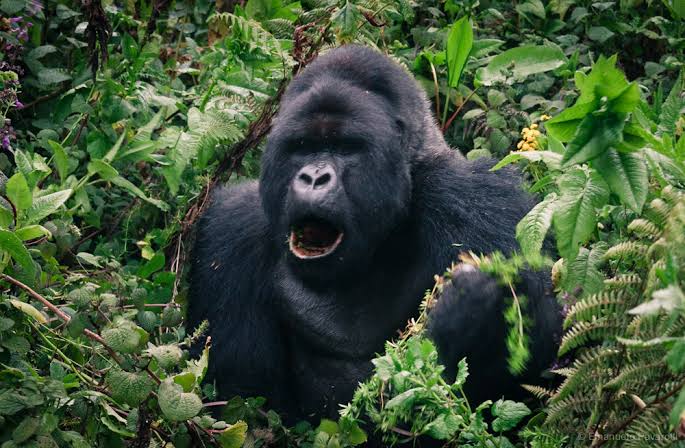
Imagine standing quietly in Uganda’s Bwindi Impenetrable National Park, watching a mountain gorilla family feed among the trees. A young gorilla climbs over a fallen branch while its mother rests nearby. Suddenly, the enormous silverback rises, beats his chest and rushes towards your group.
For a first-time visitor, this can be frightening. However, a charge does not always mean the gorilla intends to attack.
Understanding what to do if a gorilla charges is an essential part of preparing for gorilla trekking in Uganda and Rwanda. Mountain gorillas are generally peaceful animals, but they remain wild and powerful. A silverback may display threatening behaviour when protecting his family or responding to something he perceives as a disturbance.
The most important rule is simple: stay calm, do not run and follow your ranger’s instructions.
1. Do Mountain Gorillas Really Charge Tourists?
Yes. Mountain gorillas sometimes make threatening displays towards visitors, trackers or other gorillas.
These incidents are uncommon during properly managed encounters with habituated families.
A charge may involve a gorilla rushing forward, sometimes accompanied by chest-beating, vocalisations or movements through vegetation.
Some charges stop before physical contact. These are commonly described as bluff charges.
However, visitors should never assume that every charge will stop harmlessly.
Gorillas are exceptionally strong, and dangerous contact remains possible.
This is why experienced rangers supervise every authorised trekking group.
2. What Should You Do Immediately?
If a gorilla charges, your response should be controlled rather than sudden.
Stop moving and listen to your ranger.
If instructed, lower yourself slowly into a crouched position, avoid staring directly into the gorilla’s eyes and remain quiet.
Do not run, shout or attempt to photograph the charge.
Immediate Safety Steps
| Action | What You Should Do |
|---|---|
| Stop | Avoid sudden movement |
| Listen | Follow the ranger’s instructions immediately |
| Lower your body | Crouch slowly if directed |
| Avoid staring | Look down rather than maintaining direct eye contact |
| Stay quiet | Do not scream or shout |
| Do not run | Remain where the ranger directs |
| Put photography aside | Do not raise your camera or use flash |
| Wait | Allow the ranger to manage the encounter |
These are general precautions. Your ranger’s instructions take priority because they can assess the specific animal and surroundings.
3. Why Running Is Dangerous
Running away may feel like the most natural reaction when a large animal approaches.
However, sudden flight can make an already tense encounter more dangerous.
It may trigger pursuit or create additional confusion.
Running through dense forest also introduces other risks.
Bwindi and Volcanoes National Park contain slippery roots, uneven ground and steep slopes.
A visitor attempting to escape quickly could fall or become separated from the trekking group.
For these reasons, visitors are instructed not to run.
Remain still or move only when directed by the ranger.
4. Why You Should Avoid Direct Eye Contact
Gorillas communicate using posture, facial expressions, sounds and movements.
A sustained stare may be interpreted as threatening in some encounters.
During a charge or threatening display, guides commonly instruct visitors to lower their gaze.
This helps reduce confrontational body language.
You do not need to close your eyes.
Instead, keep your attention on the ranger’s instructions while avoiding a prolonged direct stare at the gorilla.
Do not turn the encounter into a staring contest.
5. Why Rangers May Tell You to Crouch
Lowering your body can make your posture appear less confrontational.
It also helps visitors avoid standing upright directly in front of an agitated animal.
However, crouching should be done slowly and carefully.
Suddenly dropping to the ground or making exaggerated movements may create further disturbance.
If the terrain is steep or unstable, your ranger may provide different instructions.
The aim is to remain calm and non-threatening while allowing the trained guide to manage the situation.
6. What Does a Gorilla Charge Look Like?
A gorilla may show several behaviours before moving towards a perceived threat.
However, not every display leads to a charge, and some reactions develop quickly.
Possible Warning Behaviours
| Behaviour | Possible Meaning |
|---|---|
| Chest-beating | Display or communication |
| Loud vocalisations | Agitation or social signalling |
| Tearing vegetation | Display behaviour |
| Rapid movement | Possible approach or charge |
| Stiff body posture | Heightened attention |
| Repeated threatening displays | Potential discomfort or defensive behaviour |
These behaviours are not a reliable system for predicting an attack.
A visitor should not attempt to diagnose a gorilla’s intentions independently.
Follow the ranger’s guidance.
7. Why Do Silverbacks Charge?
Silverbacks play important protective roles within gorilla families.
They help coordinate group movements and respond to potential dangers.
A silverback may display threatening behaviour when he perceives something as a challenge or disturbance.
Possible contributing situations include sudden noises, visitors moving too close or unusual activity around vulnerable family members.
However, the exact reason for a charge cannot always be determined.
Does a Charge Mean the Gorilla Is Angry?
Not necessarily.
Chest-beating and rushing behaviour are forms of communication.
A display may serve to warn another animal or communicate the gorilla’s presence and strength.
The behaviour should be taken seriously without assuming that the gorilla intends to injure someone.
8. What Is the Difference Between a Bluff Charge and an Attack?
A bluff charge is generally understood as a threatening rush that stops or changes direction before harmful contact.
A physical attack involves dangerous contact, such as striking, biting or grabbing.
Understanding the Difference
| Bluff Charge | Physical Attack |
|---|---|
| Often a threatening display | Involves physical aggression |
| May stop short | May cause injury |
| Can be brief | May require emergency intervention |
| Does not necessarily involve contact | Involves contact or attempted harm |
| Still requires caution | Requires immediate ranger-led response |
Visitors should not try to determine which type is happening while a gorilla is rushing towards them.
Treat every charge as serious and follow the ranger.
9. What Does the Ranger Do During a Charge?
Gorilla trekking rangers receive training in wildlife behaviour and visitor management.
They also work with trackers who know the particular gorilla families.
When a gorilla becomes agitated, the ranger may instruct visitors to remain still, lower their bodies or move away.
Experienced personnel may use familiar vocal signals or other established techniques to reduce tension.
Their response depends on the circumstances and the animal’s behaviour.
Visitors should not imitate ranger vocalisations unless specifically instructed.
It is safer to remain quiet and allow trained personnel to manage the encounter.
10. What Happens if a Gorilla Comes Very Close?
Mountain gorillas sometimes approach visitors voluntarily.
Young individuals may be especially curious.
If a gorilla moves closer, do not reach towards it or attempt to touch it.
Remain calm and follow the guide’s instructions.
Where safe, the ranger may direct visitors to move slowly away to restore the required viewing distance.
Do not attempt to move around the gorilla independently.
Avoid blocking its intended direction of travel.
Close contact creates safety concerns and increases the risk of transmitting human diseases.
11. Can You Take Photographs During a Charge?
No. Put photography aside when the gorilla is displaying threatening behaviour or charging.
Raising a camera, moving suddenly or concentrating on getting a photograph can interfere with your ability to follow instructions.
Flash photography is prohibited during gorilla trekking.
Your safety and the gorilla’s welfare are more important than obtaining dramatic footage.
When the situation has settled, the ranger will determine whether viewing can continue.
Visitors should never deliberately provoke a gorilla to capture a charge on camera.
12. How Can Visitors Avoid Provoking Gorillas?
Preventing unnecessary disturbance is one of the most important parts of gorilla trekking safety.
Visitors should respect the distance required by the park authority and ranger.
Keep movements slow and predictable.
Speak quietly and avoid sudden gestures.
Essential Gorilla Trekking Rules
- Remain with the authorised trekking group.
- Follow the ranger’s positioning instructions.
- Maintain the required viewing distance.
- Never touch or feed gorillas.
- Avoid sudden movements.
- Do not use flash photography.
- Never surround or block a gorilla.
- Keep food and drinks away during the encounter.
- Do not trek when suffering from a potentially contagious illness.
These rules protect both people and gorillas.
13. What if a Gorilla Charges Near Its Cubs?
A silverback may be especially attentive when visitors are near other family members.
Young gorillas also sometimes move unpredictably.
If a mother and infant are nearby, avoid positioning yourself between them.
Do not approach a young gorilla simply because it appears playful or curious.
If a silverback reacts defensively, remain calm and follow the ranger.
Allow the family adequate space to move together.
Never assume that habituated gorillas are comfortable with visitors approaching their offspring.
14. Can Gorilla Charges Happen in Uganda and Rwanda?
Yes. Gorilla behaviour is not determined by national borders.
The same general precautions apply during authorised trekking in both countries.
Uganda and Rwanda Safety Comparison
| Feature | Uganda | Rwanda |
|---|---|---|
| Gorilla parks | Bwindi and Mgahinga | Volcanoes National Park |
| Ranger-led trekking | Required | Required |
| Maximum standard tourist group | 8 visitors | 8 visitors |
| Standard viewing period | 1 hour | 1 hour |
| Response to threatening behaviour | Follow ranger instructions | Follow ranger instructions |
| Visitor responsibility | Remain calm and avoid disturbance | Remain calm and avoid disturbance |
Specific distance and health requirements should always be confirmed during the current park briefing.
15. What if Someone Falls During a Charge?
Dense mountain forests can be difficult places to maintain balance.
If you fall, avoid jumping up suddenly while the gorilla remains close.
Listen for the ranger’s instructions and move only when directed.
If you are injured, inform the ranger immediately.
Do not attempt to separate from the group or leave by an unfamiliar route.
The ranger and supporting team can assess the situation and coordinate assistance.
16. What Happens After a Charge?
After a threatening encounter, the ranger assesses whether the gorilla family has settled.
The group may remain still while the animals move away.
In some situations, visitors may be repositioned.
In others, the ranger may end the encounter early.
Although standard gorilla viewing lasts a maximum of one hour, that period is not guaranteed when safety or animal welfare requires an earlier departure.
Tourists should respect the ranger’s decision.
If an injury occurs, follow the team’s emergency arrangements and seek medical attention.
17. Are Mountain Gorillas Naturally Aggressive?
Mountain gorillas are generally peaceful, social primates.
They spend much of their time feeding, resting, grooming and interacting with family members.
Their diet consists mainly of vegetation.
However, they are wild animals with powerful bodies and complex social relationships.
A silverback may respond forcefully to perceived threats.
Habituation makes gorillas more tolerant of carefully managed human visits, but it does not remove their natural instincts.
Respectful observation is therefore essential.
18. How to Prepare Before Your Trek
The best time to learn charge-response instructions is during the official ranger briefing.
Listen carefully and ask questions before entering the forest.
If you are nervous, tell your guide.
A good ranger can explain what to expect and how visitors should behave during a close encounter.
Before-Trek Checklist
| Preparation | Why It Matters |
|---|---|
| Attend the complete briefing | Learn current safety rules |
| Ask about charge responses | Understand the ranger’s instructions |
| Wear suitable hiking boots | Improve stability |
| Remain with your group | Avoid unexpected encounters |
| Keep camera flash disabled | Prevent disturbance |
| Follow health requirements | Protect susceptible gorillas |
| Stay calm during encounters | Reduce unnecessary movement |
Preparation cannot eliminate every risk, but it makes visitors better able to follow instructions.
Stay Calm and Trust Your Ranger
Knowing what to do if a gorilla charges can help travellers feel more prepared for mountain gorilla trekking.
Charges are uncommon during properly managed encounters with habituated families, and some are threatening displays rather than attempts to injure visitors.
However, every charge must be treated seriously.
Do not run, shout, stare aggressively or attempt to photograph the incident.
Remain calm, lower yourself if directed and follow the ranger’s instructions.





No comment