
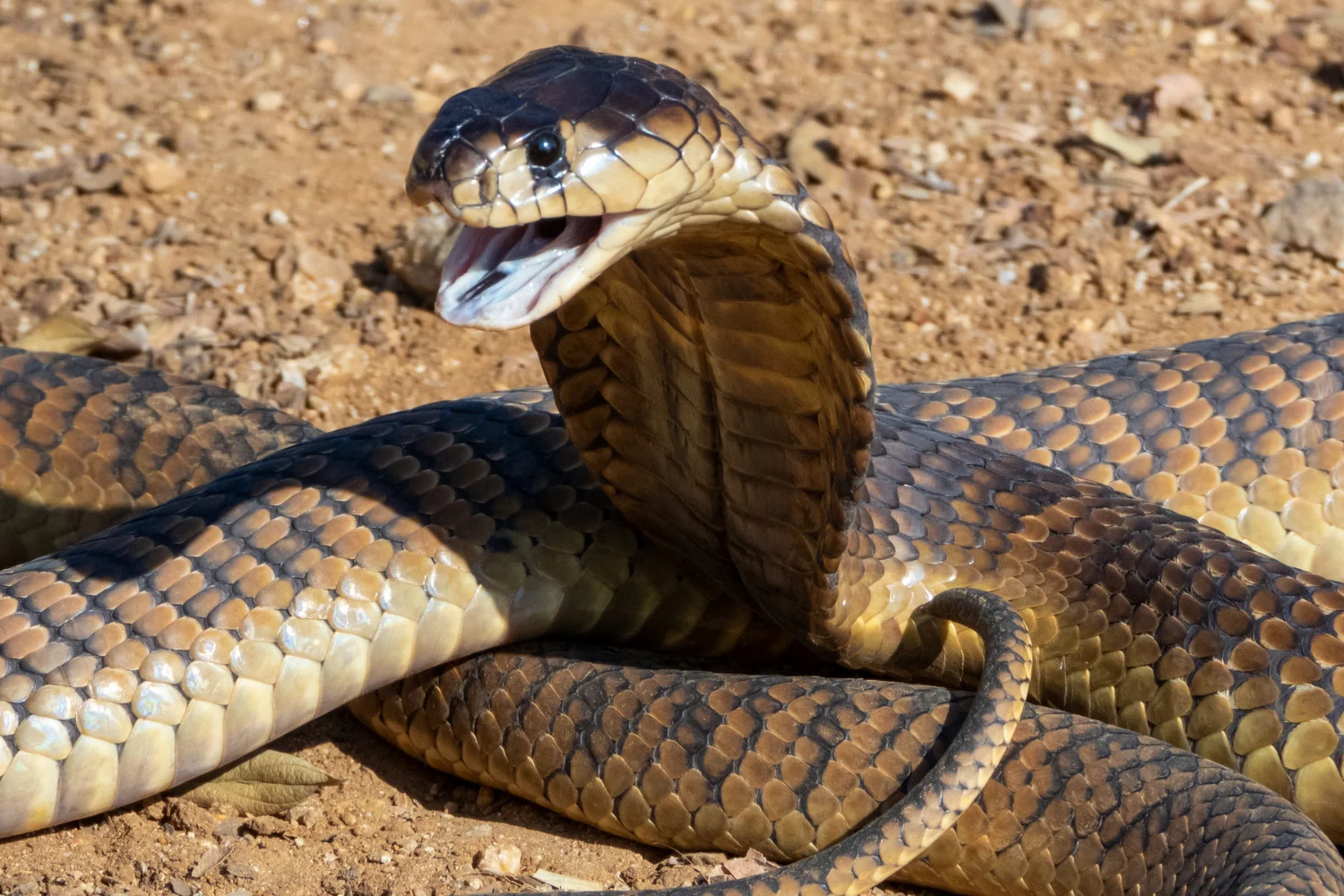
Snake Bites on Safari: What Guides Do and What to Pack
Snake bites on safari are an important safety consideration for travellers exploring the national parks, forests and wilderness areas of Uganda, Kenya, Tanzania and Rwanda. Although most safari visitors never experience a snake bite, understanding basic prevention and emergency procedures can make a significant difference if an incident occurs.
East Africa supports numerous snake species, including harmless snakes and venomous species such as cobras, mambas and puff adders. These reptiles play important ecological roles by controlling rodents and other small animals.
Most snakes prefer avoiding humans and bite when threatened, accidentally stepped on or handled.
A professionally organised safari reduces unnecessary exposure through experienced guides, established walking routes and responsible wildlife-viewing practices.
This guide explains what happens after a snake bite, how safari guides respond, what travellers should pack and why immediate medical attention is essential.
Are Snake Bites Common on African Safaris?
Snake bites are possible in African wilderness areas, but the risk for most safari tourists is relatively low.
Visitors travelling in safari vehicles have limited direct contact with the ground and vegetation where snakes may hide.
Risk can increase during walking safaris, camping, hiking or moving outdoors after dark.
Common Snake Bite Risk Situations
| Situation | Possible risk |
|---|---|
| Vehicle game drive | Generally low |
| Guided walking safari | Possible accidental encounters |
| Forest hiking | Snakes hidden in vegetation |
| Camping | Encounters around equipment |
| Night-time walking | Reduced visibility |
| Reaching into holes | Hidden snakes |
| Handling snakes | High and unnecessary risk |
The safest approach is to avoid approaching or disturbing snakes.
Venomous Snakes Found in East Africa
East Africa supports several medically important venomous snakes.
Their distribution varies according to habitat and geographical location.
Snakes Safari Travellers May Encounter
| Snake | Main characteristics |
|---|---|
| Puff adder | Heavy-bodied, often well camouflaged |
| Black mamba | Fast-moving, highly venomous snake |
| Spitting cobra | Can project venom towards the eyes |
| Other cobras | Several venomous species |
| Boomslang | Tree-dwelling snake with dangerous venom |
| Gaboon viper | Large forest-associated viper |
Not every species occurs in every East African national park.
Identifying snakes from colour alone is unreliable, so visitors should leave identification to trained professionals.
Why Do Snakes Bite?
Snakes generally bite humans in self-defence.
Accidental contact is a common factor.
For example, a traveller might step near a camouflaged snake while walking through vegetation.
A snake may also defend itself when trapped or approached.
How to Avoid Provoking Snakes
Remain on designated paths.
Avoid placing hands into hidden spaces.
Never attempt to catch a snake.
Do not surround or corner it for photographs.
Allow any encountered snake a clear escape route.
Respecting wildlife distance protects both travellers and animals.
What Should You Do Immediately After a Snake Bite?
Treat every suspected venomous snake bite as a medical emergency.
Do not wait for pain, swelling or other symptoms to develop.
Some dangerous bites initially cause little discomfort.
Immediate Snake Bite Response
| Step | Recommended action |
|---|---|
| 1 | Move away from the snake |
| 2 | Alert your guide immediately |
| 3 | Stop walking and minimise movement |
| 4 | Remove rings and tight jewellery |
| 5 | Keep the affected limb still |
| 6 | Arrange urgent medical transport |
| 7 | Monitor breathing and consciousness |
Do not attempt to capture or kill the snake.
Treatment should never be delayed to identify the species.
What Do Safari Guides Do After a Snake Bite?
Professional safari guides should understand emergency response procedures appropriate to their operating area.
Their first responsibility is to protect the injured traveller and arrange medical assistance.
Typical Guide Responsibilities
Secure the area: Move the group away from the snake without creating additional danger.
Assess the traveller: Check consciousness, breathing and visible injuries.
Reduce movement: Help the injured person remain still and support the bitten limb.
Contact emergency services: Inform the safari operator and arrange transport to suitable medical facilities.
Monitor symptoms: Observe changes in breathing, swelling, pain and alertness.
Coordinate evacuation: Arrange vehicle or emergency medical transport according to the circumstances.
Guides provide first aid and coordination, not a replacement for hospital treatment.
Why Immobilisation Matters
Movement can increase the spread of some snake venoms through the body.
Keeping the person calm and still is therefore important.
A guide may support the affected limb using an appropriate splint, avoiding unnecessary movement or pressure.
Immobilisation Precautions
Do not use a tight tourniquet.
Avoid restricting circulation.
Do not force a painful limb into an unnatural position.
Pressure-immobilisation bandaging is recommended only for particular types of venomous snake bites and requires appropriate local guidance and training.
Because some African snake venoms cause severe tissue damage, travellers should not automatically apply tight compression bandages.
Dangerous Snake Bite Treatments to Avoid
Several traditional first-aid practices can worsen injuries or delay lifesaving care.
What Never to Do
| Unsafe action | Why it is dangerous |
|---|---|
| Cutting the wound | Causes additional tissue damage |
| Sucking out venom | Ineffective and unsafe |
| Applying a tourniquet | Can damage blood circulation |
| Applying ice | May worsen tissue injury |
| Using herbal remedies | Can delay effective treatment |
| Giving alcohol | May complicate medical care |
| Applying electric shocks | Dangerous and ineffective |
| Attempting to catch the snake | Creates further bite risk |
The correct priorities are immobilisation, urgent medical assistance and safe transport.
Recognising Snake Bite Symptoms
Symptoms depend on the snake species, amount of venom and individual response.
Some bites cause mainly local tissue damage, while others affect nerves, blood clotting or muscles.
Possible Warning Signs
| Symptom | Possible concern |
|---|---|
| Increasing swelling | Tissue injury |
| Severe pain | Local venom effects |
| Bleeding | Possible clotting disturbance |
| Drooping eyelids | Neurological effects |
| Blurred vision | Possible neurotoxicity |
| Difficulty swallowing | Possible paralysis |
| Breathing difficulties | Life-threatening emergency |
| Collapse | Severe systemic illness |
The absence of early symptoms does not establish that a bite is harmless.
What Happens at the Hospital?
Doctors assess the patient and monitor for signs of envenoming.
Treatment depends on the symptoms and suspected snake type.
Possible Hospital Treatment
Medical staff may provide pain relief, intravenous fluids, blood tests and wound care.
Patients with serious envenoming may require antivenom.
Some also need respiratory support or treatment for bleeding complications.
Not every snake bite requires antivenom, but determining this is a medical decision.
What Is Snake Antivenom?
Antivenom is a specialised medicine containing antibodies that neutralise particular snake venoms.
It can be lifesaving when used appropriately.
However, antivenoms differ according to the species they are designed to treat.
Important Antivenom Facts
Antivenom should be administered by trained healthcare professionals.
It may cause serious allergic reactions.
It is not appropriate for every bite.
Availability varies between medical facilities.
Travellers should never attempt to administer antivenom themselves.
What Should Safari Travellers Pack?
A sensible safari first-aid kit should support basic care while avoiding unnecessary or dangerous treatments.
Recommended Safari Snake Bite Safety Kit
| Item | Purpose |
|---|---|
| Mobile phone | Emergency communication |
| Power bank | Backup charging |
| Emergency contact card | Medical assistance details |
| Sterile dressings | Basic wound protection |
| Medical tape | Securing dressings |
| Lightweight splint | Supporting an injured limb |
| Torch or headlamp | Safe night-time walking |
| Closed walking boots | Foot protection |
| Long trousers | Additional leg protection |
| Personal medication | Managing existing conditions |
| Travel insurance details | Emergency evacuation arrangements |
First-aid equipment is most useful when accompanied by appropriate training.
Should You Carry Antivenom on Safari?
Ordinary travellers should not carry antivenom for personal administration.
Antivenom requires appropriate storage, clinical assessment and facilities capable of managing serious reactions.
The better approach is to choose operators with established emergency evacuation procedures.
Before visiting remote destinations, ask which medical facilities are accessible and how emergencies are handled.
Preventing Snake Bites During Walking Safaris
Guided walking safaris offer memorable opportunities to observe animal tracks, vegetation and smaller wildlife.
However, walking requires particular attention to the environment.
Walking Safari Precautions
Wear suitable closed footwear.
Use long trousers where appropriate.
Follow your guide’s instructions.
Avoid walking ahead of the group.
Watch where you place your feet.
Never step blindly over fallen logs.
Avoid thick vegetation without guidance.
Remain calm if a snake appears.
Snake Safety Around Safari Lodges
Snakes occasionally enter gardens, walkways and areas surrounding safari accommodation.
This does not necessarily mean a lodge is unsafe.
However, visitors should follow basic precautions.
Lodge Safety Advice
Use a torch when walking outdoors at night.
Keep doors closed where practical.
Check shoes before wearing them.
Avoid leaving food waste around accommodation.
Do not investigate snakes independently.
Inform lodge staff when a snake is seen near guest areas.
Never attempt to remove it yourself.
What If a Cobra Spits Venom Into Your Eyes?
Some African cobras can project venom towards a perceived threat.
Eye exposure can cause severe irritation and injury.
Emergency Eye Care
Immediately rinse the affected eyes with plenty of clean water or saline.
Continue gentle irrigation for approximately 15–20 minutes.
Remove contact lenses if easily possible.
Do not rub the eyes or apply traditional remedies.
Seek urgent medical assessment because venom exposure can damage the eye.
Snake Bite Risk for Children
Children require particular supervision around wildlife.
They may approach unfamiliar animals out of curiosity.
Because of their smaller body size, venomous bites can become serious quickly.
Family Safety Precautions
Teach children not to touch snakes.
Supervise outdoor exploration.
Ensure appropriate footwear.
Use torches after dark.
Report all suspected bites immediately.
Children with possible snake bites require urgent medical assessment.
Medical Evacuation From Remote Safari Parks
Some national parks are several hours from major hospitals.
Emergency transport may involve road ambulances or specialist aircraft, depending on availability.
Emergency Planning
| Question | Why it matters |
|---|---|
| Where is the nearest medical facility? | Determines response time |
| Can it manage snake bites? | Establishes treatment capability |
| Is appropriate antivenom available? | Helps assess referral needs |
| Is emergency transport available? | Supports evacuation |
| Who coordinates assistance? | Clarifies responsibility |
| Does insurance cover evacuation? | Reduces financial uncertainty |
A reliable safari operator should explain emergency arrangements before departure.
Travel Insurance for Snake Bite Emergencies
Travel insurance can help with unexpected medical expenses and emergency transport.
However, coverage depends on the policy.
Check whether walking safaris, remote activities and emergency evacuation are included.
Travellers should also confirm medical expense limits and relevant exclusions.
Keep insurance documents accessible throughout the journey.
Frequently Asked Questions
Are Snake Bites Common During Game Drives?
They are uncommon during ordinary vehicle-based safaris because travellers have limited direct contact with snake habitats.
Should You Run Away From a Snake?
No. Move away carefully without provoking it. Sudden attempts to catch or threaten the animal increase danger.
Can You Survive a Venomous Snake Bite?
Yes. Prompt professional treatment can be lifesaving. However, some venomous bites are rapidly dangerous, making immediate medical assistance essential.
Should You Photograph the Snake?
Only if a photograph can be taken safely from a distance without delaying treatment. Never approach or capture the animal.
Staying Safe From Snake Bites
Snake bites are an important but generally avoidable risk during African safaris.
Uganda, Kenya, Tanzania and Rwanda support diverse snake species, most of which prefer avoiding people.
Suitable footwear, experienced guides, careful walking and sensible lodge precautions reduce unnecessary encounters.
If a suspected bite occurs, the most important actions are to move away from danger, minimise movement and obtain urgent medical care.
Never use tourniquets, cut the wound, attempt suction or delay treatment while trying to identify the snake.
With proper preparation and professional guiding, travellers can enjoy East Africa’s wildlife destinations safely and responsibly



No comment