
Overlanding vs Flying Between Parks: Time, Cost and Comfort Compared
Overlanding vs flying between parks is an important decision when planning an African safari in Uganda, Kenya, Tanzania or Rwanda. Both transport options allow travellers to explore remarkable wildlife destinations, but they offer different experiences in travel time, cost, comfort and flexibility.
Overlanding involves travelling by road between national parks using a safari vehicle, usually accompanied by a professional driver-guide. Flying involves using scheduled domestic flights or private charter aircraft to reach airports and airstrips near wildlife destinations.
For example, visitors travelling between Entebbe and Bwindi in Uganda can choose a long scenic road journey or a domestic flight followed by a shorter transfer. In Tanzania, travellers can drive from Arusha towards the Serengeti or take a flight to an airstrip serving their accommodation area.
Understanding these options helps travellers design enjoyable itineraries without unnecessary expenses or exhausting transfers.
What Is Overlanding on an African Safari?
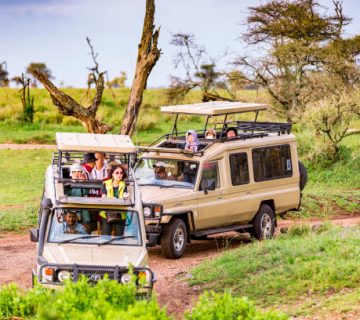
Overlanding means travelling between destinations by road, commonly using a four-wheel-drive safari vehicle.
The journey forms part of the wider travel experience, allowing visitors to observe landscapes, villages and rural communities between national parks.
Main Features of Overlanding
| Feature | Description |
|---|---|
| Transport | Safari 4WD vehicle |
| Driver | Professional driver-guide |
| Travel duration | Depends on road distance |
| Luggage | Generally more flexible |
| Scenic stops | Usually possible |
| Cost | Often economical for groups |
| Flexibility | Relatively high |
| Main limitation | Long driving hours |
Overlanding is popular for multi-park safaris where destinations can be connected through established road networks.
What Is a Fly-In Safari?
A fly-in safari uses domestic flights or charter aircraft to reduce lengthy road transfers.
Aircraft may land at regional airports or designated bush airstrips near lodges and national parks.
Visitors then continue by road to their accommodation.
Main Features of Flying
| Feature | Description |
|---|---|
| Transport | Light aircraft or domestic flight |
| Travel duration | Often shorter |
| Luggage | Usually restricted |
| Cost | Often higher |
| Comfort | Less time on rough roads |
| Flexibility | Depends on flight schedules |
| Main limitation | Weather and baggage restrictions |
A fly-in safari does not eliminate road transport entirely. Guests normally still require vehicles for airport transfers and game drives.
Overlanding vs Flying: Main Differences
| Feature | Overlanding | Flying |
|---|---|---|
| Cost | Often lower | Usually higher |
| Travel time | Longer | Often shorter |
| Scenic experiences | Roadside landscapes | Aerial landscapes |
| Luggage allowance | More flexible | Restricted |
| Comfort | Depends on road quality | Shorter travel, smaller aircraft |
| Photography | Roadside stops | Limited aerial opportunities |
| Flexibility | Easier to adjust stops | Fixed schedules |
| Suitable for | Budget travellers and groups | Time-limited travellers |
Neither option is automatically better. The ideal choice depends on the specific route.
How Much Time Can Flying Save?
Flying can substantially reduce travel time between distant destinations.
However, total journey time includes transfers, check-in, boarding and travel from the destination airstrip.
Illustrative Travel Times
| Safari route | Road journey | Flight consideration |
|---|---|---|
| Entebbe–Bwindi region | Approximately 8–10 hours | Shorter flight plus road transfer |
| Nairobi–Maasai Mara | Approximately 5–7 hours | Around 1-hour flight plus transfers |
| Arusha–Serengeti | Approximately 7–9 hours | Around 1–2 hours flying, route-dependent |
| Entebbe–Murchison Falls | Approximately 5–7 hours | Domestic flight where available |
| Kigali–Volcanoes National Park | Approximately 2–3 hours | Road travel generally practical |
These are approximate planning times. Road conditions, airport arrangements, stops and destination locations affect actual journeys.
Comparing Safari Transport Costs
Road transfers are often economical when several travellers share a vehicle.
Flying introduces individual ticket costs and additional airport transfers.
Illustrative One-Way Transport Budgets
| Transport arrangement | Estimated cost |
|---|---|
| Shared road transfer | $50–$150 per person |
| Private vehicle transfer | $150–$500+ per vehicle |
| Scheduled safari flight | $200–$500+ per person |
| Private charter flight | $1,000–$4,000+ per aircraft |
These are broad examples, not current quotations for specific routes. Some long road transfers cost considerably more, while charter rates depend heavily on aircraft and distance.
Uganda: Driving vs Flying to Bwindi
Bwindi Impenetrable National Park is among Uganda’s most important safari destinations.
Visitors commonly travel from Entebbe or Kampala to southwestern Uganda.
Driving to Bwindi
The road journey passes through attractive countryside, trading centres and hilly landscapes.
Depending on the trekking sector and road conditions, travel may take approximately eight to ten hours or longer.
Flying to Bwindi
Scheduled domestic flights serve airstrips such as Kihihi and Kisoro.
Travellers still need road transfers to their lodges.
The best airstrip depends on the assigned gorilla trekking sector.
Flying is particularly useful for visitors with limited holiday time.
Uganda: Connecting Wildlife Parks by Road
Uganda’s national parks can be combined in an extended road safari.
Popular routes connect Murchison Falls, Kibale, Queen Elizabeth and Bwindi.
Why Overlanding Works Well
Road travel allows visitors to experience different landscapes.
Guides can arrange refreshments and suitable stops.
Travellers can combine wildlife activities with cultural experiences.
However, long transfers require careful scheduling and comfortable vehicles.
Kenya: Nairobi to the Maasai Mara
The Maasai Mara is one of Kenya’s most famous wildlife destinations.
Visitors can travel by road from Nairobi or use scheduled flights from Wilson Airport.
Driving to the Maasai Mara
Road journeys generally take five to seven hours, depending on the accommodation location and conditions.
Some sections may be rough.
Flying to the Maasai Mara
Flights commonly take approximately one hour, depending on the route and airstrip stops.
Lodge transfers are arranged separately or included in the package.
Flying is convenient for travellers planning short wildlife holidays.
Tanzania: Arusha to the Serengeti
The Serengeti is a major attraction on Tanzania’s northern safari circuit.
It can be reached by road or aircraft.
Driving to the Serengeti
Travellers may pass through the Ngorongoro Conservation Area while travelling towards the Serengeti.
The journey can include scenic highlands and wildlife habitats.
Long distances make it necessary to start early.
Flying to the Serengeti
Scheduled flights connect regional airports with selected Serengeti airstrips.
Flight durations vary according to stops and destination areas.
For visitors staying in remote northern or western regions, flying can save valuable time.
Comfort: Which Transport Is Better?
Comfort depends on personal preferences.
Road travel involves sitting for extended periods, sometimes on gravel surfaces.
Flying reduces driving hours but may involve small aircraft, noise and turbulence.
Comfort Comparison
| Consideration | Road travel | Flying |
|---|---|---|
| Legroom | Depends on vehicle | Often limited |
| Rough movement | Uneven roads | Possible turbulence |
| Rest breaks | Can be arranged | Not available in flight |
| Toilets | At selected stops | Often unavailable |
| Motion sickness | Possible | Possible |
| Luggage access | Usually easier | Restricted during flight |
Travellers with mobility limitations should discuss their needs before selecting either option.
Safari Flight Luggage Restrictions
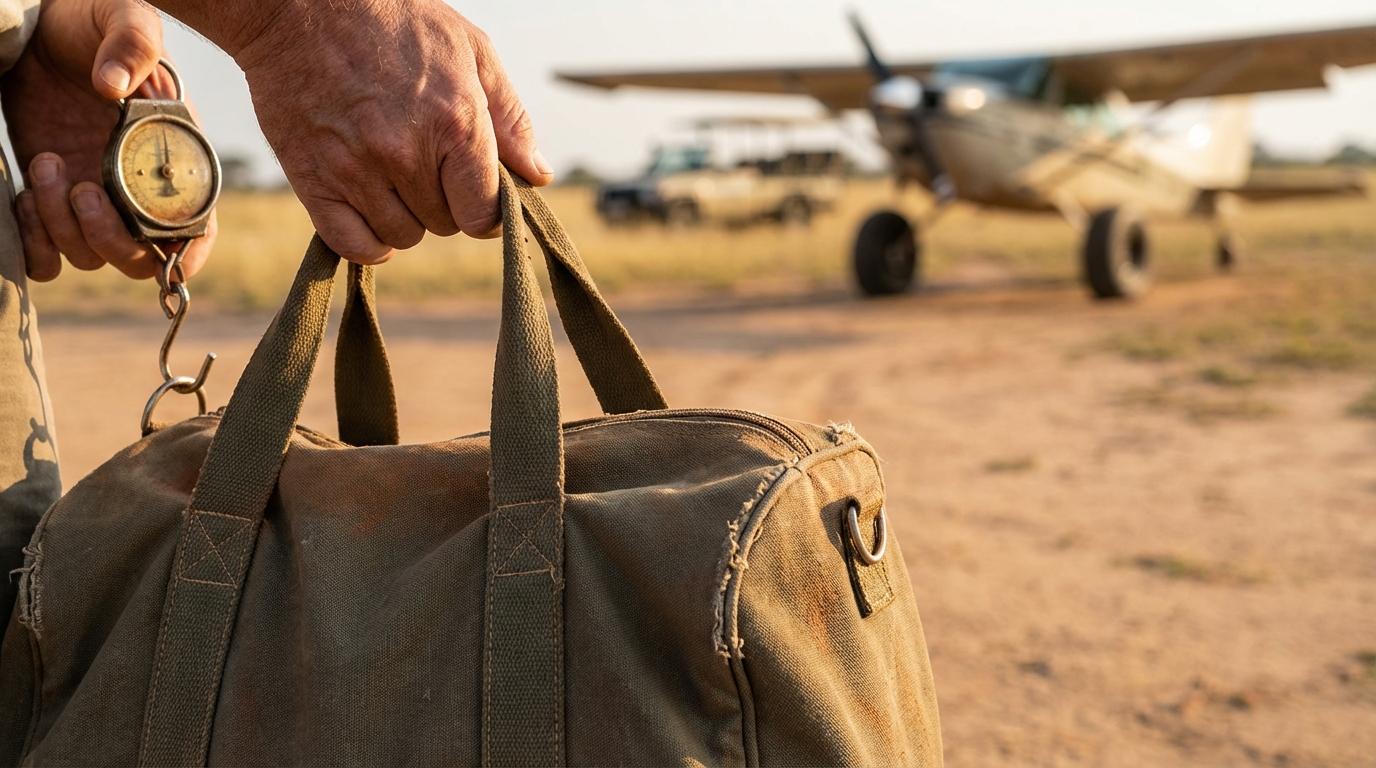
Light aircraft have strict weight and storage limitations.
Several safari airlines use allowances of approximately 15 kilograms per passenger, including hand luggage, although limits differ by operator and route.
Luggage Planning
| Item | Recommendation |
|---|---|
| Main bag | Soft-sided travel bag |
| Clothing | Pack lightweight layers |
| Camera equipment | Confirm combined weight |
| Large suitcase | Check aircraft restrictions |
| Extra luggage | Arrange in advance |
| Essential medication | Keep accessible |
Some operators offer additional baggage arrangements at extra cost.
Confirm restrictions directly with the airline before travelling.
Which Option Is Better for Wildlife Photography?
Road travel offers opportunities to stop at landscapes and viewpoints where permitted.
Photographers can carry additional equipment more easily.
However, flying reduces transfer time and may provide more hours at the destination.
For dedicated wildlife photographers, the best arrangement depends on whether they value equipment flexibility or additional game-drive time.
Environmental Considerations
Both road and air transport produce emissions.
Flying short distances can have a substantial environmental impact per passenger, particularly on lightly occupied aircraft.
Road transport also consumes fuel, especially over long distances.
Travellers can reduce unnecessary journeys by choosing efficient routes, sharing vehicles and spending longer in fewer destinations.
Combining Overlanding and Flying
A mixed transport itinerary can provide an excellent balance.
For example, travellers might drive through Uganda’s wildlife parks before flying from southwestern Uganda to Entebbe.
In Tanzania, visitors can explore Tarangire and Ngorongoro by road before flying from the Serengeti to another destination.
Hybrid Safari Advantages
| Benefit | Explanation |
|---|---|
| Time savings | Avoids repeated long journeys |
| Scenic exploration | Retains important road experiences |
| Comfort | Reduces travel fatigue |
| Flexibility | Combines different transport options |
| Budget control | Flights used only where valuable |
This approach is particularly useful for safaris lasting seven to twelve days.
Which Transport Is Better for Different Travellers?
| Traveller | Suitable option |
|---|---|
| Budget traveller | Shared overland safari |
| Family with children | Depends on journey length |
| Honeymoon couple | Fly-in or private road safari |
| Wildlife photographer | Road or hybrid itinerary |
| Older traveller | Shorter transfers or fly-in |
| Solo traveller | Shared road or scheduled flights |
| Luxury traveller | Fly-in safari |
| Traveller with limited leave | Flying or hybrid safari |
Choosing the most expensive transport arrangement does not automatically improve the wildlife experience.
Questions to Ask Before Booking
Before confirming a safari, ask the operator whether transfers are included in the quoted price.
Confirm flight baggage limits, airstrip transfers and the number of expected road hours.
Ask what happens if weather disrupts a flight.
Review cancellation terms and understand whether alternative transport is available.
The itinerary should clearly distinguish travel days from full wildlife-viewing days.
Frequently Asked Questions
Is Flying Between Safari Parks Worth the Money?
Flying can be worthwhile when it saves substantial travel time, especially for short holidays or distant destinations.
Are Safari Flights Safe?
Licensed operators follow applicable aviation regulations. Travellers should use authorised airlines and follow baggage and safety instructions.
Can I Drive Between All East African Parks?
Many parks are connected by roads, but not every route is practical or safe. Some international transfers require lengthy detours or additional border arrangements.
Do Safari Flights Include Game Drives?
Not necessarily. Flights, lodge transfers and game drives may be charged separately.
Road or Air?
Overlanding offers flexibility, cultural encounters and scenic journeys between wildlife destinations.
Flying provides faster transfers and more time for activities, although it usually involves higher costs and stricter luggage restrictions.
For travellers with generous schedules, road safaris can be rewarding.
Those with limited holiday time may prefer domestic flights.
The best solution is often a carefully planned combination of driving and flying, using each transport option where it provides the greatest value.




No comment