
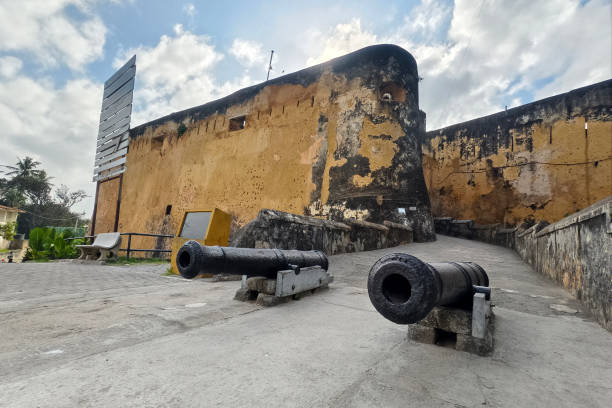
Fort Jesus in Mombasa: The History Behind the Portuguese Fort
Fort Jesus in Mombasa is one of Kenya’s most important historical attractions, offering visitors an opportunity to discover centuries of Portuguese colonial expansion, Indian Ocean trade, military battles and Swahili coastal heritage. Standing above the entrance to Mombasa’s Old Port, this impressive fortress has witnessed the struggles of different powers seeking control of East Africa’s coastline.
Built by the Portuguese between 1593 and 1596, Fort Jesus protected their commercial and military interests along the Indian Ocean. Over the following centuries, it changed hands several times as Portuguese, Omani, local Swahili and British authorities competed for influence.
Today, Fort Jesus operates as a museum and UNESCO World Heritage Site. Visitors can explore its massive walls, historic cannons, underground passages and fascinating archaeological collections.
Where Is Fort Jesus Located?
Fort Jesus stands at the southern edge of Mombasa Old Town, overlooking the entrance to the historic harbour.
Its position allowed soldiers to monitor approaching ships and defend the important coastal trading centre.
The surrounding neighbourhood contains traditional Swahili buildings, narrow streets, mosques and busy commercial areas.
Quick Facts About Fort Jesus
| Feature | Description |
|---|---|
| Country | Kenya |
| City | Mombasa |
| Location | Mombasa Old Town |
| Construction | 1593–1596 |
| Original builders | Portuguese |
| Architect | Giovanni Battista Cairati |
| Main materials | Coral stone and lime mortar |
| UNESCO designation | 2011 |
| Management | National Museums of Kenya |
| Recommended visit | 1½–3 hours |
Why Did the Portuguese Build Fort Jesus?
During the sixteenth century, European powers increasingly competed for control of international maritime trade.
The Portuguese wanted to establish dominance over important Indian Ocean shipping routes connecting East Africa, Arabia, India and Europe.
Mombasa was strategically valuable because of its natural harbour and established commercial networks.
Protecting the Portuguese Trading Empire
Before the fortress was constructed, Portuguese ships had already reached the East African coast.
Vasco da Gama’s voyage around Africa in 1498 opened a direct maritime route between Europe and India.
Portuguese expansion brought military intervention and conflict with established coastal societies.
Fort Jesus was intended to strengthen Portuguese control over Mombasa and protect their position within Indian Ocean trade.
Who Designed Fort Jesus?
Fort Jesus was designed by Giovanni Battista Cairati, an Italian military architect working for the Portuguese crown.
Construction began in 1593 and was substantially completed in 1596.
Cairati incorporated European Renaissance military design principles into the fortress.
Why the Design Was Unusual
The fortress was constructed with geometric proportions inspired by Renaissance architecture.
Its overall layout has been compared to the shape of a human body.
Thick defensive walls, projecting bastions and carefully positioned openings helped soldiers defend the harbour.
The original design was remarkable because it combined military function with architectural symmetry.
The Architecture of Fort Jesus
Fort Jesus stands on a coral-rock ridge overlooking the Indian Ocean.
Its walls were built using coral stone and lime mortar, materials commonly employed in coastal construction.
The fortress contains defensive bastions, courtyards, passages and rooms used for different military purposes.
Important Architectural Features
| Feature | Historical purpose |
|---|---|
| Thick coral-stone walls | Protection against attacks |
| Defensive bastions | Positions for artillery |
| Cannon openings | Harbour defence |
| Central courtyard | Military activities |
| Storage rooms | Supplies and equipment |
| Water facilities | Supporting occupants |
| Moat | Additional defensive protection |
These features reveal how military architects responded to advances in weapons technology.
The Portuguese Period
The Portuguese controlled Fort Jesus for much of the seventeenth century.
Their presence formed part of a larger commercial and military network extending across the Indian Ocean.
However, Portuguese authority faced repeated resistance from coastal communities and competing regional powers.
Life Inside the Fortress
Soldiers maintained defensive positions and monitored shipping movements.
The fortress required food, water, weapons and other supplies.
Military personnel lived alongside individuals performing administrative and supporting duties.
Conditions could become difficult during periods of conflict, particularly when access to supplies was restricted.
The Great Omani Siege
One of the most important events in Fort Jesus’s history was the Omani siege of 1696–1698.
Omani forces sought to remove Portuguese influence from the East African coast.
The fortress endured a prolonged siege lasting more than two years.
What Happened During the Siege?
The Portuguese defenders faced serious difficulties obtaining supplies.
Disease, hunger and military pressure weakened the garrison.
In December 1698, the fort fell to Omani forces.
This marked a major turning point in the struggle for control of Mombasa.
Portuguese authority over the coast was significantly weakened.
Fort Jesus Under Omani Rule
Following the siege, Omani influence expanded along the East African coastline.
Fort Jesus became part of a changing political landscape involving Omani rulers and local coastal authorities.
The Portuguese briefly regained the fortress between 1728 and 1729.
However, their return did not restore long-term control.
Why Control Continued Changing
Mombasa’s port remained commercially valuable.
Different rulers sought access to trading revenues, shipping routes and political influence.
The repeated occupation of Fort Jesus demonstrates the importance of the Indian Ocean economy.
The British Colonial Period
During the late nineteenth century, British influence expanded in East Africa.
The British took control of Fort Jesus in 1895.
The fortress subsequently served as a prison.
From Military Fortress to Prison
Rooms originally associated with military activities were adapted for detention and administrative purposes.
This change reflected the transition from maritime warfare towards colonial administration.
The prison period became another important chapter in the building’s long history.
Fort Jesus eventually ceased serving this function and became a protected historical monument.
Becoming a Museum
Fort Jesus was declared a protected national monument in 1958.
Its historical importance encouraged efforts to preserve the structure and establish museum collections.
Today, the National Museums of Kenya manages the site.
What Can Visitors Discover?
The museum presents archaeological discoveries, historical objects and information about coastal trade.
Exhibitions help visitors understand the Portuguese, Omani and British periods.
The building itself remains the most significant historical exhibit.
Exploring its rooms and defensive walls reveals centuries of architectural change.
UNESCO World Heritage Recognition
Fort Jesus was inscribed on UNESCO’s World Heritage List in 2011.
The recognition reflects its outstanding historical and architectural importance.
UNESCO considers the fortress an exceptional example of sixteenth-century Portuguese military fortification.
Why UNESCO Recognition Matters
The designation encourages preservation of the structure and its surrounding historical setting.
It also recognises cultural exchanges between African, Arab, Persian, Turkish and European communities.
Fort Jesus therefore represents more than Portuguese colonial history.
It illustrates the complex relationships that shaped the Indian Ocean coastline.
Exploring Fort Jesus Museum
Visitors can explore several parts of the historic fortress.
A guided tour is particularly useful because different structures have changed functions over time.
Museum Highlights
Historic cannons: Weapons positioned around the fortress help explain its defensive importance.
Fortress walls: Elevated sections provide views towards the harbour and surrounding town.
Archaeological objects: Exhibitions introduce visitors to coastal trade and historical settlement.
Old passages: Interior routes reveal how the fortress was organised.
Courtyards: Open spaces show the scale of the original military complex.
Access to individual areas may change for preservation or safety reasons.
The Importance of Mombasa Old Town
Fort Jesus stands beside one of Kenya’s most historically important urban neighbourhoods.
Mombasa Old Town contains buildings reflecting Swahili, Arabian, Indian and European architectural influences.
What Makes Old Town Interesting?
Visitors can explore narrow streets, carved wooden doors, mosques and traditional commercial buildings.
The neighbourhood reveals how coastal communities developed through centuries of trade and cultural exchange.
A guided Old Town walk complements the Fort Jesus museum experience.
Fort Jesus and Indian Ocean Trade
Mombasa was part of a wider trading network long before Portuguese arrival.
Merchants exchanged agricultural products, textiles, ceramics and other goods across the Indian Ocean.
What Changed Under Portuguese Rule?
Portuguese authorities attempted to control important maritime routes and commercial activities.
These efforts affected established trading relationships.
The fortress became a symbol of military power within the wider commercial network.
Understanding this history helps explain why Mombasa attracted repeated political conflict.
Best Time to Visit Fort Jesus
Fort Jesus can be visited throughout the year.
Mombasa has a warm coastal climate, and midday temperatures can be uncomfortable.
Morning visits are generally pleasant for exploring the open courtyards and walls.
Seasonal Visiting Conditions
| Period | General conditions |
|---|---|
| January–March | Often hot and relatively dry |
| April–May | Increased rainfall |
| June–October | Generally more comfortable |
| November–December | Warm with variable rainfall |
Carry drinking water and sun protection.
Opening Hours and Entrance Fees
The National Museums of Kenya currently lists Fort Jesus as open daily from 8:00 am to 6:00 pm.
Admission fees vary by visitor category and may change.
Visitor Information
| Item | Details |
|---|---|
| Opening days | Monday–Sunday |
| Visiting hours | 8:00 am–6:00 pm |
| Public holidays | Generally open |
| Entrance fee | Depends on visitor category |
| Payment | Official electronic payment arrangements |
| Guided tours | Available through authorised guides |
| Recommended time | 1½–3 hours |
Confirm current admission rates before travelling.
How to Reach Fort Jesus
Fort Jesus is located on Mombasa Island and is accessible by road from different parts of the city.
Travellers staying around Nyali, Bamburi or Mombasa’s central area can arrange taxis or private transfers.
Visitors arriving from Diani Beach must also account for the Likoni crossing or another suitable route.
Allow extra time during busy traffic periods.
Photography at Fort Jesus
The fortress provides excellent photography opportunities.
Massive walls, old cannons and harbour views create impressive compositions.
Photography Tips
Photograph the outer walls from suitable public viewpoints.
Capture architectural details in natural morning light.
Use a wide-angle lens for courtyards and passages.
Respect museum photography regulations.
Avoid climbing fragile structures or entering restricted sections.
Combining Fort Jesus With Other Attractions
Fort Jesus fits conveniently into a Mombasa cultural itinerary.
Travellers can combine it with Mombasa Old Town, the historic harbour and selected coastal museums.
Suggested Half-Day Visit
Morning: Begin with a guided Fort Jesus tour.
Late Morning: Explore Mombasa Old Town and its distinctive architecture.
Afternoon: Enjoy traditional Swahili food before continuing to another attraction.
This programme provides a balanced introduction to Mombasa’s heritage.
Responsible Heritage Tourism
Fort Jesus is a protected cultural monument.
Visitors should avoid touching fragile exhibits or damaging historical surfaces.
Remain on designated walking routes.
Respect nearby religious and residential communities.
Support authorised guides and locally owned businesses.
Responsible tourism helps preserve the fortress for future generations.
Why Fort Jesus Is Worth Visiting
Fort Jesus offers one of Kenya’s most fascinating historical experiences.
Its impressive walls and defensive architecture reveal the military ambitions of the Portuguese Empire.
The fortress also tells stories of Omani expansion, Swahili resistance, British colonial administration and centuries of Indian Ocean trade.
For travellers exploring Mombasa, visiting Fort Jesus provides valuable historical understanding beyond the city’s famous beaches.
Its combination of architecture, archaeology and coastal heritage makes it an essential cultural attraction on the Kenyan coast.




No comment