
Why Crossings Come Early or Late Some Years
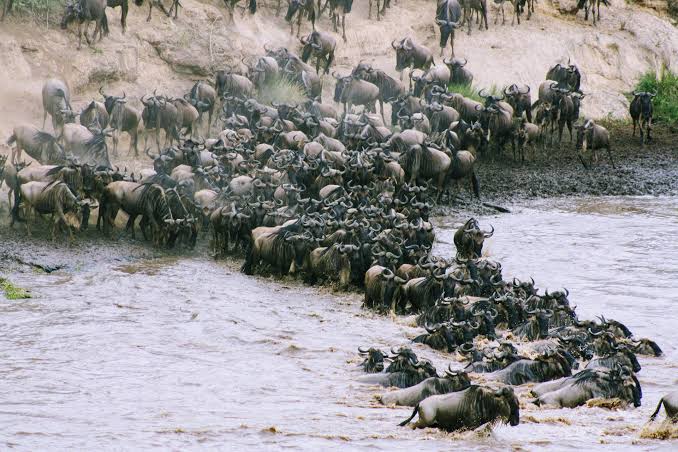
The timing of wildebeest river crossings changes from year to year because Africa’s Great Migration depends on rainfall, grass quality and seasonal grazing conditions. Every year, enormous herds travel across Tanzania’s Serengeti National Park and Kenya’s Maasai Mara ecosystem. Although July to October is generally considered the main Mara River crossing season, some herds arrive earlier while others reach the river much later.
For safari travellers, these changes can be confusing. A crossing location that was full of wildebeest in August one year may remain quiet during the same week the following year. Even when animals gather near the river, they may hesitate for hours before crossing or move away without entering the water.
Understanding these seasonal differences helps visitors plan better migration safaris. It also explains why experienced guides rely on recent wildlife observations rather than fixed migration calendars.
Why the Great Migration Has No Fixed Calendar
The Great Migration is a continuous movement of wildebeest and other grazing animals across the Serengeti–Mara ecosystem.
Approximately 1.2–1.5 million wildebeest participate in this seasonal movement, although population estimates vary.
Unlike animals travelling towards a fixed destination on a particular date, wildebeest respond to changing environmental conditions.
They move towards areas offering suitable grass and water.
When feeding conditions remain favourable, herds may stay in one region longer than expected.
When grazing deteriorates, they may begin moving towards alternative areas.
Quick Facts About Migration Timing
| Feature | Description |
|---|---|
| Main migrating animal | Blue Wildebeest |
| Countries | Tanzania and Kenya |
| Main crossing river | Mara River |
| Typical crossing season | July to October |
| Often favourable months | August and September |
| Main movement driver | Suitable grazing |
| Major environmental influence | Rainfall |
| Other influences | Grass quality, water and herd movements |
| Exact crossing dates | Unpredictable |
1. Rainfall Influences When Wildebeest Move
Rainfall is one of the most important factors affecting migration timing.
Different parts of the Serengeti–Mara ecosystem receive rain at different times.
When rain encourages fresh grass growth, wildebeest may move towards these feeding areas.
However, animals do not simply follow rain clouds.
They respond to the vegetation that develops after rainfall.
What Happens When Rain Arrives Early?
Early rainfall can encourage grass growth sooner than expected.
If suitable grazing becomes available farther north, some herds may begin moving towards those areas earlier.
However, early rain in southern or central Serengeti may have the opposite effect.
Fresh grazing can encourage wildebeest to remain where they are.
This explains why early rainfall does not automatically produce early Mara River crossings.
2. Late Rainfall Can Delay Herd Movements
When seasonal rainfall arrives late, grass growth may also be delayed.
Wildebeest may remain in existing grazing areas while sufficient food is available.
Alternatively, prolonged dry conditions may encourage animals to move elsewhere.
The result depends on where rainfall occurs and which regions retain suitable vegetation.
A delayed rainy season does not always produce a delayed migration.
The animals respond to the distribution of feeding opportunities across the landscape.
3. Grass Quality Matters More Than Appearance
Not every green grassland provides equally nutritious food.
Wildebeest generally benefit from short grasses containing suitable amounts of protein and other nutrients.
Fresh grass often provides better nutrition than older, fibrous vegetation.
However, soil fertility also affects nutritional quality.
A grassland may appear green while offering relatively poor forage.
Another area may contain shorter but more nutritious grasses.
Scientific research has shown that fresh vegetation growth and forage quality are important influences on wildebeest migration.
This helps explain why herd movements cannot be predicted using rainfall alone.
4. The Ndutu Calving Season Influences Later Movements
The southern Serengeti and Ndutu plains are important during the wildebeest calving season.
Large herds usually gather between January and March, with February often being the busiest period.
These grasslands contain volcanic-influenced soils that support nutritious vegetation during suitable rainy conditions.
Pregnant wildebeest and nursing mothers depend on this grazing.
Why Herds Leave Ndutu
As rainfall decreases, parts of the southern plains begin drying.
Fresh grass becomes less available, encouraging many animals to move towards central Serengeti.
If feeding conditions deteriorate earlier, some herds may begin their movements sooner.
However, leaving Ndutu early does not guarantee an early arrival at the Mara River.
The animals may spend weeks grazing in other Serengeti regions.
5. Western Serengeti Can Hold Herds Longer
During May and June, many wildebeest move through central Serengeti towards the Western Corridor.
This region contains grasslands, woodland and rivers, including the Grumeti River.
When suitable grass remains available, herds may spend considerable time feeding there.
Why This Affects Crossing Dates
Large wildebeest concentrations can remain in western Serengeti while grazing conditions are favourable.
Other groups may continue northwards.
This creates differences in movement between herds.
A visitor may therefore observe thousands of wildebeest around Grumeti while other animals have already reached northern Serengeti.
Such differences are normal during the migration.
6. Reaching the Mara River Does Not Guarantee a Crossing
One of the most important distinctions is the difference between arriving near the Mara River and actually crossing it.
Wildebeest may gather along the banks without entering the water.
Some approach the edge repeatedly before retreating.
Others travel along the river searching for suitable crossing locations.
Why Wildebeest Hesitate
Several factors can influence their behaviour:
Strong river currents.
Deep water channels.
Steep or muddy riverbanks.
Movement of neighbouring animals.
Disturbances around crossing approaches.
Suitable grazing remaining nearby.
Potential dangers within the river.
The exact reason for hesitation is often difficult to determine.
A large herd may remain near a crossing point for several days without producing the dramatic event visitors expect.
7. River Water Levels Affect Crossing Conditions
The Mara River changes according to rainfall and water flow.
Heavy rainfall can increase water levels and create powerful currents.
These conditions may make swimming more difficult.
Steep banks and slippery rocks can create additional challenges.
However, wildebeest sometimes cross under difficult conditions.
Scientists have not established a universal water level at which wildebeest decide to cross.
River conditions influence risks, but they do not provide an exact crossing timetable.
8. Different Herds Arrive at Different Times
The Great Migration does not consist of one enormous herd travelling together.
Instead, animals form numerous groups spread across a large landscape.
Some may reach northern Serengeti in July.
Others may remain in central or western Serengeti.
Additional herds can arrive during August, September or even later.
This explains why crossing activity may continue for several months.
Do Wildebeest Cross More Than Once?
Yes.
Wildebeest may cross the Mara River repeatedly while moving between grazing areas.
Their journey does not follow a simple one-way route from Tanzania into Kenya.
Some animals cross northwards before later returning south.
Others move between nearby feeding areas and cross again.
9. Why Crossings Sometimes Begin in June or July
Early crossings may occur when grazing conditions encourage wildebeest to move northwards sooner than usual.
Drying grasslands farther south may reduce the time herds spend in those regions.
Suitable northern grazing can also encourage earlier movement.
However, a few early crossings do not mean the main migration season has finished.
Other herds may still be travelling towards the river.
Substantial crossing activity can continue later in the season.
10. Why Some Crossings Happen in September or October
Late crossings may occur when wildebeest remain in suitable grazing areas for longer.
Rainfall can create fresh vegetation in central or western Serengeti, influencing movement.
Some herds may reach northern regions later than expected.
Others may already be present but continue grazing before crossing.
October can still provide opportunities to observe crossings, although herd distribution varies significantly between years.
11. Can Scientists Predict Crossing Dates?
Scientists study wildebeest movements using GPS tracking, aerial surveys and satellite observations.
These methods provide information about seasonal movement patterns.
Satellite imagery can reveal changes in vegetation greenness, while rainfall records help explain environmental conditions.
However, no system can reliably predict the exact moment wildebeest will enter the Mara River.
Why Predictions Have Limitations
A tracking report may show thousands of wildebeest near Kogatende or the Mara Triangle.
However, those animals may move away before a safari vehicle arrives.
Even when a herd remains nearby, a crossing is not guaranteed.
Recent observations are useful for identifying promising locations, but they are not exact forecasts.
12. Best Months for Mara River Crossings
Although migration timing varies, historical seasonal patterns provide useful guidance.
| Month | Typical crossing opportunities |
|---|---|
| June | Early crossings occasionally possible |
| July | Increasing northern migration activity |
| August | Often favourable for major crossings |
| September | Usually another productive month |
| October | Crossings may continue |
| November | Many herds begin moving towards southern grazing areas |
These months are general planning guidelines rather than guaranteed crossing dates.
13. Best Places to Watch Early or Late Crossings
Northern Serengeti, Tanzania
Kogatende and Lamai provide opportunities to observe wildebeest near the Mara River.
The area can be particularly attractive during July, August and September.
Maasai Mara National Reserve, Kenya
The Maasai Mara supports large seasonal wildebeest concentrations.
Crossings may occur at different points along the river.
Mara Triangle, Kenya
The Mara Triangle provides access to important migration habitats and river sections.
The area also supports resident predators and other wildlife throughout the year.
The best destination depends on recent herd movements rather than a fixed assumption that one location is always more productive.
14. How to Plan Around Unpredictable Crossing Dates
Travellers should select dates within the broad migration season while remaining flexible about individual crossing events.
Spending three or four nights near suitable viewing areas can improve opportunities to observe herds.
Experienced guides can use recent wildlife reports to identify promising locations.
Practical Safari Planning Tips
Choose accommodation reasonably close to the expected migration areas.
Confirm recent herd sightings before travelling.
Allow enough time for several game drives.
Avoid operators promising guaranteed crossings.
Include other wildlife activities in your itinerary.
Remember that a quiet river does not mean the entire safari will be unsuccessful.
Lions, elephants, giraffes, zebras and numerous bird species provide rewarding viewing opportunities throughout the ecosystem.
15. Why Climate Variability Makes Timing Difficult
Rainfall patterns naturally vary between years.
Some seasons experience prolonged dry periods, while others receive unusually heavy rain.
These differences influence grass growth and herd movements.
Long-term climate change may also affect rainfall patterns and vegetation conditions across East Africa.
However, one unusually early or late crossing season cannot automatically be attributed to climate change.
Researchers must examine long-term environmental records before identifying persistent changes.
Protecting connected grazing habitats helps wildebeest respond naturally to changing conditions.
16. Responsible Wildlife Viewing During Delayed Crossings
When wildebeest hesitate near the river, visitors may become impatient.
However, guides should never attempt to force a crossing.
Safari vehicles must remain in authorised viewing areas.
Drivers should avoid blocking herd approaches or moving unnecessarily close to animals.
Photographers should use suitable telephoto lenses rather than requesting unsafe vehicle positions.
Patience allows wildlife to behave naturally and produces a more meaningful safari experience.
Why Wildebeest Crossings Come Early or Late
Wildebeest crossings happen earlier or later because the Great Migration responds to changing environmental conditions rather than fixed calendar dates.
Rainfall influences grass growth, while soil fertility affects forage quality.
When nutritious grazing remains available in central or western Serengeti, herds may delay moving north.
When feeding conditions deteriorate, some groups may travel towards the Mara River sooner.
However, reaching the river does not guarantee an immediate crossing.
Water conditions, herd behaviour and local disturbances can influence what happens next.
For safari travellers, the best approach is to combine seasonal migration knowledge with recent wildlife observations.
Allowing several days in northern Serengeti or the Maasai Mara, travelling with an experienced guide and maintaining realistic expectations can improve opportunities to witness this remarkable natural event.
The changing timing is part of the migration’s natural complexity, reflecting how wildebeest continuously respond to rainfall, grass quality and the landscapes they depend on.



No comment