
Predator Calendar During Calving Season
Predator Calendar During Calving Season: Hyenas, Lions and Vultures
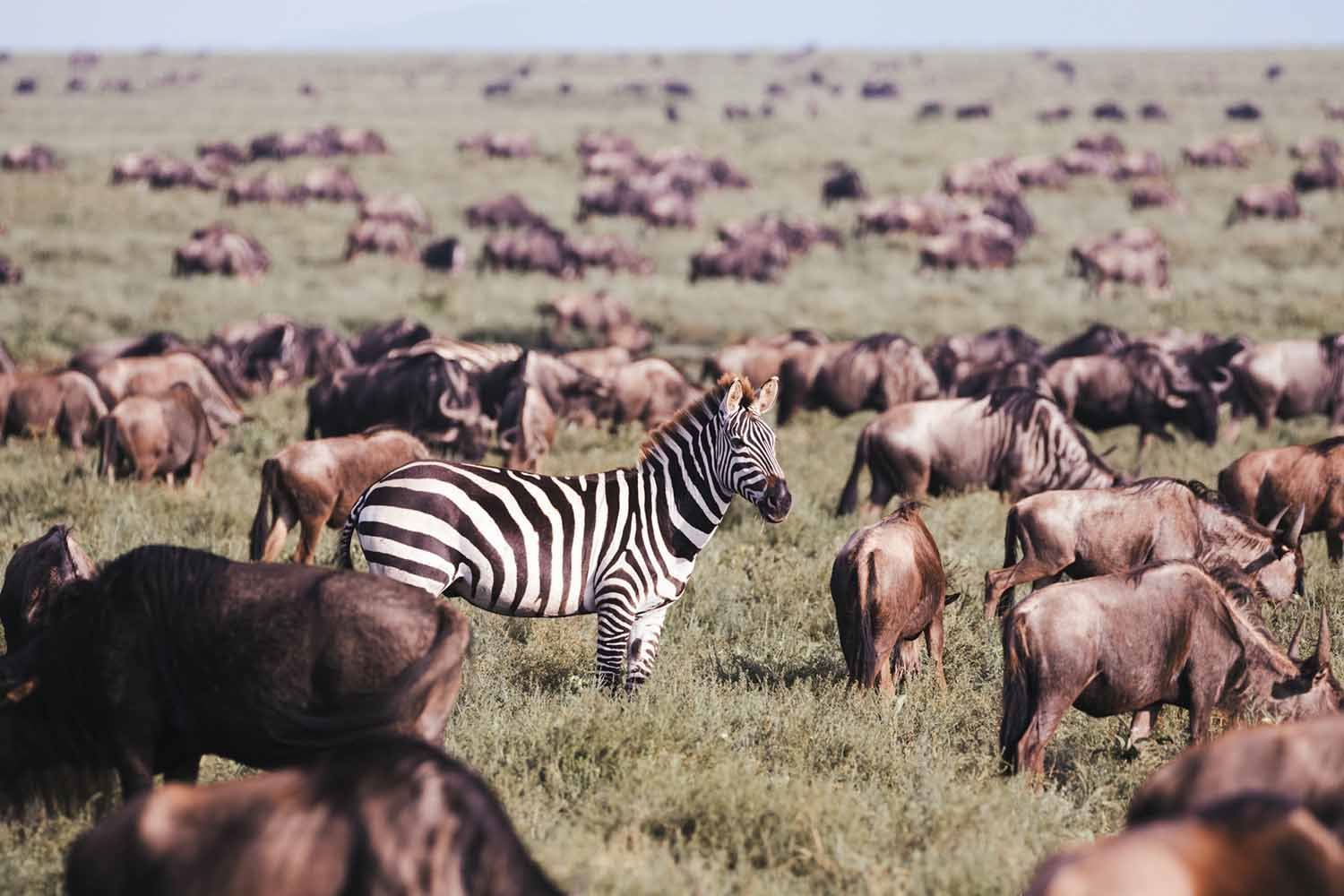
The predator calendar during calving season reveals one of the most fascinating stages of Africa’s Great Wildebeest Migration. Every year, hundreds of thousands of wildebeest calves are born on the short-grass plains of southern Serengeti and Ndutu in Tanzania. Their arrival creates feeding opportunities for spotted hyenas, lions, vultures and other animals that depend on the grassland food web.
Between January and March, enormous wildebeest herds gather across the southern plains, where fresh grass supports pregnant females and nursing mothers. During the busiest weeks, thousands of calves may be born daily. Predators respond to these concentrations, searching for vulnerable animals while scavenging birds monitor the landscape for carcasses.
For travellers planning a Tanzania wildlife safari, understanding how predator activity changes throughout the calving season helps explain what to expect during different months. Although February is generally the most productive period for concentrated wildebeest births, predator sightings remain possible throughout the year.
What Is the Serengeti Calving Season?
The calving season is the period when most female wildebeest in the migratory Serengeti population give birth.
Large herds gather on the short-grass plains of southern Serengeti and adjoining areas around Ndutu.
Seasonal rainfall encourages nutritious grass growth, helping mothers obtain the energy required for pregnancy and milk production.
The open landscape also allows wildebeest to detect approaching predators, although it cannot eliminate danger.
Approximately 400,000–500,000 calves may be born during a major season, according to commonly reported estimates. The actual number varies with population size and environmental conditions.
Quick Facts About Calving Season Predators
| Feature | Description |
|---|---|
| Main location | Southern Serengeti and Ndutu |
| Country | Tanzania |
| Main calving period | January–March |
| Typical peak | February |
| Main prey | Wildebeest calves and adults |
| Major hunters | Spotted hyenas and lions |
| Other predators | Cheetahs, leopards and jackals |
| Important scavengers | Vultures and Marabou Storks |
| Recommended safari stay | 3–4 nights |
January: Predators Follow Growing Wildebeest Herds
January marks an important stage in the calving season.
Large wildebeest concentrations may already occupy the southern Serengeti plains, depending on rainfall and grazing conditions.
Some females begin giving birth, while many others remain heavily pregnant.
Predators take advantage of the increased availability of grazing animals.
Spotted Hyenas in January
Spotted hyenas patrol grasslands, searching for suitable prey.
They may hunt wildebeest, gazelles and other animals while also scavenging available carcasses.
Hyenas are skilled hunters rather than animals that depend entirely on scavenging.
Their strong jaws allow them to consume bones and other material that many carnivores leave behind.
Lions in January
Lions may hunt adult wildebeest and other herbivores gathering across the plains.
Pride members often rest between hunting attempts, particularly during warmer hours.
Females frequently undertake hunting, although males can also capture prey.
Vultures in January
Vultures search for carcasses across the savannah.
Their activity depends on available food rather than a fixed calving schedule.
As wildebeest concentrations increase, opportunities to feed on natural deaths and predator kills may also increase.
February: Peak Calving and Predator Activity
February is generally the most important month for witnessing concentrated wildebeest births.
Thousands of calves may be born across the southern Serengeti plains during peak periods.
Newborn wildebeest can stand within minutes, but they remain vulnerable while developing coordination and strength.
This creates opportunities for predators.
How Hyenas Hunt Newborn Wildebeest
Spotted hyenas may approach herds looking for calves that have become separated from their mothers.
They can hunt individually or cooperate with other clan members.
Although young wildebeest may be easier to capture than healthy adults, hyenas also hunt larger animals.
Their success depends on prey condition, herd behaviour and surrounding terrain.
How Lions Respond to Calving Herds
Lions may use shallow depressions, vegetation or uneven ground to approach grazing animals.
A lioness may target a vulnerable calf, but adult wildebeest remain important prey.
Hunting is not always successful.
Wildebeest can run quickly, and adult animals may respond defensively to threats.
Why Vultures Become Noticeable
Vultures may gather when carcasses become available.
They can consume remains left by predators or animals that die from other causes.
Their presence does not necessarily indicate that a predator has recently made a kill.
Vultures are important scavengers that help process animal remains and transfer nutrients through the ecosystem.
March: Changing Herd Movements and Feeding Opportunities
During March, calving activity may continue, but many newborn wildebeest are becoming stronger.
As rainfall and grass conditions change, the herds may begin shifting towards other grazing areas.
Predators respond to the distribution of available prey.
Hyenas During March
Hyenas continue hunting and scavenging across their territories.
Young wildebeest remain potential prey, although calves born earlier in the season have become more mobile.
Lions During March
Lions may follow local prey opportunities within their territories.
However, they do not necessarily accompany migrating wildebeest over the entire annual route.
Some prides remain in established areas and feed on resident herbivores when major migration herds move away.
Vultures During March
Vultures continue searching for carcasses.
Their movements reflect food availability, nesting behaviour and environmental conditions.
As wildebeest concentrations change, scavenging opportunities may become more widely distributed.
Predator Calendar at a Glance
| Month | Wildebeest activity | Predator viewing |
|---|---|---|
| December | Herds returning towards southern plains | Increasing opportunities around arriving herds |
| January | Early calving and large grazing concentrations | Lions, hyenas and scavenging birds |
| February | Usually peak calving | Excellent opportunities to observe predator-prey behaviour |
| March | Later births and growing calves | Continued hunting and scavenging activity |
| April | Many herds begin moving away | Predators respond to changing prey distribution |
These periods are approximate. Actual wildlife activity depends on rainfall, herd movements and local conditions.
Why Spotted Hyenas Are Important During Calving
Spotted hyenas are among the Serengeti’s most successful large carnivores.
They live in social groups called clans, which contain individuals organised within a complex dominance hierarchy.
Hyenas use hearing, smell and vision to locate food.
During calving, vulnerable wildebeest calves provide additional hunting opportunities.
However, hyenas also consume adult herbivores, smaller mammals and carrion.
Their ability to hunt and scavenge makes them important members of the grassland food web.
Why Hyenas Sometimes Hunt Together
Group hunting can help hyenas pursue larger animals.
Several individuals may cooperate when attacking prey that would be difficult for one hyena to capture.
However, many hunts involve individual animals.
Their behaviour depends on prey size, availability and the number of clan members present.
How Lions Hunt Around Calving Herds
Lions are powerful predators capable of capturing wildebeest of different ages.
They frequently use concealment and short bursts of acceleration rather than long-distance pursuit.
A hunting lion may wait until animals approach within suitable range before attacking.
During calving, newborn animals can provide opportunities, but lions are not restricted to hunting calves.
Adult wildebeest may provide substantial meals for an entire pride.
Are Lions Always Successful?
No. Many lion hunts fail.
Prey may detect the approaching predator early or escape during the chase.
Hunting also requires energy and carries injury risks.
Visitors should therefore not expect every lion sighting to involve a successful attack.
Watching lions rest, communicate and interact socially can be equally rewarding.
Why Vultures Matter During Calving Season
Vultures occupy a different ecological role from lions and spotted hyenas.
They are primarily scavengers, feeding on carcasses rather than regularly hunting healthy mammals.
Several vulture species occur in the Serengeti ecosystem, including White-backed Vultures, Rüppell’s Vultures and Lappet-faced Vultures.
Different species may use carcasses in different ways.
Large vultures with powerful bills can open tough skin, while others feed on exposed soft tissue.
How Vultures Find Food
Vultures often locate carcasses using exceptional eyesight.
Some may notice other scavenging birds descending towards food.
Several individuals can gather around a carcass, sometimes alongside Marabou Storks and terrestrial scavengers.
Their feeding contributes to the removal of animal remains from the landscape.
Why So Many Wildebeest Calves Survive
Despite intense predator activity, large numbers of wildebeest calves survive the calving season.
One reason is the concentration of births within a relatively short period.
When thousands of calves are born together, predators cannot capture every vulnerable animal.
Scientists describe this phenomenon as predator saturation.
Rapid calf development provides another advantage.
A healthy newborn wildebeest can begin standing within minutes and may follow its mother shortly afterwards.
Remaining close to the herd helps reduce some risks, although calves are never completely safe from predators.
Best Places to Watch Predators During Calving
Ndutu Plains
Ndutu is one of the most important destinations for calving-season safaris.
Its short-grass plains support large wildebeest concentrations during suitable rainfall conditions.
Visitors may encounter lions, cheetahs, spotted hyenas and numerous scavenging birds.
Lake Masek Area
The Lake Masek surroundings include grassland and woodland habitats.
These provide feeding and resting areas for different wildlife species.
Lions and hyenas may be encountered, while vultures can often be observed overhead.
Southern Serengeti Plains
The wider southern Serengeti contains extensive calving habitats.
Large concentrations of wildebeest can attract predators when environmental conditions are favourable.
The open landscape also provides opportunities for observing natural interactions between grazing animals and carnivores.
Best Time of Day for Predator Viewing
Early morning is often productive for wildlife observation because temperatures are relatively cool.
Lions and hyenas may still be active after overnight movements.
Late afternoon can also provide opportunities to observe predators becoming active.
However, hunting can occur at different times of day.
Vultures often benefit from rising warm air currents that help them soar efficiently.
These conditions commonly develop as the morning progresses.
A full-day safari can therefore reveal different types of predator and scavenger behaviour.
Photography Tips for Calving-Season Predators
The southern Serengeti provides excellent opportunities for photographing wildlife in open grassland habitats.
A 100–400 mm telephoto zoom lens offers flexibility for capturing individual animals and wider scenes.
For running predators or wildebeest, a shutter speed around 1/1000–1/2000 second can help freeze movement.
Early morning and late afternoon provide attractive natural lighting.
Photographers should maintain suitable distances from newborn calves and avoid interfering with hunting animals.
How Long Should You Stay in Ndutu?
Travellers interested in predator behaviour should consider spending three or four nights in Ndutu during the calving season.
This provides opportunities to explore different habitats and observe wildlife over several days.
A longer stay also allows flexibility when weather conditions or herd movements change.
However, no safari itinerary can guarantee a predator hunt.
An experienced guide can help identify suitable areas for observing lions, spotted hyenas and scavenging birds.
Responsible Wildlife Viewing During Calving
Wildebeest mothers and newborn calves are particularly sensitive to disturbance.
Safari vehicles should never block animals attempting to move or separate mothers from their young.
Visitors should avoid excessive noise near birthing animals.
Never ask guides to chase predators or interfere with natural hunting behaviour.
Responsible wildlife viewing allows animals to behave naturally while protecting the quality of the safari experience.
Why the Predator Calendar Matters
The predator calendar during calving season helps travellers understand how wildlife activity changes as wildebeest give birth and their calves develop.
January brings growing herd concentrations and early births.
February generally offers the highest concentration of newborn wildebeest and excellent opportunities to observe predators.
March brings stronger calves, changing grazing conditions and continued predator activity.
Spotted hyenas, lions and vultures all play important roles, but their feeding strategies differ.
Hyenas combine hunting with scavenging, lions rely on powerful attacks, and vultures specialise in consuming animal remains.
Together, these species demonstrate the complex relationships connecting wildebeest reproduction, predator populations and nutrient cycling across the Serengeti ecosystem.
For travellers planning a Tanzania safari, understanding these seasonal changes makes the Ndutu calving experience more informative and rewarding.



No comment